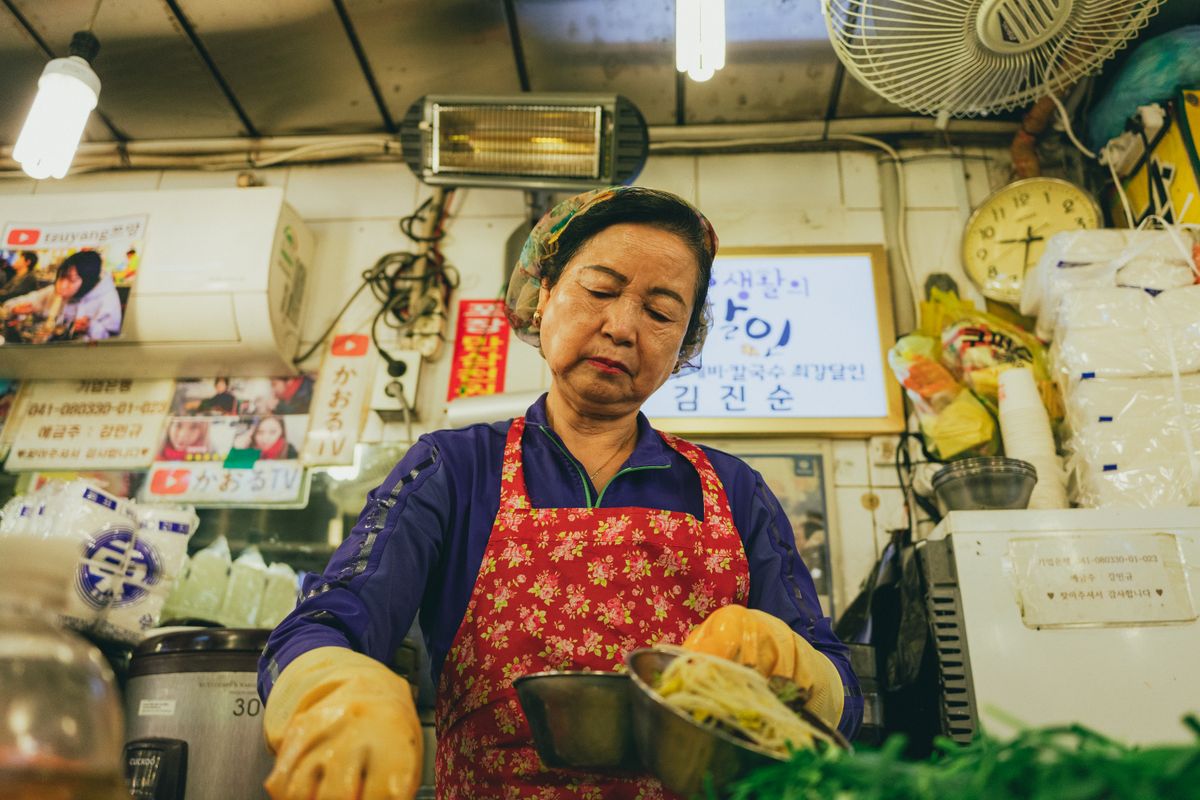
Ajumma Meaning: Is This Korean Word Rude? Ahjumma and Imo Explained
Ajumma meaning is easy to translate and difficult to use. The Korean word ajumma (아줌마) can mean an adult or middle-aged woman, and subtitles often flatten it into “ma’am,” “auntie,” or “lady.” In real life, however, calling a stranger ajumma can sound overly familiar, age-marking, or openly rude.
That does not mean the word is always an insult. Korean women may use it about themselves, friends may use it playfully, and the word can carry ideas of toughness, community, and practical confidence. The problem is that a traveler cannot safely guess which meaning a stranger will hear.
This guide explains ahjumma, ajumeoni, imo, and safer ways to get a woman’s attention in Korea without turning a vocabulary experiment into an awkward moment.
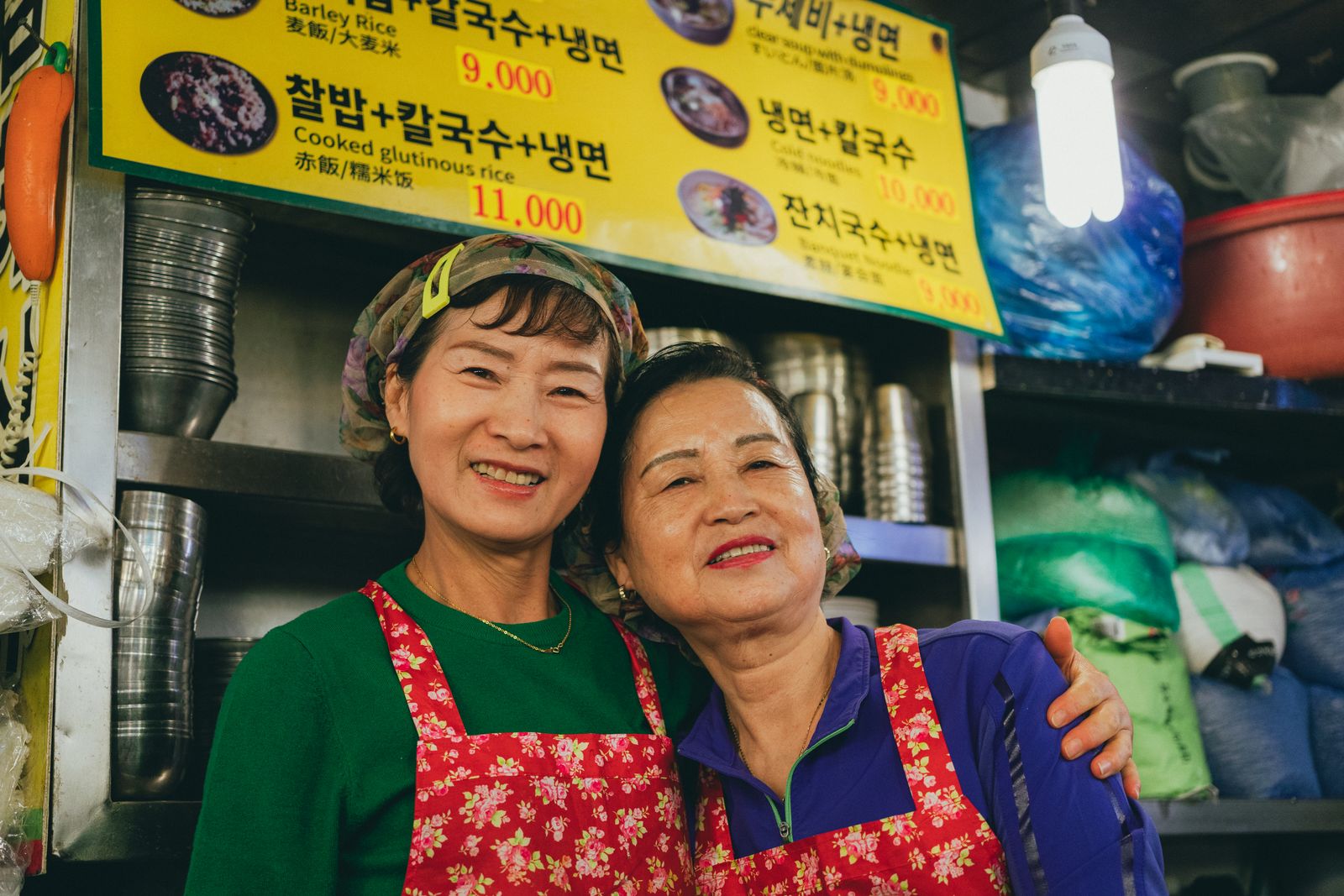
Watch the 6-minute episode: Ahjussi Meaning: Why Koreans Stopped Calling Strangers Ajumma — why ajumma now ranks as a more disliked way to be addressed than ahjussi, and what Koreans say instead.
Quick Answer: What Does Ajumma Mean?
Ajumma is a familiar or lowered form related to ajumeoni (아주머니), a word for an adult woman who is not your relative. The National Institute of Korean Language's Korean-English learner's dictionary labels ajumma an “impolite form” for an adult woman among people who do not know one another.
In practical terms:
- Do not use ajumma as your default word for a female stranger.
- Do not decide that someone is an ajumma from her face, clothing, job, or presumed marital status.
- Use jeogiyo (저기요, “excuse me”), a role title such as sajangnim (사장님), or no title at all when the situation allows.
- Understand the word when you hear it in dramas or daily life, but wait until your Korean and relationship knowledge are strong before using it yourself.
The safest rule is simple: recognize ajumma; do not reach for it first.
| Term | Basic Meaning | How It Can Feel | Traveler Rule |
|---|---|---|---|
| Ajumma (아줌마) | Adult or middle-aged woman; familiar form | Casual, age-marking, teasing, or rude | Understand it, but avoid using it for strangers |
| Ajumeoni (아주머니) | Adult woman; more polite than ajumma | Still classifies the person by age and gender | Better, but not a universal default |
| Imo (이모) | Mother's sister; “auntie” | Warm and familiar in some restaurants | Use only when the setting clearly supports it |
| Sajangnim (사장님) | Owner, boss, or proprietor | Respectful role title | Useful for an owner, not every employee |
| Jeogiyo (저기요) | Excuse me / over here | Neutral attention-getter | Usually the safest first move in service settings |
Lonely Planet Korean Phrasebook & Dictionary — on AmazonAffiliate link. As an Amazon Associate, EpicKor earns from qualifying purchases at no extra cost to you.
Ajumma, Ahjumma, or Ajoomma: Which Spelling Is Correct?
The Hangul spelling is 아줌마. Under South Korea's Revised Romanization system, the closest standard spelling is ajumma. English speakers also write ahjumma, ajoomma, and occasionally ajuma because they are trying to reproduce the Korean vowel and doubled consonant by ear.
These spellings usually point to the same word. They are not separate levels of politeness.
For search and learning, remember this pair:
- ajumma / ahjumma — 아줌마
- ajumeoni — 아주머니
The pronunciation difference matters more than the English spelling. Ajumeoni is longer and more formal. Ajumma is compressed and more familiar, which is part of why it can land more sharply.
Why Can Calling Someone Ajumma Be Rude?
English translations hide three things that Korean listeners hear immediately: age, relationship, and social position.
First, the word places a woman into an older adult category. A stranger may hear more than “ma’am.” She may hear, “I have decided you look old enough for this label.” That can be uncomfortable even if the speaker intended warmth.
Second, ajumma creates familiarity that may not exist. Family-style words are common in Korean, but their warmth depends on the relationship and setting. Borrowing closeness without permission can sound presumptuous.
Third, the word has accumulated stereotypes. The cartoon version of an ajumma is forceful, loud, practical, unfashionable, physically fearless, and ready to claim space on a bus or at a market. Some Koreans use that image humorously or proudly. Others hear it as a sexist box that reduces a woman to age, marriage, motherhood, or behavior.
This is why dictionaries can give the correct definition while still failing to tell you whether to say the word. Meaning lives in the entry; social risk lives in the moment.
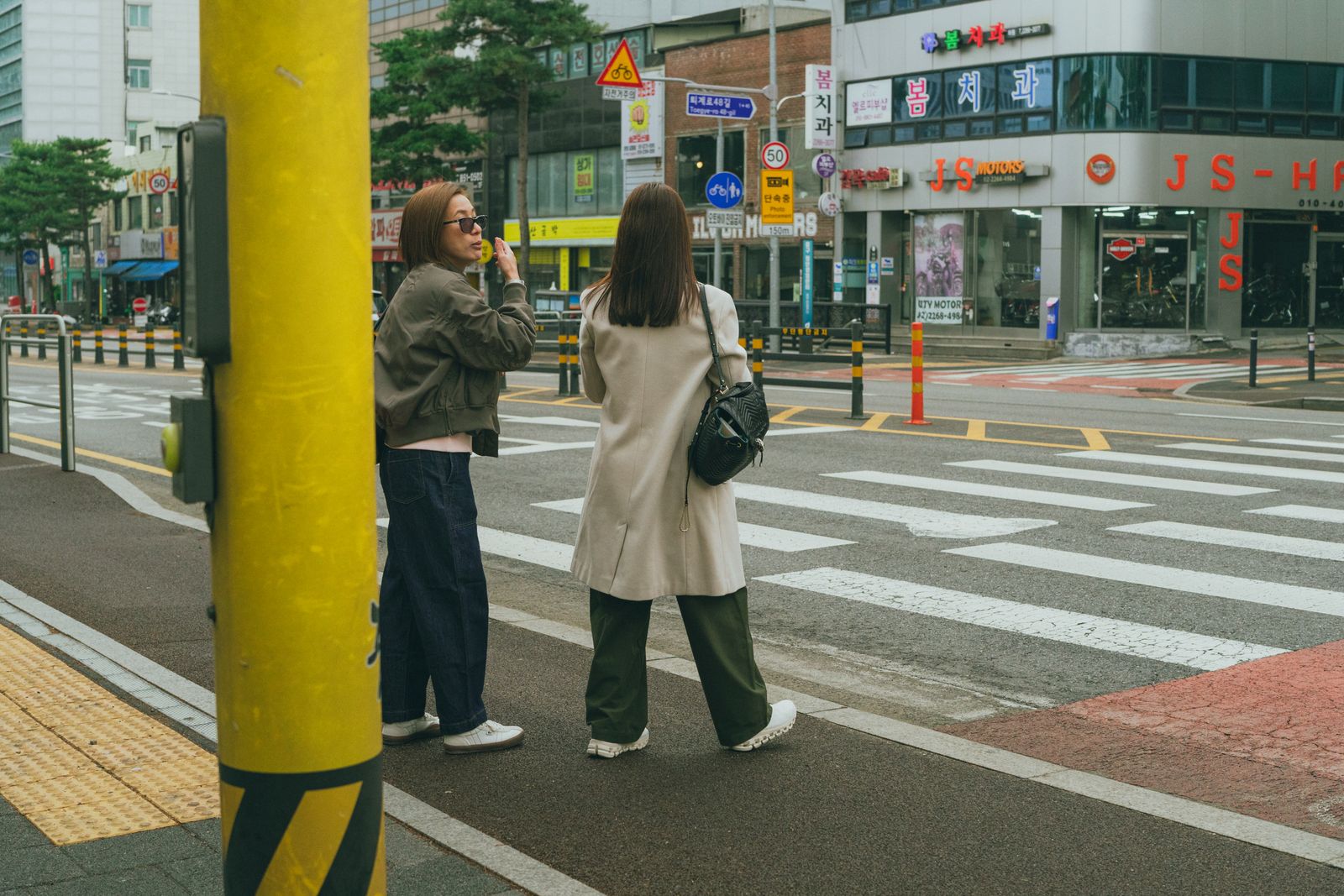
Learn the phrase before testing it on a stranger: As an Amazon Associate, EpicKor may earn from qualifying purchases. Compare Korean phrasebooks with polite travel expressions so your first instinct is a neutral “excuse me,” not an age-based title.
See Korean phrasebooks with polite travel expressions on AmazonIs Ajumma Always Negative?
No. Context can completely change the emotional color.
A woman may call herself an ajumma to signal that she is experienced, unbothered, and no longer performing for other people's approval. Friends may joke that they have entered “ajumma mode” when they become assertive, practical, or protective. A neighborhood group may use the identity with affection and solidarity.
The word can also recognize labor that keeps daily life moving: market sellers, restaurant workers, caregivers, small-business owners, mothers, organizers, and older neighbors. Korean popular culture sometimes turns the ajumma into a comic stereotype, but it also portrays her as the person who survives, negotiates, feeds everyone, and refuses to disappear.
Those positive meanings do not give a stranger automatic permission to use the label. Self-identification and outside labeling are different acts. If a woman calls herself an ajumma, that tells you how she framed herself in that moment; it does not create a rule for the next woman you meet.
Ajumma vs. Ajumeoni: Is Ajumeoni Safe?
Ajumeoni is more polite than ajumma. The National Institute of Korean Language describes ajumma as a lowered way of saying ajumeoni, and the official learner's dictionary uses ajumeoni for an adult female stranger or a woman of a parental generation.
Still, ajumeoni is not the Korean equivalent of a perfectly neutral “ma’am.” It continues to classify someone by age and gender. Depending on tone, distance, and the listener's age, it may sound old-fashioned or unnecessary.
Use it when you have enough context to know that it fits, not merely because it looks more polite in a vocabulary list. A traveler can usually avoid the decision by using an attention phrase or the person's actual role.
For the male side of the same problem, EpicKor's ahjussi meaning guide explains why ajeossi can also shift between practical, familiar, and rude. The broader oppa, samchon, and ahjussi guide shows how speaker gender, age, and closeness change male terms.
What About Imo at a Korean Restaurant?
Imo literally means your mother's sister. In some casual Korean restaurants, customers use imo or imonim for a woman serving or running the restaurant. It can create a warm, home-style atmosphere, especially when the restaurant itself encourages that tone.
But this is not a universal restaurant password.
A younger employee may dislike it. A formal restaurant may find it too familiar. A worker who is not the owner may prefer a neutral call. Travelers also tend to copy the loudest customer without noticing whether that customer is a regular with a long relationship to the staff.
Start with jeogiyo. If staff members introduce themselves by a title, use that title. If everyone in a small, casual restaurant naturally uses imo and the interaction is warm, you can understand the convention without feeling obligated to imitate it.
Safer Ways to Address a Woman in Korea
Korean often handles this problem by not naming the person at all. You get attention politely, then ask the question.
| Situation | Safer Korean | Meaning | Why It Works |
|---|---|---|---|
| Calling restaurant staff | 저기요 (jeogiyo) | Excuse me / over here | Gets attention without guessing age or role |
| Starting a polite question | 실례합니다 (sillyehamnida) | Excuse me / pardon me | Formal and respectful for a stranger |
| Speaking to a store owner | 사장님 (sajangnim) | Owner / boss | Uses a respected role when it is accurate |
| Speaking to a teacher or professional | 선생님 (seonsaengnim) | Teacher; respectful professional title | Appropriate when the role supports it |
| Someone dropped an item | 저기요! 이거 떨어뜨리셨어요. | Excuse me! You dropped this. | Solves the immediate problem without a personal label |
Tone still matters. A sharp shout of jeogiyo can sound rude; a calm voice and short bow can make the same word polite. Add -yo endings when you can, avoid snapping fingers or touching someone, and begin with annyeonghaseyo if the interaction is not urgent.
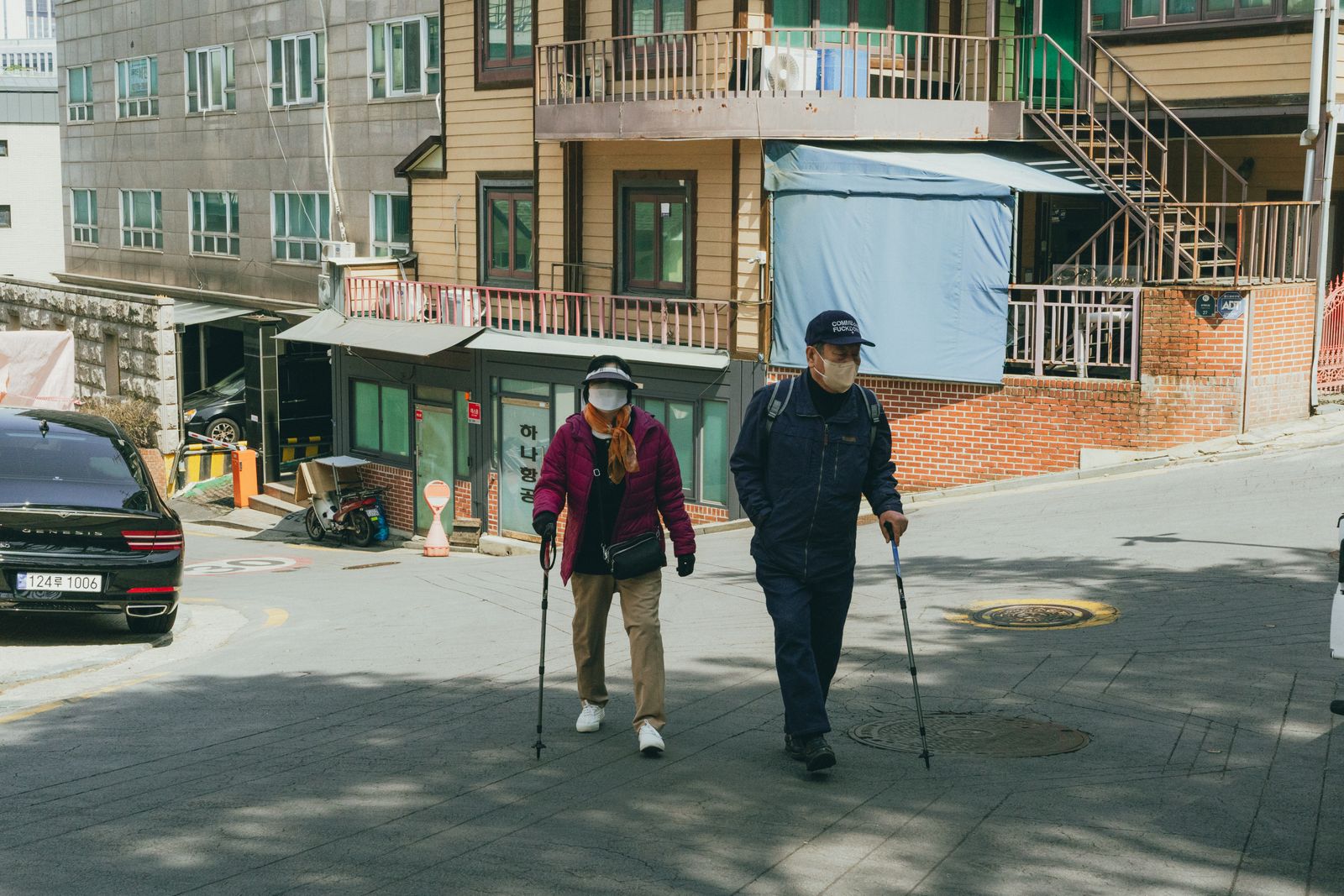
Common Tourist Mistakes
The first mistake is treating subtitles as conversation lessons. A drama character may say ajumma because the scene needs conflict, comedy, intimacy, or class tension. The subtitle “ma'am” cannot carry all that information.
The second mistake is assuming marriage determines the word. Modern usage is not an identity test, and you cannot know a stranger's marital status by looking at her.
The third mistake is overcorrecting with halmeoni (할머니, grandmother). Calling someone “grandmother” because she looks older can be just as intrusive unless she is actually your grandmother or the relationship clearly permits it.
The fourth is using unnie (언니) for every woman you want to flatter. Unnie means an older sister used by a female speaker and usually needs closeness. Retail marketing may use it playfully, but that does not make it a neutral title for any stranger.
The fifth is turning one friendly reaction into a national rule. One restaurant owner may laugh and welcome imo. Another person may prefer sajangnim. Korean politeness is adaptive, not a phrasebook trick.
Build the Hangul foundation: If the romanized spellings keep blurring together, compare a Korean alphabet writing workbook. Reading 아줌마, 아주머니, and 이모 directly makes pronunciation and word relationships much easier to remember.
See Korean alphabet writing workbook on AmazonWhy the Word Matters Beyond Vocabulary
The debate around ajumma reveals how Korea uses family language beyond the family. Words such as oppa, unnie, imo, samchon, eomeoni, and abeoji can turn social distance into a relationship. That can make an interaction warmer, but it also assigns everyone a place.
Age and hierarchy have historically organized Korean speech. Modern Korea is more individual and globally connected, yet those linguistic habits remain. A single noun can therefore carry affection, hierarchy, humor, sexism, neighborhood belonging, and generational change at the same time.
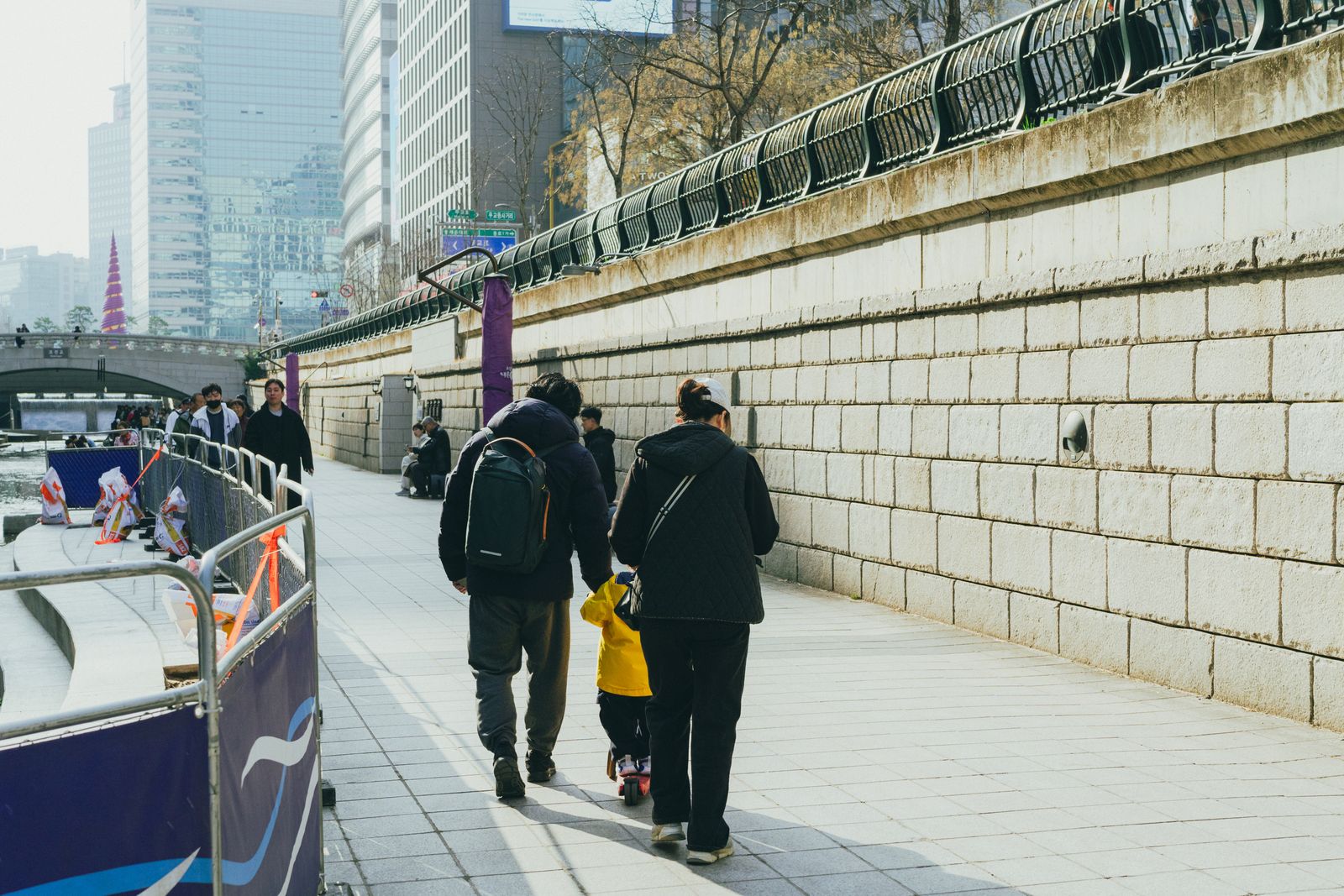
The useful lesson for a visitor is not “Korean is too dangerous to speak.” It is the opposite. You can communicate more respectfully by saying less: greet the person, use a neutral attention phrase, state what you need, and thank them.
FAQ About Ajumma Meaning
Q: What does ajumma mean in English?
It is commonly translated as “middle-aged woman,” “auntie,” “lady,” or sometimes “ma'am.” None is exact because the Korean word also carries familiarity, age, and social stereotypes.
Q: Is ajumma a bad word?
It is a standard Korean word, not profanity. However, the National Institute of Korean Language identifies it as a lowered or impolite form, so it can offend when used for a stranger.
Q: What is the difference between ajumma and ahjumma?
They are alternative English spellings of the same Korean word, 아줌마. Ajumma follows Revised Romanization more closely; ahjumma tries to guide English pronunciation.
Q: Is ajumeoni more polite than ajumma?
Yes. Ajumeoni is the more polite form, but it still identifies a woman by age and gender. A neutral jeogiyo or an accurate role title is often safer.
Q: Can I call a restaurant worker imo?
Sometimes, in a casual restaurant where that family-style tone is already established. It is not appropriate for every worker or restaurant, so begin with jeogiyo unless you know the local convention.
Q: What should I say instead of ajumma?
Use jeogiyo to get attention, sillyehamnida to begin a polite interruption, or an accurate title such as sajangnim. You can often ask your question without naming the person.
The One Rule to Remember
If you remember only one thing, remember this: ajumma is a word to understand before it is a word to use.
Listen for who says it, to whom, in what tone, and with what relationship. When speaking to a stranger, remove the age guess and use a neutral phrase. That small choice sounds more natural and shows more respect than performing a dramatic Korean word at the wrong moment.
Official Sources
You Might Also Like
What to Call a Stranger in Korea: Jeogiyo, Sajangnim, Imo
You need a waiter's attention in Korea and you do not know their name. Jeogiyo is the safe answer, sajangnim works in any shop, and imo is warmer than a foreigner should risk. Here is what to actually say, and what never to shout.
How to Avoid Conflict in Korea: Nunchi, Respect, and Boundaries
A practical Korea etiquette guide explaining nunchi, honorifics, family respect, public conflict, sensitive topics, and how visitors can disagree well.
Korean Etiquette Guide: Habits Locals Notice Most
A practical Korean etiquette guide explaining shoes indoors, quiet public behavior, two-hand manners, indirect refusals, dining rules, and nunchi.