Seoul Vintage Shopping: What Dongmyo Costs and When to Go
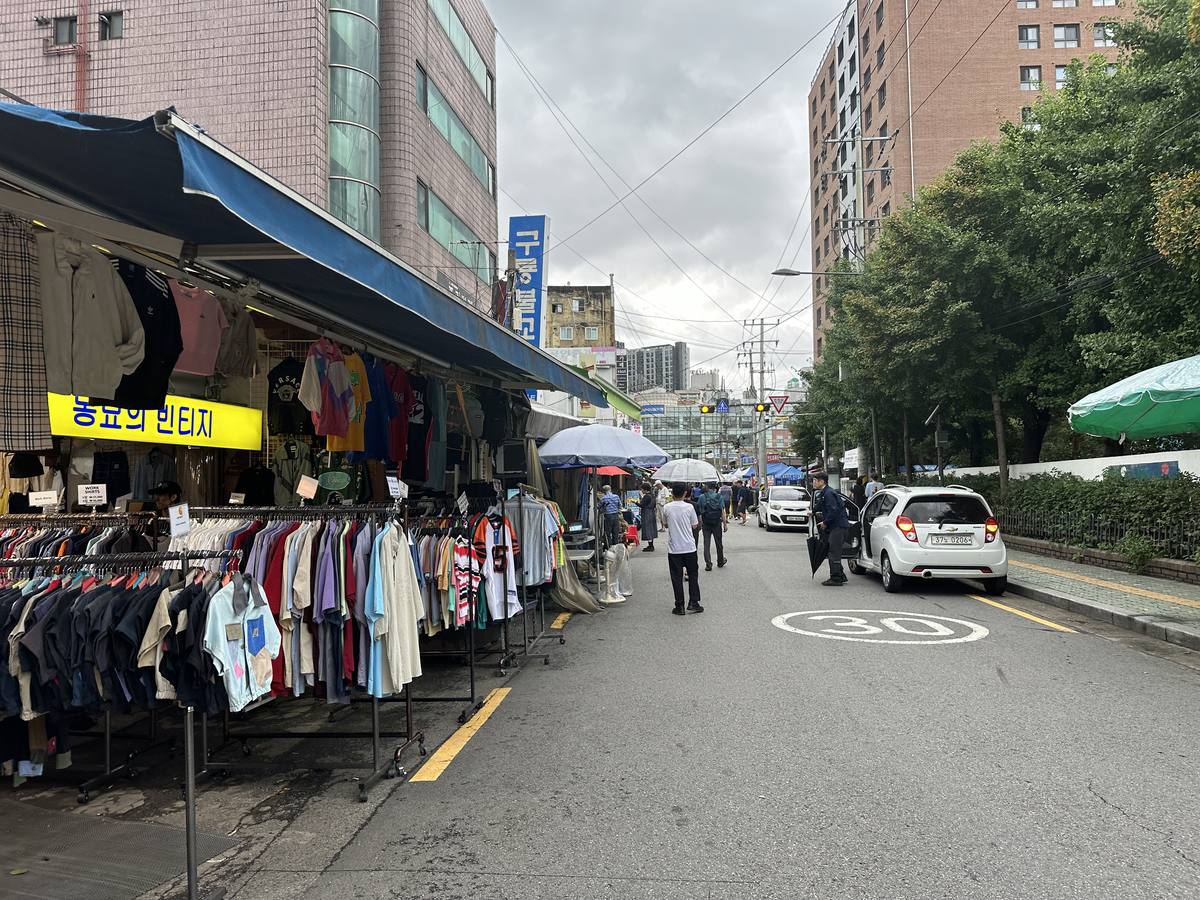
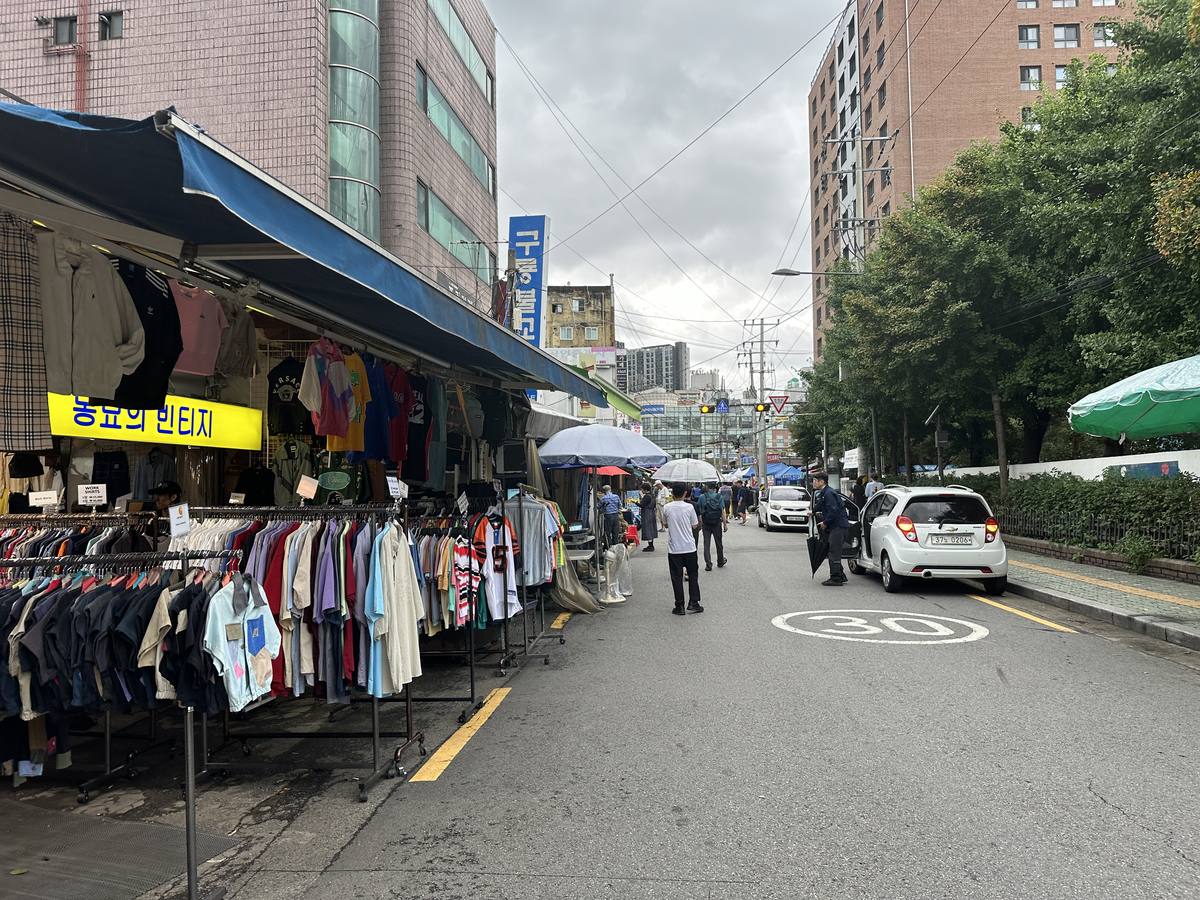
Seoul vintage shopping is not a softer version of a K-fashion route. K-fashion shopping means concept stores, Korean designer labels, Musinsa research, and polished neighborhoods. Vintage shopping in Seoul means racks on a public road, folded denim stacked on cardboard with a handwritten price card on top, and the possibility that the best thing in the pile is under something ugly.
The Korean word for it is 구제 (guje) — literally "old relief," used for secondhand clothing. It is not the same word as 빈티지 (binteiji), which Korean shops use for the curated, higher-priced end. A stall that says 구제 is selling by the pile. A shop that says 빈티지 has already done the sorting and priced it accordingly.
Here is the part most English guides skip. In December 2024, Korean business media ran Dongmyo's obituary. A thirty-year vendor told The Scoop the market "feels finished," that customers browsed and left without buying. Household spending on clothing had fallen to 3.9% of the total, a record low against 7–8% a decade earlier, while used-goods app 당근 (Danggeun) grew from 51 million transactions in 2021 to 64 million in 2023. Wholesalers reported the supply of used clothing down 20–30%.
Then the foreign shoppers arrived.
Travel laundry bags — compare on AmazonAffiliate link. As an Amazon Associate, EpicKor earns from qualifying purchases at no extra cost to you.
Quick Guide: What You Actually Pay
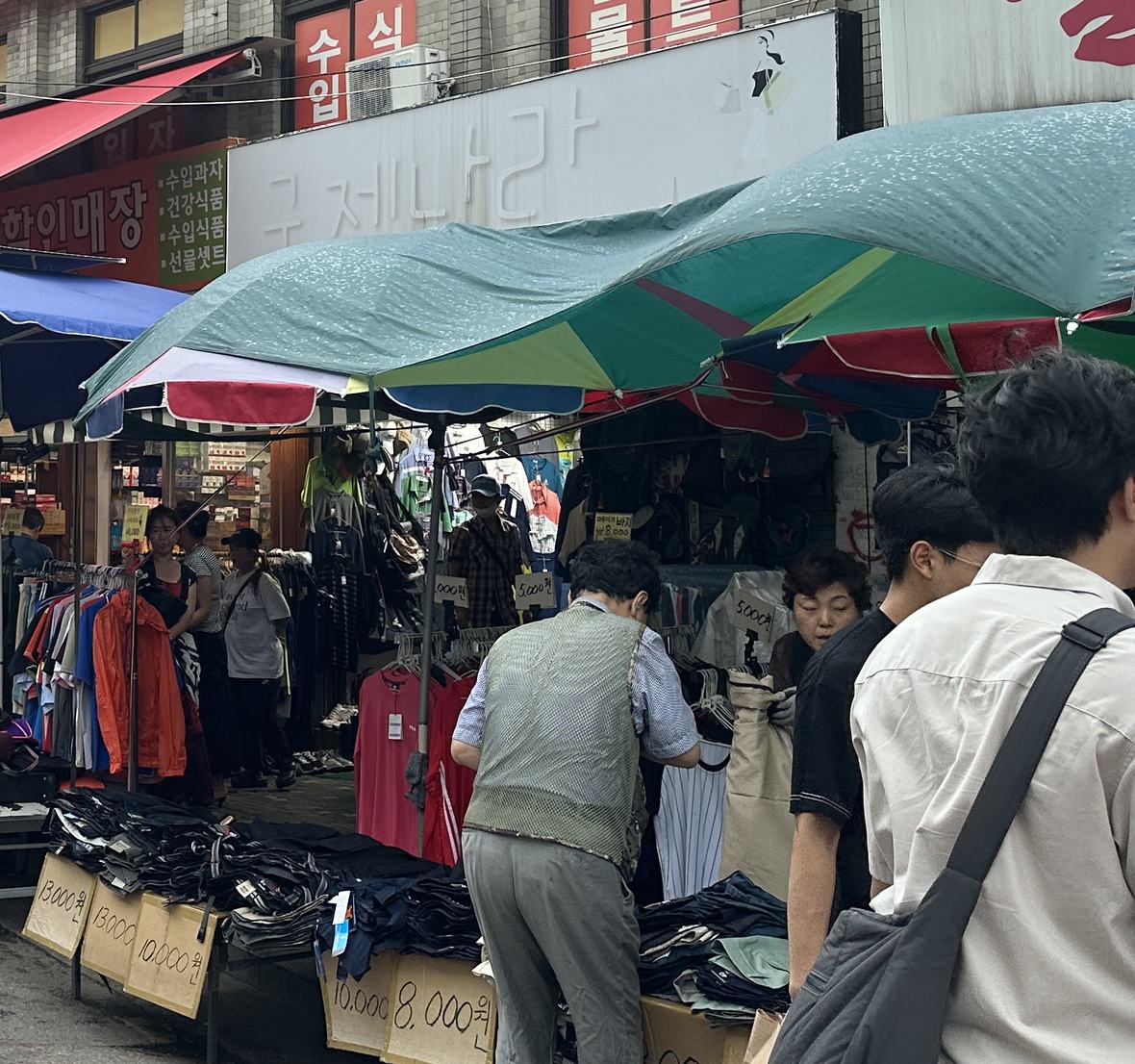
The prices below were read off the handwritten cards at Dongmyo stalls and cross-checked against Korean coverage. They move, but the ladder is stable: the gap between the cheapest pile and a curated Hongdae rail is roughly ten to twenty times.
| Tier | Typical price | Where | What it buys |
|---|---|---|---|
| 옷무덤 (otmudeom, "clothes mound") | ₩1,000–5,000 | Dongmyo street piles | Unsorted tees, shirts, knitwear. Digging required |
| Folded stall stock | ₩5,000–13,000 | Dongmyo stalls, cardboard tables | Sorted denim and trousers, roughly sized |
| 메이커 (brand-name) rail | ₩8,000–10,000 | Dongmyo, imported-guje shops | Recognisable labels, shirts and trousers |
| Leather, fur, heavy outerwear | ₩10,000 and up | Dongmyo, indoor shops | Condition varies enormously. Inspect hard |
| Curated 빈티지 shop | From ₩10,000, often ₩30,000+ | Hongdae, Sangsu, Yeonnam | Edited racks, styling, somewhere to try things on |
| Collector and archive pieces | ₩100,000+ | Specialist shops | Named designers, rare sportswear |
This guide is a spin-off from EpicKor's K-fashion shopping guide, not a duplicate. It also connects with traditional markets in Korea, Dongmyo and major Seoul markets, Korea coin laundry guide, and Korea Post EMS shipping guide.
Quick Answer: Where Should Tourists Go For Vintage Shopping In Seoul?
Start with Dongmyo if you want the flea-market hunt, Hongdae and nearby youth districts if you want curated vintage and street styling, and Mullae or smaller creative neighborhoods if you enjoy discovery shops. Do not try to cover every vintage area in one day. Choose one messy market lane and one curated shop lane.
The safest plan is:
- Go on a weekday morning if you want space, Saturday afternoon if you want the best stock.
- Bring cash. Street piles at Dongmyo are cash-only, and only the newer shops take cards.
- Wear clothes that make trying on jackets easy — there are no fitting rooms outdoors.
- Check stains, smell, zippers, lining, buttons, and fabric wear.
- Avoid heavy coats unless your luggage space is real.
- Wash or clean items before wearing them at home.
The Numbers That Show What Changed
In July 2026 Seoul Metro (서울교통공사) published its first-half ridership analysis, and one station stood out for a reason that had nothing to do with commuting.
| Station | Weekday daily average | Weekend daily average | Weekend increase |
|---|---|---|---|
| 동묘앞 (Dongmyo-ap) | 19,673 | 28,785 | +46.3% — highest in Seoul |
| 월드컵경기장 (World Cup Stadium) | — | — | +40.6% |
| 올림픽공원 (Olympic Park) | — | — | +13.5% |
| 고속터미널 (Express Bus Terminal) | — | — | +13.1% |
| 홍대입구 (Hongik Univ.) | — | — | +8.7% |
Dongmyo-ap gains 9,112 more people on a weekend day than on a weekday, and Seoul Metro named the flea market as the cause. Look at the company it keeps: second place is a stadium, which fills because there is a match on. Hongdae, Seoul's best-known shopping district, swings only 8.7%.
That statistic contains a practical instruction. Dongmyo is a weekend event, and you get to decide whether to attend it. Go on a Tuesday morning and the same stalls are there with a third fewer people in front of them.
Foreign shoppers are a visible part of the change. Korean reporting in July and August 2026 found French, Chinese and Australian visitors working the racks, several saying they had found the market through TikTok, Reddit, or the Chinese platform 샤오홍슈 (Xiaohongshu). CNN ran its own Dongmyo piece in April 2026. The market that was pronounced dead in 2024 is now on the itinerary.
Dongmyo: The Practical Details
동묘앞역 (Dongmyo-ap Station), Seoul Subway Line 1 and Line 6. Exit 3, then about five minutes on foot. The market runs year-round with no closing day, and roughly 600 stalls spread through the lanes.
The layout is a rough T shape, and it helps to know which arm you are standing in:
- The 구제 (guje) clothing arm — racks, piles, folded stacks, the price cards.
- The 골동품 (goldongpum) antique arm — brassware, ceramics, cameras, watches, tools, records, religious statuary, and objects that defy category.
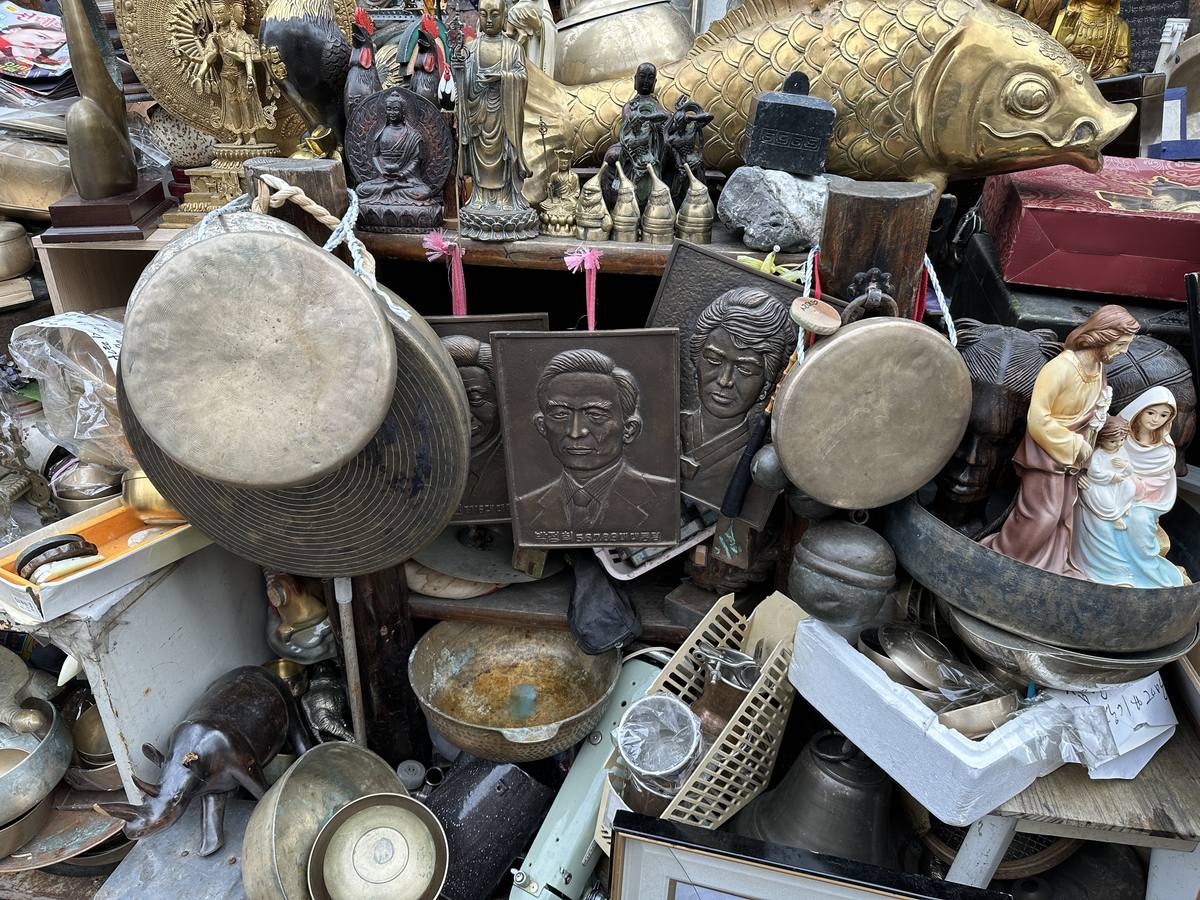
Both are worth walking even if you only came for clothes. The antique lanes are where the market's older identity survives, and where the strangest finds are. "Unsorted" is not a figure of speech: one stall photographed for this article has bronze commemorative plaques of two Korean presidents from opposite ends of the country's politics — Park Chung-hee and Roh Moo-hyun — leaning against each other behind a pair of gongs, beside a Nativity figurine and a metre-long brass carp. Nothing about that arrangement is curated. That is the appeal.
The restock day, and the trade-off nobody mentions
Korean shopping guides agree on one timing detail: new stock lands on Saturday afternoon. That is when the good pieces appear on the racks.
It is also, per the ridership figures above, close to the worst crowding of the week. There is no version of this where you get both. Decide which one you are optimising for:
- Best selection: Saturday afternoon. Accept the crowd, and expect to queue behind other people at the same pile.
- Best browsing: weekday morning. Fewer people, room to hold a jacket up to the light, and the stalls are still fully set up.
Bring a tote — plastic bags are not guaranteed. Bring cash in small notes, because handing a ₩50,000 note to a stall selling ₩5,000 shirts is a slow way to buy a shirt.
Vintage vs K-Fashion Shopping
K-fashion shopping is usually about current Korean brands, store design, sizing, tax refund, and neighborhood routes. Vintage shopping is about search skill. You look for fabric, condition, silhouette, era, price, and whether the item can still work in your real life.
That means the success metric is different. In a brand store, you may expect clean fitting rooms and consistent sizing. In a vintage market, the winning item may not have a readable size tag. In a concept store, the styling is done for you. In a flea market, you build the outfit in your head.
| Shopping Type | Best For | Tourist Risk |
|---|---|---|
| Dongmyo-style flea market | Low-cost finds, denim, jackets, random treasures | Condition checks, crowds, no returns, cash only |
| Curated vintage shop | Better presentation, easier styling, cleaner edits | Higher prices and trend markup |
| K-fashion concept store | Current brands, polished styling, easier browsing | Buying the store mood instead of a wearable piece |
| Traditional market | Local atmosphere, practical items, food nearby | Not all markets are vintage-focused |
Hongdae And Youth Vintage
Hongdae is easier if you want youth styling rather than pure market digging. The area gives you curated shops, streetwear-adjacent pieces, accessories, cafes, and a route that pairs well with albums, beauty, and casual food. Expect to start around ₩10,000 and to pay ₩30,000 or more for anything with a strong point of view — the edit is what you are paying for.
Hongdae vintage suits tourists who want a wearable piece rather than a treasure-hunt marathon. Look for shirts, varsity jackets, denim, graphic tees, leather pieces, and small accessories. If a store has a strong styling point of view, study the display before buying. Seoul vintage often works because of proportion: wide pants, cropped jackets, oversized shirts, small bags, or sporty layers.
Shops here open late by market standards — many not until midday, some at 1pm on weekends — and they close late. That makes Hongdae a natural afternoon pairing with a Dongmyo morning, not the other way round.
Mullae, Euljiro, And Smaller Discovery Routes
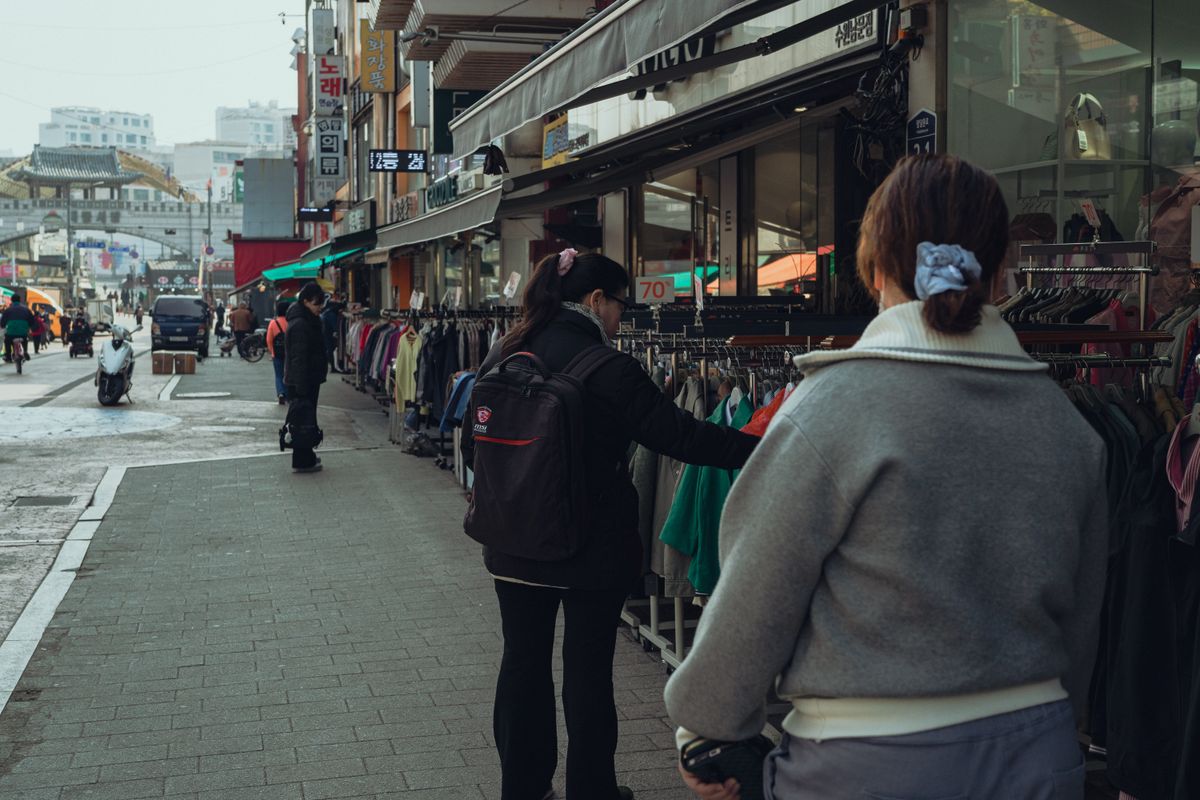
Some of Seoul's best shopping memories happen outside the obvious list. Mullae, Euljiro, Yeonnam, Mangwon, and smaller creative streets can hold small vintage shops, select shops, workshops, cafes, or pop-ups that change faster than a stable guide can track. This is where you should not overplan.
Use maps and social media as a starting point, then walk. Check opening hours before crossing town because small shops may close unexpectedly. If you only have one day, do not gamble everything on a tiny shop. Pair it with a neighborhood you already want to explore.
These areas are better for atmosphere and discovery than guaranteed bargains. If the goal is cheap piles, go Dongmyo. If the goal is curated street style, go Hongdae. If the goal is wandering and finding a small shop you did not expect, try a creative district.
What To Buy
The best vintage purchase is wearable, cleanable, packable, and hard to find at home. Do not buy only because the price is low. A ₩3,000 shirt still costs you luggage space.
Good categories:
- Denim and workwear. Easy to judge, easy to wash, hard to ruin.
- Jackets and overshirts. The category Dongmyo is genuinely strong in.
- Sportswear. Football shirts move fast here, especially around tournaments.
- Bags and small leather. Check straps and zip teeth before anything else.
- Objects, not clothes. Watches, cameras, brassware and ceramics from the antique lanes. One visitor quoted in Korean coverage bought a vintage watch for ₩10,000.
Dongmyo's longtime older shoppers are part of the district, not scenery for a vintage haul. EpicKor's respectful Seoul senior street-style guide explains what current portrait projects and mixed-age fashion events actually show, plus how to ask before taking a close street photograph.
How To Check Condition
Vintage shopping is condition reading. Hold the item in good light — outdoors under a tarp, that means stepping out from under it. Check underarms, collar, cuffs, inside lining, pockets, zipper, buttons, hem, and smell. For pants, check crotch wear and knee shape. For jackets, check lining tears. For leather, check cracks. For bags, check strap strength and zipper teeth.
| Check | Why It Matters | Buy Or Skip? |
|---|---|---|
| Smell | Mold, smoke, or storage smell can be hard to remove | Skip if strong |
| Zippers and buttons | A ₩4,000 repair on a ₩5,000 shirt is not a bargain | Buy only if repair is easy |
| Underarms and collar | Sweat marks show age and cleaning difficulty | Inspect carefully |
| Fabric thinning | Thin fabric can tear after one wash | Skip if structural |
| Fit without tailoring | Tourists rarely have time for alterations | Buy if wearable now |
Bargaining, Payment, And Manners
흥정 (heungjeong), bargaining, is expected on anything without a price card. That is the local rule, and stallholders treat it as normal. Where a handwritten card says ₩5,000, that is the price. Where nothing is marked, ask.
Curated shops have fixed prices. Do not bargain in a Hongdae boutique. In the market, buying three things is a better lever than arguing about one — ask once, smile, and accept the answer.
On payment: street piles are cash-only. Newer indoor shops take cards, but do not plan a day around it. Bring a tote bag because plastic bag availability varies. Keep valuables secure in crowded lanes, and do not block a narrow path while filming.
If you pick up an item, put it back reasonably. If a stall is busy, do not unfold ten pieces and walk away. Vintage markets can feel casual, but they are still someone's business.
Cleaning And Packing
Assume secondhand clothes need cleaning. If the item is washable, wash it before wearing it heavily. If it needs dry cleaning, calculate that cost before buying — dry cleaning a ₩5,000 jacket at home will usually cost more than the jacket did. If you are traveling for weeks, use a laundry bag and keep vintage items separate from clean clothes.
For bulky items, consider whether Korea Post EMS makes sense, but do not ship dirty or damp clothing. For luggage, use compression carefully. Leather and structured jackets can crease badly. For smell, airing out helps, but it will not fix mold.
Tourist Mistakes To Avoid
Expecting curated-shop cleanliness at a flea market. The piles are dusty. That is the format, not a failure of it.
Arriving without cash. This is the single most common way to waste a Dongmyo trip.
Buying heavy outerwear without checking luggage space. A ₩10,000 coat that forces a checked bag is a ₩90,000 coat.
Ignoring smell. Strong storage smell defeats a good price.
Assuming all vintage is cheap. Curated vintage is priced for styling, rarity, and location, and a Hongdae rail can cost twenty times a Dongmyo pile.
Chasing fake luxury. Buy the shape and the fabric, not a suspicious logo.
Expecting the piles the reels showed you. This is the honest caveat. The supply of used clothing reaching Korean wholesalers fell 20–30% into 2024, and the vendors who spoke to Korean media said sellable stock had become harder to source. The mounds are real. They are thinner than they were, and more people are now digging through them.
FAQ
Q: Is Dongmyo good for vintage shopping?
Yes, if you enjoy digging. Street piles run ₩1,000–5,000 and sorted stall stock ₩5,000–13,000, which is genuinely cheap by any standard. It is a poor fit if you want fitting rooms, sizes you can trust, or returns.
Q: How do I get to Dongmyo market?
동묘앞역 (Dongmyo-ap Station) on Subway Line 1 or Line 6, Exit 3, then about five minutes on foot. The market opens year-round with no closing day.
Q: When is the best time to go?
Saturday afternoon for the best stock, because that is when new inventory arrives. Weekday morning for the best browsing — Dongmyo-ap carries 46.3% more passengers on a weekend day than a weekday, the largest gap of any Seoul station.
Q: Do I need cash?
Yes. The street piles are cash-only and only the newer indoor shops take cards. Small notes are easier than large ones.
Q: Is Hongdae better than Dongmyo?
Different, not better. Hongdae is curated and starts around ₩10,000, often ₩30,000 or more. Dongmyo is chaotic and starts at ₩1,000. Hongdae shops also open late, many at midday, so it works as an afternoon after a Dongmyo morning.
Q: Can tourists bargain in Seoul vintage markets?
On unmarked items, yes — 흥정 is expected there. Where a handwritten price card is attached, that is the price. Curated shops have fixed prices.
Q: What should I avoid buying secondhand?
Items with strong mold or smoke smell, damaged zippers, stained underarms, fragile fabric, uncomfortable shoes, and fake luxury that creates customs or quality issues.
Q: How should I clean vintage clothes after buying?
Separate them from clean clothes, wash washable items according to fabric, and dry clean delicate or structured pieces. Do not pack damp or smelly items tightly.
Final Take
Seoul vintage shopping works because it shows a less polished side of Korean style. You can move from a concept store in Seongsu to a ₩5,000 pile in Dongmyo and still be reading the same city: fast taste, visual experimentation, and a love of finding the right object.
The market's own story is worth carrying with you. Two years ago Korean reporters were writing about vendors who could not sell a single garment in a day. Now the station outside it has the biggest weekend swing in Seoul. Go with cash and patience, check condition, buy what you can actually wear, and leave space in your luggage.
Sources Checked
- 서울교통공사 (Seoul Metro) first-half 2026 ridership analysis, released 23 July 2026 — 동묘앞 weekend daily average 28,785 against 19,673 on weekdays, a 46.3% increase and the highest of any Seoul station, plus the comparison stations and their figures.
- The Scoop, 11 December 2024 — the Dongmyo decline reporting: the thirty-year vendor's quote, clothing at 3.9% of household spending, and used-clothing supply to wholesalers down 20–30%.
- Seoul Metropolitan Government media hub — Exit 3, year-round opening, the T-shaped layout, the 옷무덤 price band, and the Saturday-afternoon restock.
- Korean market coverage, July–August 2026 — foreign visitors at Dongmyo, the platforms they arrived through, the ₩10,000 vintage watch, and the roughly 600 stalls.
- Prices read at full resolution from the stall photographs used in this article (Seefooddiet / Wikimedia Commons, CC BY-SA 4.0) — the ₩13,000, ₩10,000, ₩8,000 and ₩5,000 cards, and the 메이커바지 ₩8,000 tag.
Prices move and stalls change hands. The figures here were checked in September 2026 — treat them as the shape of the market, not a quotation.
You Might Also Like
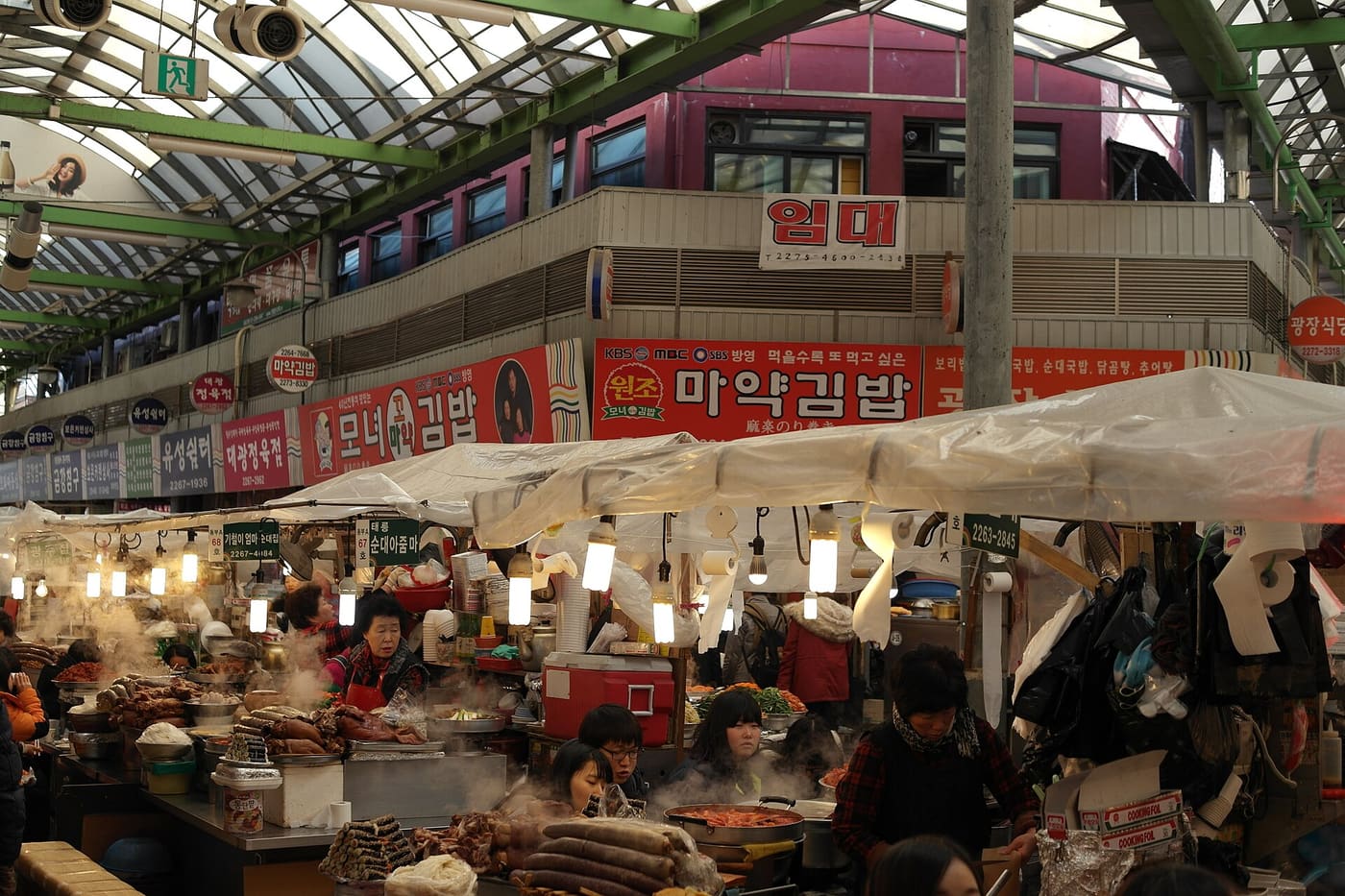
Gwangjang Market's Second Floor: Seoul's Vintage Arcade, and the One Day It's Shut
Everyone knows Gwangjang for the food alley that never closes. Above it is a vintage arcade signed 수입구제 where most items run under ₩20,000 — and it shuts every Sunday, which is exactly when visitors turn up.
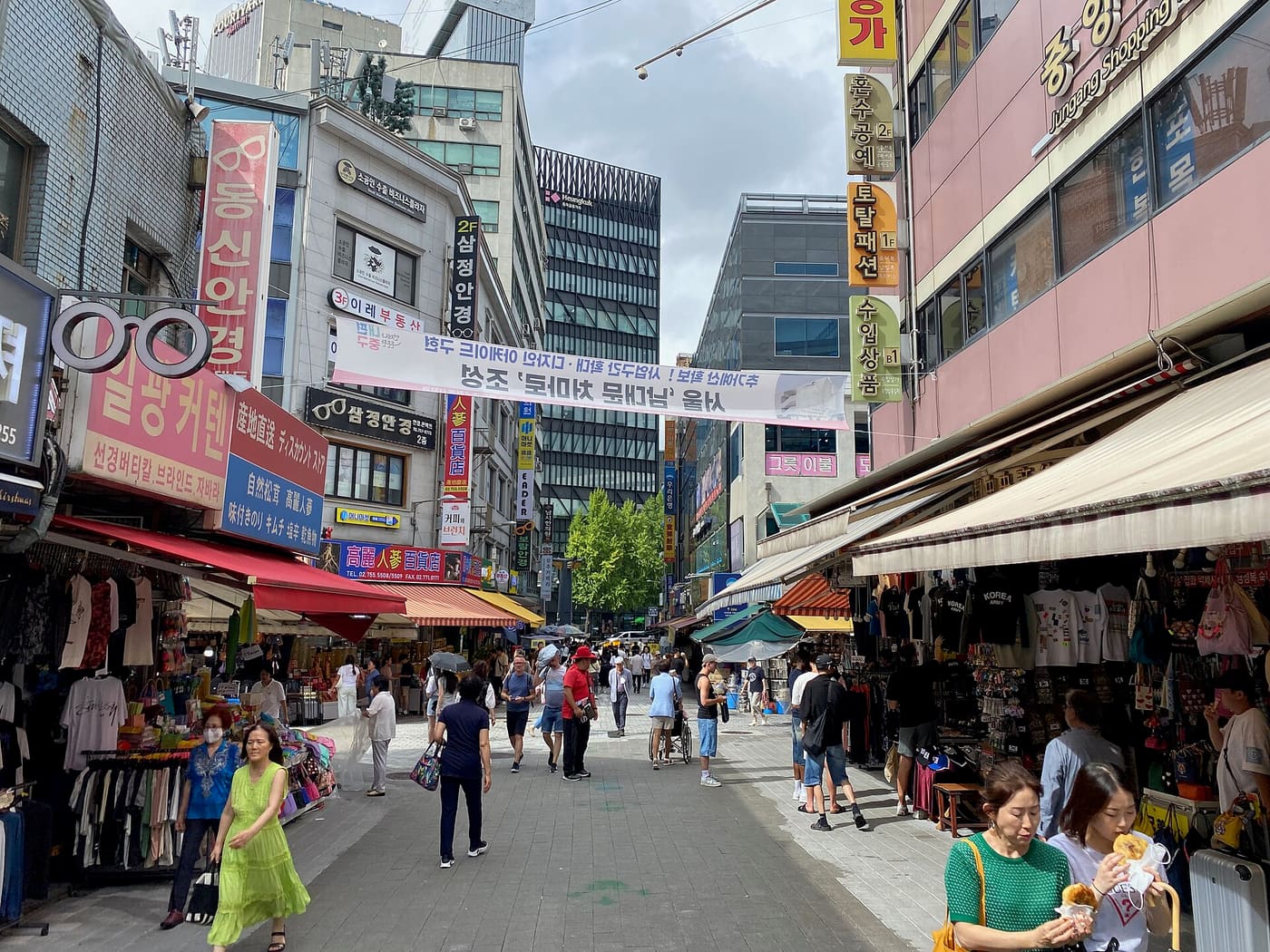
Where to Buy Luggage in Seoul: Namdaemun, Real Prices, and When Not to Bother
You shopped too well and now you need another suitcase. Namdaemun is the answer, but the underground arcade shuts on the 2nd and 4th Sunday, the bag shops close for Chuseok, and a cheap case is not always cheaper than shipping.
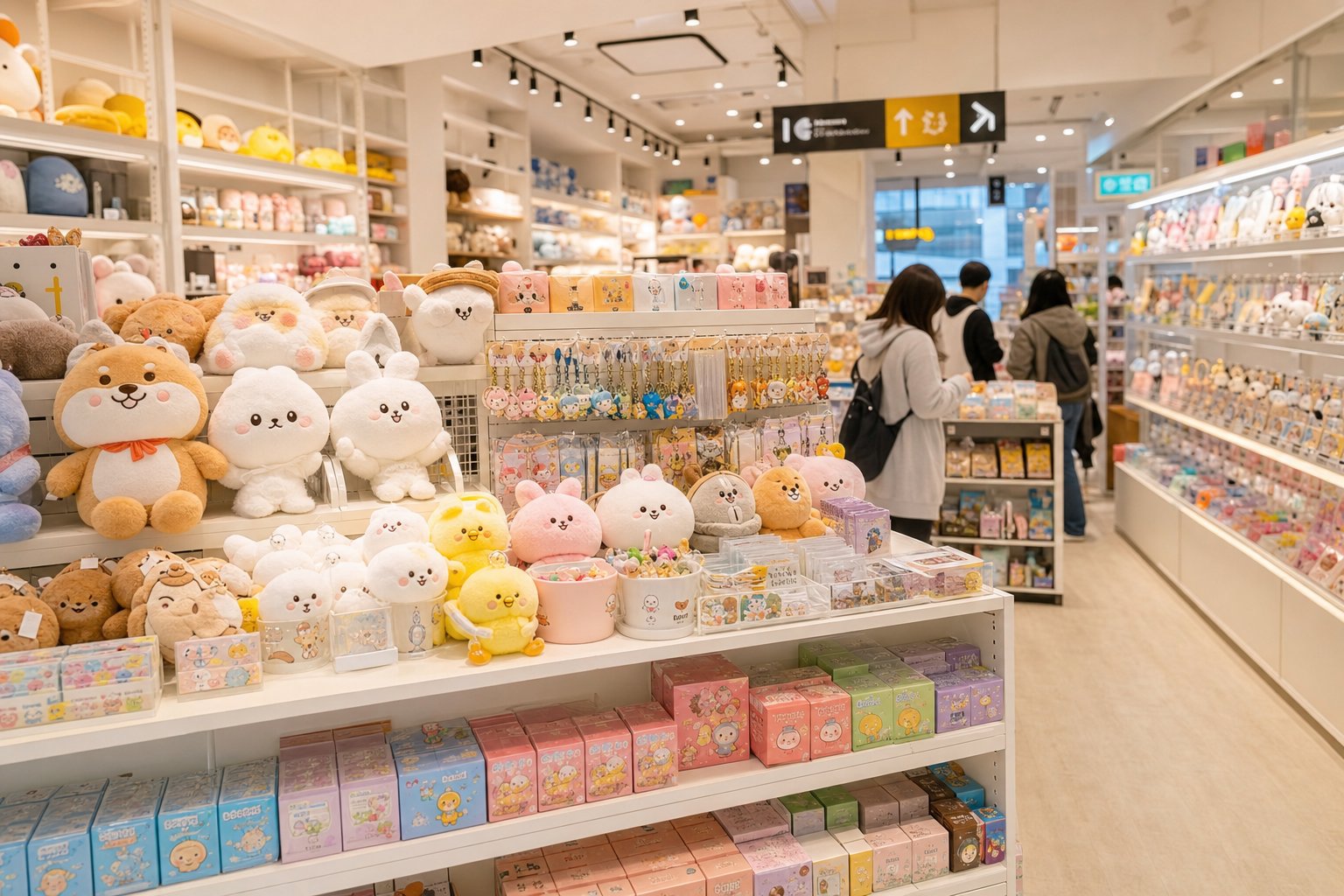
Seoul Character Store Guide 2026: Kakao, LINE, Artbox
A Seoul character shopping guide for Kakao Friends, Line Friends, Artbox, Pop Mart, blind boxes, and how to buy cute gifts wisely.