Three Seoul Markets: Gwangjang, Majang and Dongmyo
Choose Gwangjang for famous street food and textiles, Majang for a meat-focused meal, and Dongmyo for low-cost secondhand browsing. They are not three versions of the same tourist market. Each rewards a different plan, and trying to rush all three as a checklist can leave you tired, overfed and carrying things you did not mean to buy.
The easiest first visit is Gwangjang, where food stalls and central subway access make the experience immediately legible. Majang is the specialist choice for diners who genuinely want to choose and grill meat. Dongmyo works best for patient browsers who enjoy outdoor flea-market unpredictability. This guide explains what each place does well, how to combine them, and where old online advice needs caution in 2026.
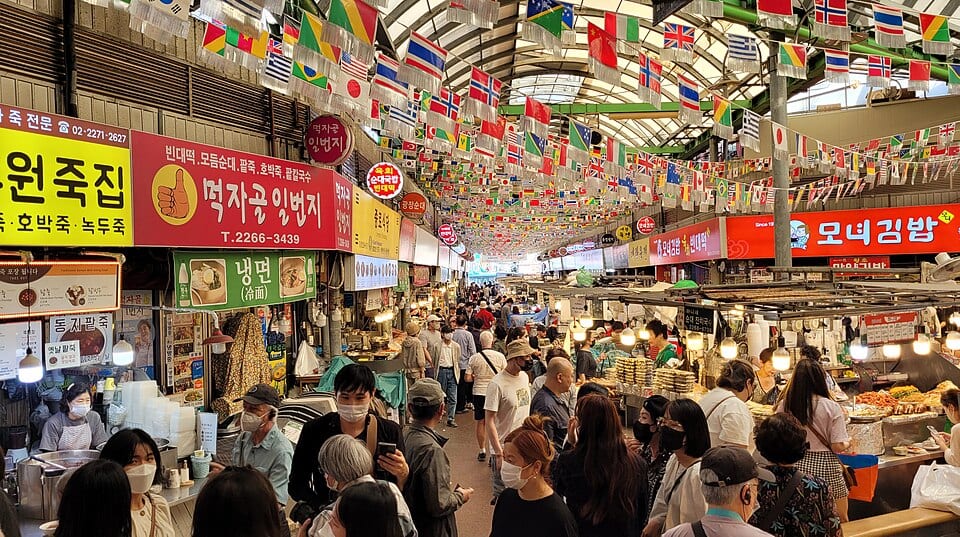
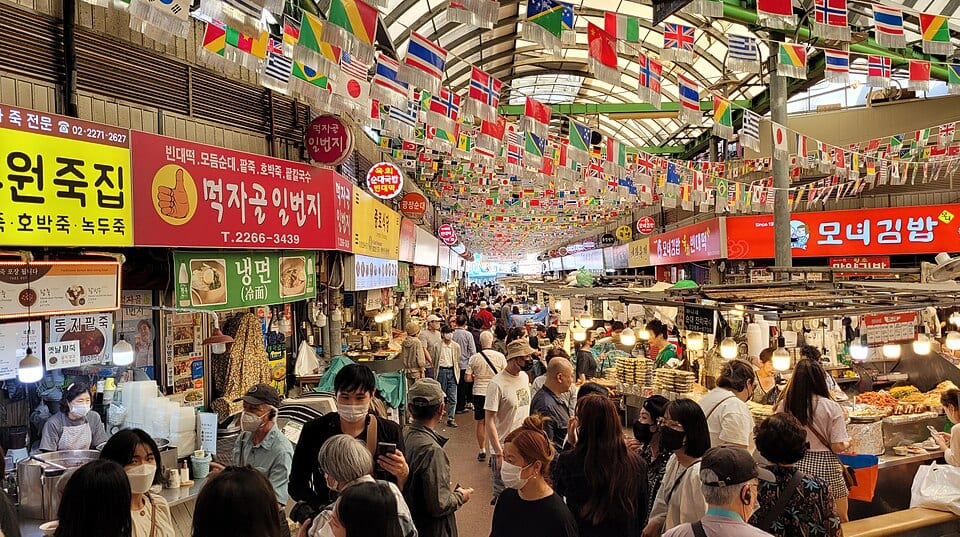
Gwangjang Market's covered aisles combine prepared food, textiles, household goods and heavy foot traffic. Photo by Bgag via Wikimedia Commons, CC0.
Quick comparison: which Seoul market fits you?
The three markets serve different appetites. Gwangjang is a broad historic market whose food alley became internationally famous, but its upper-floor fabric and hanbok trade still matters. Majang is a professional meat-distribution district with retail butchers and restaurants. Dongmyo is a loose flea-market ecosystem spreading around the shrine and nearby streets.
| Market | Best for | Closest useful subway | Allow |
|---|---|---|---|
| Gwangjang | Street food, textiles, an easy first market | Jongno 5-ga, Line 1 | 1.5-2 hours |
| Majang Meat Market | Butcher shopping and a planned Korean beef meal | Majang, Line 5 | 2 hours with lunch or dinner |
| Dongmyo Flea Market | Vintage clothes, records, tools and unpredictable finds | Dongmyo, Lines 1 and 6 | 1.5-3 hours |
Times are planning estimates, not official limits. Add more time if you want a full meal, serious textile shopping or careful secondhand inspection.
Travel wet wipes — compare on AmazonAffiliate link. As an Amazon Associate, EpicKor earns from qualifying purchases at no extra cost to you.
Gwangjang Market: go for food, but see the whole market
Gwangjang is the most accessible answer for a traveler asking for one classic Seoul market. The Seoul Metropolitan Government describes it as Korea's first permanent market, established in 1905, and notes its mung-bean pancakes, small gimbap and beef tartare. The official Seoul Gwangjang overview also highlights the upstairs fabric wholesale area, tailors and handmade hanbok shops.
The central food zone can feel tourist-oriented, while the fabric sections reveal why the market existed long before travel videos. Walk beyond the first crowded stall to see businesses serving working customers.
For food, order one or two items first. Bindaetteok is a crisp mung-bean pancake; mayak gimbap is a small rice roll served with mustard sauce; yukhoe is raw seasoned beef and should only be chosen if raw meat suits your health and comfort level. Knife-cut noodles, dumplings and tteokbokki offer alternatives. Prices and menus vary by stall, so read the displayed board before sitting. If a seafood-market stop tempts you toward moving octopus, read EpicKor's san-nakji safety and etiquette guide before treating it as a challenge.
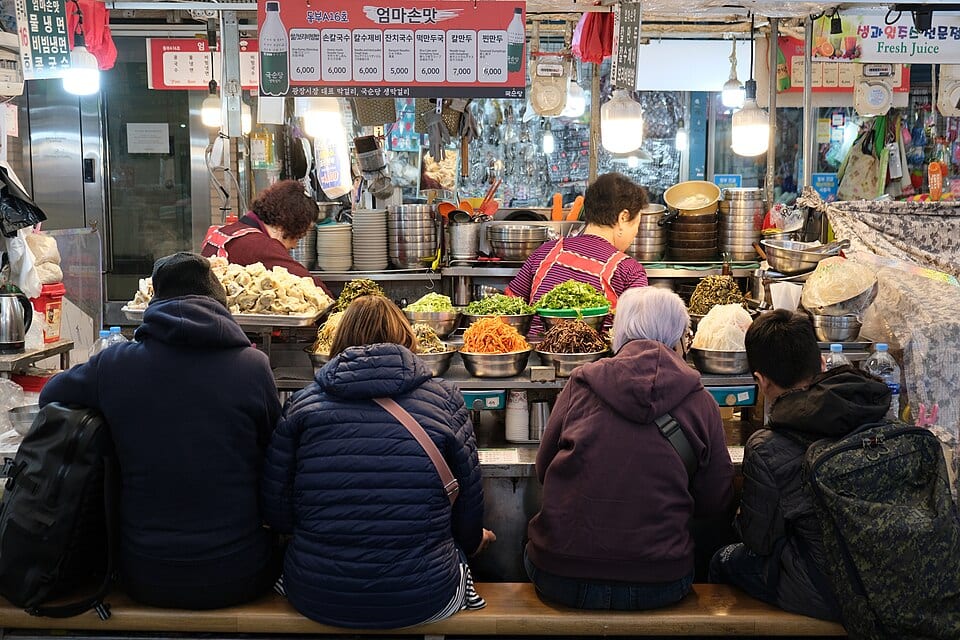
Counter seating puts visitors directly beside the cooks and the dishes at Gwangjang Market. Photo by Kallerna via Wikimedia Commons, CC BY-SA 4.0.
How to eat at Gwangjang without turning lunch into a mistake
Crowds create pressure to sit quickly, but you can pause and compare visible prices. Confirm what one order contains, whether seating has a minimum, and whether cash or card is accepted. A short question such as “How much is one portion?” is enough. Pointing politely at the menu is normal when language fails.
Do not order five famous foods at the first stall. Portions overlap, fried items become heavy, and you lose the chance to try something farther inside. Sharing is useful, but ask before assuming that one seat can be used for food bought from another vendor. Each stall's seating belongs to that business.
Seoul introduced measures to reduce price disputes at Gwangjang, including clearer quantity and price display. The city's market price-transparency announcement is useful context, but visitors should still confirm the current board. A viral complaint or a viral recommendation may describe one vendor, not the entire market.
Prepare for a food-heavy market day: As an Amazon Associate, EpicKor may earn from qualifying purchases. Compare travel wet wipes in small resealable packs; market tables, sauces and crowded handwashing areas make a compact pack more useful than a bulky travel kit.
Majang Meat Market: a specialist destination, not a snack lane
Majang is the right choice when meat is the purpose of the trip. The Korea Tourism Organization's current Majang Meat Market listing calls it Korea's largest meat market and lists retail prices with origin information. The official page currently gives general operating hours of 03:00-23:00 and closures on the first and third Sundays, but an individual butcher or restaurant may keep a different schedule.
The common visitor pattern is to choose meat from a butcher and take it to an associated restaurant that charges a table or cooking fee and supplies side dishes. Do not assume every shop follows the same system. Before paying, ask where the meat can be cooked, what the table charge includes, whether there is a minimum and how the final bill is divided.
Hanwoo means Korean native beef, but the label alone does not tell you the cut, grade, weight or final value. Read the package or display and compare cost per weight. Imported beef is also sold. A transparent origin label lets you choose; it does not make one origin automatically right for every budget.
A simple Majang ordering method
Start with party size and appetite. Two people who also want rice, stew and side dishes rarely need the dramatic quantity shown in a group video. Ask for a balanced selection rather than only the fattiest marbled cut. Sirloin, tenderloin, striploin and specialty cuts cook differently, and a butcher can recommend an order when you give a budget.
Confirm four numbers before the card comes out: weight, price per unit, meat total and restaurant fee. Then photograph the package label if you want to remember the cut. At the grill, cook small batches. Premium beef overcooks quickly, and filling the grill makes it harder to manage.
Majang is a working district with raw meat displays, cutting and delivery activity. Travelers who prefer a relaxed barbecue meal may be happier at a conventional restaurant.
Dongmyo Flea Market: browse slowly and inspect everything
Dongmyo rewards curiosity more than a shopping list. The Seoul Metropolitan Government's Dongmyo Flea Market page traces the market's modern formation to secondhand merchants gathering in the area from the 1980s and after the Cheonggyecheon restoration. It describes antiques, appliances, clocks, jewelry, cameras, books, records and tools as well as used clothing.
Some vendors operate from shops; others arrange goods outside. Weekends can produce the liveliest street scene, while poor weather can reduce outdoor stock. Hours found online conflict because Dongmyo is not one controlled building. Seoul's tourism material advises that business hours vary by store. Arrive in daylight, ideally late morning through afternoon, and treat any exact closing time as a guideline.
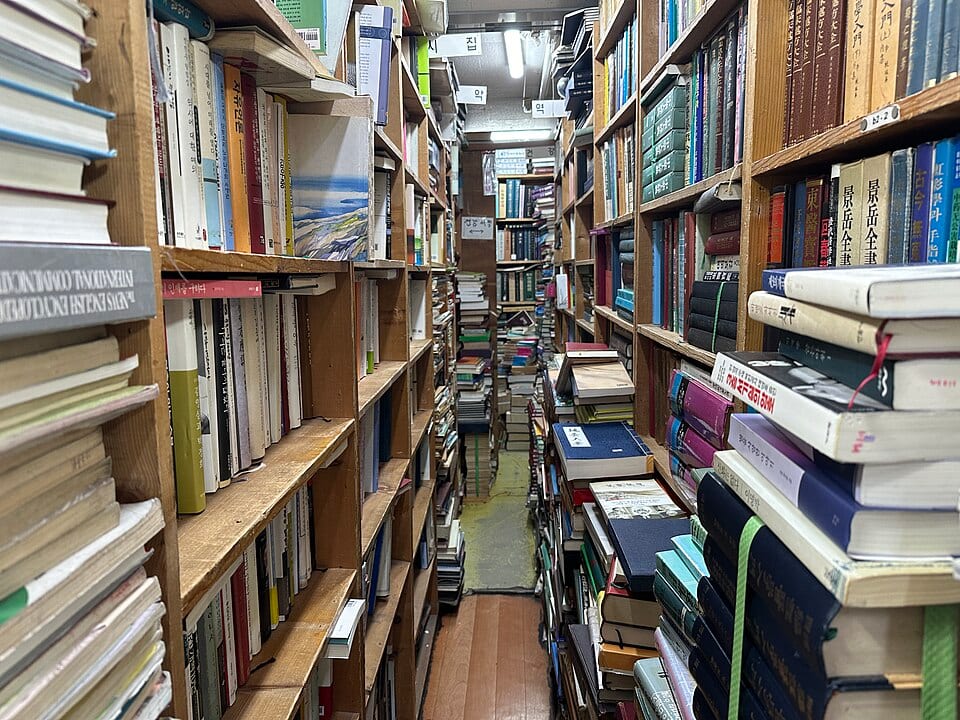
Dongmyo's flea-market inventory extends beyond clothing to tightly packed secondhand books, tools and household goods. Photo by Seefooddiet via Wikimedia Commons, CC BY-SA 4.0.
How to shop secondhand responsibly at Dongmyo
Inspect seams, stains, zippers, labels and odor before buying clothing. For electronics and cameras, assume nothing works until it is tested. Ask permission before opening cases or plugging in equipment. Branded goods may be authentic, altered, damaged or counterfeit; a low price and a familiar logo are not proof.
Cash can be useful for very small outdoor purchases, but many fixed shops accept cards or transfers. Bargaining is not a compulsory performance. If a price is displayed, begin there. A polite question may be welcome when buying several items, but aggressive haggling over a low-cost object wastes the vendor's time.
Bring a small bag and keep your own valuables zipped. Crowding is the greater practical risk than any claim that the market is dangerous. If you buy vintage clothing, wash or professionally clean it before regular wear.
For a deeper clothing route, EpicKor's Seoul vintage shopping guide adds Hongdae and curated stores. If markets are only one part of your shopping plan, the Korea tourist shopping route helps separate beauty, fashion, souvenirs and food by neighborhood.
Can you visit all three Seoul markets in one day?
Yes, if markets are the day's main theme. Begin at Dongmyo, move to Gwangjang for a moderate lunch, and use Majang for dinner. Do not plan a full meal at both food stops.
| Time | Stop | Plan |
|---|---|---|
| 10:30-12:30 | Dongmyo | Browse outdoor stock while daylight and vendor activity are strong. |
| 13:00-14:30 | Gwangjang | Share two or three foods and walk through the fabric area. |
| 15:00-16:30 | Break | Cafe, Cheonggyecheon walk or return purchases to the hotel. |
| 17:00 onward | Majang | Choose meat deliberately and make it the day's main meal. |
This sequence is a planning template, not a promise that every stall opens at that time. For most travelers, choosing two markets creates a better day. Gwangjang plus Dongmyo suits browsers; Gwangjang plus Majang suits food travelers.
Market etiquette, payment and accessibility
Ask before photographing a vendor closely. A wide market scene is different from placing a camera in someone's face or filming a transaction for content. Do not touch unpackaged food, sit at a stall without ordering, or block a narrow aisle while deciding.
Carry both a card and modest cash. Korea is highly card-friendly, but small outdoor transactions and older market equipment create exceptions. Keep change manageable rather than presenting a large note for a tiny purchase.
Accessibility varies. Gwangjang's main lanes are fairly flat but become congested; upper floors and old sections may involve stairs. Majang can have wet working surfaces and delivery traffic. Dongmyo's outdoor layout, piles and uneven pedestrian edges can be difficult for wheelchairs, strollers or anyone with limited balance. A quieter weekday can help, but it may also mean fewer outdoor sellers.
Carry purchases without adding bulk: As an Amazon Associate, EpicKor may earn from qualifying purchases. Compare foldable reusable shopping bags by packed size and washable fabric, especially if Dongmyo clothing or Gwangjang dry goods are on your list.
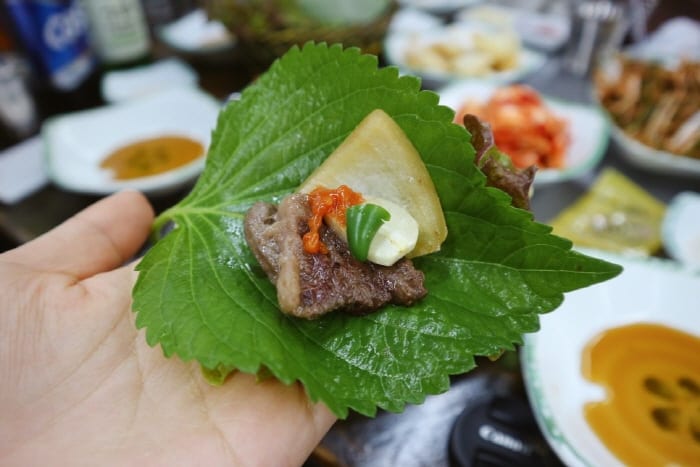
Majang Meat Market is built around selecting cuts and taking them upstairs or nearby to be grilled. Photo: Korea Tourism Organization.
What to verify on the day you go
Check the market's official listing and Korean map app on the morning of your visit. Public holidays, summer heat, rain, maintenance and vendor choice can override general hours. Search the exact restaurant or shop rather than assuming the market's umbrella schedule applies to every tenant.
Weather matters most at Dongmyo, where outdoor selling can shrink in rain. Meal timing matters at Gwangjang, where peak lunch and weekend periods compress the lanes. Closure days matter at Majang, where a specialist trip is frustrating if the butcher you wanted is shut.
Finally, arrive with one priority per market: one food category, one meat budget or one secondhand item. Seoul's market appeal comes from discovery, but a small plan prevents discovery from becoming overload.
The practical answer
Gwangjang, Majang and Dongmyo belong in the same guide because each reveals a different Seoul economy: prepared food and textiles, meat distribution, and reuse. They should not be sold as an interchangeable “big three.” Gwangjang is easiest for a first-time visitor, Majang is strongest for a planned group meal, and Dongmyo is best for flexible daytime browsing.
Choose two if your Seoul schedule is broad. Choose all three only when markets themselves are the attraction. Verify current hours, read prices before ordering, and remember that these are workplaces serving local customers as well as visitors.
FAQ
Q: Which Seoul market is best for a first-time visitor?
Gwangjang is usually easiest because it is central, well known and combines food with textiles. Go beyond the first food aisle, confirm prices and order gradually.
Q: What should I eat at Gwangjang Market?
Bindaetteok, small gimbap, knife-cut noodles, dumplings and tteokbokki are approachable choices. Yukhoe is raw beef, so choose it only if raw meat fits your health needs and risk tolerance.
Q: Can tourists buy Hanwoo and grill it at Majang?
Yes, many visitors buy from a butcher and use an associated restaurant, but the arrangement and fees vary. Confirm the meat price, weight, restaurant location and table charge before paying.
Q: Is Dongmyo open when it rains?
Fixed shops may open, but rain can sharply reduce outdoor vendors. Since outdoor browsing is a major part of Dongmyo, a dry late morning or afternoon is the safer plan.
Q: Do Seoul traditional markets accept credit cards?
Many stores and food stalls do, but small outdoor sellers may prefer cash. Carry a card plus a modest amount of Korean won rather than relying on one payment method.
Q: Are Gwangjang, Majang and Dongmyo close enough to combine?
Yes. They sit in central or eastern Seoul and connect reasonably by subway or short taxi rides. Still, two markets make a more relaxed day; all three require deliberate meal and luggage planning.
You Might Also Like
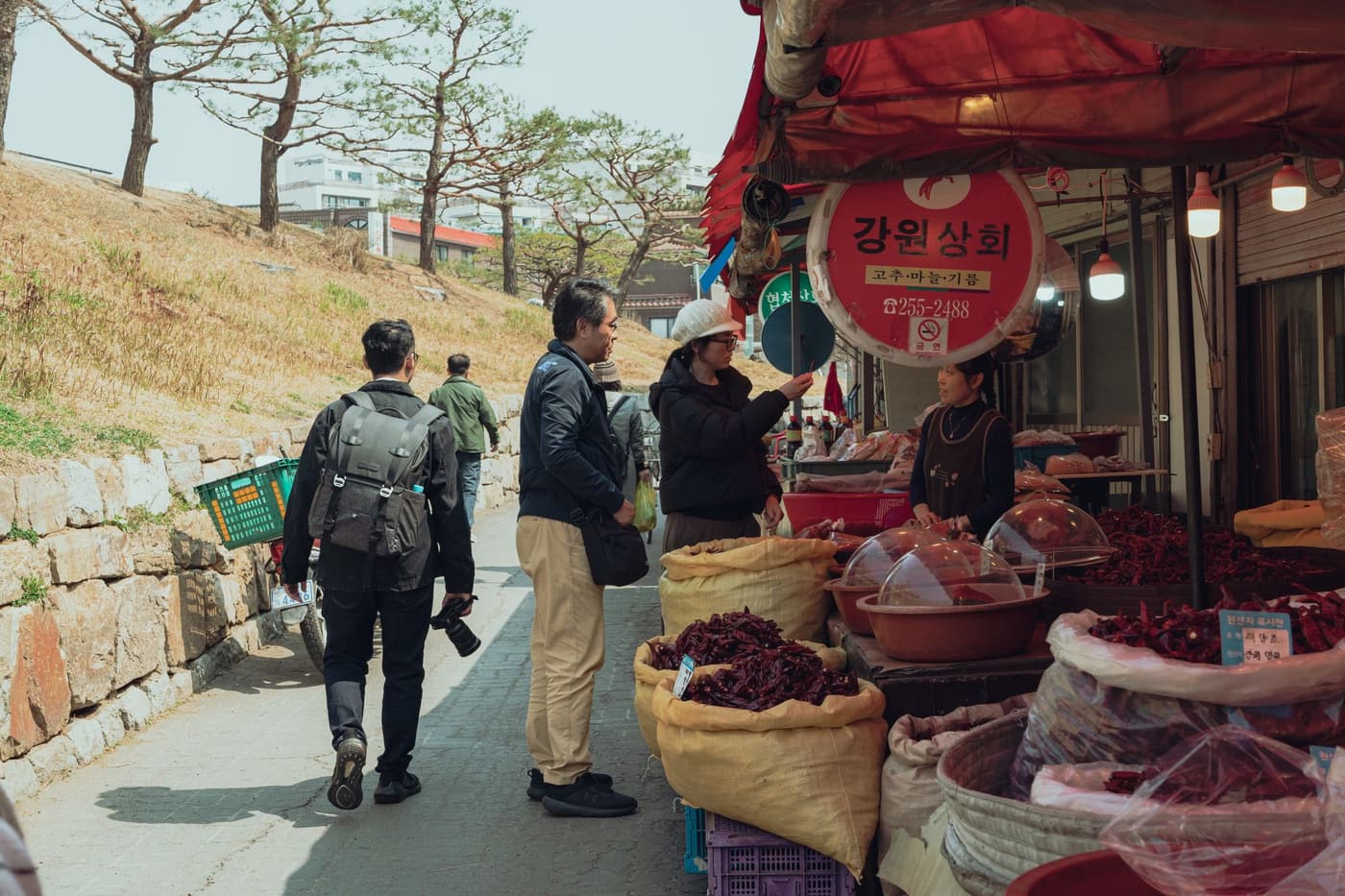
Namdaemun vs Dongdaemun: Which Seoul Market to Visit
Namdaemun closes around 17:00 and many stalls shut on Sundays. Dongdaemun's wholesale floors open at midnight. Which Seoul market fits your trip, with real hours, August 2026 prices, and the station exits that put you in the right alley.
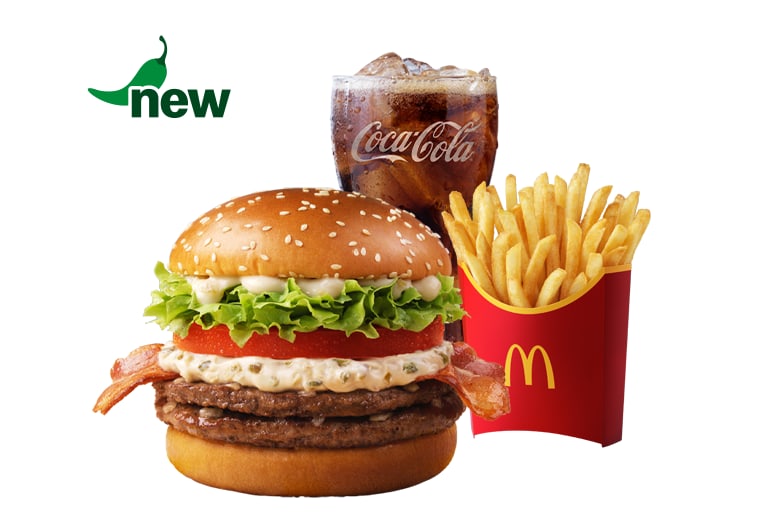
Korean McDonald's: Why the Burgers Are Named After Farm Counties, and What to Order Now
McDonald's Korea has bought 459.2 tonnes of named Korean produce since 2021 and prints the county on the burger — Changnyeong garlic, Jindo spring onion, Jinju pepper. 24 million sold, ₩61.7 billion of measured regional value. Here is what is on the menu now.
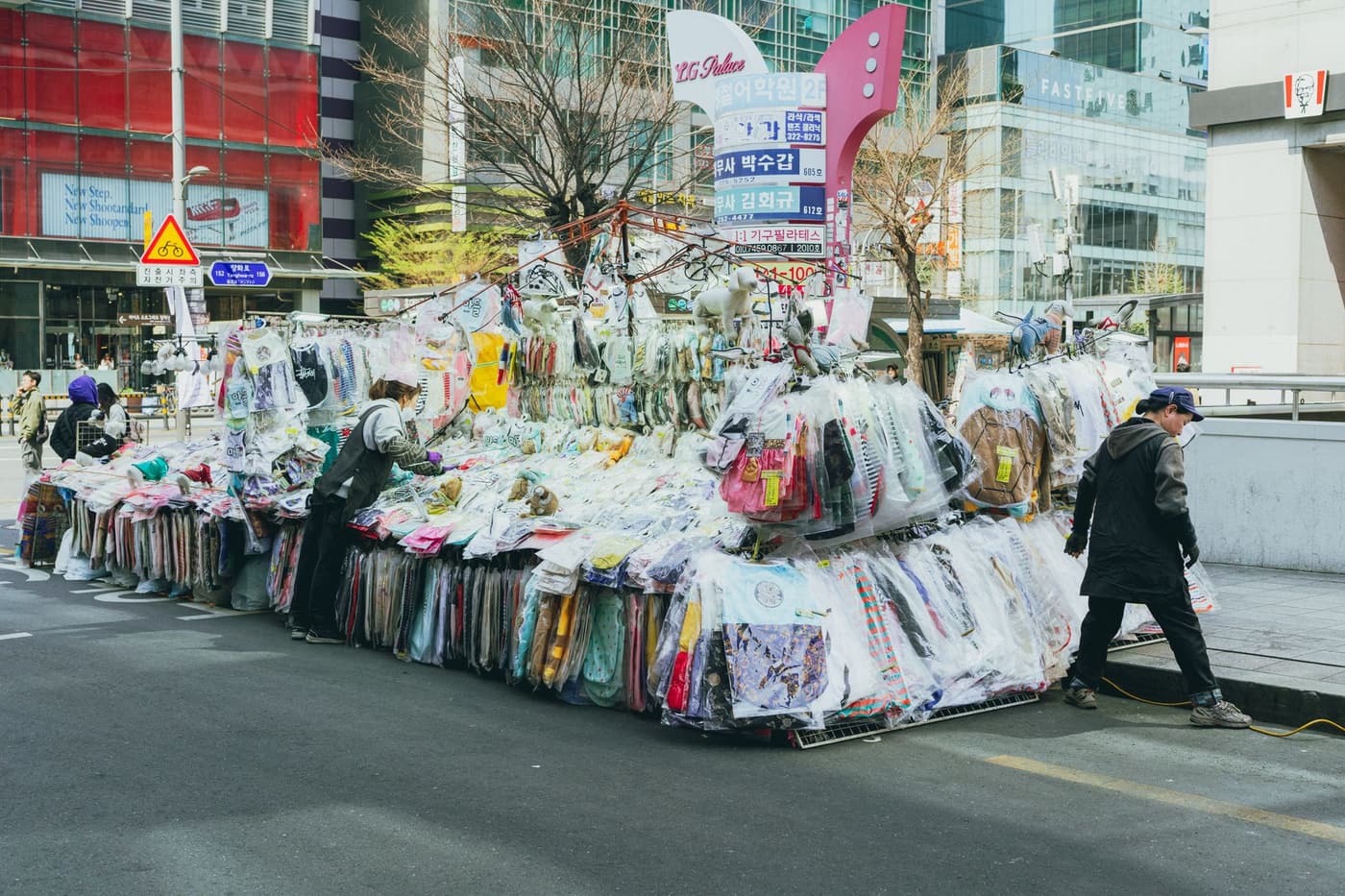
Hongdae vs Itaewon vs Gangnam: Seoul Nightlife Guide
Hongdae vs Itaewon vs Gangnam guide for Seoul travelers: compare nightlife, shopping, food, transit, and where to stay or spend your night.