Seoul Senior Street Style Without the Stereotypes
Seoul senior street style is not one trend or one “grandpa look.” It is the everyday result of individual taste, clothes kept for years, practical walking layers, formalwear habits, vintage shopping and people who simply enjoy getting dressed. Dongmyo helps make older shoppers visible, while photography projects and mixed-age runways have challenged the idea that Korean fashion belongs only to the young.
The respectful way to explore it is to notice choices without turning age into a costume. Look at proportion, color, repair, comfort and personal history. Do not assume that an older person is poor because a coat is old, fashionable because a photographer says so, or available for a portrait because an outfit caught your eye.
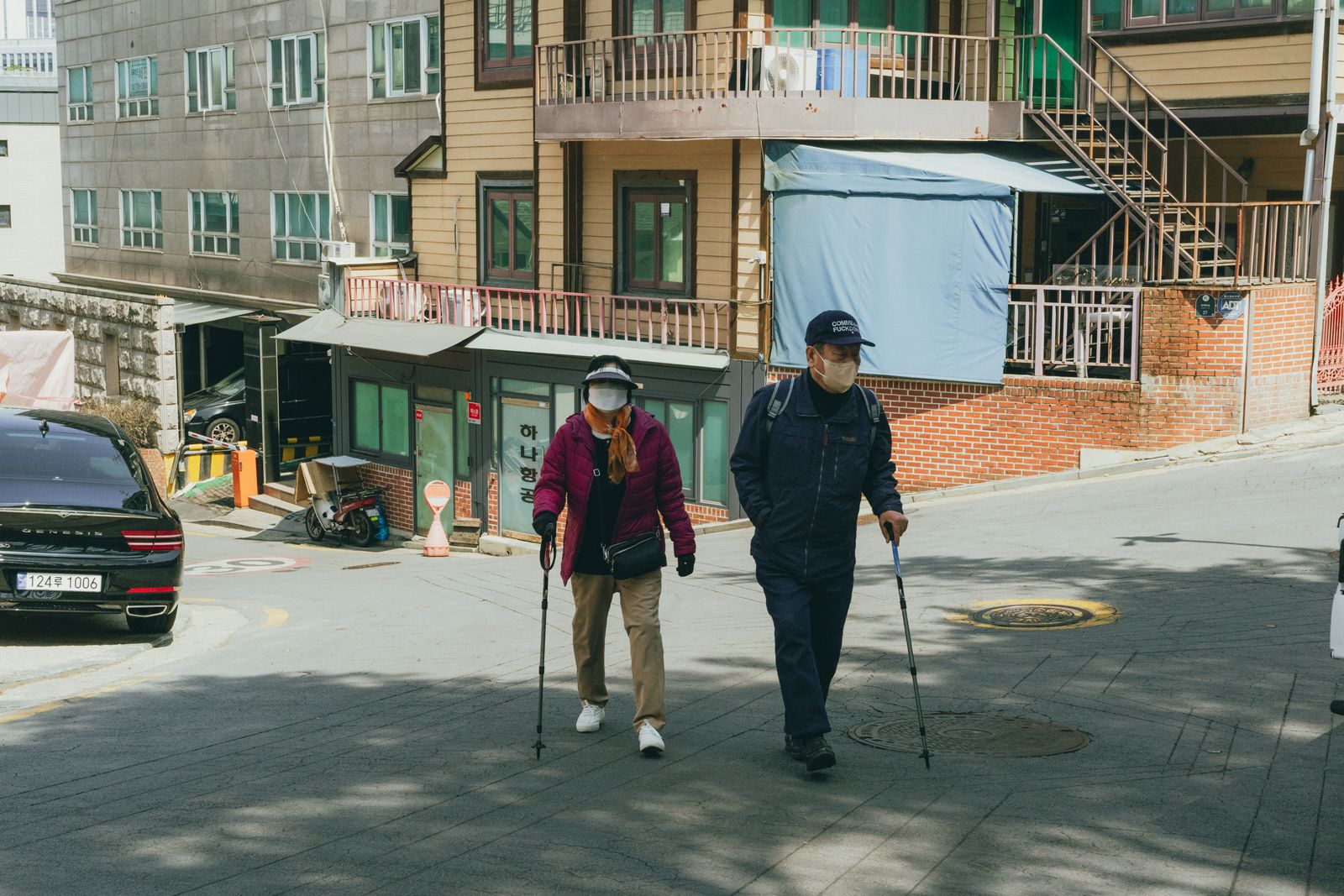
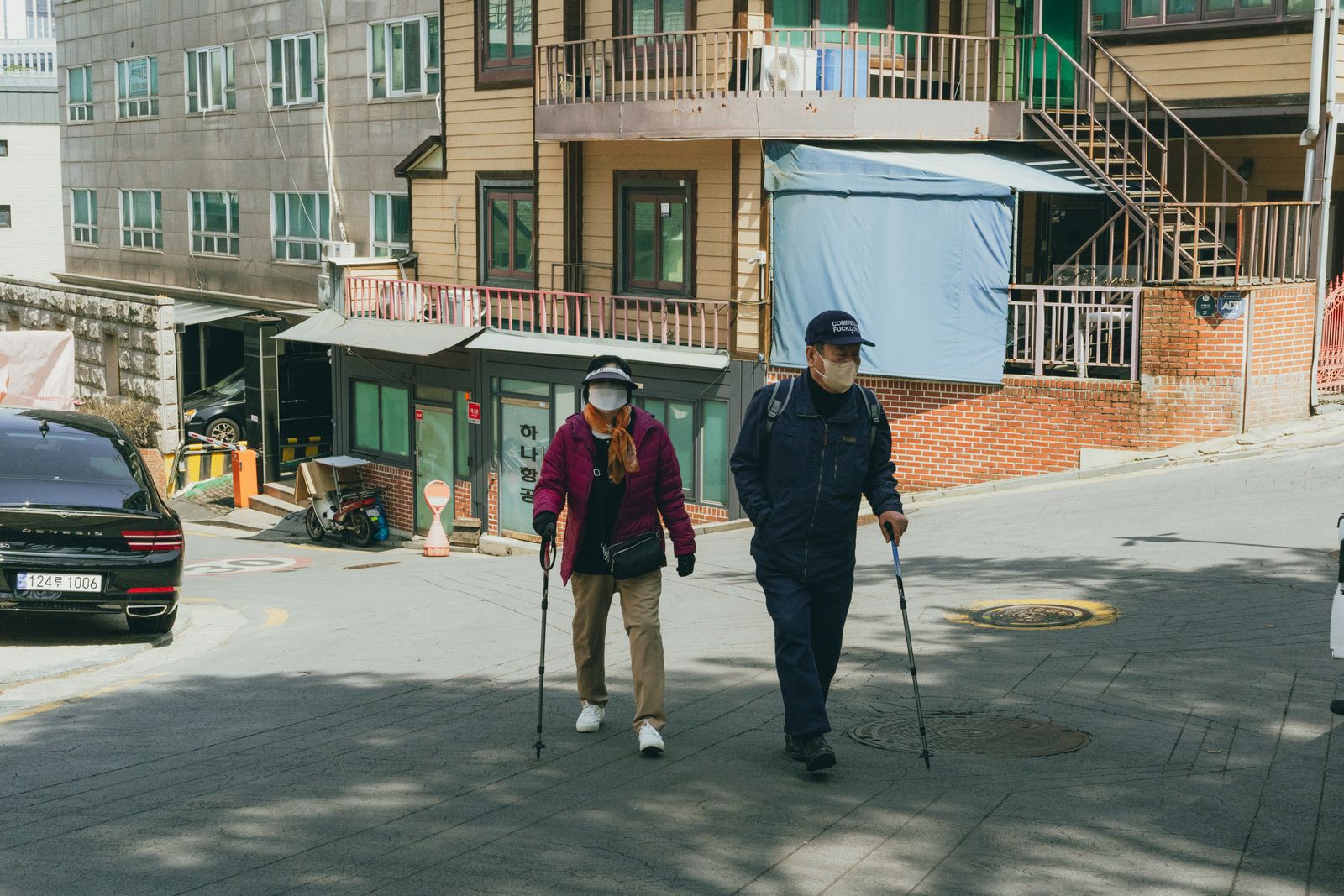
Street style begins with real daily movement, not a runway category. Photo by Theodore Nguyen on Pexels.
What Seoul senior street style actually means
The phrase describes older adults in Seoul whose clothing attracts attention for fit, color, combinations or confidence. It can include a sharply tailored suit, a hiking vest over work clothes, a bright scarf, immaculate shoes, a repaired jacket or a practical sun hat. There is no official uniform.
Age does not explain the outfit by itself. Someone may dress formally because of a lifelong workplace habit, choose technical outdoor clothing for walking, wear older garments because they remain useful, or shop vintage because the price and selection work. A younger observer may call the result “normcore,” “gorpcore” or “heritage,” while the wearer may simply call it Tuesday.
That gap in interpretation is part of the appeal, but it creates risk. When fashion media celebrates an older stranger as an accidental icon, it can erase the person's intention. Good coverage asks what the wearer likes and credits their choices instead of inventing a character.
Conair handheld garment steamer — on AmazonAffiliate link. As an Amazon Associate, EpicKor earns from qualifying purchases at no extra cost to you.
The evidence behind the phenomenon
This is more than a recycled social-media caption. Photographer Kim Dong-hyun's MUT: Street Fashion of Seoul documented stylish older Seoul residents. The work matters because it presents older subjects as people with aesthetic agency, not as comic contrasts to young models.
Seoul's public fashion culture is also becoming more visibly intergenerational. In May 2026, a Cheonggyecheon public fashion show announced a cast ranging from teenagers to people in their eighties. One event does not prove that age discrimination has disappeared, but it shows that an all-ages runway is now part of the city's official cultural conversation.
The strongest current evidence remains observable and specific: Dongmyo's vintage market is active, older shoppers have used the district for decades, portrait projects exist, and mixed-age fashion programming is taking place. Claims about one mysterious “Korean senior chic movement” go farther than the evidence.
Why Dongmyo became the visual reference point
The official Seoul tourism guide says Dongmyo Flea Market began in the late 1980s and now emphasizes vintage clothing and shoes alongside antiques, books, electronics and miscellaneous goods. Its May 2026 update notes that weekends are busy and outdoor stalls line the walls around Dongmyo.
Older shoppers were part of this market long before entertainers and vintage hunters made it fashionable. The official Dongmyo listing and Seoul's Sindang neighborhood guide both describe a district shaped by longstanding shoppers, secondhand trade and older urban history.
Dongmyo therefore works as a meeting point, not the birthplace of older people's style. Workwear, suits, outdoor jackets, hats and shoes from different decades appear together. Younger visitors reinterpret the stock, while regular customers use it according to their own needs.
| What you notice | Possible practical reason | Respectful fashion lesson |
|---|---|---|
| High-waisted trousers | Older tailoring and a comfortable rise | Proportion changes the whole silhouette |
| Layered vest | Pockets, temperature control and walking | Function can create visual structure |
| Bright hat or scarf | Sun, warmth, visibility or personal taste | One color accent can lead a neutral outfit |
| Well-worn leather shoes | Repair, familiarity and long ownership | Patina is different from neglect |
| Mixed decades | Clothes accumulated over time | A wardrobe need not match one season |
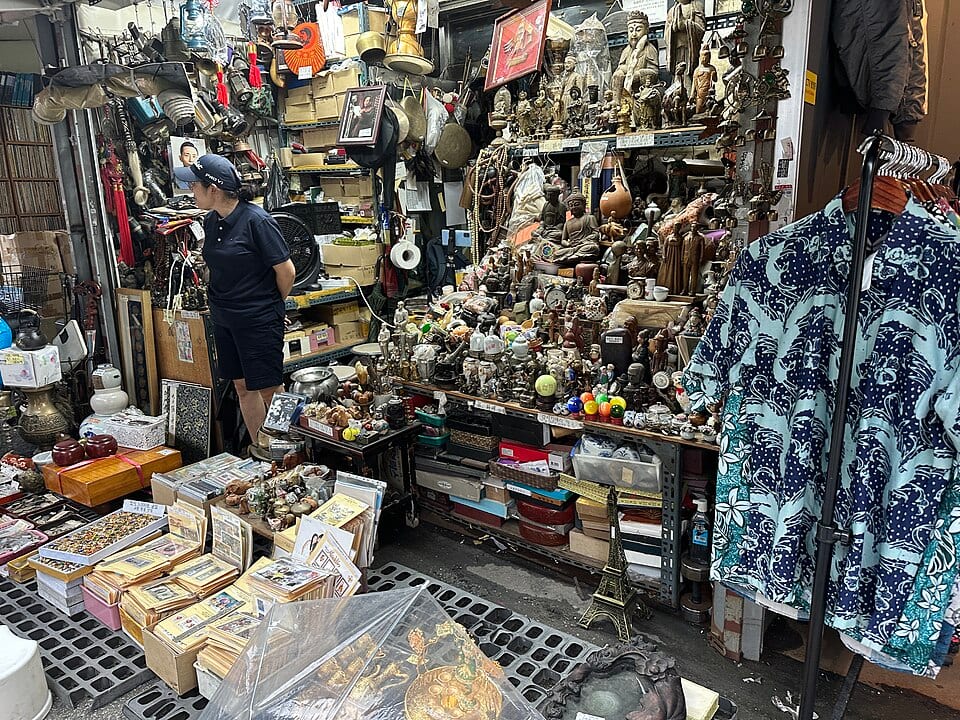
Dongmyo's stalls mix clothing, accessories, household objects and decades of accumulated stock. Photo by Seefooddiet via Wikimedia Commons, CC BY-SA 4.0.
Style lessons that do not depend on age
The first lesson is proportion. A short jacket with higher trousers creates a different line from a long coat with loose pants. The second is repetition: matching the hat to a sock, scarf or shirt makes strong color feel deliberate. The third is texture. Wool, washed cotton, nylon, leather and knitwear can make a neutral palette visually rich.
The fourth lesson is editing. Many memorable street outfits have one focus rather than five: a hat, coat, glasses or unusual trouser shape. Finally, comfort changes posture. Shoes that support a long walk and layers that handle Seoul's temperature shifts let the wearer move naturally.
None of these ideas belongs to one generation. The value of observing older dressers is that their wardrobes often show time: items altered, repaired, softened and combined outside a single trend cycle.
Study fit before buying a costume: As an Amazon Associate, EpicKor may earn from qualifying purchases. Compare unstructured blazers by shoulder fit, fabric and return policy; a comfortable jacket that works with existing trousers is more useful than copying a stranger's complete outfit. What actually makes an older Korean man's jacket look the way it does is that it is pressed — a handheld garment steamer does more for an existing wardrobe than a new blazer does.
How to build an age-inclusive Seoul-inspired outfit
Start with what you already own. Choose straight or relaxed trousers, a shirt or knit, and a practical outer layer. Adjust the trouser rise and jacket length until the silhouette feels intentional. Add one personal object: cap, scarf, watch, tote or glasses. Then stop.
If you shop secondhand, inspect seams, lining, closures, moth damage, odor and alteration potential. Korean sizing on an old label may not match a current international chart. Measure the garment flat and compare it with a piece that fits at home.
| Goal | Low-risk starting piece | Check before buying |
|---|---|---|
| Sharper daily look | Soft blazer or chore jacket | Shoulders, sleeve length and pocket use |
| More color | Scarf, cap or socks | Whether it repeats a color you own |
| Vintage proportion | Higher-rise straight trousers | Waist, rise, hem and alteration room |
| Walking comfort | Supportive leather shoe or clean sneaker | Sole wear, width and a full-day fit |
| Useful layering | Light vest or cardigan | Pockets, bulk and indoor temperature |
The point is not to dress “old.” It is to borrow durable principles—fit, repetition, repair and comfort—without making another generation a theme party.
How to shop Dongmyo without treating it like a film set
Go in daylight and allow time. Outdoor inventory changes with weather and vendor choice, and weekends can be crowded. Use Dongmyo Station on Lines 1 or 6, then follow the market streets around the shrine. Exact business hours vary because this is a district of independent stalls and shops.
Inspect before bargaining. Very low prices can mean visible wear, missing buttons or an untested item. Branded labels are not proof of authenticity. Ask before unfolding a carefully stacked piece, and return unwanted items where you found them.
For a full route and condition checklist, EpicKor's Seoul vintage shopping guide connects Dongmyo with Hongdae and curated stores. The Gwangjang, Majang and Dongmyo market guide helps decide whether flea-market browsing actually fits the rest of your day.
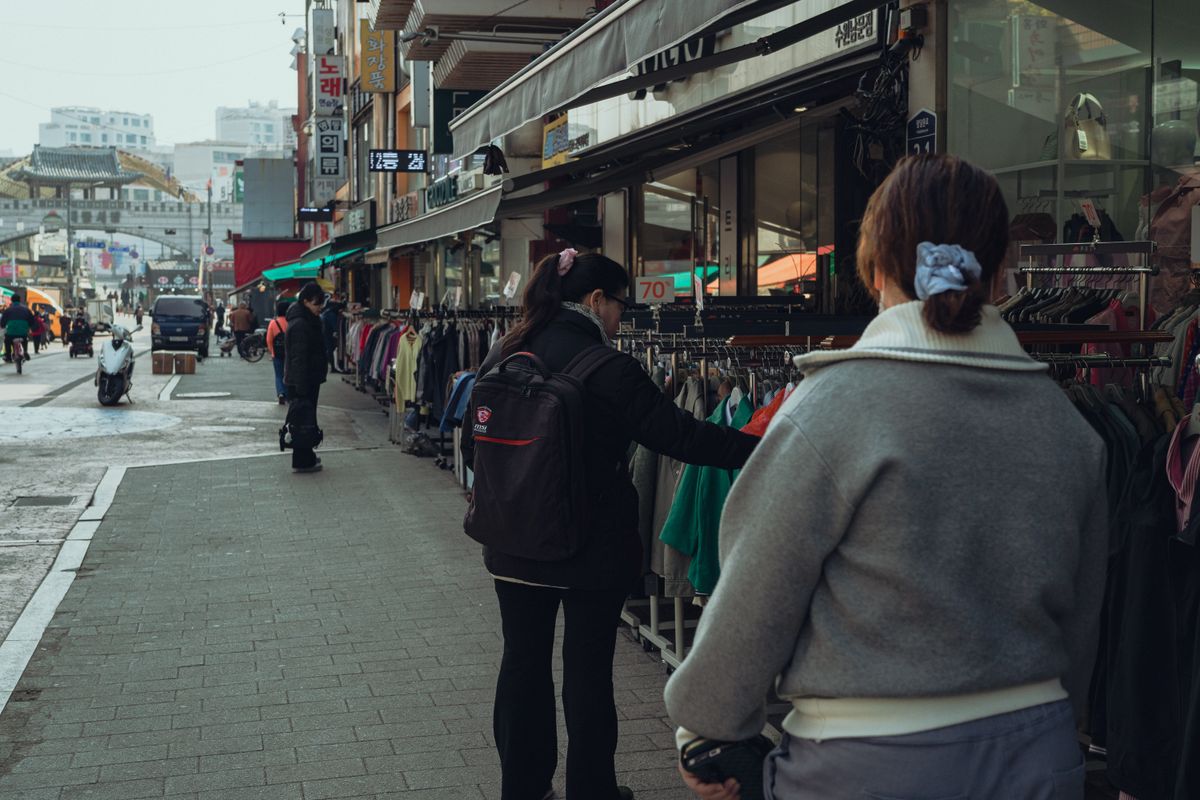
The pleasure is in comparison and discovery, but every used garment still needs a condition check. Photo by Theodore Nguyen on Pexels.
Respectful street photography comes before a good picture
An interesting outfit does not cancel privacy. Ask clearly before making a close portrait, especially when a face is identifiable. Point to the camera, explain the purpose in simple language, and accept “no” immediately. Do not photograph someone as an exotic “Seoul grandpa” from across the street and publish a story about their personality without speaking to them.
Consent should include use. A person who agrees to one photo may not understand that it will become a commercial post, reel or advertisement. Show the frame when possible and offer a way to receive it. Avoid captions that guess occupation, income, health, marital status or attitude.
Public fashion photography can be respectful when it records agency. It becomes ageist when wrinkles are treated as novelty, practical clothes are mocked, or an older subject exists only to surprise a young audience.
Older women belong in the story too
The viral phrase “fashion grandpas” narrows the scene before observation even begins. Older Seoul women also make deliberate choices with tailoring, floral patterns, sportswear, hanbok-inspired pieces, salon styling, jewelry and comfortable shoes. Their style is often dismissed as “mom clothes” even when similar color and volume appear on a runway.
Gender changes how aging is judged. Older men may be praised as distinguished for gray hair and an old coat, while older women receive pressure to look younger. An inclusive fashion story should not reproduce that double standard.
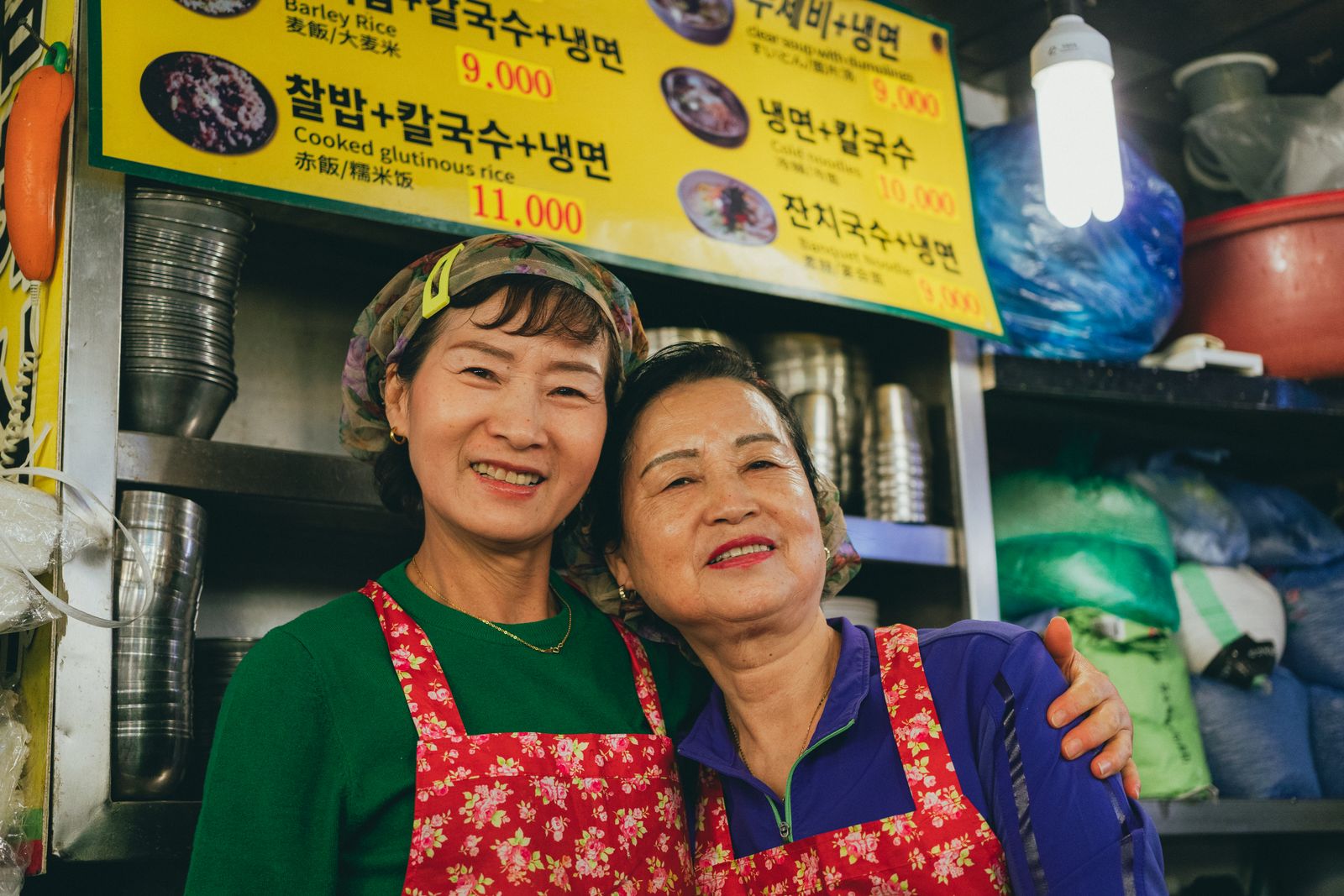
Older women are participants in Seoul's public style, not supporting characters in a menswear trend. Photo by Theodore Nguyen on Pexels.
Sustainability claims need restraint
Keeping and repairing clothing can reduce the need for new purchases, and secondhand shopping extends use. But one vintage jacket does not make an entire lifestyle sustainable. Travel, cleaning, synthetic materials, overbuying and disposal still matter.
The more useful lesson is wardrobe longevity. Learn basic mending, replace buttons, resole good shoes, store wool properly and tailor a strong garment when the cost makes sense. Buy used because it fits a real need, not because a low price makes ten unnecessary pieces feel harmless.
Maintain what you already wear: As an Amazon Associate, EpicKor may earn from qualifying purchases. A handheld steamer and a needle-and-thread habit fit this style story better than buying disposable “vintage-look” accessories; the look is maintained clothing, not new clothing.
What visitors should take away
Seoul senior street style is interesting because it expands who gets seen as a fashion participant. Dongmyo provides a visible setting, and documented portrait work plus 2026 mixed-age programming show that the subject is real. But older adults did not begin dressing when younger media noticed them.
Observe the clothing, ask before photographing, credit intention and avoid turning age into a punchline. The best style lesson is durable and ordinary: wear clothes that fit your body, movement, climate and history.
FAQ
Q: Is “senior chic” an official Korean fashion trend?
No. It is a media label for visible older dressers, portrait projects and age-inclusive fashion activity. Older Seoul residents have diverse styles and should not be treated as one movement.
Q: Is Dongmyo only for older shoppers?
No. Longtime older customers remain important, while younger vintage shoppers, tourists and resellers also visit. It is a working mixed-age flea-market district.
Q: Can I photograph stylish older people in Seoul?
Ask before making an identifiable portrait and explain how it will be used. Accept refusal without pressure. Public space is not automatic permission for a commercial character study.
Q: What should I buy for a Seoul senior-style outfit?
Do not buy a costume. Start with one well-fitting jacket, higher-rise trousers, comfortable shoes or a color accent that works with clothes you already own.
Q: Are old clothes automatically sustainable?
No. Reuse can extend a garment's life, but overbuying secondhand still creates waste. Condition, cleaning, repair, transport and actual wear all matter.
Q: Where can I see age-inclusive fashion in Seoul?
Dongmyo offers everyday vintage culture, while public events and portrait projects periodically include older models and dressers. Check current programs before traveling and do not expect residents to perform for visitors.
Sources checked
You Might Also Like
Korean Luxury Brands: What Actually Exists, and What to Buy in Seoul
Korea has no heritage luxury house, and pretending otherwise sends shoppers to the wrong stores. What it has instead are two very different tiers, and the 2024 accounts show one of them just contracted for the first time. Here is how to shop each.
Korea's Neighbourhood Bathhouses Are Disappearing, and the Bath Is Not: Where the Hot Water Went
Seoul had 1,764 public bathhouses in 1995 and has 510 now. Koreans have not stopped soaking; they moved to private-bath hotels, ₩60,000 scrub studios and the apartment-basement sauna. Why the old tang died, what Japan did differently, where to bathe in 2026.

Korean McDonald's: Why the Burgers Are Named After Farm Counties, and What to Order Now
McDonald's Korea has bought 459.2 tonnes of named Korean produce since 2021 and prints the county on the burger — Changnyeong garlic, Jindo spring onion, Jinju pepper. 24 million sold, ₩61.7 billion of measured regional value. Here is what is on the menu now.