Korean Luxury Brands: What Actually Exists, and What to Buy in Seoul
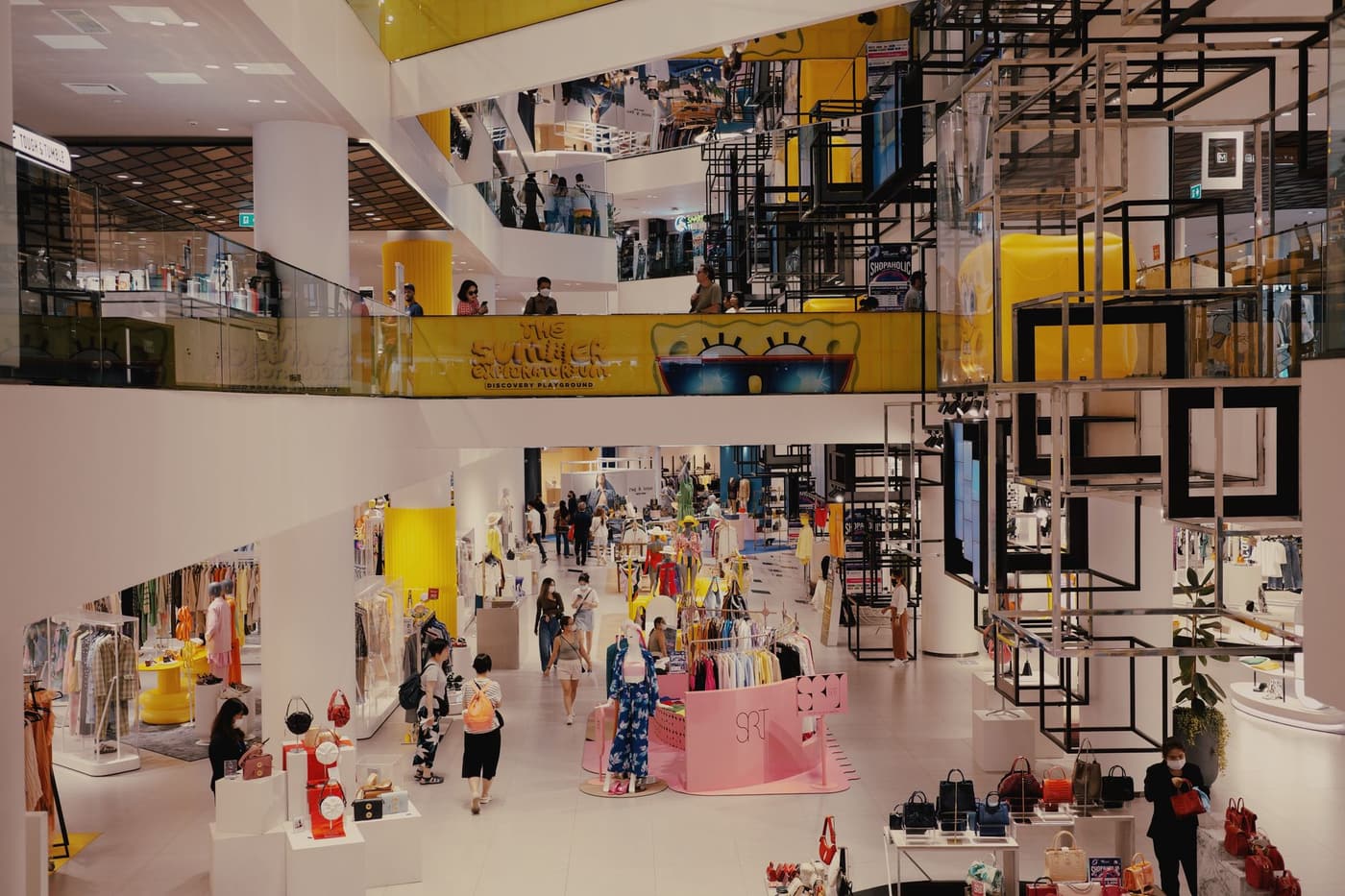
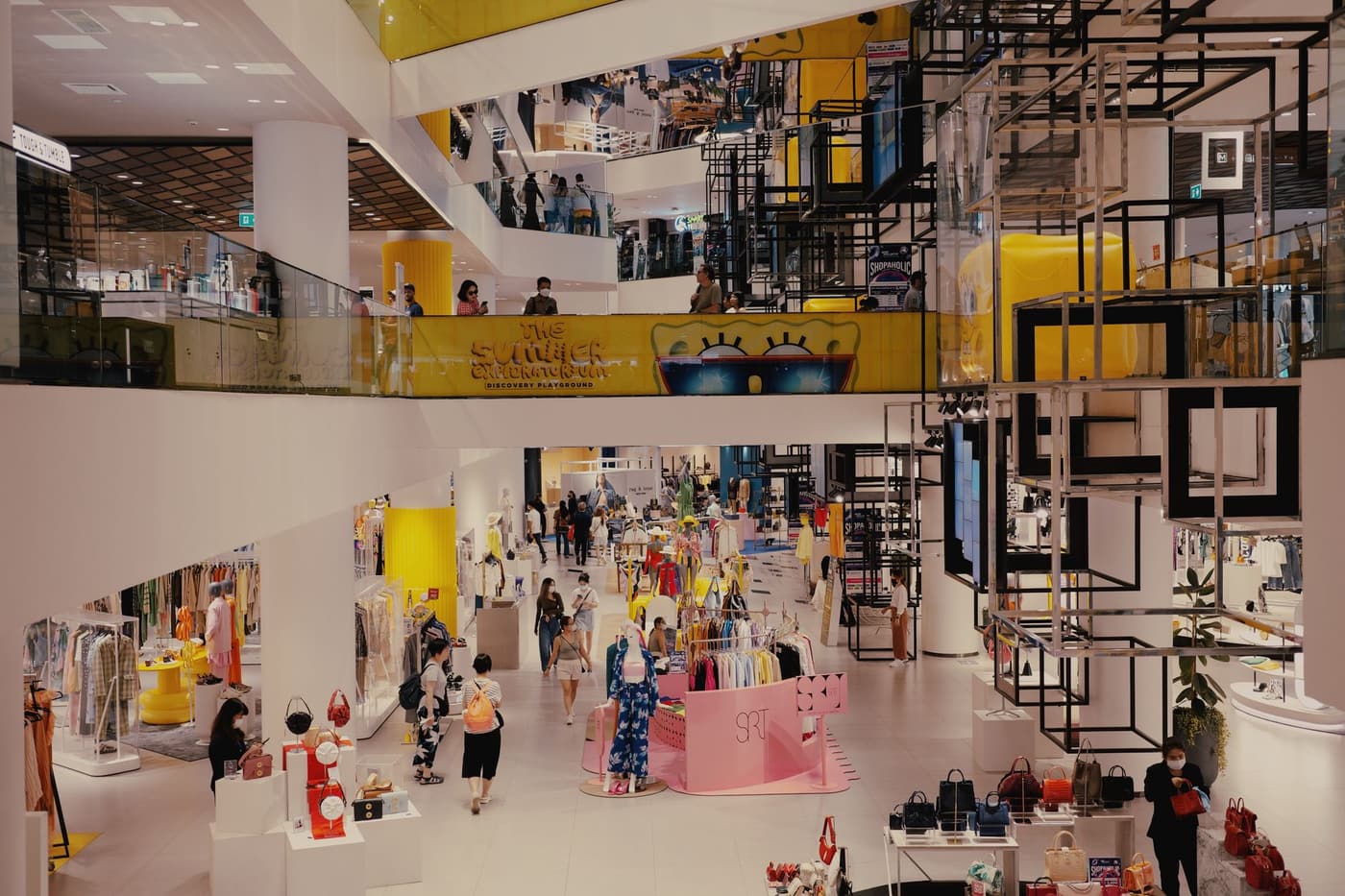
Korean retail is unusually good at the environment around the product. That is not a side note — for one whole tier of Korean brands, it is the product. Photo by Tony Wu, Pexels.
Search "Korean luxury brands" and you will get lists that quietly mix three unrelated things: fashion houses that show in Paris, eyewear companies that build art installations, and department-store labels that are simply expensive.
That mix is why so many visitors come back from Seoul disappointed. They went looking for a Korean Hermès and there isn't one.
There is no Korean heritage luxury house. No 150-year-old leather atelier, no founding family with an archive. Korea's fashion industry industrialised late, and its designer scene is roughly two generations old. Anyone selling you "Korea's Chanel" is selling you a story.
What Korea does have is two genuinely distinct tiers that both get called luxury, and they suit completely different shoppers. Working out which one you want is the whole decision.
The Short Answer
| Tier 1: Designer labels | Tier 2: Experience-led "new luxury" | |
|---|---|---|
| Examples | WOOYOUNGMI, Juun.J, SONGZIO | Gentle Monster, Tamburins, Nudake |
| What they sell | Tailoring and ready-to-wear | Eyewear, fragrance, retail environments |
| Credibility from | Paris runway shows | Store design and cultural cachet |
| Typical entry price | High — real designer pricing | Accessible — often well under ₩500,000 |
| Bought by | People who follow menswear | Almost everyone visiting Seoul |
| Buy it if | You want a garment that lasts a decade | You want an object with a strong point of view |
Reading the Korean fashion scene properly: As an Amazon Associate, EpicKor may earn from qualifying purchases. This guide covers the structure — compare books on Korean fashion and design if you want the designers and the history in depth before you shop.
Compare on AmazonTier 1: The Labels That Actually Show in Paris
This is the tier most English lists get wrong, because the brands are quieter online and their stores do not queue.
WOOYOUNGMI (우영미) is the clearest case. Designer Woo Youngmi founded Solid Homme in 1988, which made her the first woman in Korea to build a menswear label. In 2002 she launched the eponymous WOOYOUNGMI line through the Paris Collection — not a showroom appointment, the actual Paris menswear schedule, which she has now been on for over two decades.
The commercial result is the part that tells you whether this is real:
| Metric | Figure |
|---|---|
| SOLID group revenue (Solid Homme + WOOYOUNGMI) | about ₩110.2 billion |
| Share from overseas | about 40% |
| Global stores | around 80 |
| Markets | France, Italy, Spain, Qatar, Japan, Hong Kong and others |
Forty percent overseas revenue is the number to hold onto. A brand foreigners buy at that rate is not a domestic label with an export brochure — it is a working international business. Woo also opened a standalone Itaewon flagship in late 2025, arguing that a Korean cultural moment ought to be connected through fashion rather than routed around it.
Alongside WOOYOUNGMI, Juun.J and SONGZIO occupy the same territory: Korean designers on the Paris menswear schedule doing volume-driven tailoring and dark, architectural silhouettes. If Yohji Yamamoto or Rick Owens make sense to you, this tier will too — and Korea is a cheaper place to buy it than Europe.
What to expect on price: this is genuine designer pricing. A WOOYOUNGMI coat is a coat at designer money, not a souvenir. If your budget is a few hundred thousand won, you are shopping in Tier 2, and that is fine — it is where most of the interesting things are anyway.
Tier 2: The Brands That Sell You a Room
The second tier is what most visitors actually mean by Korean luxury, and it is where Korea genuinely leads.
Gentle Monster (젠틀몬스터) is the anchor. It sells sunglasses, but the reason people go is the stores — each built as a full installation with sculptural, often unsettling kinetic pieces, and rebuilt on a schedule. The eyewear is priced within reach of a normal shopper. The room around it is not, and that inversion is the entire business model.
Its parent company, IICOMBINED (아이아이컴바인드), also runs the fragrance and body-care brand Tamburins (탬버린즈) and the dessert brand Nudake (누데이크) — the same design logic applied to a hand cream and a cake.
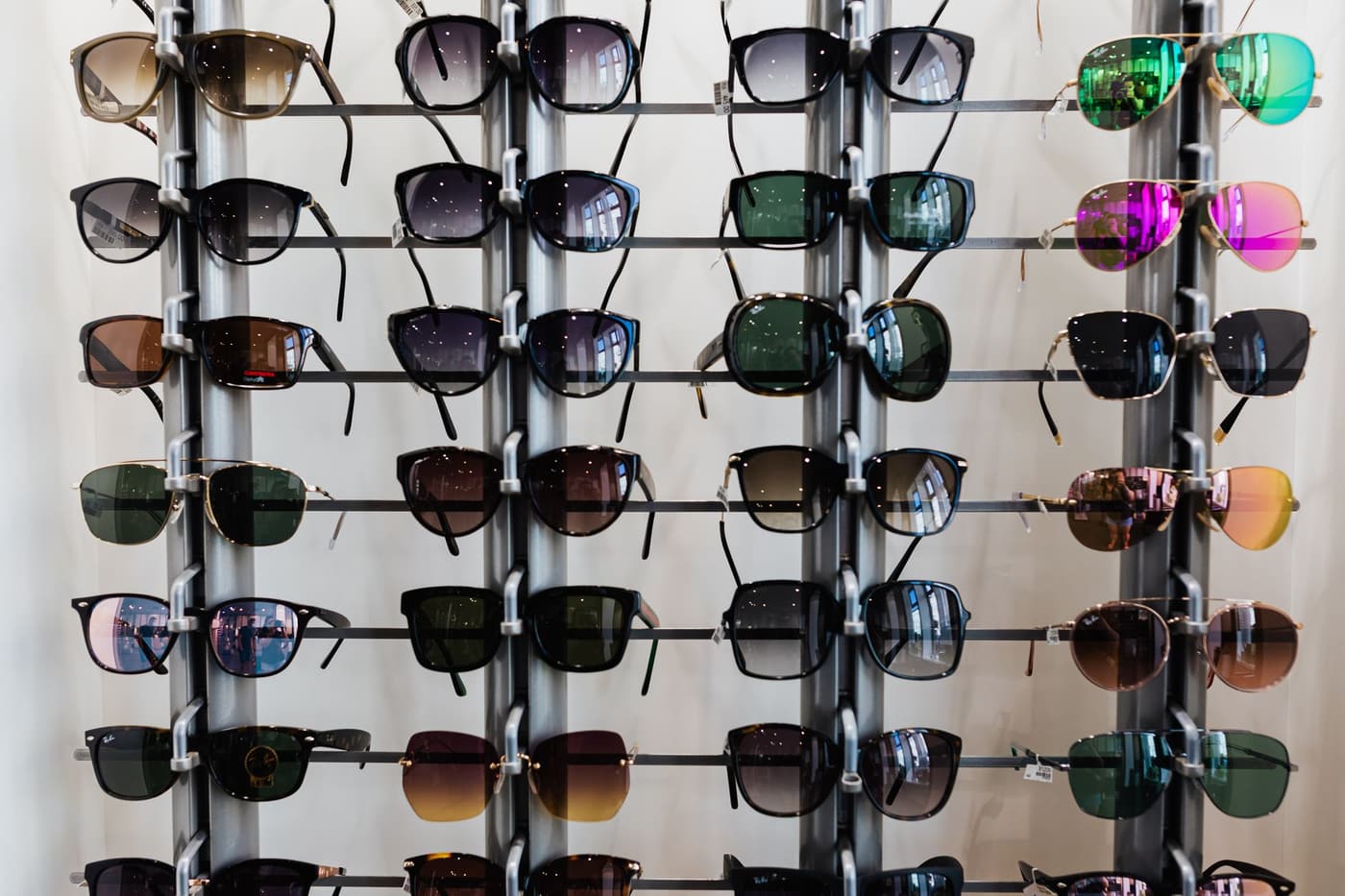
Eyewear is the volume engine of Korea's new-luxury tier — over ₩600 billion of it a year, from one company. Photo via Kaboompics, Pexels.
The numbers, and why 2024 changed the advice
Here is the part that is not in any English-language shopping guide, and it should change how you shop.
| IICOMBINED (consolidated) | Previous year | 2024 | Change |
|---|---|---|---|
| Revenue | ₩789.1bn | ₩772.3bn | −2.1% |
| Operating profit | ₩233.8bn | ₩177.0bn | −24.3% |
| Eyewear | — | ₩604.9bn | −1.5% |
| Cosmetics (Tamburins) | — | ₩152.5bn | −7.3% |
| Other (incl. Nudake) | — | ₩14.9bn | +42.3% |
Three things follow from that table.
First, the scale is real. A ₩772.3 billion company built on sunglasses is not a boutique. Whatever you make of the aesthetic, the business is substantial and the products are made at volume.
Second, growth stopped. Revenue fell for the first time and operating profit dropped by nearly a quarter. That is a mature brand meeting the limits of hype-led retail rather than a company in trouble — but it is a different company from the one the 2019-era coverage described.
Third, the food arm is the only thing growing fast. Nudake and the other minor lines grew 42.3% off a small base. Korea's new-luxury playbook is migrating out of eyewear and into cafés and desserts, which is exactly where the next round of queue-around-the-block openings will be.
What this means for you as a buyer: the scarcity premium is softening. There is much less reason now to pay a resale markup or to panic-buy a limited colourway. Buy the frame you like, at list price, in the store.
You might like: Must-Buy K-Beauty Items in Korea
What Is Not Korean Luxury, Despite the Label
A short list of things that get miscategorised, because avoiding them saves real money.
- Department store house brands. Korean department stores carry expensive labels that are licensing arrangements or in-house lines. Expensive is not the same as designed.
- Contemporary brands at contemporary prices. Labels like Andersson Bell and ADER error are genuinely interesting and internationally stocked, but they sit below the designer tier on both price and construction. Buy them for the point of view, not as an heirloom.
- Anything sold to you as an investment. Korean designer resale is thin outside Korea. If the pitch involves future value, it is a sales technique.
- Duty-free "luxury" floors. These are mostly European brands. You did not come to Seoul for those.
A Half-Day Shopping Plan That Actually Works
The geography matters, because these tiers are not in the same neighbourhoods.
| Area | What it is for | Who should go |
|---|---|---|
| Sinsa / Apgujeong (Gangnam) | Flagships, designer boutiques, the concentrated luxury strip | Tier 1 shoppers, serious budgets |
| Hannam-dong | Quieter flagships, galleries, restrained retail | Anyone who dislikes crowds |
| Seongsu-dong | Pop-ups, brand experience spaces, newer labels | Tier 2, and the best browsing |
| Myeongdong | Mass-market and beauty, high tourist density | Skip it for this purpose |
A workable order: start in Seongsu late morning, when the pop-ups open and the queues have not formed. Move to Hannam for lunch and the quieter flagships. Finish in Apgujeong if you are actually buying at the designer tier, because that is where the stock and the sizes are.
Try things on. This sounds obvious, but Korean designer sizing runs to a different fit model than European or American sizing, and the cuts in this tier are deliberately unusual on top of that. A size you know from another brand tells you nothing here.
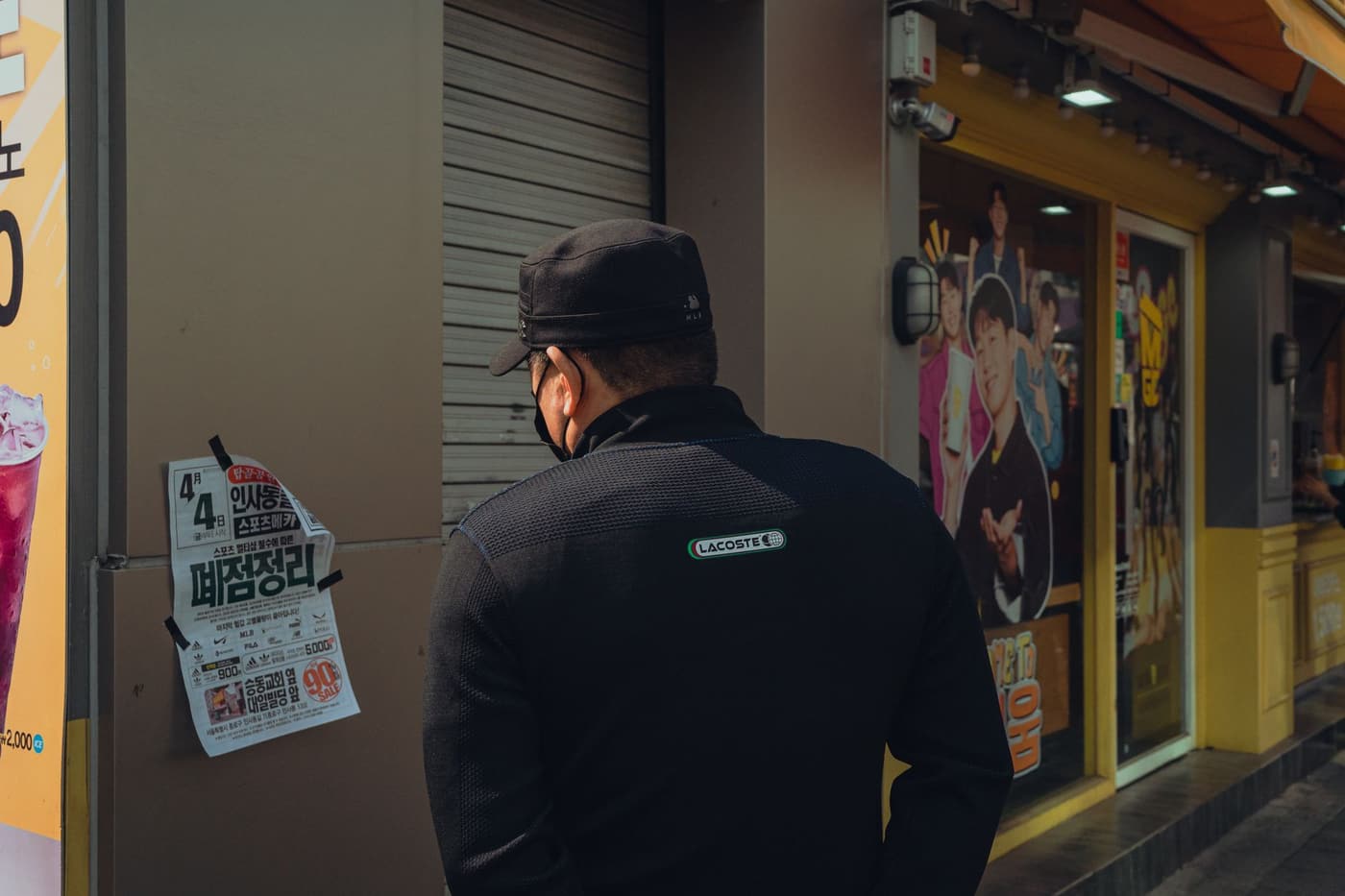
Most of the interesting Korean retail is street-level and neighbourhood-scale rather than inside a mall. Plan on walking. Photo by Theodore Nguyen, Pexels.
Before a shopping day in Seoul: These neighbourhoods are walked, not driven, and the good stores are spread across three districts — compare comfortable walking shoes and a hard eyewear case if you plan to buy frames and keep flying.
Compare on AmazonThe Honest Counter-Recommendation
Three things this guide will not tell you to do.
Do not buy Tier 1 as a souvenir. A designer coat bought on holiday because you happened to be in the country is the most reliable way to spend a lot of money on something you will not wear. If you did not know the label before your trip, treat that as a signal.
Do not treat a Gentle Monster store visit as a shopping trip. Go for the installation. It is one of the more genuinely worthwhile free things to do in Seoul, and it costs nothing to walk through and leave. If a frame suits your face, buy it; if not, you still got the better half of the experience.
And do not buy eyewear you have not worn outside. Store lighting in this tier is designed, which is a polite way of saying it flatters. Take the frame to the door and look at it in daylight before you pay.
FAQ About Korean Luxury Brands
Q: What is the most famous Korean luxury brand?
A: By international recognition, Gentle Monster — its parent company IICOMBINED turned over ₩772.3 billion in 2024. By fashion-industry standing, WOOYOUNGMI, which has shown on the Paris menswear schedule since 2002 and takes about 40% of its revenue overseas.
Q: Does Korea have a heritage luxury house like Louis Vuitton or Hermès?
A: No. Korea's fashion industry industrialised late and its designer scene is roughly two generations old. Any list presenting a Korean brand as an equivalent heritage house is inventing the lineage.
Q: Is Gentle Monster actually expensive?
A: Not by luxury standards. The eyewear is priced within reach of a normal shopper — the extravagance is in the stores, not on the price tags. That gap is the deliberate design of the business.
Q: Where should I shop for Korean designer fashion in Seoul?
A: Sinsa and Apgujeong in Gangnam for the designer tier, Hannam-dong for quieter flagships, and Seongsu-dong for pop-ups and newer labels. Myeongdong is mass-market and beauty, so skip it for this purpose.
Q: Is Korean designer clothing a good investment?
A: No, and be wary of anyone framing it that way. Resale for Korean designer labels is thin outside Korea. Buy because you will wear it.
Q: Are Korean sizes the same as US or European sizes?
A: Not reliably, and in this tier the cuts are intentionally unusual on top of that. Try everything on rather than ordering to a size you know from another brand.
The One Thing to Remember
Korean luxury is not one category, and the split is not about price — it is about what you are buying.
Tier 1 sells you a garment with two decades of Paris behind it. Tier 2 sells you an object plus a room you will remember. Both are worth your money. Neither is a heritage house, and the brands themselves have never claimed to be — that story was added afterwards, by people writing lists.
Sources
- Sedaily and Insight Korea reporting on IICOMBINED (아이아이컴바인드) FY2024 results — consolidated revenue, operating profit, and the eyewear / cosmetics / other segment breakdown
- Sedaily, "이태원 단독 매장 낸 우영미" (November 2025) — SOLID group revenue, overseas revenue share, global store count, and Woo Youngmi's own comments
- Brand founding dates: Solid Homme 1988; WOOYOUNGMI launched through the Paris Collection in 2002
You Might Also Like
Korean McDonald's: Why the Burgers Are Named After Farm Counties, and What to Order Now
McDonald's Korea has bought 459.2 tonnes of named Korean produce since 2021 and prints the county on the burger — Changnyeong garlic, Jindo spring onion, Jinju pepper. 24 million sold, ₩61.7 billion of measured regional value. Here is what is on the menu now.
Korean Toothpaste: Why It Says 고불소, and How to Check Your Tube
Korea capped toothpaste fluoride at 1,000 ppm with a manufacturing rule that contradicted its own licensing rule, which is why 고불소 is sold as a premium feature. Here is what a Korean tube legally must tell you, and what 2026's two recalls covered.
Korean Towels: What 40수 and 180g Mean, and Why You Keep Being Given Them
Korea sells towels by 수 (yarn count) and by the gram weight of one towel. Amazon sells the same towels by GSM. Those are different numbers, and converting takes one division. Here is the Korean system, current Songwol prices, and why weddings hand them out.