Wild Camping in Korea: Why You Can't, and Where to Sleep Instead
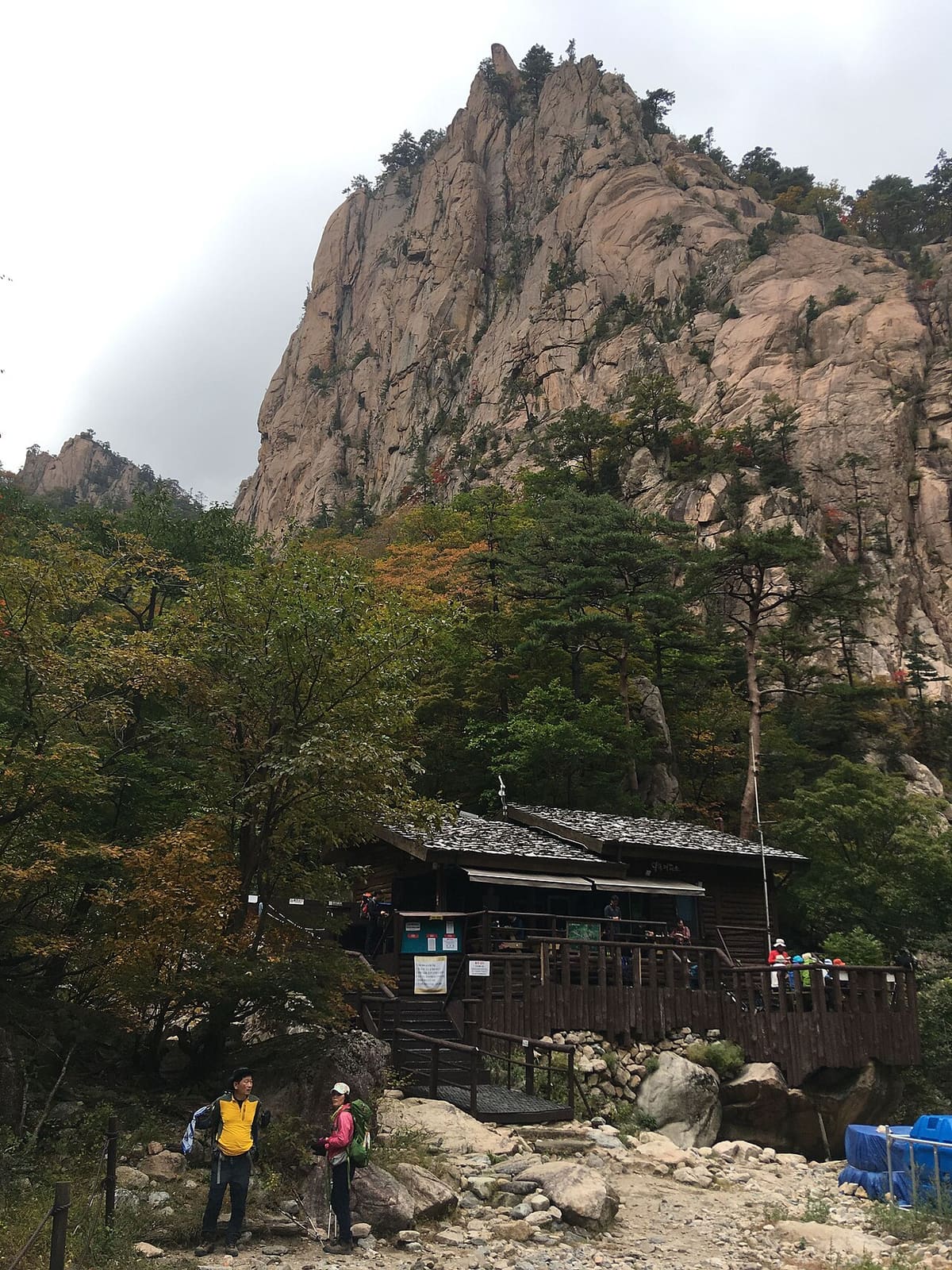
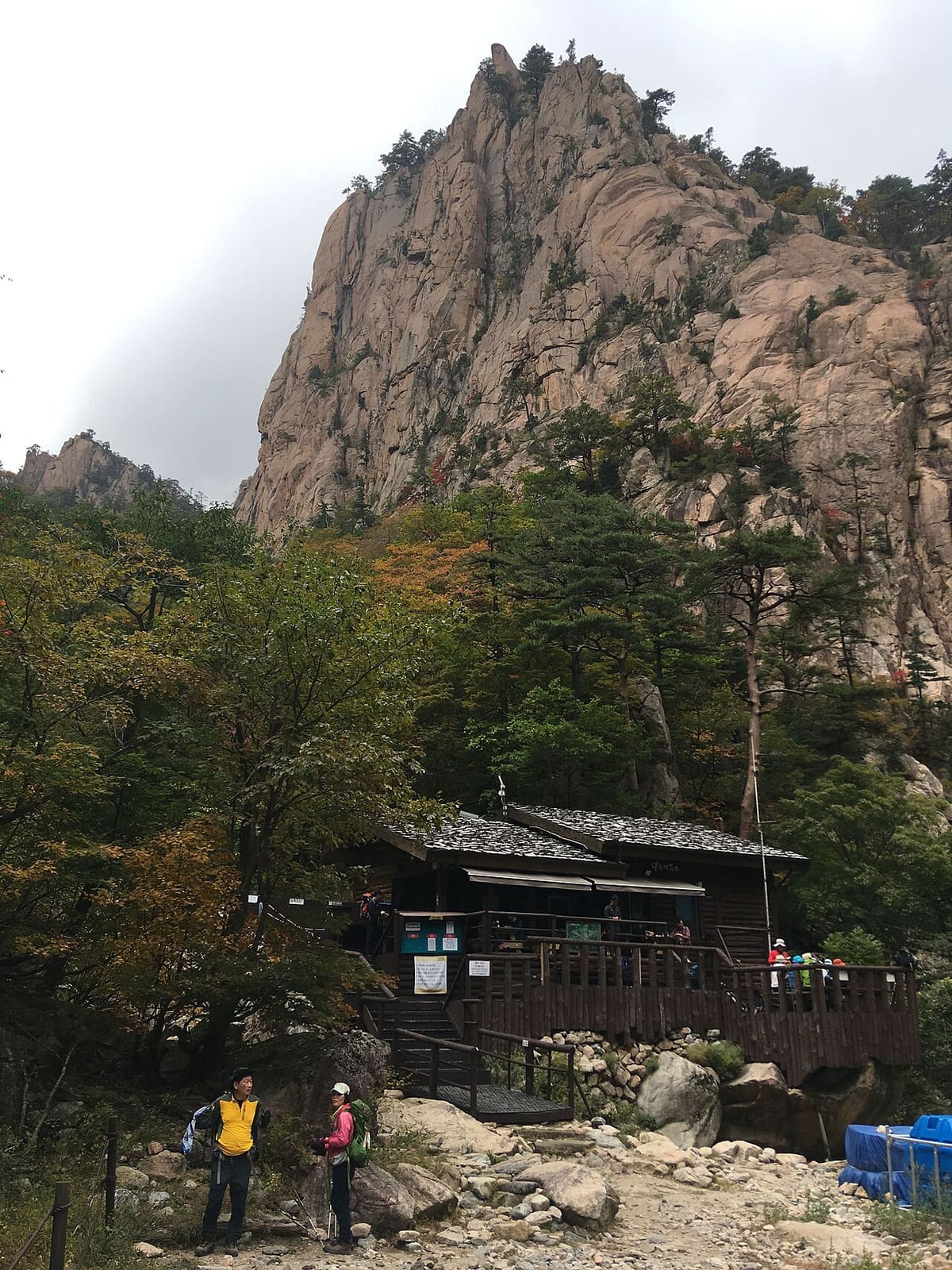
Yangpok Shelter in Seoraksan. This — not a tent — is what sleeping in a Korean mountain looks like. Photo by Christophe95, CC BY-SA 4.0.
If you have wild camped in Scotland, Scandinavia or the American West and you are planning to do the same in Korea, stop and read this first.
Camping outside a designated site inside a Korean national park is prohibited, and it carries a fine. Not discouraged, not frowned upon — restricted by park regulation, with penalties.
This surprises people, because Korea looks like a country built for wild camping. It is roughly seventy percent mountains, the national parks are numerous and reachable, and hiking is close to a national sport. All true. And you still cannot put a tent wherever you like.
What Koreans do instead is something most visitors have never heard of: they book a numbered plank in a mountain shelter, weeks in advance, and they are not allowed to cook in it.
The Short Answer
| Question | Answer |
|---|---|
| Can I wild camp in a Korean national park? | No. Camping outside designated locations is prohibited and fined |
| Where can I legally camp? | Designated campsites (야영장) inside and outside the parks |
| Where do hikers sleep on multi-day routes? | Mountain shelters (대피소) — bookable, communal, indoors |
| Do I need to book? | Yes. Shelters and park campsites require advance online reservation and payment |
| When does booking open? | Calendars open on the 1st and 15th of each month at 10:00 |
| Where do I book? | Korea National Park Service reservation system, reservation.knps.or.kr, or the KNPS app |
| The catch for foreigners | Sign-up requires Korean mobile identity verification |
Sea to Summit silk-cotton travel liner — on AmazonAffiliate link. As an Amazon Associate, EpicKor earns from qualifying purchases at no extra cost to you.
What a Korean Mountain Shelter Actually Is
Say "mountain hut" to a European and they picture a small inn. Say "camping" to an American and they picture a tent and a fire. A Korean 대피소 (daepiso) is neither.
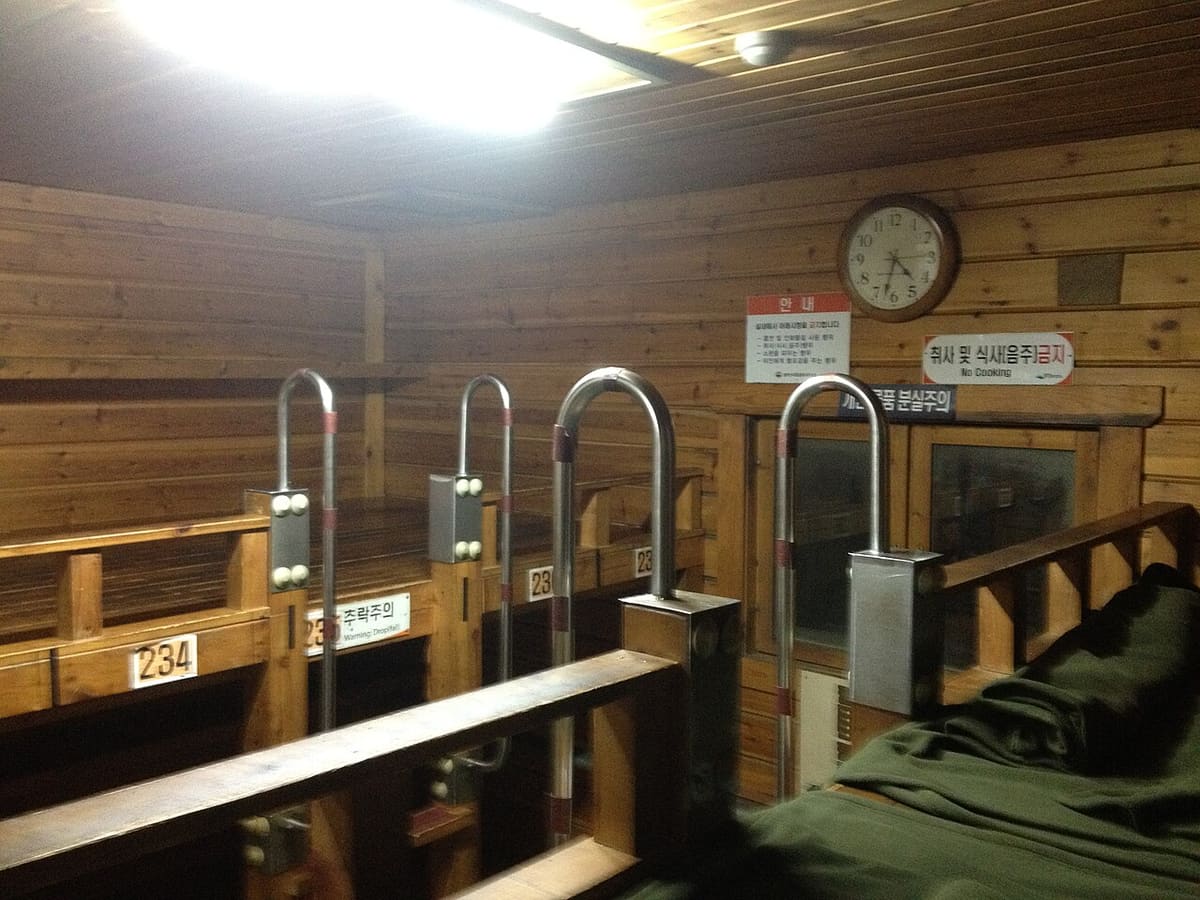
Inside Jungcheong Shelter. Numbered wooden sleeping platforms — note "234" — and a wall notice reading 취사 및 식사음주금지 / No Cooking. Photo by 콩가루, CC BY-SA 4.0.
Look at what that photograph shows, because it is the whole reality of the thing:
- You are assigned a number, not a room. Sleeping platforms are wooden, communal, and numbered. You get a slot on a plank
- No cooking. The sign says so in Korean and English. Shelters restrict cooking, and drinking, indoors
- It is a shared hall, so you sleep alongside strangers with the lights and noise that implies
- Blankets may be available, but this is basic accommodation by design — a shelter, in the literal sense
This is not a hardship story. It is a design choice. Concentrating overnight stays into a few managed buildings is how Korea keeps heavily-used mountains from being covered in tents, fire rings and rubbish. The restriction and the shelter are two halves of the same policy.
Why Korea Restricts It
Worth understanding, because it changes how the rule feels.
Korean national parks carry enormous visitor numbers on a small land area, and the terrain concentrates people onto a limited number of ridge routes. Dispersed wild camping across that kind of pressure does not stay low-impact for long. Fire risk on dry granite slopes, waste, and vegetation damage all scale badly.
So the park service went the other way: designate where you may sleep, build shelters at the points where multi-day routes actually need them, and prohibit the rest.
You do not have to like it, but it is a coherent answer to a real problem, and it is enforced.
How to Book
This is where visitors most often come unstuck, so here is the sequence.
1. Use the official system. Reservations run through the Korea National Park Service at reservation.knps.or.kr — also reachable as res.knps.or.kr — or the KNPS mobile app. Shelters and park campsites both go through it.
2. Know the calendar opening time. Booking calendars open on the 1st and the 15th of each month at 10:00. Popular shelters in Seoraksan and Jirisan go quickly at those moments, so this is not a system where you browse casually the week before.
3. Register and verify. You create an account and complete mobile identity verification (휴대폰 본인인증).
4. Select, then pay. Choose the park, the facility, the date and the site, then complete payment. A reservation is not confirmed until payment is done — check under 마이페이지 → 나의예약목록.
The honest problem for foreign visitors
Korean mobile identity verification generally expects a Korean phone number, and that is a real obstacle for short-term travellers.
Plan around it rather than discovering it at 10:00 on the 1st:
- If you have a Korean number — a local SIM in your own name, or a resident phone — verification is straightforward
- If you are travelling with a Korean friend or resident, ask them well in advance rather than on booking day
- If neither applies, treat multi-day shelter routes as probably out of reach this trip, and plan day hikes plus a town or a private campground instead
This is the single most common reason a foreign visitor's Korean multi-day hiking plan fails, and it fails at the account stage, not on the mountain.
You might like: Seoul Hiking Guide: Easy, Scenic, and Challenging Trails
What You Can Do Legally
The picture is not restrictive as it might sound. Camping in Korea is popular and well-supported; it is simply channelled.
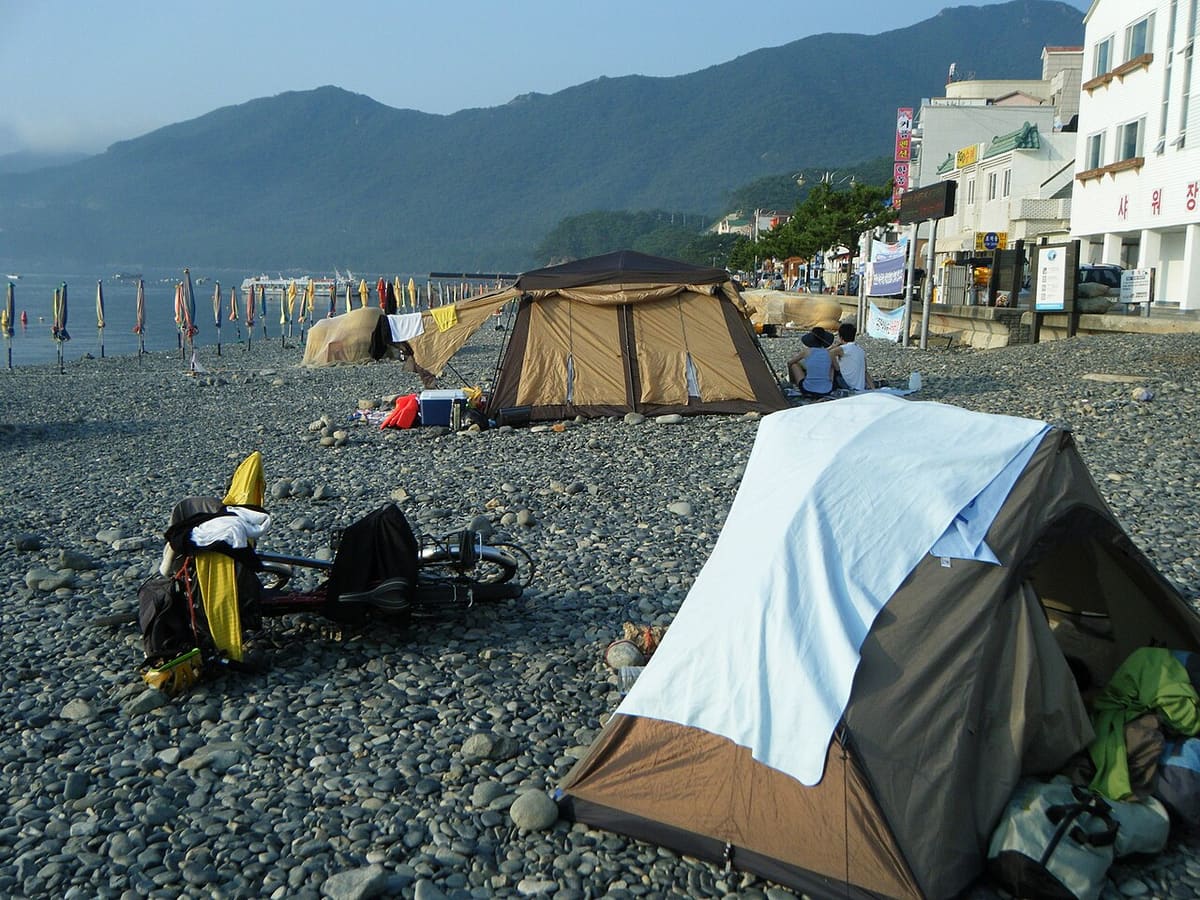
A designated beach campsite. Legal camping in Korea is abundant — it is just in assigned places. Photo by gary4now, CC BY 3.0.
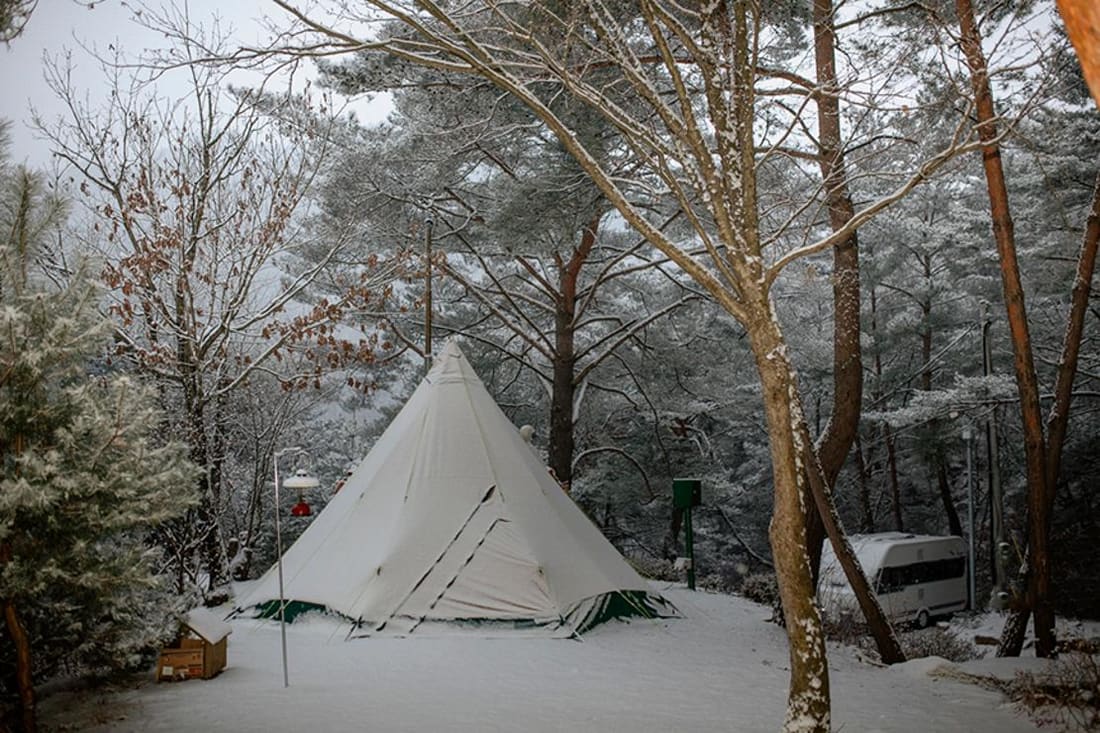
Winter camping at a designated Korean site. Koreans camp through the cold season, at booked pitches. Photo by 황남원, CC BY (공유마당).
| Option | Korean | What it is |
|---|---|---|
| National park campsite | 야영장 | Designated, bookable, inside park boundaries |
| Private campground | 캠핑장 | Commercial sites, widely available, often with facilities |
| Auto camping | 오토캠핑 | Drive-in sites — a large part of Korean camping culture |
| Glamping | 글램핑 | Equipped tents and cabins, very popular domestically |
| Mountain shelter | 대피소 | Indoor bunks for multi-day ridge routes |
Korean camping culture is real and large — it is car-based and site-based rather than backcountry. A Korean family going camping is generally driving to a booked site with equipment, not walking into the hills to find a spot. Once you understand that, the country stops looking restrictive and starts looking well-organised.
What to Do Instead if You Wanted the Backcountry
Practical alternatives, since the honest answer to the original question is "you cannot".
Do the big mountains as long day hikes. Korean peaks are unusually accessible — you can be on a serious summit and back the same day, which removes most of the reason to sleep out.
Book one shelter night for the experience. If you can clear the verification hurdle, one night in a shelter on a Seoraksan or Jirisan route is genuinely memorable, precisely because it is nothing like Western hut culture.
Use a private campground as a base. Commercial campsites near the parks are plentiful, do not run on the park reservation system, and are far easier to book.
Do not improvise a bivouac. 비박 — sleeping out without a designated site — is exactly what the rule prohibits inside parks, and rangers do check.
Sea to Summit silk-cotton travel liner — the single item Korean shelter regulars actually carry. A Korean mountain shelter is a numbered platform in a shared hall; the liner packs to the size of a fist and is the difference between a night and a good night. As an Amazon Associate, EpicKor earns from qualifying purchases at no extra cost to you.
See the travel liner on AmazonWhat to Pack for a Shelter Night
The packing list is different from a tent trip in ways that catch people out, and most of the differences follow from two facts: you have no tent, and you cannot cook.
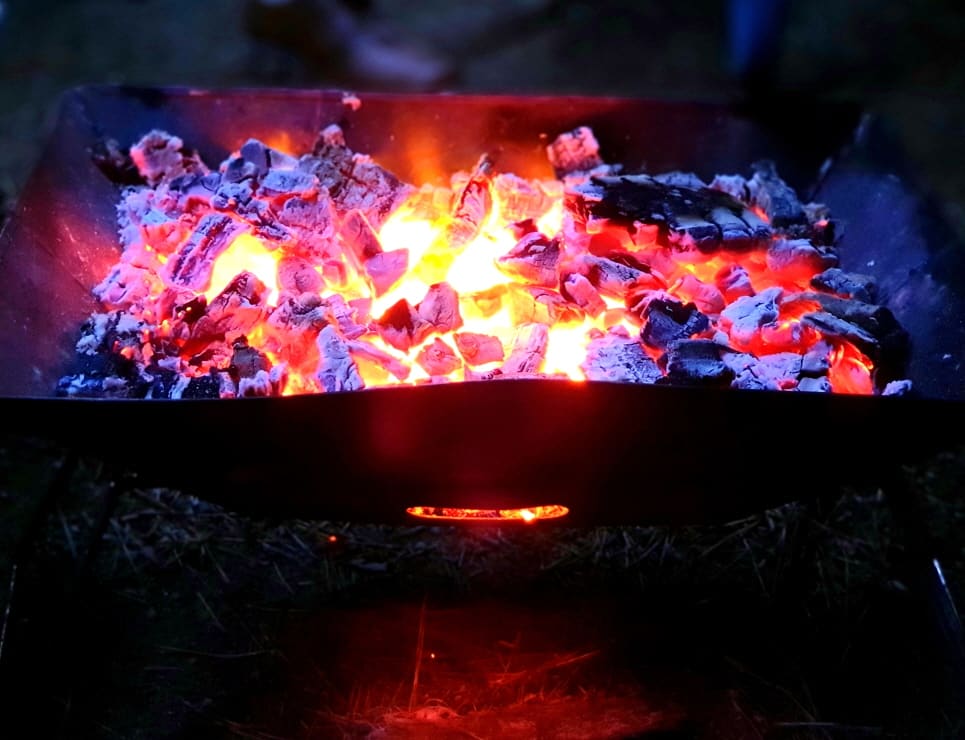
A fire pit at a campsite in Inje, Gangwon — the kind of built firepit designated sites provide, and the reason open fires elsewhere are not permitted. Photo by 전영재, CC BY (공유마당).
Bring, because the shelter will not solve it for you:
- A sleeping bag or liner. Blankets may be available but plan as though they are not, and a liner is worth carrying regardless in shared accommodation
- Earplugs and an eye mask. You are sleeping on a numbered platform in a room of strangers. This is the single most useful thing in the pack
- Food that needs no cooking. Bread, gimbap bought at the bottom, nuts, dried fruit, energy bars. Korean hikers are extremely well provisioned with exactly this
- A headlamp, because moving around a dark shared hall with a phone torch annoys everyone
- Cash, since small purchases at some facilities are simpler with it
- A rubbish bag. Carry out what you carry in — this is standard practice and heavily reinforced in Korean parks
Leave behind:
- A stove. Cooking is restricted inside shelters, and the signage says so directly
- A tent, unless you have booked a designated campsite. Carrying one into a park where you cannot legally pitch it is dead weight and an invitation to a problem
On water: treat it as something to confirm rather than assume. Availability varies by shelter and by season, and freezing conditions change what is running. Plan to carry what you need for the ascent regardless.
Which Parks People Actually Do This In
Two names dominate multi-day route planning, and knowing which is which saves you a badly-chosen first attempt.
Seoraksan (설악산), in Gangwon, is the most celebrated and the most photographed — sharp granite, the country's best-known autumn foliage, and shelters positioned on the main ridge routes. It is also the busiest, which means booking competition at 10:00 on the 1st and the 15th is at its most severe here, especially for October dates.
Jirisan (지리산), spanning three provinces, is Korea's largest mainland national park and the standard reference for a genuinely long traverse. The ridge walk is the classic multi-day objective in Korean hiking, and it is where the shelter system makes the most obvious sense — the route simply cannot be done in a day.
A realistic first attempt: a single shelter night on a Seoraksan route, booked for a shoulder-season weekday rather than an October weekend. You get the experience without competing against the entire country for the same bunk.
And the reality check that matters most: autumn is when Koreans hike, and Korean autumn hiking is a mass participation event. If your date is a weekend in October, assume the mountain will be busy and the booking will be hard, and decide whether that is the trip you wanted.
Kahtoola MICROspikes — Korean ridge trails are granite slab, and once that glazes, boot tread does nothing. Ice is the real hazard on Korean ridges in winter. Spikes for the first half of the problem; a headlamp for the second. As an Amazon Associate, EpicKor earns from qualifying purchases at no extra cost to you.
See the MICROspikes on AmazonWhen to Skip It Entirely
- Skip a shelter plan on a short trip. Between booking timing and verification, this needs weeks of lead time, not days
- Skip winter shelter attempts unless you are experienced. Korean ridges get genuinely cold and icy, and the routes to shelters are exposed
- Skip it if you wanted solitude. A shelter is a shared hall with numbered platforms. It is many things; quiet and private are not among them
- Skip the monsoon. Heavy summer rain makes Korean granite slick and closes routes
FAQ About Camping in Korea
Q: Is wild camping legal in Korea?
A: Not in national parks. Camping outside designated locations inside a national park is prohibited and can be fined. Legal camping happens at designated campsites, and overnight stays on multi-day mountain routes happen in booked shelters.
Q: What is a daepiso?
A: 대피소 is a mountain shelter — a managed building with communal, numbered wooden sleeping platforms. Cooking and drinking are restricted inside, as posted on the walls. It is basic shared accommodation, not a hut-inn.
Q: How do I book a Korean national park shelter or campsite?
A: Through the Korea National Park Service reservation system at reservation.knps.or.kr or the KNPS app. Booking calendars open on the 1st and 15th of each month at 10:00, and a reservation is only confirmed once payment is complete.
Q: Can foreigners book without a Korean phone number?
A: This is the common obstacle. Account creation involves Korean mobile identity verification, which generally expects a Korean number. Arrange a local SIM or help from a Korean resident in advance, or plan day hikes and private campgrounds instead.
Q: Is there any camping culture in Korea then?
A: A large one. It is car-based and site-based — auto camping, glamping and commercial campgrounds are all popular. The difference from Western backcountry camping is that you go to an assigned place rather than choosing your own.
Q: What happens if I just pitch a tent anyway?
A: You are camping outside a designated location inside a national park, which is prohibited and subject to a fine. Rangers patrol, and the practical risk is real rather than theoretical.
The One Thing to Remember
In Korea, you do not choose where to sleep in the mountains. You book it.
The tent-anywhere version of camping does not exist inside the national parks, and the replacement is a numbered plank in a shared wooden hall where you are not allowed to cook. That sounds austere written down, and it is the reason Korea's heavily walked mountains still look the way they do.
Book on the 1st or the 15th at 10:00, sort out phone verification before that morning, and treat the shelter as the experience rather than as a compromise.
Sources and Further Reading
- Korea National Park Service reservation system (
reservation.knps.or.kr) covering campsites, shelters and eco-centres - Korean guidance that camping outside designated locations within national parks is prohibited and subject to a fine
- Korean documentation of the reservation process: account registration with mobile identity verification, booking calendars opening on the 1st and 15th of each month at 10:00, and reservations confirming only on completed payment
- Shelter signage as shown in this post's photographs, including the posted restriction on cooking and drinking inside
- Image sources and licensing are documented in this post's
image-sources.md
Regulations, fees and reservation procedures are set by the Korea National Park Service and can change. Confirm current rules on the official site before travelling.
You Might Also Like
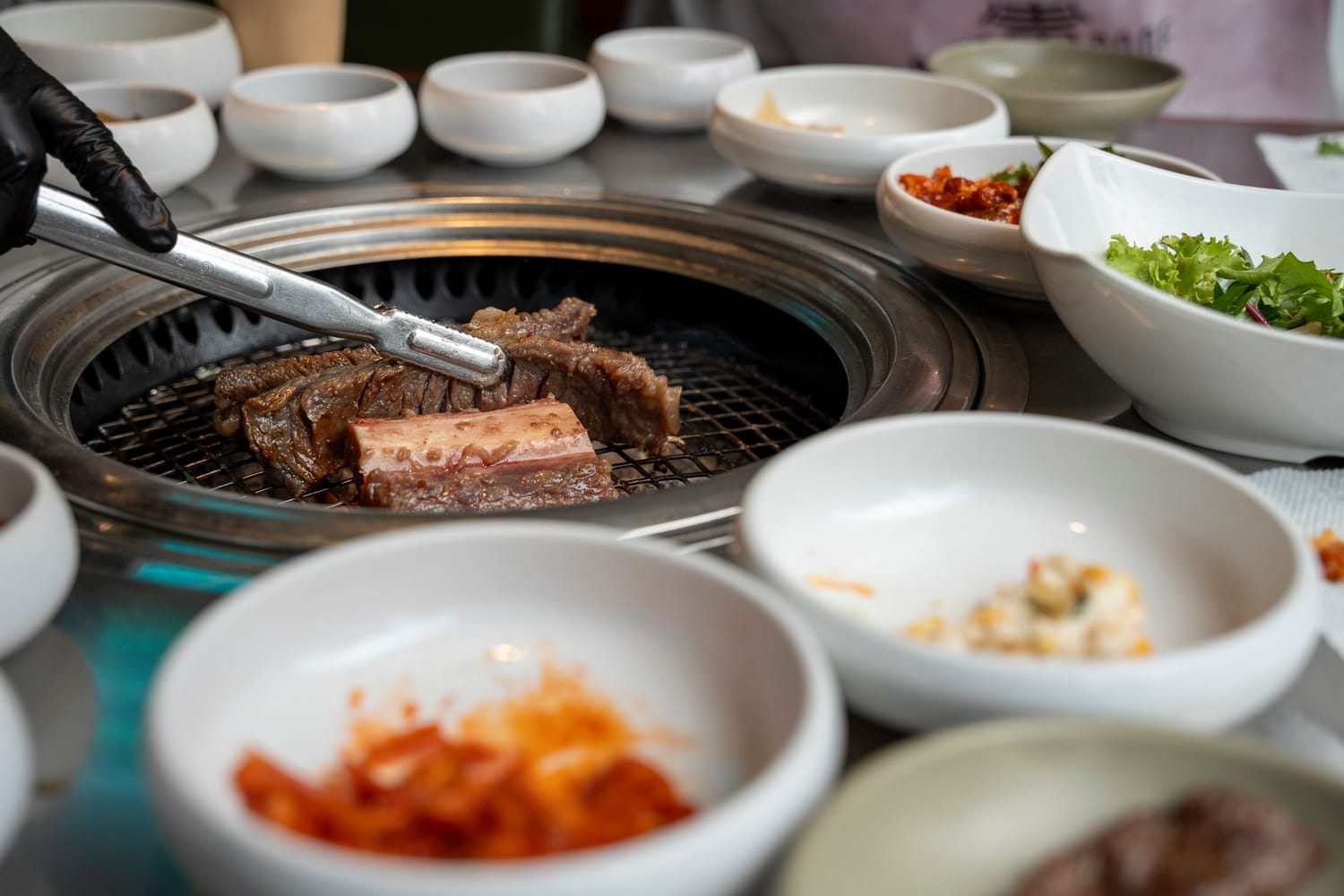
Korean Kitchen Scissors: Why Koreans Cut Meat and Noodles at the Table, and Why It Is Not an Office Scissor
Scissors on a restaurant table look wrong to most of the world and normal to every Korean. The tool is not a desk scissor: thick blades, one serrated edge, big rings, often detachable, built for galbi and cold noodles. Where it came from, and which one to buy.
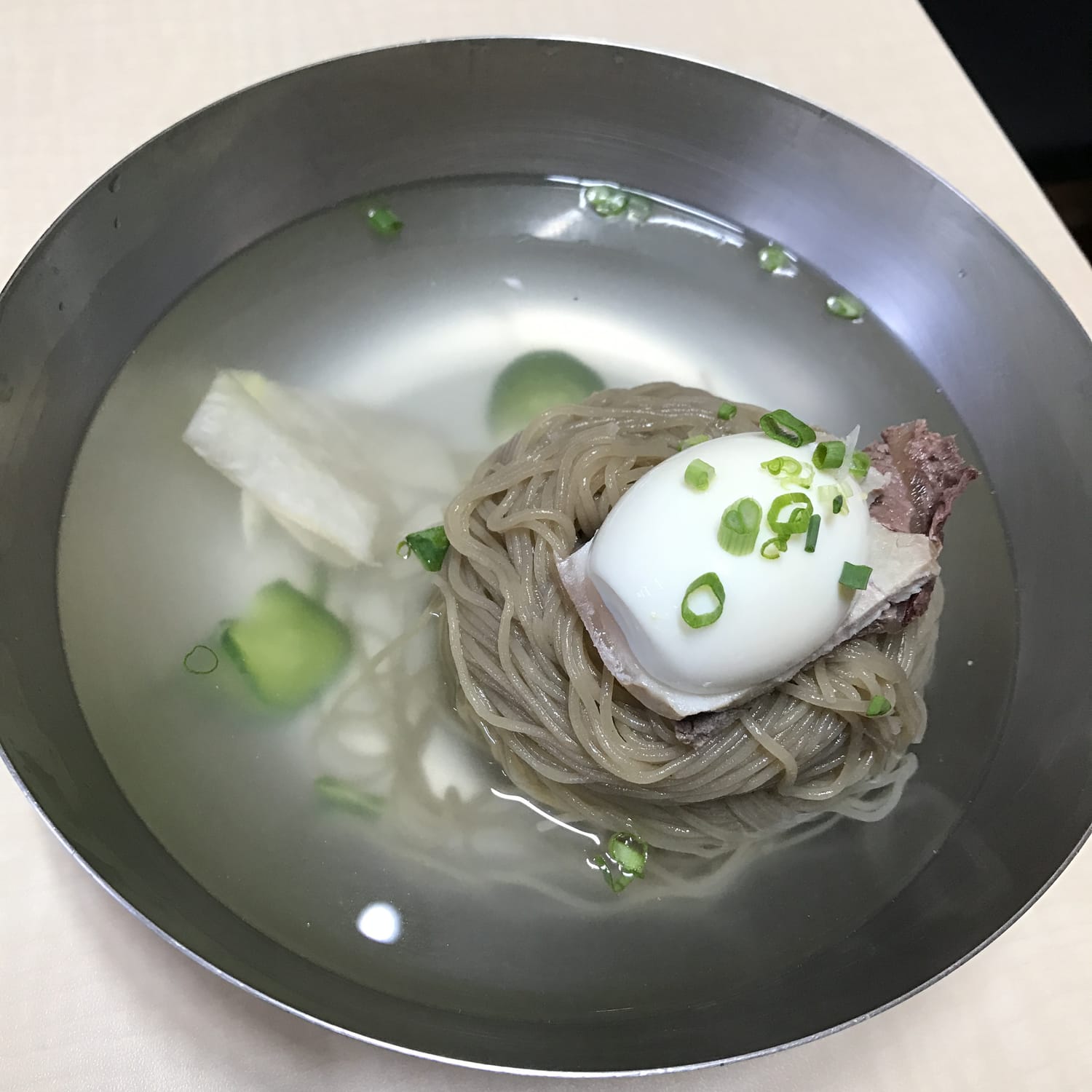
The One Korean Food Foreigners Never Learn to Love: Hamheung Naengmyeon, and Why Koreans Can't See the Problem
Foreigners who eat cheonggukjang and even hongeo still will not pay for this twice. A Korean creator who fed foreigners for years says naengmyeon was the overwhelming number one refusal, and Koreans, who rank it first every summer, cannot see why.
Why Do Koreans Stare at Foreigners? The 5% Country, and Where the Looking Actually Happens
In central Seoul nobody looks at you. In a provincial market, a small town or a subway car of grandmothers, they do. Korea only became a 5%-foreign country in 2025. Where the staring happens, what it means and does not mean, and what to do with it.