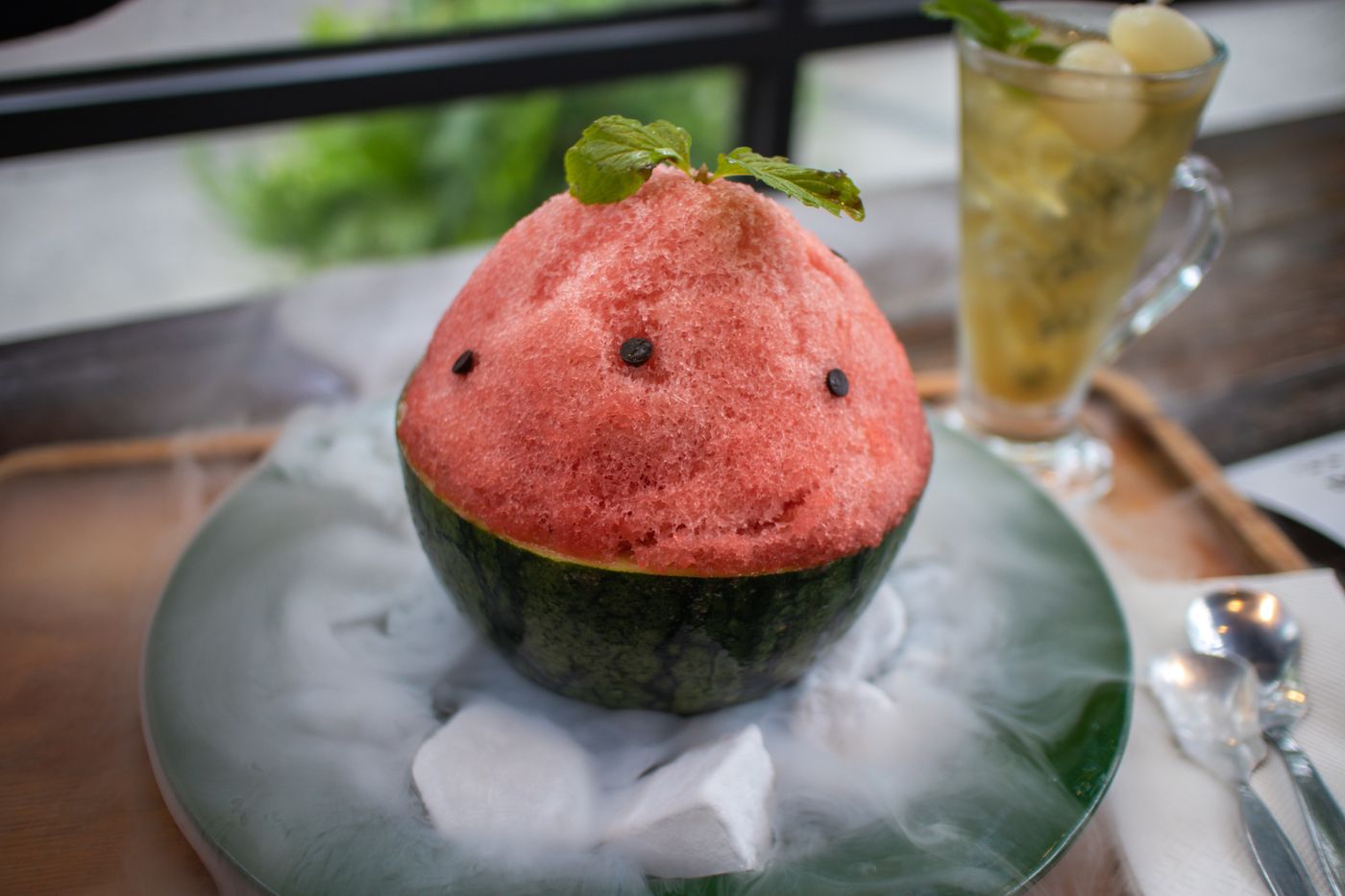
Korean Bingsu Guide: Why the Same Dessert Costs ₩9,900 and ₩149,000
Korean bingsu (빙수) is shaved ice with toppings. That definition is true and almost useless, because in Korea the same word covers a ₩9,900 bowl at a chain and a ₩149,000 bowl in a hotel lounge on the same afternoon.
That is a fifteen-fold spread. Nobody in Korea thinks these are the same purchase, and the gap is not really about the ice.
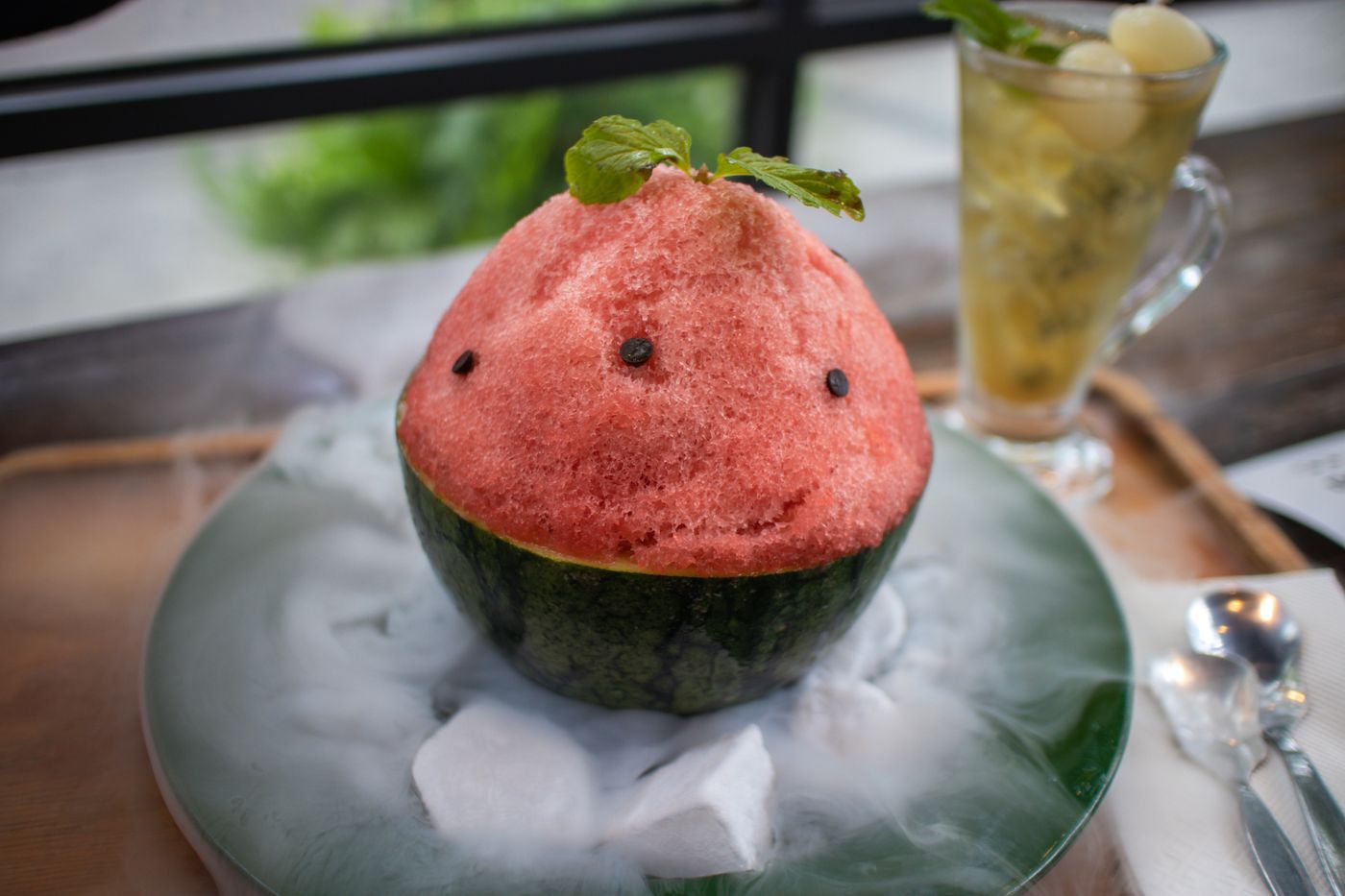
The Short Answer
| Tier | What it costs | What you are buying |
|---|---|---|
| Chain (설빙 Sulbing) | ₩9,900 for injeolmi | A reliable full-size bowl, visible menu, no reservation |
| Neighbourhood cafe | ₩8,000–15,000 | Seasonal fruit, atmosphere, variable technique |
| Entry hotel | ₩42,000–83,000 | Lounge seating, plated service, still hotel fruit |
| Flagship hotel 애망빙 | ₩120,000–149,000 | Jeju apple mango, and mostly the mango |
As of August 2026, ₩9,900 buys Sulbing's injeolmi bingsu and ₩149,000 buys the Four Seasons Seoul's Jeju apple mango bingsu for two. Prices below are this season's; confirm before you travel across Seoul for one bowl.
For a wider Korea summer plan, pair this with EpicKor's Korean hwachae guide, convenience store ice cream guide, and Korean cafe culture guide.
애망빙: How a Hotel Dessert Became Annual News
Every spring, Korean newspapers run the same story: how much the hotel mango bingsu costs now. In 2026 one headline joked that 애망빙 — the standard contraction of 애플망고빙수, apple mango bingsu — sounded like a stock ticker.
It is a real price story. The Shilla started selling apple mango bingsu at its Jeju property in 2008 as a local-ingredient project, then brought it to Seoul in 2011 at ₩27,000.
| Year | Shilla Seoul 애망빙 |
|---|---|
| 2011 | ₩27,000 |
| 2022 | ₩83,000 |
| 2023 | ₩98,000 |
| 2025 | ₩110,000 |
| 2026 | ₩130,000 |
That is 4.8 times the launch price, and the jump from 2025 to 2026 alone was 18.2%.
Here is the part that reframes it. Hotels use only Jeju-grown apple mango, because off-season or frozen fruit loses sweetness badly. One Jeju apple mango runs about ₩25,000 at retail, and Korean reporting puts the fruit at over 70% of the bowl's selling price.
So the ₩130,000 is not a markup on ice. You are buying several of the most expensive fruits sold in Korea, arranged in a lounge. Hotels say their margin on it is thin, and that is believable at 70% ingredient cost.
This Season's Hotel Prices, and What Has Already Closed
These are 2026 season prices against 2025, from Korean distribution reporting. All are two-person servings unless noted.
| Hotel | 2026 | 2025 | Change |
|---|---|---|---|
| Four Seasons Seoul | ₩149,000 | ₩149,000 | frozen |
| Signiel Seoul | ₩135,000 | ₩130,000 | +3.9% |
| Shilla Seoul | ₩130,000 | ₩110,000 | +18.2% |
| Josun Palace Gangnam | ₩130,000 | ₩120,000 | +8.3% |
| Lotte Hotel Seoul (R) | ₩120,000 | ₩110,000 | +9.1% |
| Grand InterContinental Parnas | ₩120,000 | ₩110,000 | +9.1% |
| Walkerhill | ₩95,000 | ₩85,000 | +11.8% |
| JW Marriott Dongdaemun | ₩83,000 | ₩78,000 | +6.4% |
| Le Meridien Myeongdong | ₩42,000 (one person) | — | — |
Hotels attribute the rises to Jeju apple mango costs, labour, rent and operating expenses. The Four Seasons held its price and is still the most expensive.
The dates matter more than the prices if you are here now. Hotel bingsu is a season, not a menu item:
- Ends 31 August: Shilla Seoul, Signiel Seoul, Shilla Jeju (₩90,000)
- Ends 3 September: JW Marriott Dongdaemun
- Ends 30 September: Four Seasons Seoul, Grand InterContinental Parnas, Le Meridien Myeongdong
- Already closed: Lotte Hotel World ran only 6 May – 30 June
- Not running in 2026: The Plaza
Two practical notes. Le Meridien Myeongdong's ₩42,000 is a single-person portion, which is unusual — most hotel bingsu assumes two people, so a solo traveller normally pays for a bowl they cannot finish. And the Lotte Hotel Seoul four-person L size is ₩220,000, which is worth knowing before a group orders casually.
설빙 Sulbing: The Chain That Invented the Category
Almost every bingsu you see in Korea today descends from one shop in Busan.
설빙 — the characters 雪氷 literally read "snow ice" — began in 2010 as a dessert cafe called 시루 (Siru), founded by Jeong Sun-hee (정순희), who had studied food and nutrition in Japan. The company incorporated under the Sulbing name in 2013. Its invention was 인절미빙수, injeolmi bingsu: fine milk snow buried under roasted soybean powder, chewy rice cake and almonds.
That single bowl created the modern format. Before it, Korean bingsu was mostly coarse water ice with red bean; Sulbing made snow-textured milk ice the default and grew past 490 domestic franchises by 2018. A private equity firm bought a 70% stake in 2023.
Current prices, as of 2026: 인절미설빙 is ₩9,900. Sulbing raised 11 of its 28 bingsu items this year by an average of 4.2%, roughly ₩400–600 each, and delivery orders carry a separate menu with about ₩1,000 added per item — so the delivery price you see in an app is not the in-store price.
If you are reading this from the United States, Sulbing now runs five US locations and opened its first Thailand store in July 2026, with franchise agreements signed toward Florida, Chicago and Atlanta.
Patbingsu, and Where the Ice Actually Came From
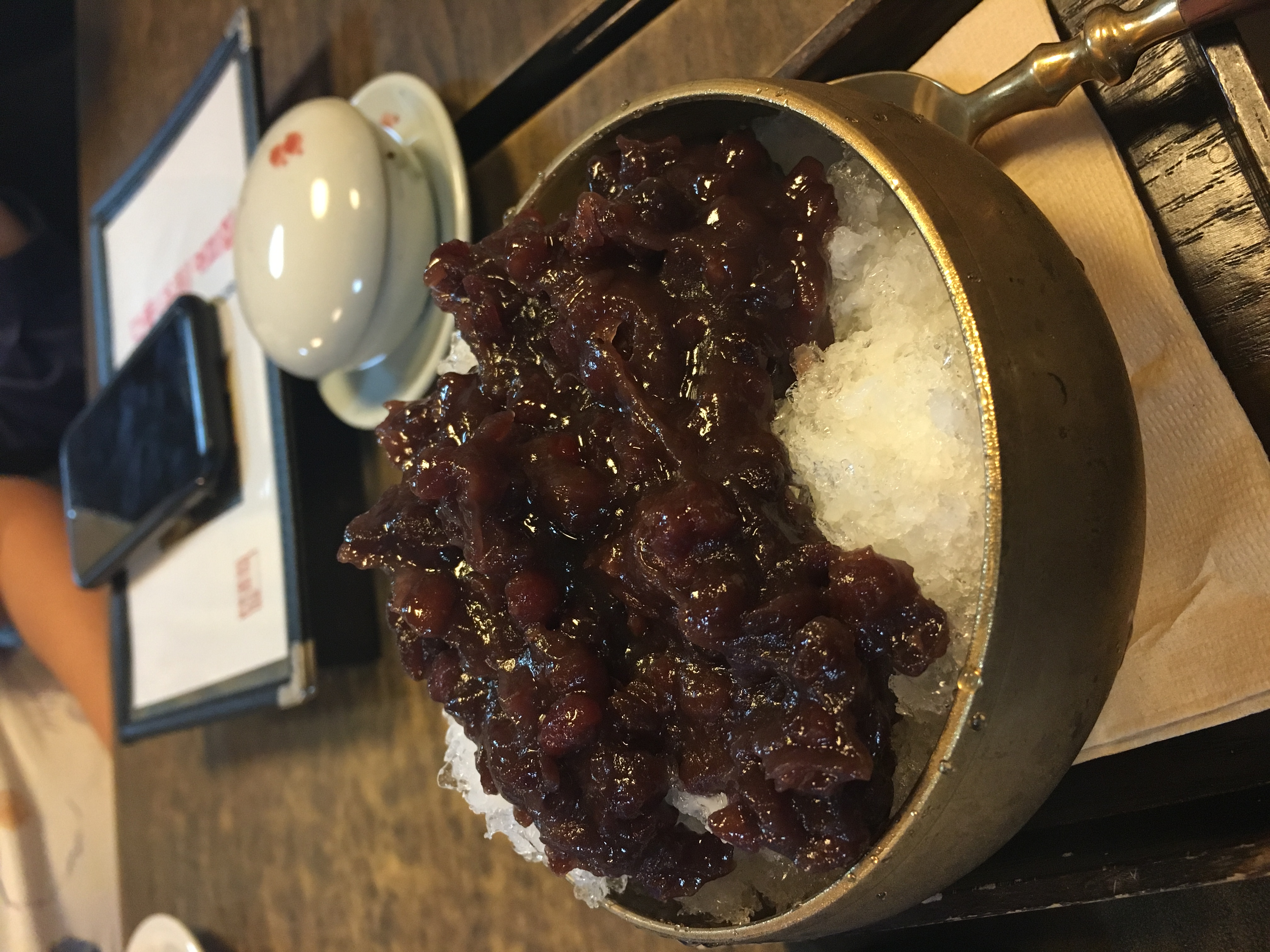
팥빙수 — red bean shaved ice — is the older Korean baseline: shaved ice, sweet red beans (팥), condensed milk, usually rice cake.
The ice part is genuinely old. Joseon-era Seoul kept royal ice houses, and 서빙고 — the West Ice Store, which still names the Yongsan neighbourhood and its subway station — stored ice distributed to officials. Records describe it being crushed or served on a tray under fruit.
The modern bowl is younger and more tangled. Shaved ice with syrup arrived in Korea in the Japanese kakigori (카키고오리) form during the colonial period, 1910–1945. But kakigori is essentially ice and syrup, closer to a slush. The combination of shaved ice with sweet red bean is the Korean part — that pairing, plus milk and rice cake, is what separates patbingsu from what it grew out of.
This is worth knowing because English writing about bingsu often calls it "the Korean version of kakigori," which gets the lineage right and the dish wrong.
Choosing Your First Bowl
The first question is whether you like red bean. If yes, start with patbingsu. If no, start with mango, strawberry, melon or injeolmi. Do not force red bean on a first bowl because it feels traditional.
The second is fruit freshness or milk richness. Fruit bingsu is brighter and lighter. Milk snow is softer and more dessert-like. Injeolmi is the heaviest of the common orders — the powder, nuts and rice cake fill you up.
The third is group size. Most Korean bowls are built for two. A two-person bowl after dinner is too much for one person, and a hotel bowl is emphatically not a quick cooling snack.
| Type | Korean | Flavour | Best for |
|---|---|---|---|
| Patbingsu | 팥빙수 | Red bean, milk, rice cake, gentle | The Korean baseline |
| Injeolmi bingsu | 인절미빙수 | Roasted soybean powder, nuts, chewy | Nutty, filling, Sulbing's signature |
| Mango or strawberry | 망고·딸기빙수 | Fruit-forward, often creamy | First-timers, couples |
| Matcha or coffee | 녹차·커피빙수 | Bitter-sweet, less childlike | People who dislike sweet desserts |
| Hotel 애망빙 | 애플망고빙수 | Jeju apple mango, plated | One special occasion, May–September |
If you are unsure, pick a medium fruit bingsu at a cafe where people are visibly eating it. Turnover is the best available signal: a busy summer cafe is more likely to have ripe fruit and a proper shaving rhythm.
Ordering Etiquette
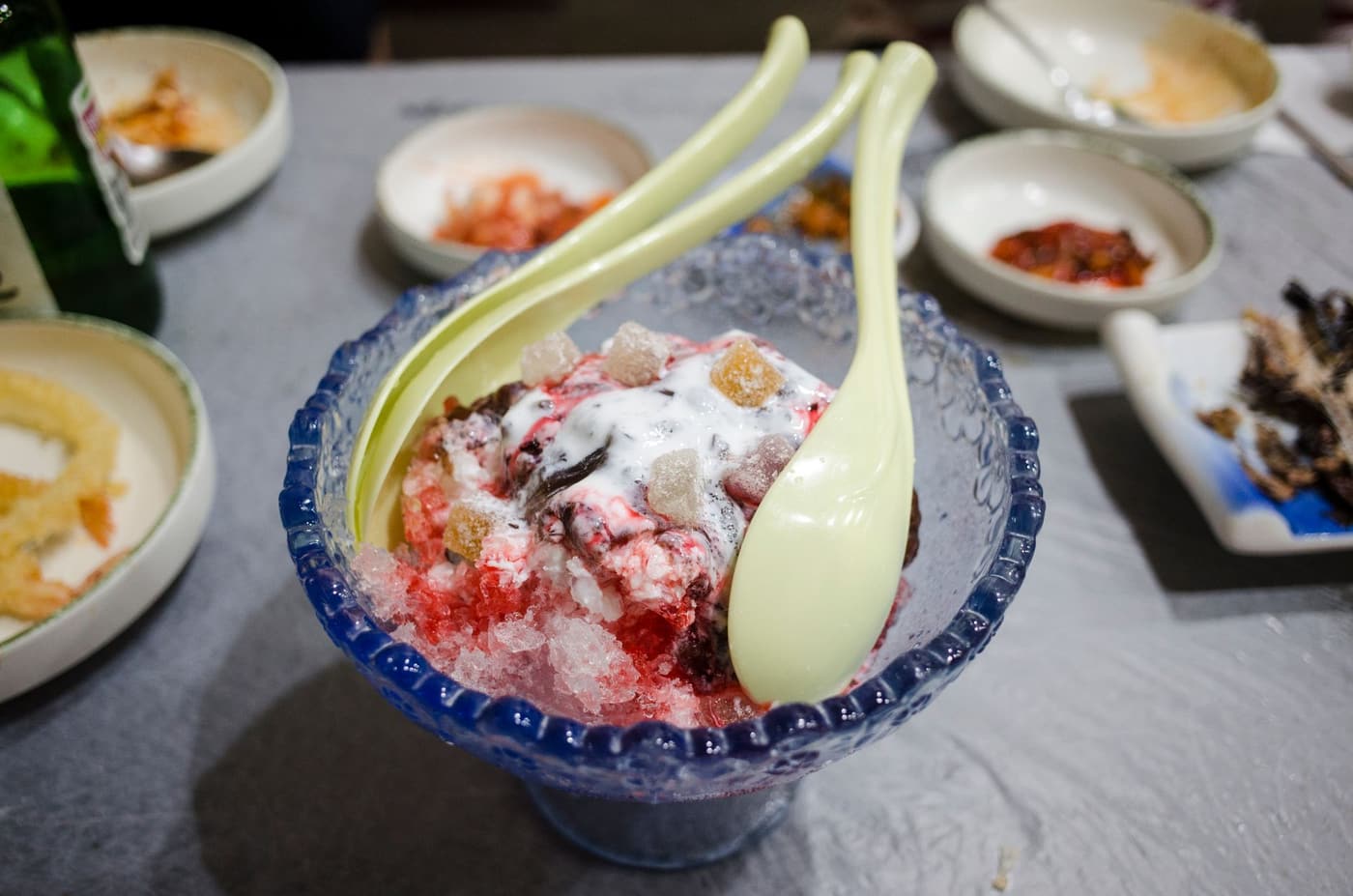
Bingsu is a shared dessert. One bowl plus drinks is normal for two people. In busier cafes each person may be expected to order something, especially if you settle in — a small independent shop will not love four people sharing one bowl for two hours in peak summer.
Do not wait too long after it arrives. Bingsu is designed to change as it melts, but it should not become soup before you start. Take the photo, then eat.
If condensed milk comes on the side, add it gradually. Many first-timers pour all of it immediately and flatten the bowl into sugar. The best bingsu holds contrast: cold ice, sweet sauce, soft beans, chewy rice cake, fruit acidity, powder or nuts.
If you are sensitive to dairy, ask before ordering. Modern bingsu usually uses milk ice, and a fruit-looking bowl may contain dairy all the way through the base.
What Makes a Good Bowl
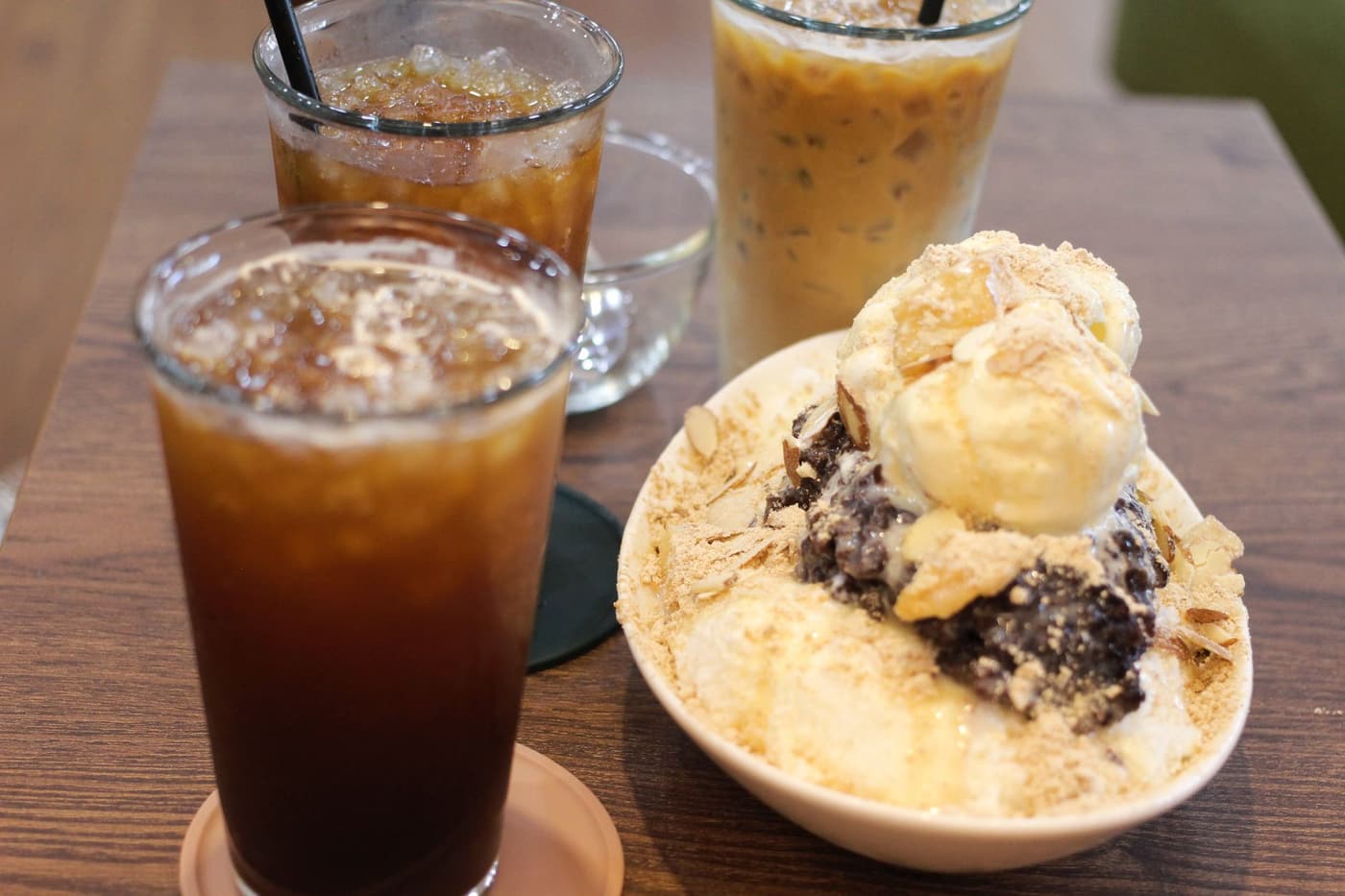
Good bingsu starts with the ice. Fine milk snow should feel fluffy and light, not hard or crunchy. Old-school ice is more crystalline, which is fine if the shop means it.
Toppings should match the bowl. Patbingsu needs enough red bean to flavour the ice without turning every bite to paste. Fruit bingsu needs ripe fruit, not only syrup. Injeolmi needs the powder, rice cake and nuts distributed so you do not hit dry spoonfuls.
Balance beats size. Oversized bingsu photographs well, but if the centre is plain ice and everything sits on top, the second half is boring. The best bowls keep flavour through the layers.
When Not to Buy the Expensive One
The honest counter-advice, since this guide has just spent several hundred words on ₩130,000 desserts.
Skip the hotel bowl if you only want to cool down. That is what the ₩9,900 tier is for, and it does the job better because you can order it on the spot, near wherever you already are.
Skip it if you are alone, unless you are at Le Meridien Myeongdong. Everything else assumes two people, and hotel bingsu melts on the same schedule as the cheap kind.
Skip it outside May to September. Jeju apple mango is the entire proposition, and out of season it is either unavailable or not the same fruit — which is exactly why hotels only run it in those months.
And do not order it right after Korean BBQ or a market crawl. Injeolmi, chocolate, cheesecake and hotel fruit bowls are all heavy. Share one.
Making It at Home
Freeze milk with a little condensed milk, shave or crush it finely, then add red bean paste, fruit, rice cake, cereal, nuts or syrup. A real shaved ice machine gets closest to the texture, but crushed frozen milk still works.
The easiest version is fruit bingsu: shaved milk ice, sliced mango or strawberry, condensed milk, a small scoop of ice cream. The most Korean baseline is red bean, rice cake and condensed milk. The most cafe-like is injeolmi powder, almonds, rice cake and a little honey.
Do not overbuild the first bowl. Ice texture plus one main flavour is enough. Add more only once the base works.
Sources
Hotel prices and year-on-year changes come from Korean distribution reporting in Money Today and News1, with season dates cross-checked against a 2026 hotel bingsu price roundup. The Shilla price history, the Jeju apple mango sourcing figures and the 애망빙 naming come from Korean-language reference material on 애플망고빙수 and 설빙. Sulbing menu prices are from the company's own menu page. The 서빙고 ice-house background is from the Encyclopedia of Korean Culture.
Hotel bingsu runs on a season and prices move every spring. Confirm the current price and closing date with the property before making a trip out of it.
FAQ
Q: Why is hotel bingsu so expensive in Korea?
A: Because you are mostly paying for fruit. Flagship hotels use only Jeju-grown apple mango, which costs around ₩25,000 per fruit at retail and accounts for over 70% of the bowl's selling price according to Korean reporting. The Shilla Seoul bowl went from ₩27,000 in 2011 to ₩130,000 in 2026, an 18.2% rise in the last year alone, and hotels cite mango cost, labour and rent.
Q: What is the difference between bingsu and patbingsu?
A: Bingsu (빙수) is the whole shaved-ice category. Patbingsu (팥빙수) is the red bean version — shaved ice, sweet red beans, condensed milk, usually rice cake. The pairing of shaved ice with sweet red bean is the Korean contribution; the shaved-ice-with-syrup format itself arrived from Japanese kakigori during the colonial period.
Q: How much does normal bingsu cost in Korea?
A: At Sulbing (설빙), the chain that created the modern format, injeolmi bingsu is ₩9,900 as of 2026. Neighbourhood cafes generally run ₩8,000–15,000. Note that Sulbing's delivery menu is priced separately, adding roughly ₩1,000 per item over the in-store price.
Q: When can you get mango bingsu in Korea?
A: Roughly May to September, and each hotel sets its own window. In 2026 the Shilla Seoul and Signiel Seoul close on 31 August, JW Marriott Dongdaemun on 3 September, and the Four Seasons Seoul and Grand InterContinental Parnas on 30 September. Lotte Hotel World only ran from 6 May to 30 June, and The Plaza did not run it at all.
Q: Can one person order hotel bingsu?
A: Almost all of them are two-person servings, so a solo diner pays full price for a bowl they will not finish. The exception in 2026 is Le Meridien Seoul Myeongdong, which sells a single-person tropical mango bingsu at ₩42,000 through 30 September.
Q: Is bingsu always made with milk?
A: No, but usually. Older and simpler versions use water ice, while most modern Korean cafes use milk-based shaved ice for the snow texture. If you avoid dairy, ask before ordering — condensed milk, cream or ice cream may also be layered in.
Q: What bingsu should I try first?
A: For the Korean baseline, patbingsu or injeolmi bingsu. For the easiest first bowl, mango or strawberry. If you dislike very sweet desserts, look for matcha, coffee, or a fruit version with the sauce served on the side.
You Might Also Like
Korean Hwachae: Summer Fruit Punch and Picnic Culture
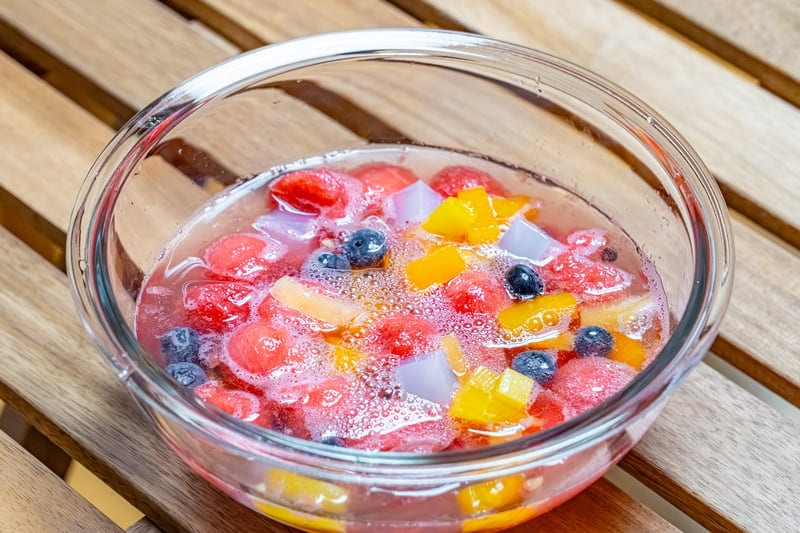
Korean hwachae is watermelon fruit punch, and 2026 flipped its economics — after a ₩30,132 spike in May, wholesale watermelon fell about 35% year on year. The milk and soda versions, picnic culture, and a home recipe.
Yonsei Cream Bread: Korea's 100-Million-Unit Convenience Store Bun
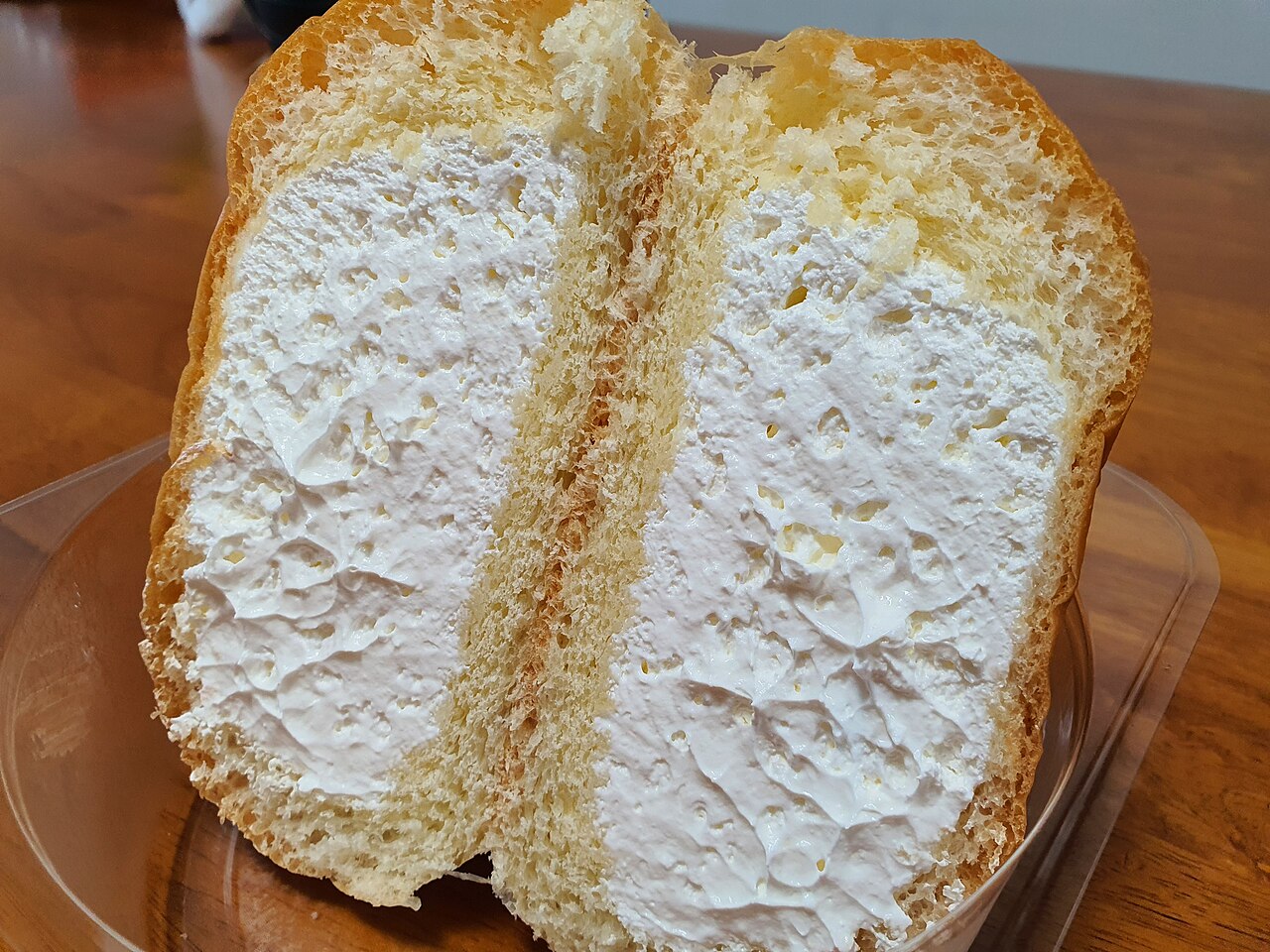
Yonsei Cream Bread sells about 45 units a minute in Korea and passed 100 million in April 2026. Around 80% of its weight is cream, it is CU-exclusive, there are 39 varieties, and Koreans eat it frozen. Here is how to buy the right one.
Samgyetang And Boknal 2026: Korea's Hot Summer Soup
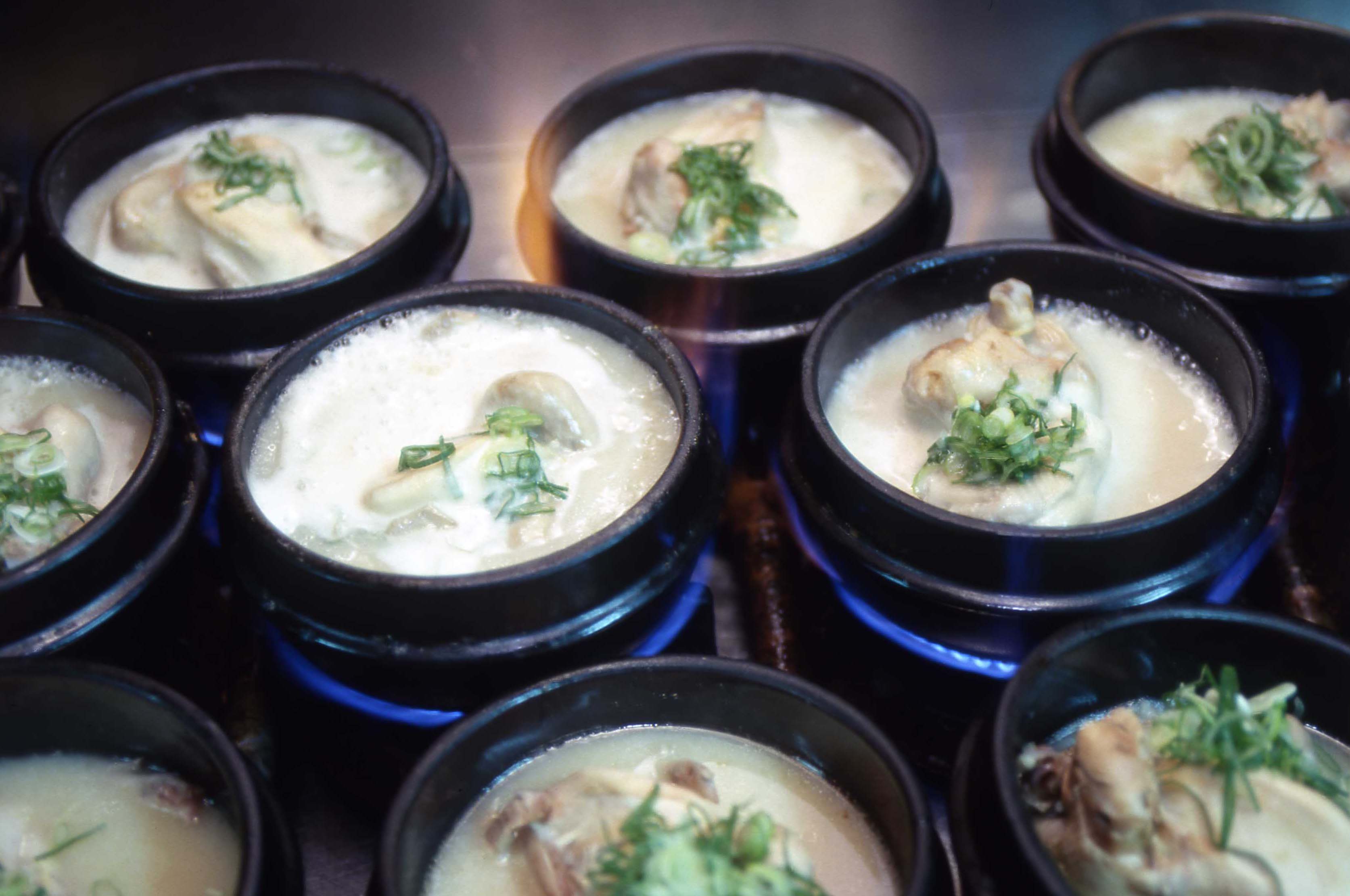
Korea's 2026 Boknal days are 15 July, 25 July and 14 August — an unusually long gap called wolbok. What samgyetang is, what a bowl costs in Seoul now (₩18,154 average), and why Koreans eat boiling soup in the hottest week of the year.