
Ajeossi Movie Explained: Korea's The Man from Nowhere and Won Bin
Ajeossi movie is the search people make when they remember the Korean title, the Won Bin stare, or the word 아저씨, but cannot quite connect it to the English release title: The Man from Nowhere. The 2010 Korean action thriller became one of the most memorable Korean film exports of its era because it made a simple relationship word feel dangerous, protective, lonely, and cinematic.
This guide explains the title, the Korean word, the English name, Won Bin's role, the poster, and the key scenes people keep looking up. It stays mostly spoiler-light, but it does discuss the movie's setup and image language, so watch the film first if you want to know absolutely nothing.
Quick Answer: What Is The Ajeossi Movie?
The movie people call Ajeossi is The Man from Nowhere, a 2010 South Korean action thriller directed by Lee Jeong-beom and starring Won Bin and Kim Sae-ron. The Korean title is 아저씨, commonly romanized as Ajeossi or Ahjussi. In everyday Korean, ahjussi means an older adult man, "mister," or a middle-aged man depending on context. In the film, the word becomes personal because a young girl uses it for a quiet pawnshop owner who looks like a nobody but is not one.
The English title, The Man from Nowhere, shifts the focus from the social word to the mystery. It tells international viewers that this man has no visible past, no obvious community, and no simple identity. The Korean title tells Korean viewers something slightly different: this is about the man a child calls "ahjussi," and about what happens when that ordinary address becomes the only human connection he still answers to.
If you reached this page while trying to understand the word itself, read EpicKor's Oppa, samchon, and ahjussi guide after this. The language meaning and the movie meaning overlap, but they are not the same.
Lonely Planet Korean Phrasebook & Dictionary — on AmazonAffiliate link. As an Amazon Associate, EpicKor earns from qualifying purchases at no extra cost to you.
Why The Title 아저씨 Matters
In Korean, 아저씨 is not a glamorous word. It is practical, everyday, and sometimes uncomfortable. It can mean a man older than you, a random adult male, a neighborhood mister, a driver, a worker, or a man who is no longer socially read as young. Depending on tone, it can be neutral, rude, affectionate, teasing, or distancing.
That is why the title works. Calling the movie "Ajeossi" does not make Won Bin's character sound like a superhero. It makes him sound like a man outside the spotlight. He is not introduced as a named savior, detective, uncle, brother, or boyfriend. He is just "the man," "the mister," the quiet adult nearby.
The emotional trick is that the word becomes warmer because of who says it. A child can use ahjussi with a different temperature than an adult stranger. The girl in the film does not fully know his history, but she gives him a social place. He is not family, but he is not nothing. The title turns that small placement into the movie's emotional engine.
That nuance is hard to translate. "Mister" sounds too thin in English. "Uncle" sounds too familial and would confuse the relationship. "The Man from Nowhere" loses the Korean social texture, but it gives international audiences the mythic action-thriller frame.
| Title / Term | Literal Signal | What It Does In The Film |
|---|---|---|
| 아저씨 | Older man, mister, adult male address | Makes the hero feel ordinary, distant, and emotionally reachable. |
| Ajeossi / Ahjussi | Romanized Korean title or keyword | Connects searchers to the Korean word and the movie's original identity. |
| The Man from Nowhere | English release title | Frames the hero as mysterious, isolated, and action-ready. |
| Won Bin's character | Quiet pawnshop owner with a hidden past | Turns a social label into a revenge-protection story. |
The Poster: Why It Still Works
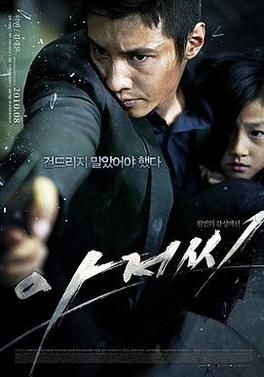
The poster is direct. Won Bin is placed forward with a weapon and a hard stare, while the child is close behind him. The composition tells you the movie is violent, but not only violent. It is built around protection. The child is not decoration; she is the reason the title matters.
For people searching in English, the poster also solves a recognition problem. Many viewers remember "that Korean action movie with Won Bin," "the Korean movie called Ahjussi," or "The Man from Nowhere poster with the girl." The poster fuses all of those memories: Korean title, action star image, child-protection premise, and the bleak blue-gray mood of late-2000s Korean thrillers.
The Korean text on the poster is also useful for learners. You can see 아저씨 visually, not only romanized as Ajeossi. If you are learning Korean through film titles, this is a strong example of why romanization is never enough. Search engines may understand "Ajeossi," "Ajusshi," "Ahjussi," and "The Man from Nowhere," but the original title has its own cultural weight.
Won Bin And The Controlled-Emotion Hero
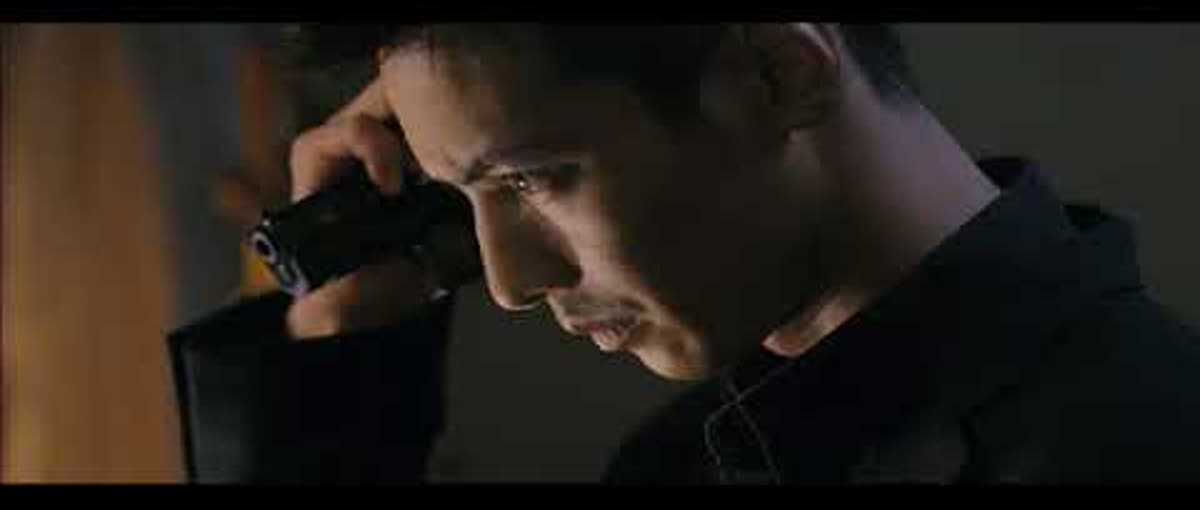
Won Bin's performance is a major reason the film stuck. He does not play the character as chatty, charming, or openly heroic. The performance is compressed: quiet movement, controlled face, sudden violence, and eyes that do more narrative work than dialogue.
That style fits Korean action melodrama. The hero is emotionally damaged, but the movie does not stop to explain every feeling. It lets silence become part of the character. When he moves, the audience feels the change because he had been so still. When he looks at someone, the gaze carries the threat.
This is also why the film became a reference point for later "quiet man with a hidden past protects a vulnerable person" conversations. It is not the only movie with that structure, but it is one of the Korean examples global viewers remember most easily.

The Shaving Scene And The Transformation Image
The shaving scene is one of the most searched visual memories connected to Ajeossi. It is not only a style change. It is a cinematic switch. The quiet pawnshop man becomes visibly prepared for action. The haircut strips away hesitation and turns grief, anger, and purpose into a clean silhouette.
Korean cinema often uses body, hair, clothes, and face as emotional shorthand. In this case, the shaved-head look makes the character feel more severe, but it also makes him less hidden. He is choosing to become visible in the world he had avoided.
That is why the scene works even for people who have not watched the movie in years. They may forget plot details, but they remember the mirror, the razor, the stare, and the sense that the film has crossed a line. After that moment, the title "ahjussi" no longer feels casual. It feels like a warning.

Why The English Title Changes The Feeling
The English title The Man from Nowhere is effective, but it changes the emotional entry point. It makes the film sound like a mystery-action story about a man without origins. That is good marketing for international audiences because it needs no Korean language knowledge.
But the Korean title gives the story a social frame first. "Ahjussi" is what someone calls him, not what he calls himself. That matters. The movie is not only asking "Who is this man?" It is asking "What does this man become when one person still sees him as someone worth calling?"
This is one reason direct title translation can fail. A literal English title like "Mister" would not carry the same age, social distance, child-speaker warmth, and street-level Korean feeling. The English release title sacrifices linguistic nuance for genre clarity. The Korean title sacrifices genre clarity for emotional specificity.
Both are defensible. Together, they explain why the film keeps ranking in search through multiple query paths: Korean title, English title, actor name, and word meaning.
Is Ajeossi The Same As Ahjussi?
Yes, in practical search terms. Ajeossi, Ahjussi, Ajusshi, and 아저씨 all point to the same Korean word, though romanization varies. "Ajeossi" is commonly used for the movie title because of official or database romanization patterns. "Ahjussi" is common in language-learning and K-drama fan contexts because it looks closer to how many English speakers hear the word.
For language learners, do not treat spelling variants as different Korean words. The Korean spelling is the anchor: 아저씨. The romanized spelling is only a bridge.
Also remember that the word in real life can be risky. Calling a stranger ahjussi may be fine in some practical settings, but it can also sound blunt, old-fashioned, or rude depending on age, tone, and relationship. The movie makes the word emotionally powerful, but that does not make it a cute word to use casually in Korea.
What To Know Before Watching
The Man from Nowhere is a violent action thriller with crime, trafficking, revenge, and child-in-danger themes. It is not a light "Korean culture" movie, even though the title teaches a Korean word. If you are sensitive to brutal action or dark crime plots, check content details before watching.
It is also not a film you should reduce to one cool action sequence. The action works because the emotional setup is clear. The child does not magically turn the hero into a good man; she gives his buried humanity a direction. The movie's violence then becomes connected to protection, guilt, rage, and recovery, not only spectacle.
For K-cinema beginners, it pairs well with other Korean thrillers from the 2000s and early 2010s, but it is more accessible than some darker psychological films because its central relationship is easy to follow. The moral world is not subtle, but the emotional hook is strong. If your Korea movie interest came from newer fan searches instead, EpicKor's KPop Demon Hunters Korea guide shows a very different path from screen curiosity into real Korean culture.
Search Intent: What People Usually Mean
When people search "ajeossi movie," they usually mean one of five things.
They may want the English title. The answer is The Man from Nowhere.
They may want the Korean meaning of 아저씨. The short answer is "older man" or "mister," but the full meaning depends on tone and relationship.
They may want the Won Bin film. Yes, this is the Won Bin and Kim Sae-ron action thriller from 2010.
They may want the shaving scene or poster. Those became the film's strongest visual memory points.
They may want to know whether "ahjussi" is polite. The answer is: not automatically. It can be normal, but it can also sound too blunt if you use it without context.
This makes Ajeossi a useful EpicKor topic because it sits between Korean language, Korean film, and global search behavior. A single movie title becomes a lesson in translation.
Sources Checked
For factual orientation, this post checked the film's public title and database information through Wikipedia's film entry, box office listing context through Box Office Mojo, and film database context through HanCinema. Scene images were sourced from CJ ENM's official YouTube materials, including the official international trailer and CJ ENM clip uploads.
Availability on streaming services changes by country and date, so this article does not list a "watch now" platform. Search your local legal streaming stores under both The Man from Nowhere and 아저씨.
FAQ
What does Ajeossi mean in English?
Ajeossi or ahjussi means an older adult man, "mister," or a middle-aged man depending on context. It is not exactly "uncle." In the movie, the word becomes warmer because a child uses it for the isolated main character.
Is Ajeossi the same movie as The Man from Nowhere?
Yes. Ajeossi is the Korean title, written 아저씨. The Man from Nowhere is the English release title. Both refer to the 2010 Korean action thriller starring Won Bin.
Why is the movie called The Man from Nowhere in English?
The English title emphasizes mystery and isolation for international audiences. It frames the main character as a man with no visible past or social place. The Korean title focuses more on the relationship word a child uses for him.
Is ahjussi rude in Korean?
It can be neutral, but it is not automatically polite. Tone, age, relationship, and situation matter. For tourists, "excuse me" phrases or job titles are usually safer than calling a stranger ahjussi.
Is The Man from Nowhere a good first Korean action film?
Yes, if you can handle dark crime themes and violence. It is direct, emotional, and visually memorable, which makes it easier to enter than some more complex Korean thrillers.
Final Take
Ajeossi lasts because the title is smaller than the movie. It is an everyday Korean word, but the film loads it with loneliness, danger, responsibility, and recognition. The English title tells you he comes from nowhere. The Korean title tells you someone still calls him something.
That difference is the reason people keep searching for the movie years later: they are not only looking for an action film. They are trying to understand why one ordinary Korean word made the action feel personal.
You Might Also Like
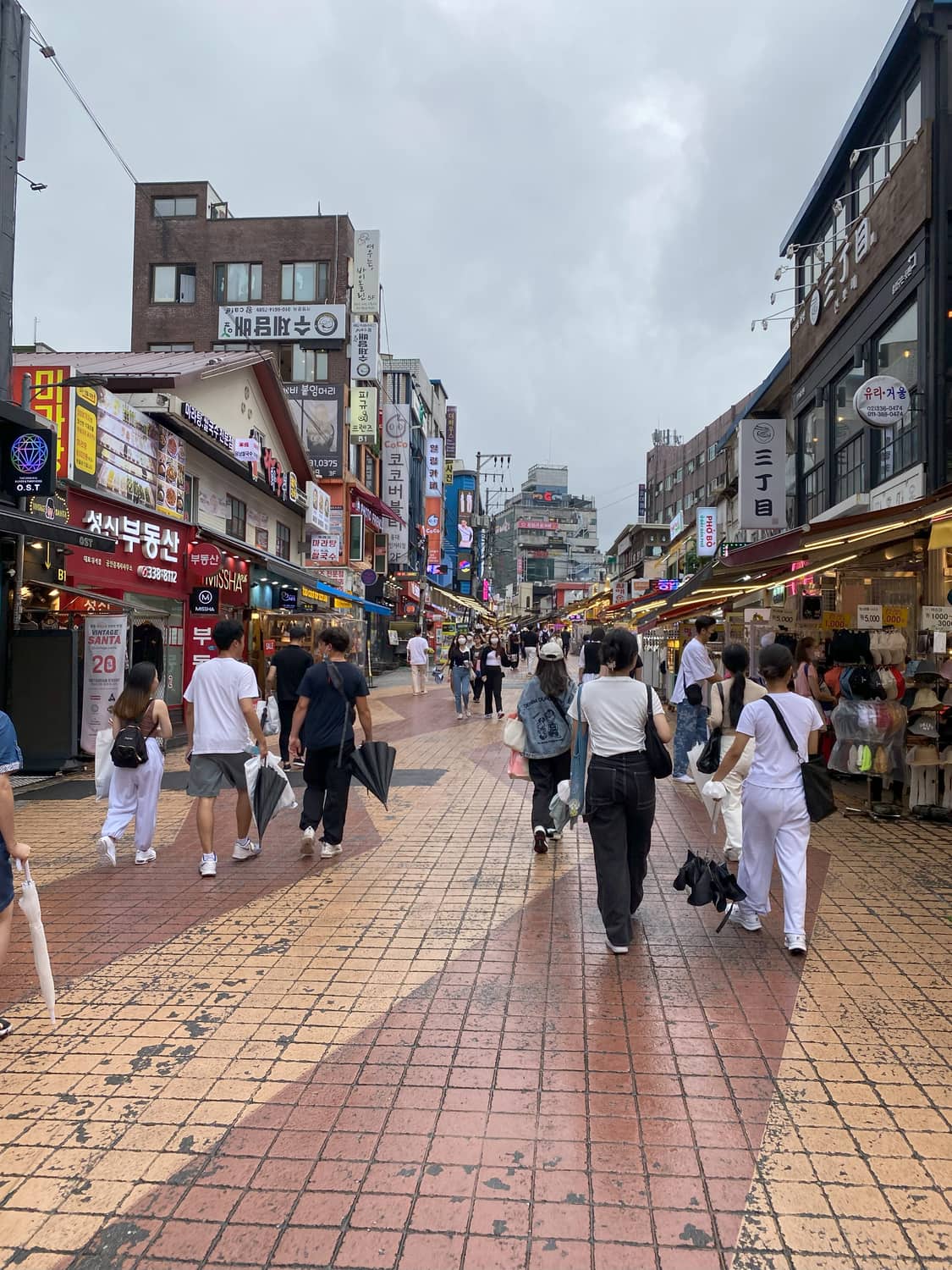
Do Koreans Speak English? Ask Someone Under 35 — What Actually Happens on a Seoul Street
Yes, if you ask the right person. Stop a Korean in their twenties or thirties on a Seoul street and you will almost always get an answer in English. The forum answer that says otherwise is twenty years old. Who to ask, how to ask, where English is built in.
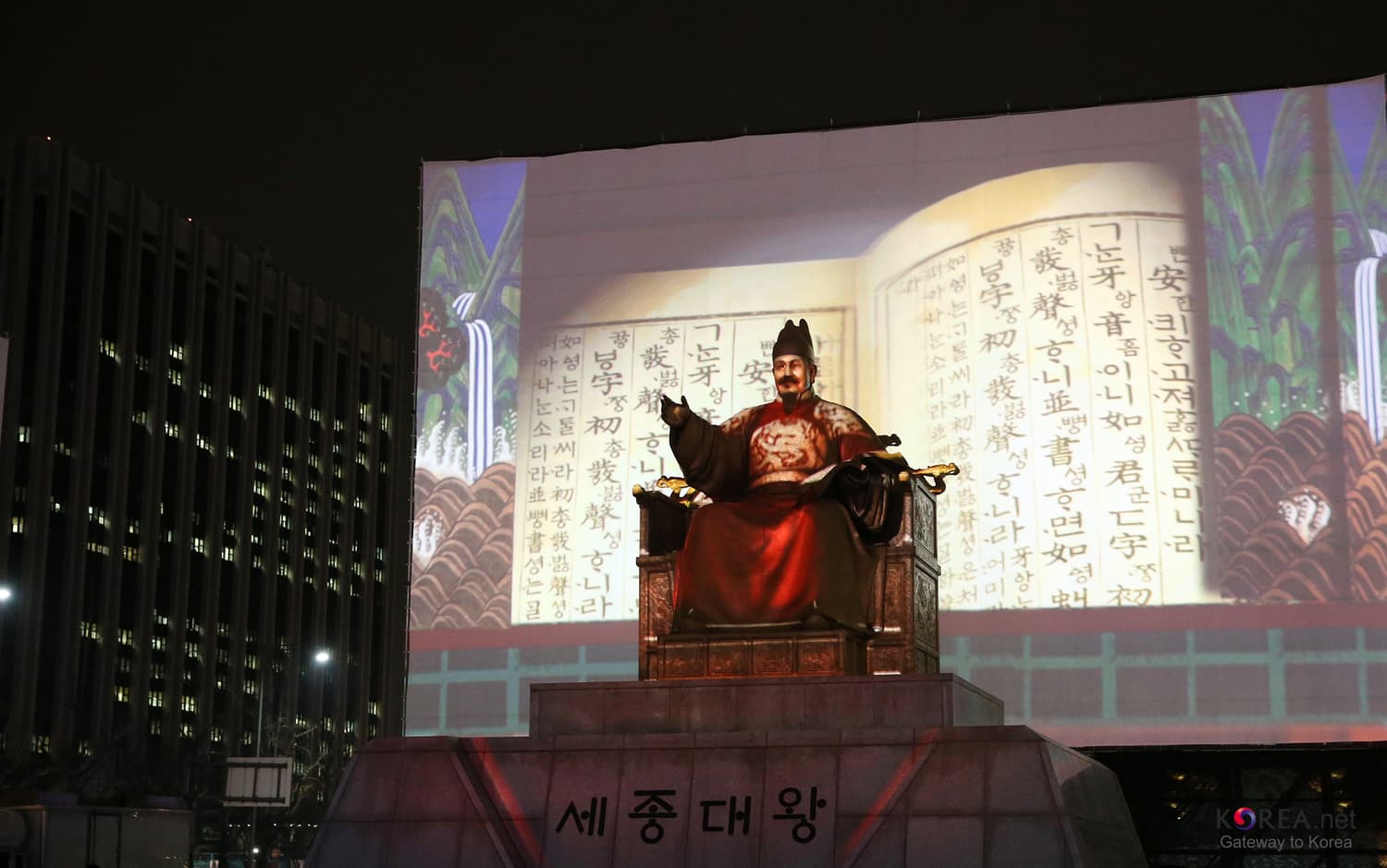
Hangul Day in Seoul: What's Open on Korea's October 9 Holiday
Korea's National Hangul Museum is shut until late 2028, so most English guides send you to a construction site. What is open on Friday 9 October 2026, the free Hangul Day centenary exhibition at Gwanghwamun, what closes, and why the date moved twice.

Ajumma Meaning: Is This Korean Word Rude? Ahjumma and Imo Explained
Learn what ajumma means in Korean, why it can sound rude, how it differs from ajumeoni and imo, and what travelers should say instead.