Korean Skincare Routine Order 2026: Simple AM and PM Steps
Korean skincare routine order is much simpler than the internet makes it look. Cleanse first. Apply the light products or treatments that genuinely fit your skin. Add moisturizer. Finish the daytime routine with sunscreen. A toner, essence, ampoule, sheet mask, eye cream, face mist, and beauty device are optional layers, not admission tickets to K-beauty.
That distinction matters in 2026 because Korean skincare is easier to buy globally than ever. Korea's Ministry of Food and Drug Safety reported that Korean cosmetics exports reached USD 11.4 billion in 2025, with basic skincare providing most of the export value. More products on more shelves create choice, but they also create a routine that can become expensive, irritating, and impossible to maintain.
This guide gives you a realistic Korean skincare routine for morning and night, explains toner versus essence versus serum and ampoule, and shows what to skip. It is general cosmetic guidance, not a diagnosis or a treatment plan. Persistent acne, eczema, rosacea, painful irritation, or a changing skin condition belongs with a qualified medical professional.
ROUND LAB 1025 Dokdo Cleanser — on AmazonAffiliate link. As an Amazon Associate, EpicKor earns from qualifying purchases at no extra cost to you.
Quick Answer: What Is the Correct Korean Skincare Order?
For most people, the practical order is:
- Cleanser
- Toner, if you enjoy one
- Essence, serum, or ampoule, choosing one main treatment lane
- Moisturizer
- Sunscreen in the morning
At night, remove sunscreen and makeup thoroughly, then use the same basic order without the final SPF. A sheet mask can sit after cleansing and toner but before moisturizer. An exfoliating product or prescription treatment needs its own instructions; do not insert it into a crowded routine only because a short video showed ten compatible-looking bottles.
The American Academy of Dermatology gives an even tighter sequence: gentle cleansing, medication or treatment if used, moisturizer and/or sunscreen, then makeup. That is the safest framework for understanding K-beauty. Korean formats can add enjoyable texture and choice inside the framework, but they do not replace it.
| Step | What It Does | Is It Essential? | Common Mistake |
|---|---|---|---|
| Cleanser | Removes sweat, oil, makeup, sunscreen, and daily residue | Yes | Using a harsh wash until skin feels squeaky |
| Toner | Adds a light hydrating or targeted layer | No | Assuming every toner must sting or exfoliate |
| Essence | Provides a light treatment or hydration layer | No | Buying one that duplicates the serum |
| Serum or ampoule | Targets one priority with a concentrated formula | No | Stacking several strong actives at once |
| Moisturizer | Helps reduce water loss and supports comfort | Usually | Choosing texture by trend instead of skin feel |
| Sunscreen | Protects exposed skin from ultraviolet radiation | Daytime essential | Applying too little or treating makeup SPF as enough |
Step 1: Cleanse Without Trying to Punish Your Skin
The cleanser's job is removal, not proof of effort. Use lukewarm water and a gentle product that leaves your skin comfortable rather than tight. The AAD recommends gentle washing and warns that scrubbing can irritate skin. Expensive skincare applied after an aggressive cleanse cannot reliably undo that discomfort.
In the morning, some people like a mild cleanser. Others with dry or easily irritated skin may prefer a water rinse, depending on their own needs and professional advice. At night, cleansing matters more because the day has added sunscreen, makeup, sweat, pollution, and oil.
Double cleansing means starting with an oil cleanser, balm, or micellar product to loosen makeup and water-resistant sunscreen, then following with a water-based cleanser. It is useful when the first cleanse leaves residue. It is not a rule that every person must perform twice every night. If one gentle cleanser removes your light sunscreen and makeup, a second wash may add work without adding value.
Step 2: Toner Is a Choice, Not a Reset Button
Traditional Western astringent toners created the idea that toner should strip the last trace of oil. Many modern Korean toners feel different: watery, lightly hydrating, and designed to prepare a comfortable first layer. Others contain exfoliating acids or ingredients marketed for pores, brightening, or calming.
Read the formula rather than trusting the word toner. A hydrating toner and an exfoliating toner do different jobs. If your toner contains an acid, it should not be casually layered with every retinoid, peeling pad, scrub, and strong serum you own.
Patting on seven toner layers is not automatically better than one. Start with one thin layer and observe how your skin feels over a few weeks. If moisturizer alone keeps your skin comfortable, toner is optional.
Build the base before the trend shelf: As an Amazon Associate, EpicKor may earn from qualifying purchases. Compare the ROUND LAB 1025 Dokdo Cleanser and ROUND LAB 1025 Dokdo Toner as two separate decisions. A cleanser should remove the day comfortably; a toner only earns its place if the extra layer improves your routine.
See ROUND LAB 1025 Dokdo Cleanser on AmazonStep 3: Essence, Serum, and Ampoule Are Overlapping Formats
The labels do not form a universal ladder. In general, an essence is light, a serum is more treatment-focused, and an ampoule is marketed as concentrated. In real stores, textures and ingredient levels overlap. One brand's essence may feel richer than another brand's serum.
Choose by function:
- For dehydration, consider one light hydrating product.
- For uneven-looking tone, choose one targeted cosmetic formula and use it consistently.
- For barrier discomfort, simplify first instead of adding three repair products.
- For a prescription or medical treatment, follow the clinician's instructions rather than a generic K-beauty order.
Apply lighter textures before heavier ones when the product instructions do not say otherwise. Let each layer settle enough to avoid pilling, but do not turn the bathroom into a forty-minute laboratory. If a serum and an ampoule have the same job, select one.
EpicKor's Korean PDRN skincare guide explains why an exciting ingredient story should not be confused with injection-level claims. The Korean wearable skincare guide makes the same distinction for patches, masks, and mist formats.
Step 4: Sheet Masks Are a Supporting Step
A sheet mask is best treated as a temporary hydration or comfort step. Use it after cleansing and, if you use one, toner. Follow the package time instead of leaving it on until the sheet is completely dry. Finish with moisturizer if your skin needs it.
The AAD notes that facial masks can complement a routine but do not replace cleansing, moisturizing, and sun protection. It also advises stopping immediately if a mask causes itching, burning, or stinging. That is more useful than the idea that discomfort proves the ingredients are working.
Do not combine a highly active mask with several other strong products on the same night. A simple hydrating mask before an event is different from an exfoliating mask, and neither needs to become a daily ritual.
Step 5: Moisturizer Seals the Routine
Moisturizer helps reduce water loss and makes the routine feel sustainable. Gel textures can suit people who dislike heaviness. Lotions sit in the middle. Creams and balms provide a richer finish. Climate, season, indoor heating, air conditioning, and the rest of your routine all affect the right texture.
Apply moisturizer after the watery treatment layers. If your skin is easily irritated, moisturizer can be the main event rather than the final decorative step. A routine of gentle cleanser, moisturizer, and sunscreen may outperform a ten-product routine that you abandon after four days.
Do not assume oily skin never needs moisturizer. A lightweight, non-comedogenic option may be more comfortable than skipping it and then over-cleansing. Likewise, dry skin does not automatically need the thickest viral cream. The best texture is the one you can apply consistently without clogged-feeling heaviness or irritation.
Step 6: Sunscreen Is the Last Morning Skincare Step
Apply sunscreen after moisturizer and before makeup. The AAD recommends broad-spectrum, water-resistant SPF 30 or higher for exposed skin and notes that sunscreen belongs after other skincare products. Reapply according to the product directions and your exposure, especially after swimming, heavy sweating, or toweling.
Korean sunscreen labels often include both SPF and PA ratings. In Korea, products that claim ultraviolet protection fall under the functional-cosmetics system, with supporting SPF and PA data included in the regulatory process described by MFDS. That does not mean every texture works for every skin type or every country's rules are identical. If you are buying during a Seoul trip, EpicKor's Olive Young Korea guide explains how to compare sunscreen, toner pads, and routine basics without overbuying.
Choose a product you will use in the correct amount. A beautiful essence-like finish is useful only if you apply enough. A sun stick can help with convenient touch-ups, but swiping a tiny amount should not replace a proper base layer. The best Korean sunscreens guide compares daily SPF choices, while the Olive Young shopping guide explains how to avoid a basket built only from ranking labels.
Finish the routine where protection starts: Compare Korean SPF 50 sunscreens by finish, skin type, water resistance, and current label instructions. If touch-ups are your weak point, compare Korean sun sticks as a supplement rather than an excuse to under-apply the first layer.
See Korean SPF 50 sunscreens on AmazonMorning, Night, Sensitive-Skin, and Travel Routines
The right order changes less than the number of products. Use the smallest version that covers the day.
| Routine | Recommended Order | Good Optional Step | What to Avoid |
|---|---|---|---|
| Simple morning | Gentle cleanse or rinse → moisturizer → sunscreen | One hydrating toner or serum | Multiple sticky layers that make SPF pill |
| Simple night | Cleanse → one treatment → moisturizer | Oil first cleanse for makeup or resistant SPF | Adding a new active every night |
| Sensitive-skin reset | Gentle cleanse → familiar moisturizer → daytime sunscreen | None until skin feels settled | Scrubs, fragrance experiments, and stacked acids |
| Travel routine | Cleanser → moisturizer → sunscreen | One familiar serum in leak-safe packaging | Testing a haul during a hot, dry, or jet-lagged trip |
| Event night | Cleanse → familiar hydrating mask → moisturizer | Comforting eye or lip product | A first-time peel before photographs |
How to Test a New Korean Product
Add one product at a time. Patch testing cannot predict every reaction, but it can reduce the chaos of introducing five products on the same weekend. Follow the brand's directions, test on a small area as appropriate, and wait long enough to identify whether the product agrees with you.
Stop using a product if you experience concerning burning, swelling, hives, or a worsening reaction, and seek medical help when appropriate. Do not keep using something because a stranger online called the reaction “purging.” Some ingredients can change breakout patterns, but irritation, allergy, and disease are not social-media diagnoses.
Check the expiration date and period-after-opening symbol. Keep jars and droppers clean. Do not decant sunscreen into an unmarked travel pot, where stability, contamination, and directions become uncertain. If you buy during a Seoul trip, keep boxes or photograph labels so you can identify the exact product later.
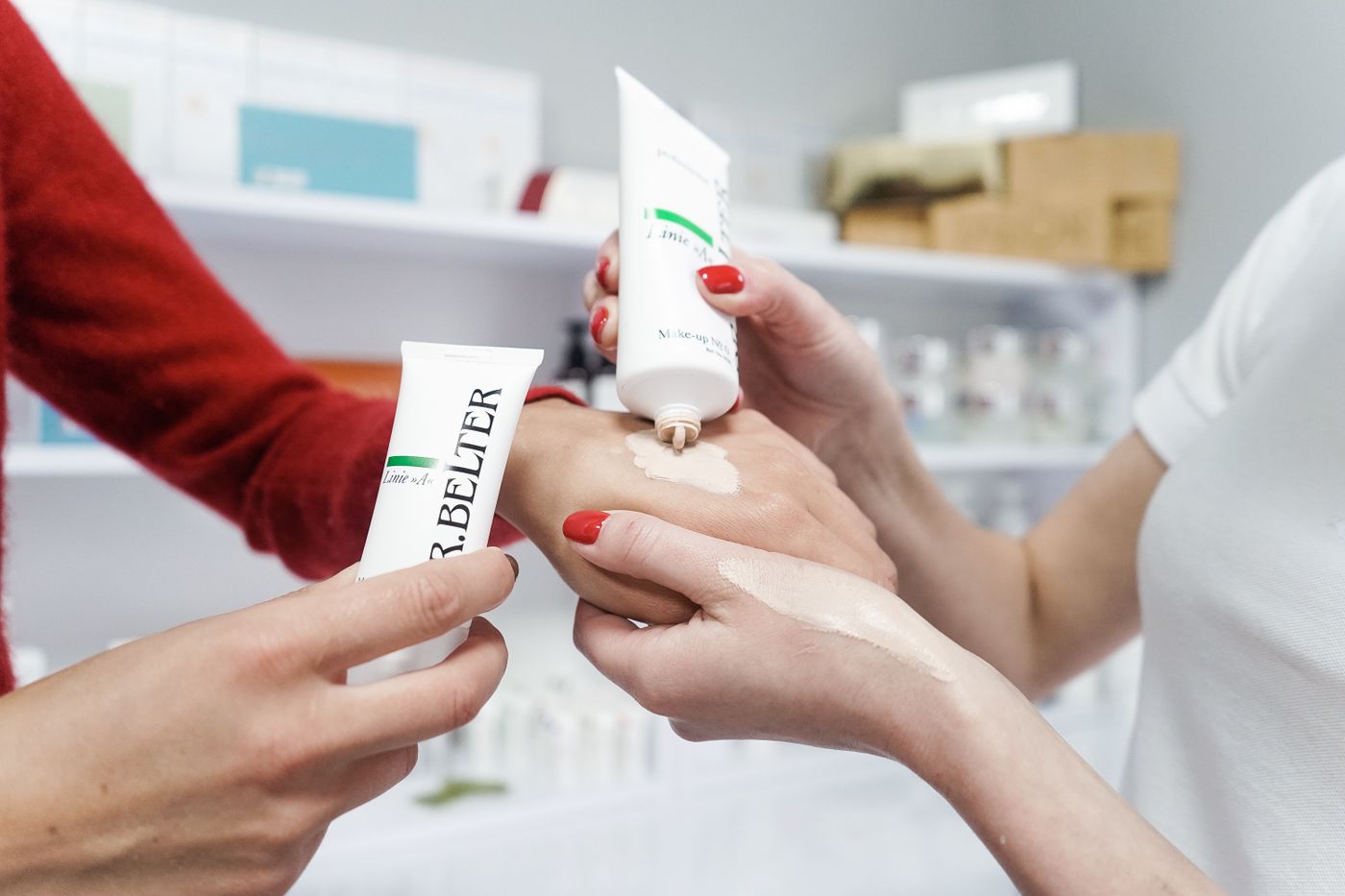
How to Shop at Olive Young Without Building a Random Routine
For lower-priced minis and store-specific beauty lines, compare the ingredient list and volume using the same method in EpicKor's Daiso Korea shopping guide; a familiar brand name does not guarantee that two formats are identical.
Enter the store with one sentence: “I need a gentle cleanser,” or “I need a daytime moisturizer that sits under sunscreen.” That sentence is more valuable than a list of twenty viral brands.
Then check five things:
- Purpose: What job does this product have?
- Duplication: Do you already own that job in another bottle?
- Compatibility: Does it add another strong active to the same night?
- Use frequency: Will you finish it before expiration?
- Home availability: Can you repurchase it or find a reasonable alternative?
Do not interpret a ranking badge as a prescription for your skin. Rankings can be useful for discovery, but popularity cannot see your current routine, allergies, climate, or medical history. The Korean beauty device guide applies the same logic to more expensive gadgets: warranty, instructions, voltage, contraindications, and actual use matter more than a dramatic demo.
FAQ About Korean Skincare Routine Order
Q: Do I need all ten steps in a Korean skincare routine?
No. A functional routine can be cleanser, moisturizer, and daytime sunscreen. Add a toner, serum, treatment, or mask only when it has a clear job and your skin tolerates it.
Q: What comes first, toner or essence?
Toner generally comes first because it is usually the most watery layer. Follow the label if a product gives different directions, and remember that either step is optional.
Q: Is an ampoule stronger than a serum?
Often it is marketed that way, but the terms are not standardized concentration levels across every brand. Compare the ingredient list, directions, texture, and purpose rather than the front-label word.
Q: When should I use a Korean sheet mask?
Use it after cleansing and optional toner, then follow with moisturizer if needed. Follow the package time and stop if you feel burning, itching, or stinging.
Q: Does sunscreen go before or after moisturizer?
Sunscreen is the final morning skincare step, after moisturizer and before makeup. Follow the product directions and apply enough for the exposed area.
Q: Can I start several Korean skincare products at once?
It is safer and more informative to introduce one at a time. If irritation appears after five new products, you will not know which formula or combination caused the problem.
The Best Korean Routine Is the One You Can Explain
You should be able to name the job of every bottle. Cleanser removes. One optional treatment targets a priority. Moisturizer supports comfort. Sunscreen protects during the day. Everything else must justify its cost, time, and irritation risk.
K-beauty is valuable because it offers elegant textures, useful formats, competitive products, and a culture of paying attention to daily care. Its lesson is not that more steps are always better. The better lesson is to make care consistent, pleasant, and specific enough that you will still be doing it three months from now.
For the culture behind the “ageless Korean” stereotype, read EpicKor's practical guide to youthful-looking Korean skin, which separates sunscreen and gentle care from celebrity selection, miracle-food claims, and nationality-based myths.
Official and Reliable Sources
- American Academy of Dermatology: Applying skincare products in order
- American Academy of Dermatology: Everyday cleansing and sun-protection guidance
- American Academy of Dermatology: Facial masks in a skincare routine
- Korea Ministry of Food and Drug Safety: Functional cosmetics approval process
- Korea.net: 2025 Korean cosmetics production and export results
You Might Also Like
Korean Body Care Guide 2026: The New K-Beauty Routine
A Korean body care guide for 2026 covering body sunscreen, exfoliating towels, lotion, back acne care, scalp tools, and what to buy.
Korean PDRN Skincare Guide: Salmon DNA and Spicules
A practical Korean PDRN skincare guide for 2026: salmon DNA, exosomes, spicules, what is hype, and what tourists should buy.

Olive Young Korea Guide: When to Shop, What It Costs, and What to Skip
Olive Young discounts on a published quarterly calendar, and its Myeongdong flagship takes about 95% of its sales from foreign shoppers. The sale dates, real prices, the tax-refund rules, and the one document a photo of will not do.