Korean Cushion Shades: 17, 21, 23, and the 45-Shade Change
Korean cushion foundation looks simple until you stand in front of a tester wall in Seoul. The compact is cute. The puff looks harmless. The shade number says 21 or 23 as if that should answer everything. Then you tap it onto your jaw, walk outside, and realize the product that looked perfect under store lights has turned too pale, too pink, too gray, or too shiny.
That is the cushion trap. Korean base makeup is famous for fresh texture, light layers, and portable touch-ups, but the shade language was built inside a beauty market that historically centered fair to light-medium skin. In 2026 the category is better than it used to be. Viral brands have expanded shade ranges, global retailers are more demanding, and Korean makeup fans are much more vocal when a "universal" shade is not universal at all. Still, the old numbers matter because many popular cushions still use them.
This guide explains how 17, 21, and 23 work, why that ladder no longer stops at 23, why undertone matters more than the number on the box, how oxidation can change your match, what these cushions actually cost in won, and how to buy one without turning your face into a souvenir mistake.
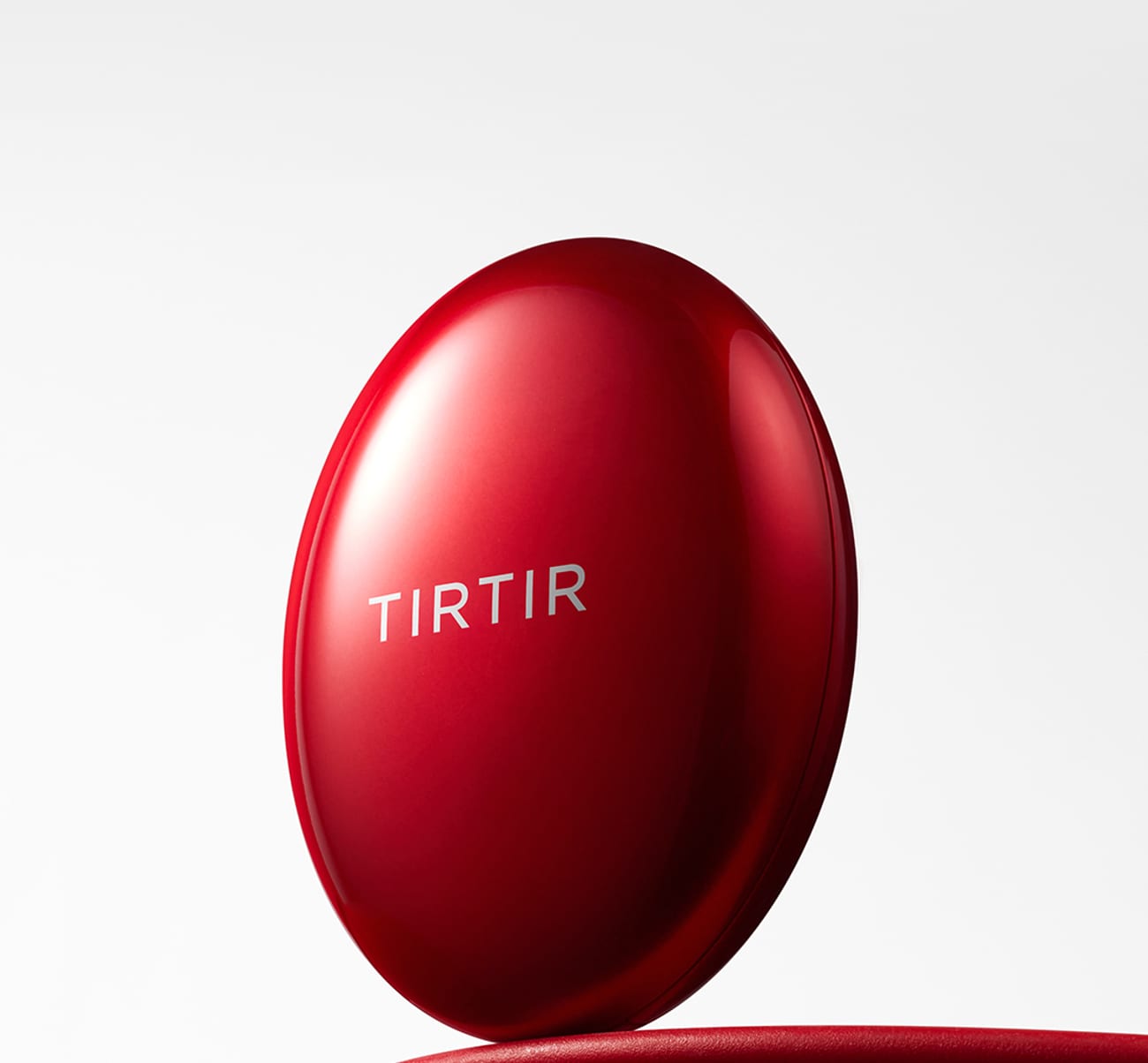
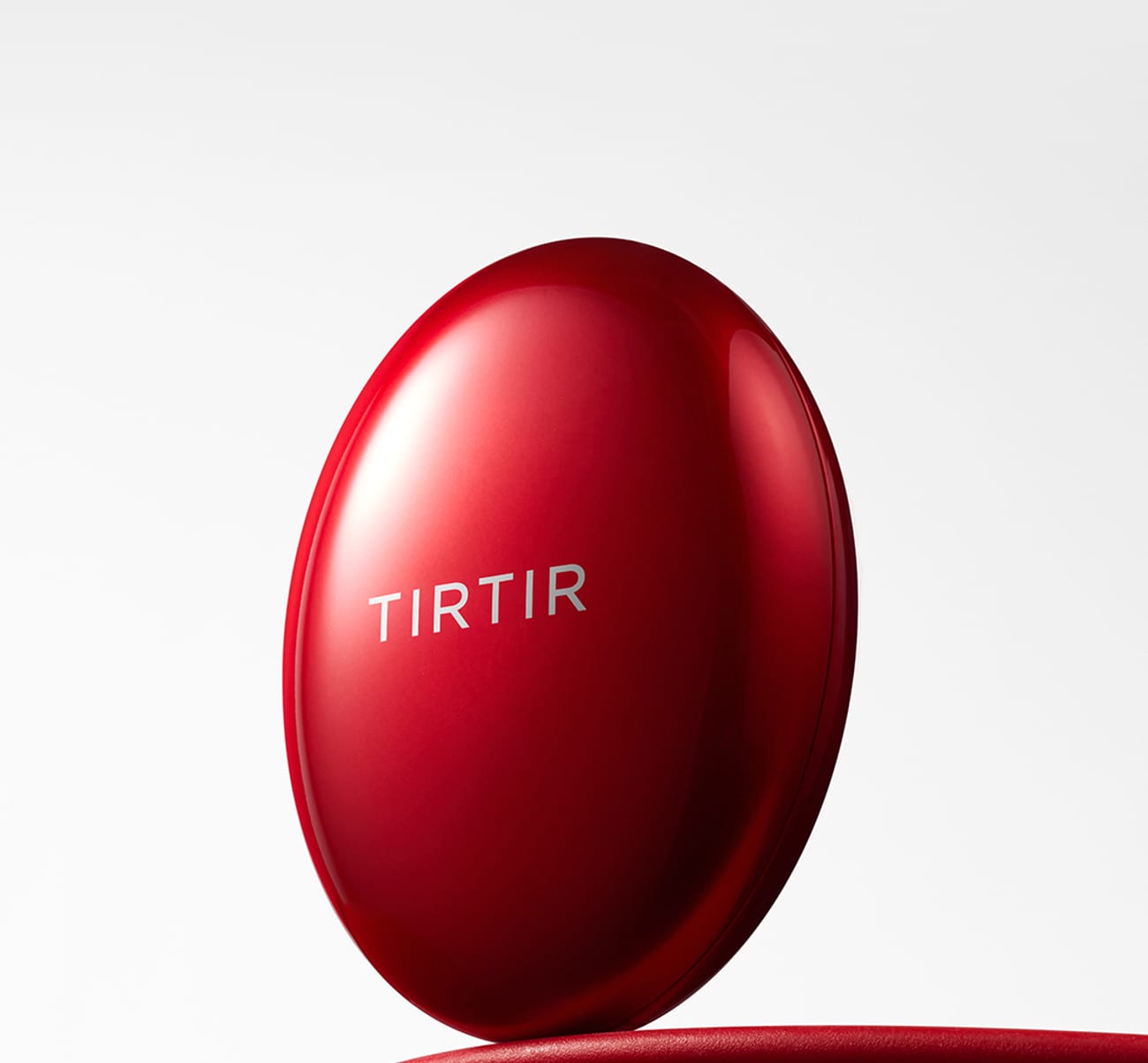
The TIRTIR Mask Fit Red Cushion in the photo — the compact that forced the 45-shade change, with the shade picker on the listingAffiliate link. As an Amazon Associate, EpicKor earns from qualifying purchases at no extra cost to you.
Quick Answer: How Do Korean Cushion Shades Work?
In many Korean cushion lines, shade 17 is usually the fairest option, 21 is a light shade, and 23 is often light-medium or medium in the Korean market. Some brands also use undertone letters such as C for cool, N for neutral, and W for warm. That sounds orderly, but it is only a starting point. A 21N from one brand can look brighter, grayer, pinker, or yellower than a 21N from another brand.
The safest cushion buying rule is this: choose depth first, then undertone, then finish. Depth is how light or deep the shade is. Undertone is whether it leans cool, neutral, warm, peach, olive, or golden. Finish is whether it dries matte, satin, natural, or glowy. If one of those three is wrong, the cushion can look wrong even when the shade number appears correct.
For most first-time shoppers in Korea:
- Try 17 only if Western fair shades often look too dark on you.
- Try 21 if you usually wear fair-light or light foundation.
- Try 23 if 21 often makes you look ghostly, gray, or over-brightened.
- Look for expanded ranges if you are medium, tan, deep, olive, or golden.
- Wear the test shade for at least 10 to 20 minutes before buying if the store allows it.
For related EpicKor planning, read the Olive Young shopping guide, Korean skincare trend guide, Seoul beauty shopping map, and Korea summer sunscreen guide. Cushion foundation is makeup, but the wrong base can ruin the whole beauty haul.
CLIO Kill Cover Founwear Cushion — the Korean cushion sold abroad in 20 shades If you cannot test in Seoul first, this is the practical export choice: most Korean cushions send only three or four shades abroad, which is the actual reason overseas buyers end up in the wrong tone. As an Amazon Associate, EpicKor earns from qualifying purchases at no extra cost to you.
See CLIO Kill Cover Founwear Cushion on AmazonWhy 17, 21, and 23 Became So Confusing
The classic Korean cushion number system is not a universal global standard. It became familiar because many Korean complexion products clustered around a narrow shade ladder: very fair, fair-light, and light-medium. For years, that worked for a portion of the domestic market and for shoppers who wanted a brightened K-beauty look. It did not work for everyone.
The global cushion conversation changed because international shoppers started comparing Korean shades against foundations from Fenty, NARS, Maybelline, Estee Lauder, and other brands with wider shade systems. Viral reviews made the gap impossible to hide.
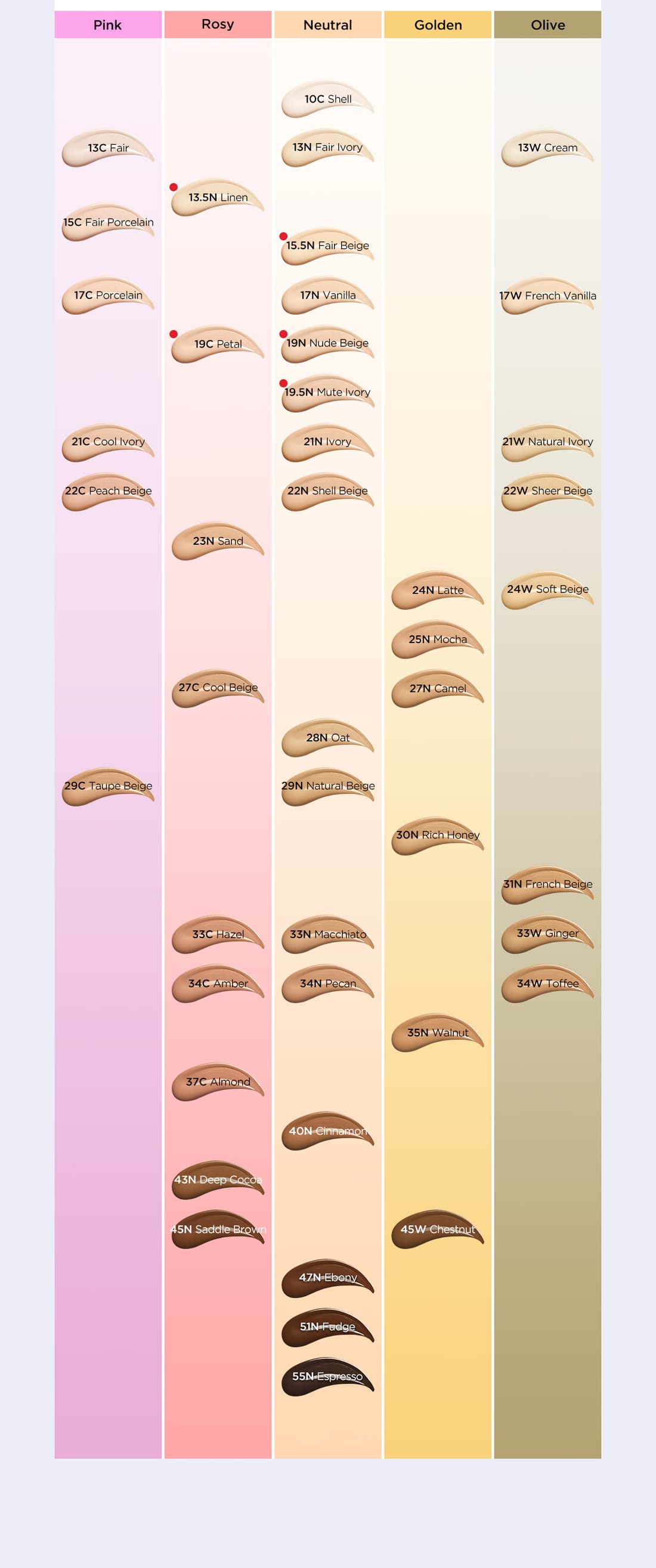
And then one brand answered with a number that broke the old assumption. TIRTIR (티르티르) launched its Mask Fit Red Cushion (마스크 핏 레드 쿠션) in three shades in 2023. After a wave of global criticism it expanded through 2024, and the Korean brand site now lists 45 shades — the ladder runs from 10C 쉘 at the fairest end to 55N 에스프레소 at the deepest, passing through 17C, 21N and 23N on the way.
Read that ladder carefully, because it reframes the whole numbering system. 17, 21 and 23 are not the range. They are the light end of a range that now goes to 55. A shopper who learned "Korean cushions come in 21 and 23" learned a fact about 2019, not about the shelf in front of them.
That history matters because shoppers now face two Korean cushion markets at once. One still uses the old three-to-five-shade logic. The other speaks a more global shade language. A compact can be excellent in texture and still not have your color. A brand can be viral and still run pale. The smarter move is to treat shade range as a product feature, not as an afterthought.
One honest limit before you plan around this: a 45-shade range on a brand's Korean website is not the same as 45 shades on a shelf in Myeongdong. Physical stores stock what sells locally, and the deep end of the ladder is often not there. If you need a shade outside roughly 13–25, check the brand's own Korean site or the global store before you build a shopping day around finding it in person.
| Shade Label | Typical Meaning In Korean Cushions | Who Should Start There | Common Mistake |
|---|---|---|---|
| 17 | Very fair or bright ivory | People whose usual fair foundations still look slightly dark | Buying it for a "Korean glow" and ending up with a chalky cast |
| 21 | Fair-light or light beige | Many light-skin shoppers who want a classic K-beauty base | Assuming every 21 is neutral when some lean pink, gray, or yellow |
| 23 | Light-medium or medium beige in many Korean lines | People who find 21 too bright or flat | Expecting it to cover all medium skin tones |
| 25 and up | Medium, tan and deeper. On TIRTIR's Korean ladder this continues to 55N | Shoppers who need richer depth, olive warmth, or golden undertones | Skipping the line because older K-beauty shade habits felt discouraging |
The Seoul Tester Method: Jaw, Neck, and Daylight
The worst place to judge a cushion is directly under a glowing store display. Those lights are designed to make products look alive. Your face has to live outside that display.
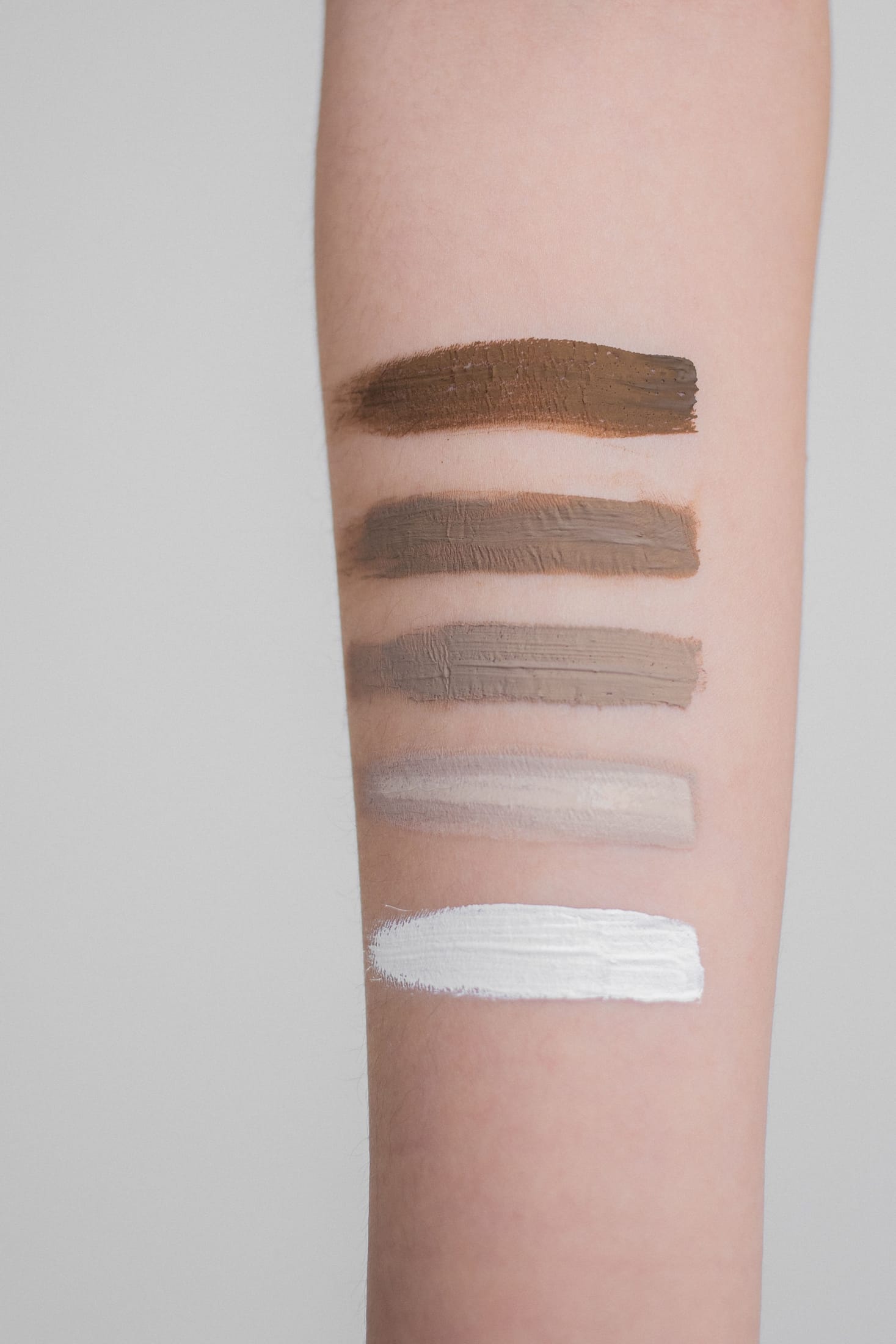
Start with a small stripe on the jawline, not the back of your hand. The hand is useful for texture, but it rarely matches your face and neck. Put one candidate that looks slightly light, one that looks close, and one that looks slightly deeper. Wait. Walk near a window or step outside if the store layout allows it. Check whether the shade disappears into the jaw, floats above the neck, or turns gray.
If the shade looks right on your cheek but wrong next to your neck, trust the neck. Korean cushions often brighten the center of the face beautifully, but a face-neck mismatch is more visible in photos than people expect. If your neck is warmer or deeper than your face, the better match may look less exciting in the compact but more natural in real life.
The same method works for undertone:
- Cool shades can look clean and bright if your skin has pink or rosy undertones.
- Neutral shades are often safer if you shift between cool and warm products.
- Warm shades help if neutral cushions turn gray on you.
- Olive shoppers should be extra cautious because many Korean beige shades do not carry enough green-gold depth.
Do not buy three cushions just because none is perfect. Buy one that fits your daily skin in normal light. A cushion that is 90 percent right will beat a beautiful compact you never reach for.
Oxidation: Why The Shade Changes After You Leave The Store
Oxidation is the moment a base product looks different after it meets skin oil, air, SPF, primer, or time. Some cushions deepen. Some look warmer. Some become slightly dull. Teen Vogue's coverage of the TIRTIR shade expansion included user discussion around oxidation and application method, which is why the smartest shade test is never a five-second swatch.
If you are buying a cushion for hot weather in Korea, oxidation matters even more. Seoul summers can be humid. Subway transfers are warm. Sunscreen layers can shift texture. A cushion that looks fresh in the store can become heavier after lunch if it is over-applied.
Use this order on test day:
- Apply your normal sunscreen first.
- Wait until the sunscreen settles.
- Test the cushion in the smallest useful layer.
- Check the color immediately.
- Check again after 10 to 20 minutes.
- If possible, check in daylight and under indoor light.
The goal is not to punish the product. The goal is to see the product as it will behave on your actual face. If a cushion oxidizes one shade deeper but still looks natural, that may be fine. If it turns orange, gray, or noticeably darker around the mouth, do not talk yourself into it.
Finish Is The Hidden Shade Problem
Many cushion mistakes are not shade mistakes. They are finish mistakes wearing a shade costume.
A dewy cushion can make the same color look lighter because light reflects off the high points of the face. A matte cushion can make a shade look deeper or flatter because it absorbs shine. A high-coverage cushion can look mask-like if the undertone is even slightly off. A sheer cushion can forgive a weaker match, but it may not cover redness, pigmentation, or acne marks the way you expect.
Think in use cases:
- Daily Seoul sightseeing: choose natural or semi-matte if you will be outside for hours.
- Dry skin and cool weather: a glowy cushion can look fresh if you control shine.
- Humid summer travel: matte or long-wear formulas are safer, but test for dryness.
- Photos and nights out: medium coverage can help, but match your neck carefully.
- Sensitive skin: prioritize comfort and ingredients over trend speed.
The most Korean-looking base is not always the brightest one. It is the one that keeps skin texture visible while making the face look rested. A cushion should look like better skin from conversation distance, not like a compact won an argument with your face.
What They Cost, And Why The Refill Is The Real Answer
Here is the part almost no English cushion guide includes: the money. These are Korean list prices (정가) as of August 2026.
| Cushion | Korean | Korean list price | Refill |
|---|---|---|---|
| TIRTIR Mask Fit Red Cushion | 티르티르 마스크 핏 레드 쿠션 | ₩29,000 — 45 shades, 10C to 55N | — |
| CLIO Kill Cover Founwear | 클리오 킬 커버 파운웨어 쿠션 | ₩36,000 for compact + refill | ₩17,000 alone |
| espoir Pro Tailor Be Glow | 에스쁘아 프로 테일러 비 글로우 쿠션 | ₩35,000 for compact + refill | from about ₩11,000 |
| Laneige Neo Cushion | 라네즈 네오 쿠션 | about ₩38,000–40,000, 15g + 15g refill | included in the set |
| HERA Black Cushion | 헤라 블랙 쿠션 | ₩74,000, 15g + 15g, 9 shades | sold separately |
Two things fall out of that table.
First, the Korean cushion is sold as a refill system, and the refill is roughly half. CLIO's compact-and-refill set is ₩36,000; the refill on its own is ₩17,000. Almost every Korean cushion works this way, and several — Laneige, HERA, espoir — are sold with the refill in the box by default because the brand assumes you will keep the case. The plastic compact and the puff are the durable part; the sponge cartridge inside is the consumable.
For a visitor this changes the buying decision more than the shade chart does. You buy the compact once. After that you are buying ₩11,000–17,000 cartridges, not ₩29,000–36,000 compacts. So the question at the counter is not "is this cushion worth ₩36,000" but "do I want to be in this brand's refill system for the next two years" — and that makes the shade match matter much more, because a near-miss shade locks you into a case you will not want to reuse.
Second, 정가 is not what you pay. Olive Young (올리브영) runs discount cycles more or less permanently, and the same CLIO set that lists at ₩36,000 routinely sells at ₩25,500–26,000, roughly 28% off. Never treat a Korean beauty list price as the price. If you have a flexible day in your itinerary, checking during a sale period is worth more than any duty-free calculation.
One caution on refills: confirm the refill fits the exact compact you own. Brands revise cases between generations, and a refill from a newer line may not seat in an older shell. This is the single most common Korean cushion buying mistake made by people who already know what they are doing.
What To Buy In Korea: Cushion, Refill, or Nothing
Korean cushion packaging often makes buying feel more urgent than it is. Limited cases, refills, and gift sets can be tempting, especially in Olive Young (올리브영) or brand flagships. Slow down.
Buy one cushion if the shade, finish, and wear test all pass. Buy a refill only if you already know you will use the product often. Skip the cushion if the shade is "almost" right but needs too much powder, concealer, mixer, or optimism. Makeup should not require a diplomatic negotiation every morning.
If you are visiting Korea, remember that some brands sell different shade availability by store, duty-free channel, or global website. A shade missing from one shelf may exist online. Ask staff politely, check the brand's official shade chart, and compare the global site if the range looks oddly small.
The best Seoul beauty haul is not the largest haul. It is the one you can use after the trip.
KAHI Airy Fit Sun Stick SPF 50+ — a Korean face sunscreen stick that sits under a cushion Pilling under a cushion is usually the SPF layer, not the cushion, and a stick that sets lightly is the easiest fix before you blame the shade. As an Amazon Associate, EpicKor earns from qualifying purchases at no extra cost to you.
See KAHI Airy Fit sun stick SPF 50+ on AmazonShade-Matching Checklist For A Seoul Beauty Day
Use this before you check out:
- Did you test on the jawline, not only the hand?
- Did you compare against your neck?
- Did you wait at least 10 minutes?
- Did you check undertone in daylight?
- Did you try the formula over your real sunscreen?
- Did you choose finish for your climate and skin type?
- Did you confirm the refill fits the exact compact?
- Did you avoid buying a shade only because the case is cute?
That last point sounds silly until you see a limited compact. Korean beauty packaging is very good at making logic leave the room.
Sources Checked
- TIRTIR Korea's own shade list for the Mask Fit Red Cushion — all 45 shades and the ₩29,000 list price
- CLIO Korea's cushion listings — ₩36,000 set, ₩17,000 refill
- Teen Vogue on TIRTIR's viral cushion shade expansion
- Vogue on K-beauty's inclusivity shift and wider shade ranges
- Glamour's cushion foundation guide
- Allure on how global shoppers buy K-beauty through Olive Young
FAQ
Q: Is shade 21 the most common Korean cushion shade?
Shade 21 is one of the most familiar Korean cushion labels and often represents a light base shade. It is not automatically the "normal" shade for everyone. If 21 makes your face look brighter than your neck, test 23 or a wider-range brand.
Q: Is Korean cushion foundation good for oily skin?
It can be, but choose carefully. Look for semi-matte or long-wear cushions, apply thin layers, and avoid stacking too much skincare underneath. In humid weather, a beautiful dewy cushion can become shiny faster than expected.
Q: How much does a Korean cushion cost in Korea?
List prices run about ₩29,000 for TIRTIR's Mask Fit Red Cushion, ₩35,000–36,000 for a CLIO or espoir compact-and-refill set, ₩38,000–40,000 for Laneige Neo Cushion, and ₩74,000 for HERA Black Cushion. But Olive Young discounts almost continuously — the ₩36,000 CLIO set commonly sells around ₩26,000 — so the list price is a ceiling, not a price.
Q: Should I buy the refill or the compact?
Buy the compact once, then buy refills. A CLIO refill is ₩17,000 against ₩36,000 for the set, and espoir refills start around ₩11,000. Several brands include the first refill in the box. Just confirm the refill matches your exact case generation — brands revise the shells and an older compact will not always take a newer cartridge.
Q: Do Korean cushions really only come in 17, 21 and 23?
Not any more. TIRTIR's Korean site lists 45 shades running from 10C to 55N, and other brands have widened too. The old three-number ladder is now the light end of a much longer one. The caveat is stock: a physical store in Seoul carries what sells locally, so shades far outside 13–25 are easier to find on the brand's website than on a shelf.
Q: Should I buy a darker shade for summer in Korea?
Maybe. If you tan easily or plan long outdoor days, test the shade against your current skin, not your winter foundation memory. Also remember that sunscreen is essential, so your base should work over SPF.
Q: Are expanded Korean cushion ranges easy to find in Seoul?
They are easier to find than before, but availability varies by brand and store. Viral global shades may sell out, and some stores carry only the core range. Check official brand charts before assuming a shelf has every option.
Q: What is the biggest cushion mistake tourists make?
Buying the shade that looks bright and pretty under store lighting without checking the neck, undertone, and wear time. Cushion foundation is portable and fun, but it still needs a real shade test.
You Might Also Like
Korean Body Care Guide 2026: The New K-Beauty Routine
A Korean body care guide for 2026 covering body sunscreen, exfoliating towels, lotion, back acne care, scalp tools, and what to buy.
Seoul Personal Color Analysis 2026: Booking and Results
A Seoul personal color analysis guide for 2026 covering booking, seasons, swatches, makeup shopping, hair color, and tourist mistakes.
Korean PDRN Skincare Guide: Salmon DNA and Spicules
A practical Korean PDRN skincare guide for 2026: salmon DNA, exosomes, spicules, what is hype, and what tourists should buy.