MU:DS Guide: How to Buy Korea's National Museum Souvenirs and Get Them Home
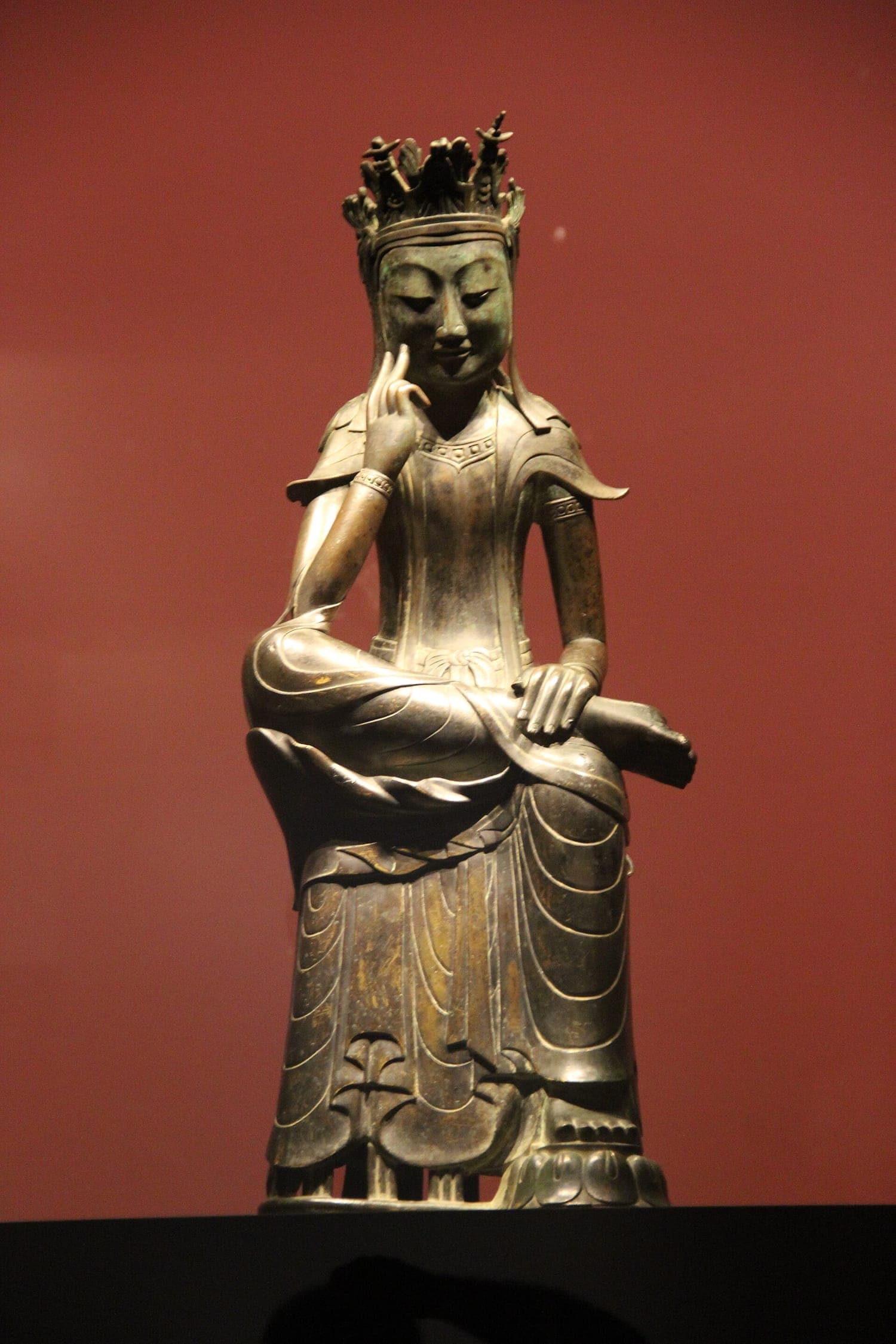
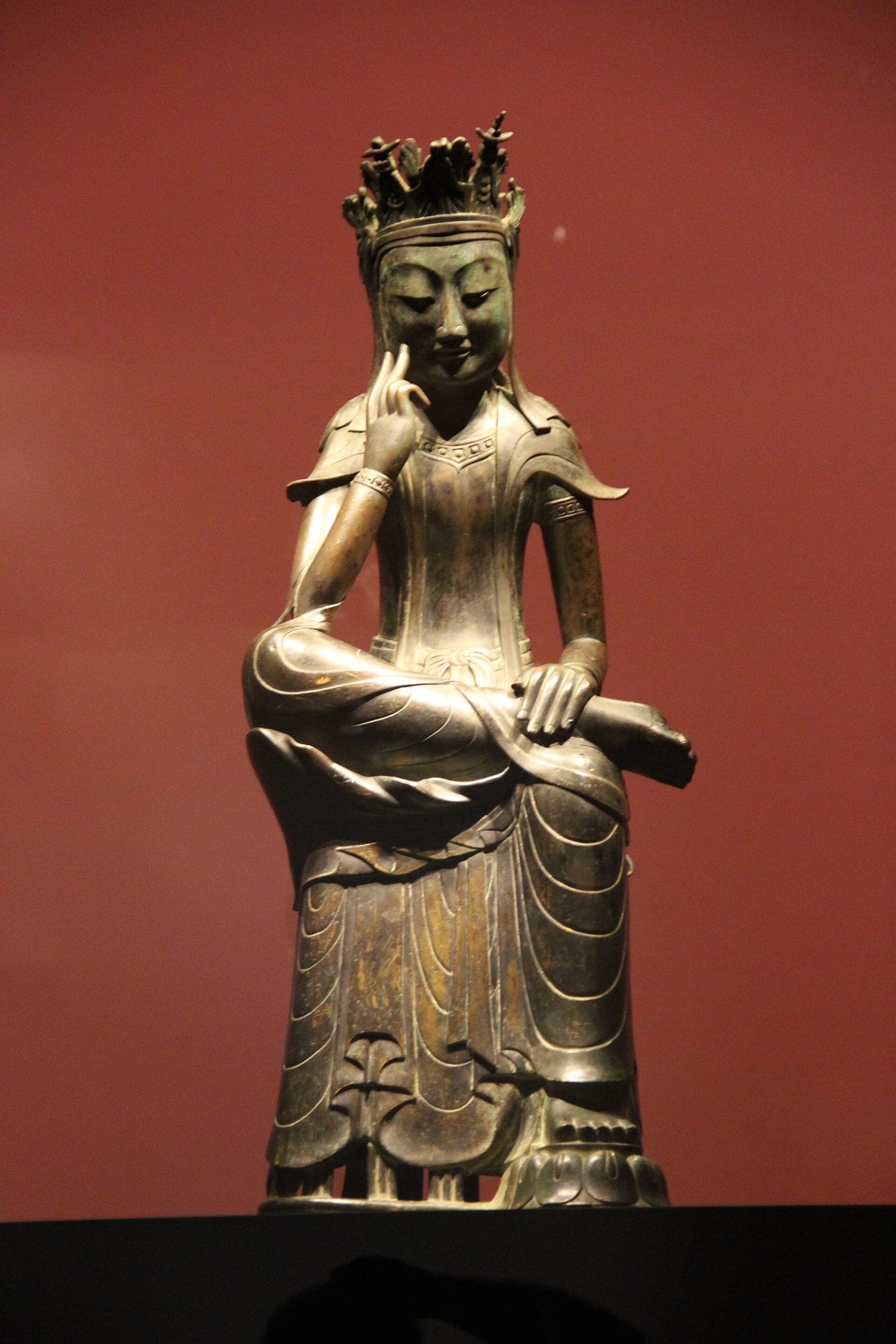
The gilt-bronze Pensive Bodhisattva, National Treasure No. 83, late 6th century. The ₩65,000 miniature in the museum shop is a reproduction of this. Photo by Gary Lee Todd, CC0.
A museum gift shop in Seoul is having a better year than most Korean fashion brands.
MU:DS (뮷즈) — the shop brand of Korea's national museums — took ₩21.8 billion in the first half of 2026 alone. That is roughly double the ₩11.48 billion it took in the same period of 2025, and it means the shop passed all of 2024's revenue before July.
The single object driving it is a small resin figure of a seated Buddhist statue. The Pensive Bodhisattva miniature (반가사유상 미니어처) sold about 12,000 units in six months and has now passed 61,000 units in total.
Most English guides describe this as "a nice museum shop." That undersells what is happening, and more importantly, it skips the one thing that actually catches foreign buyers out: taking a replica of a Korean National Treasure out of the country has a customs procedure attached to it, and you need to know about it before you are standing at the airport.
The Short Answer
| Question | Answer |
|---|---|
| What is MU:DS? | 뮷즈 — MUseum + gooDS, the shared retail brand of Korea's national museums |
| Where is the main shop? | National Museum of Korea, Yongsan, Seoul |
| Nearest station | Ichon (이촌) — Line 4 and the Gyeongui–Jungang Line, Exit 2 |
| The famous item | Pensive Bodhisattva miniature, ₩65,000 |
| H1 2026 revenue | ₩21.8 billion, about +90% year on year |
| Foreign-customer sales | about ₩1 billion in H1 2026, roughly doubled |
| Buy online? | Official shop, Naver store, or in person — avoid resellers |
| The catch for visitors | Replicas of National Treasures need an airport appraisal before you fly |
Bringing Korean tableware home: As an Amazon Associate, EpicKor may earn from qualifying purchases. Ceramics are the hardest MU:DS category to carry safely — compare Korean celadon-style tableware if you want the look without a cracked bowl in your suitcase.
Compare on AmazonWhy a Museum Shop Became a Retail Story
Korean museum shops used to sell postcards and fridge magnets, the same as everywhere else. MU:DS is the result of a different decision: treat the collection as a design library rather than a set of things to photograph.
The name is the giveaway. 뮷즈 is a contraction of museum and goods, and it is the unified brand across Korea's national museums rather than a single shop's label. That structure matters commercially — a product developed from an artifact in one museum can be sold across the whole network.
The numbers show what that has done:
| Period | Revenue | Note |
|---|---|---|
| 2024, full year | about ₩21.28 billion | |
| 2025, first half | ₩11.48 billion | |
| 2025, full year | ₩41.3 billion | record at the time |
| 2026, first half | ₩21.8 billion | about +90% year on year |
Read the last two rows together. The first six months of 2026 alone matched what the brand took in all of 2024.
There is also a specific cultural catalyst that Korean coverage names openly and English coverage tends to miss. RM of BTS owns a Pensive Bodhisattva miniature, and that became public. A ₩65,000 resin figure of a 1,400-year-old Buddhist sculpture turned into something people wanted on a shelf, and it has not slowed down since.
Foreign buyers followed. Overseas-customer sales reached about ₩1 billion in the first half of 2026, roughly double the previous year. That is still a small share of the total — this remains a product Koreans buy for themselves, which is exactly why the quality holds up.
The Object Everyone Is Actually Buying
The hero product reproduces 국보 제83호, the gilt-bronze Pensive Bodhisattva of the late 6th century — a seated figure with one leg crossed over the knee, the head tilted, and two fingertips resting lightly against the cheek. It is one of the most recognisable objects in Korean art, and the museum built a dedicated dim, quiet room for the two Pensive Bodhisattva statues that has become a destination in itself.
The miniature, in the current ver3 (83호) form:
| Spec | Detail |
|---|---|
| Price | ₩65,000 |
| Size | 60 × 84 × 155 mm |
| Packaged size | 110 × 110 × 210 mm |
| Material | Polyurethane resin |
| Korean name | 반가사유상 미니어처 ver3(83호) |
| Bulk orders | Over ₩1 million requires a stock and lead-time enquiry |
There is a second version based on 국보 제78호, the other Pensive Bodhisattva in that same room, which has a more elaborate crown. If you visit the room first and then the shop, you will know which one you actually want — and that order of operations is the single best piece of advice in this guide.
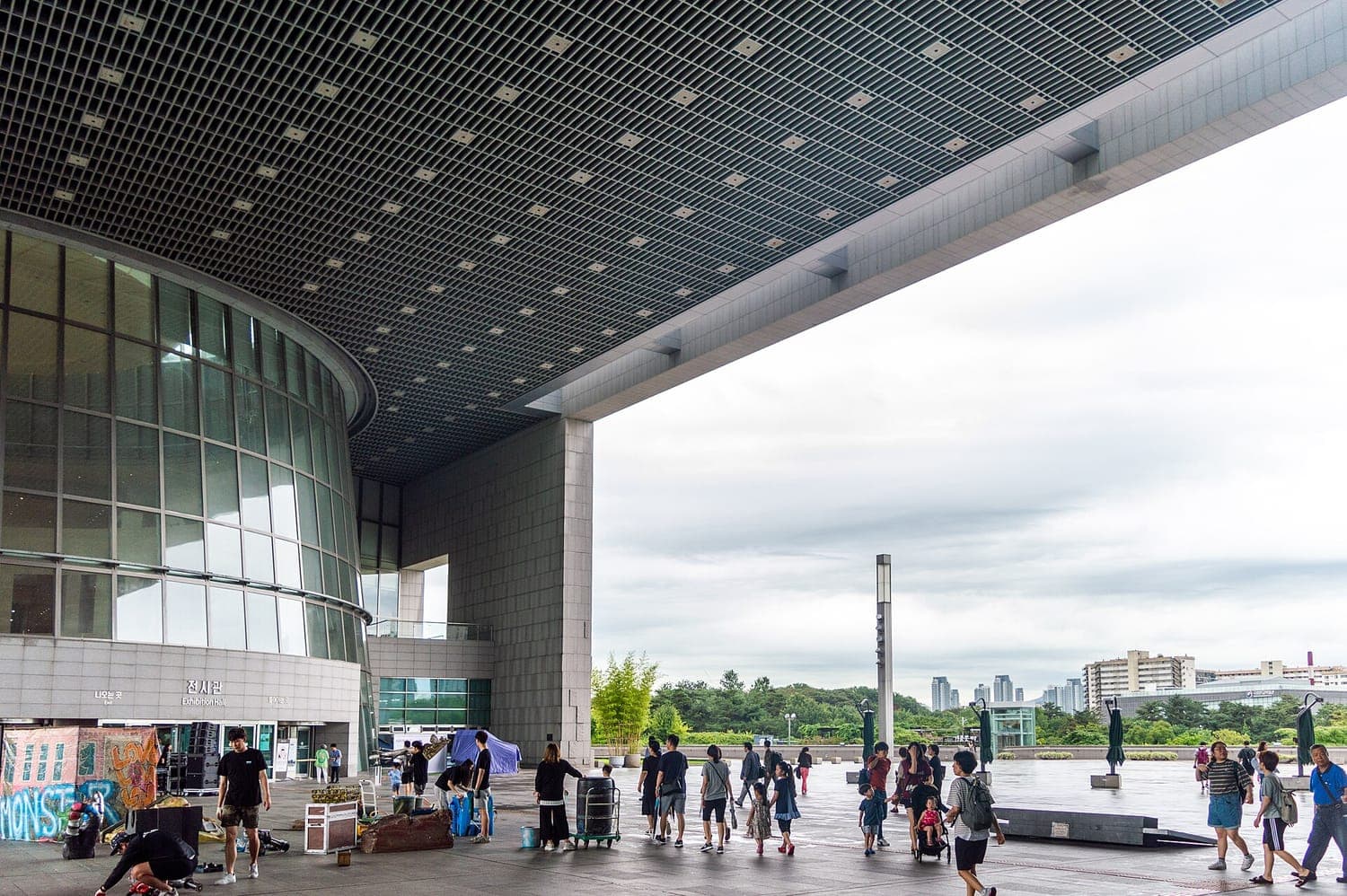
The National Museum of Korea in Yongsan. The main MU:DS shop is inside, and admission to the permanent galleries is free. Photo by Tristan Surtel, CC BY-SA 4.0.
What Else Sells, in the Order Koreans Buy It
Korean reporting on the first half of 2026 names the products that actually moved. This is a more useful list than a curated "top picks" selection, because it reflects what a domestic market bought with its own money:
- 반가사유상 미니어처 — Pensive Bodhisattva miniature
- 반가사유상 미니어처 마음 시리즈 — the "Maeum" (mind) series variant
- 단청 키보드 — a mechanical keyboard in dancheong, the polychrome paintwork on temple and palace eaves
- 이순신 전립 와인 마개 — a wine stopper shaped like Admiral Yi Sun-sin's military hat
- 달항아리 도어 차임 — a door chime based on the moon jar
- 취객선비 3인방 변색 잔 세트 — a set of cups showing three drunken scholars, which change colour with temperature
Notice what that list is not. There is no "I Love Seoul" merchandise on it. Every item takes one specific object or motif and turns it into something with a function — a keyboard, a bottle stopper, a door chime, a cup that does something when you pour into it.
Two items are worth flagging separately because they sell out and stay sold out: the 색동 공기 (a gonggi stone set in traditional striped saekdong colours) and the 갓 우산 (an umbrella shaped after the gat, the horsehair hat of the Joseon scholar). Both have gone to restock waiting lists. If you see either in stock, that is the moment.
You might like: Unique Things You'll Only Find in Korea
Where to Buy — and Where Not To
This part matters more than usual, because demand has outrun supply often enough to create a resale market.
The legitimate channels are:
- The museum shops themselves, at the National Museum of Korea and other national museums
- The official online shop,
museumshop.or.kr - The Naver store operated as 국립박물관 뮤지엄숍
What to be careful about: third-party listings at inflated prices on general marketplaces. The pattern is familiar to anyone who followed a Korean sell-out product — the item is genuine, the price is not, and the premium collapses when stock returns. If a listing is well above ₩65,000 for the standard miniature, you are paying for someone else's queueing.
On visiting in person: admission to the National Museum of Korea's permanent exhibition galleries is free, so a shop visit does not require a ticket purchase. Take Ichon Station, Exit 2, on Line 4 or the Gyeongui–Jungang Line and follow the signposted walkway. Check the museum's current opening hours before you go — Korean museums commonly run extended evening hours on some days and close on others, and the shop follows the building.
The Airport Rule Nobody Warns Foreign Buyers About
Here is the part that does not appear in English-language guides, and it is the reason this article exists.
Korea restricts the export of cultural heritage. Because a good replica of a National Treasure can look like the real thing to a customs officer, replicas are covered by a check as well. The official guidance is explicit: if you are carrying something that could be mistaken for cultural heritage, you must apply for confirmation at the Cultural Heritage Appraisal Office (문화유산감정관실) at the airport or port, at least three hours before departure.
The Korea Heritage Service operates these offices at international airports and ports specifically to stop heritage leaving the country. There is also a pre-booking system — the 국외반출 문화재 사전예약 감정제도, an online appraisal reservation service running at seventeen international airports and ports — so you can start the process before travel day rather than in a departures queue.
When an item is confirmed as not being cultural heritage, you visit the appraisal office on the day, they inspect the actual object, and you receive a 비문화재확인서 (a certificate confirming it is not cultural heritage) along with a confirmation sticker to attach.
In practice, what this means for you:
- Keep the receipt and the original packaging. A boxed, clearly retail-branded product with a price tag is the easiest possible case to make.
- Do not pack it in checked luggage before you have cleared this, if you are carrying something that could plausibly read as an antique.
- Build in time. Three hours before departure is the stated minimum, and it is a real airport queue, not a formality you can do at the gate.
- When in doubt, ask at the shop. The museum shop deals with foreign buyers constantly and can tell you whether the specific item you are holding needs anything.
This is genuinely a good rule — it is part of why Korean heritage has not been drained into overseas collections. But it catches people who bought a souvenir and had no idea it counted.
Also check shipping restrictions before you plan around them. The official shop ships overseas through Korea Post EMS with fees by volume and weight, but not every category can be sent abroad, and fragile ceramics are the obvious risk even where shipping is allowed. Confirm the restriction for your specific item on the product page rather than assuming.
Getting fragile souvenirs home intact: A resin miniature survives a suitcase; celadon does not. Compare travel packing and fragile-item protection before a trip where you plan to buy ceramics.
Compare on AmazonHow to Actually Shop It
A simple order of operations, based on how the shop is laid out and what tends to sell out:
- See the objects first. Walk the Pensive Bodhisattva room and whichever galleries you care about before you shop. The products only mean something once you have seen what they are derived from, and you will stop wanting the ones you have no connection to.
- Buy the one thing you cannot get elsewhere. For most people that is a miniature. Everything else on the list can be considered later.
- Check the sold-out items on the spot. The saekdong gonggi and the gat umbrella are the two to ask about, because asking is faster than searching shelves.
- Keep the receipt and box. Both for the airport procedure above and because MU:DS packaging is genuinely part of the gift.
- Fill in practical gifts afterwards. Stationery and small goods travel well and cost little; ceramics and glassware do not.
The honest counter-recommendation: do not buy the miniature as a gift for someone who has never been to Korea.
It is a ₩65,000 resin figure of a Buddhist sculpture. To someone who stood in that dim room and looked at the original, it is a strong object. To someone opening it cold, it is a statue they have no relationship with. The items on this list that actually work as unbriefed gifts are the functional ones — the wine stopper, the colour-changing cups, the door chime — because they do something regardless of whether the recipient knows the reference.
And one more, since it is the mistake most visitors make: the ceramics are lovely and they are the wrong souvenir for a long trip. If you have three more cities to visit before your flight, buy the ceramics on your last day in Seoul or not at all.
FAQ About MU:DS and Korean Museum Shopping
Q: What does MU:DS mean?
A: It is 뮷즈 in Korean, a contraction of MUseum and gooDS. It is the shared product brand across Korea's national museums rather than the name of one shop.
Q: How much is the Pensive Bodhisattva miniature?
A: ₩65,000 for the standard ver3 (National Treasure No. 83) version. It measures 60 × 84 × 155 mm and is made of polyurethane resin.
Q: Do I need a museum ticket to visit the shop?
A: No. Admission to the National Museum of Korea's permanent exhibition galleries is free, and the shop is inside the building. Special exhibitions are ticketed separately.
Q: Can I buy MU:DS products online from outside Korea?
A: The official shop offers overseas shipping through Korea Post EMS, priced by volume and weight, but restrictions apply to some categories. Check the individual product page, and buy from the official shop or the official Naver store rather than a reseller.
Q: Do I really have to declare a museum souvenir at the airport?
A: If it is a replica of a National Treasure or something that could be mistaken for cultural heritage, yes — Korean guidance directs you to apply for confirmation at the airport's Cultural Heritage Appraisal Office at least three hours before departure, and there is an online pre-booking appraisal service. Keeping the receipt and retail packaging makes this straightforward.
Q: Which MU:DS item is the best gift for someone who has not been to Korea?
A: One of the functional ones — the Yi Sun-sin helmet wine stopper, the drunken-scholars colour-changing cups, or the moon jar door chime. They work as objects even without the backstory, which the miniature does not.
Q: Is it worth going just for the shop?
A: If you are already in Seoul, yes, because the trip costs you a subway ride and the galleries are free. If you would be crossing the city purely to shop, buy from the official online store instead and spend the time somewhere else.
The One Thing to Remember
MU:DS is not a souvenir stand that got lucky. It is a ₩41.3-billion-a-year design brand that happens to be attached to a museum, and it is growing at 90% a year because it sells to Koreans first and visitors second.
Buy the object you actually stood in front of. Keep the receipt. And if you are carrying a National Treasure replica, get to the airport early enough to do the paperwork — that is the difference between a good souvenir and a confiscated one.
Sources
- Newspim, "RM 효과 이어졌다…박물관 '뮷즈' 상반기 매출 218억·외국인 구매 2배 ↑" (6 July 2026) — H1 2026 revenue, YoY comparison, foreign-customer sales, miniature unit sales, best-seller list
- 국립박물관 문화상품 official shop (
museumshop.or.kr) — Pensive Bodhisattva miniature ver3 specifications, price, bulk-order and export-appraisal guidance - Korea Heritage Service (국가유산청) — Cultural Heritage Appraisal Office guidance and the 국외반출 문화재 사전예약 감정제도 pre-booking appraisal system
- Herald, "기념품 사러 박물관 간다…브랜드 '뮷즈'의 비상" (5 July 2026) — brand background
You Might Also Like
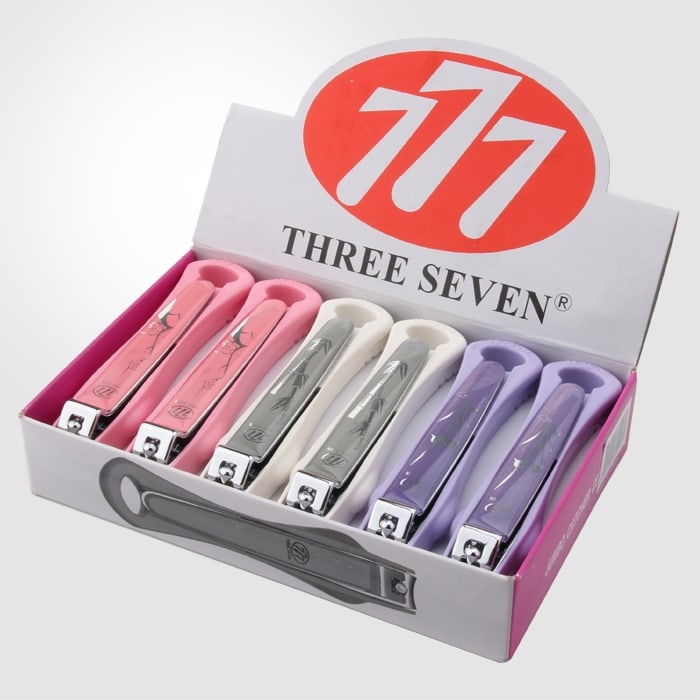
Korean Nail Clippers: Which 777 to Buy, and Why the Gift Set Can't Fly Carry-On
쓰리쎄븐 makes up to 100 million nail clippers a year, 90% of them exported. In 2008 the founder's family sold the company to cover a ₩15 billion inheritance tax bill, then bought it back for ₩6.3 billion. Which model to buy, and which must be checked.
Shipping From Korea to the US: 15% Duty, Prepaid, and What It Costs
Since August 2025 every US-bound parcel except documents is taxed at 15%, and Korea Post makes the sender prepay it at the counter. EMS to the US also rose about 32% on 1 July 2026. What shipping actually costs now, and when to just carry it.
Korean Toothpaste: Why It Says 고불소, and How to Check Your Tube
Korea capped toothpaste fluoride at 1,000 ppm with a manufacturing rule that contradicted its own licensing rule, which is why 고불소 is sold as a premium feature. Here is what a Korean tube legally must tell you, and what 2026's two recalls covered.