Best Temples in Seoul: Etiquette, Routes, Temple Stays
The best temples in Seoul reveal three different versions of the city. Jogyesa places Korean Buddhism among Jongno offices and galleries. Bongeunsa faces the glass towers and shopping complexes of Gangnam. Jinkwansa sits against Bukhansan, where the capital begins to feel like a mountain retreat. You can visit all three without being Buddhist, but each rewards a different amount of time and preparation.
This is a practical guide rather than a ranking. It explains which temple fits a short central itinerary, where to find the strongest old-meets-new view, how to approach a temple stay, and what respectful photography and behavior look like. Hours, ceremonies, and program availability can change, so verify the temple's current notice before planning around a specific activity.
The Short Answer: Which Seoul Temple Should You Visit?
Choose Jogyesa if you have one hour near Insadong, Gwanghwamun, or Bukchon. Choose Bongeunsa if your day includes COEX, Samseong, or Gangnam and you want the strongest visual contrast between a working temple and modern towers. Choose Jinkwansa if you want a quieter half-day near Bukhansan and are willing to spend more time on transport.
For an overnight or structured cultural program, search the official Templestay platform by date and language rather than assuming every temple offers the same schedule. A day visit and a temple stay are very different experiences.
| Temple | Best For | Time to Allow | Transit Character |
|---|---|---|---|
| Jogyesa | First visit, lanterns, central Seoul itinerary | 45-90 minutes | Easy walk from Jonggak or Anguk |
| Bongeunsa | Gangnam contrast, larger grounds, cultural programs | 60-120 minutes | Near Bongeunsa Station and COEX |
| Jinkwansa | Mountain setting, slower visit, temple-food context | Half day | Subway plus bus or taxi and walking |
| Geumseonsa | Temple stay and hillside atmosphere | Half day or program length | Requires an uphill approach from northwest Seoul |
Korea travel essentials — compare on AmazonAffiliate link. As an Amazon Associate, EpicKor earns from qualifying purchases at no extra cost to you.
All four are active religious spaces, not reconstructed theme parks. Public access can pause during ceremonies, and a quiet hall is not an invitation to enter every door.
Jogyesa: The Most Convenient First Temple
Jogyesa is the central temple of the Jogye Order and one of the easiest major temples to add to a Seoul itinerary. The official Seoul tourism page lists the grounds as open around the clock, while specific halls, offices, museums, shops, and programs follow their own operating times.
The current temple developed in the modern period rather than surviving unchanged from ancient Seoul. Its institutional history is connected to efforts in the early 20th century to establish Korean Buddhist presence inside the old capital. That makes Jogyesa important not because every building is ancient, but because it is a living administrative and ceremonial center.
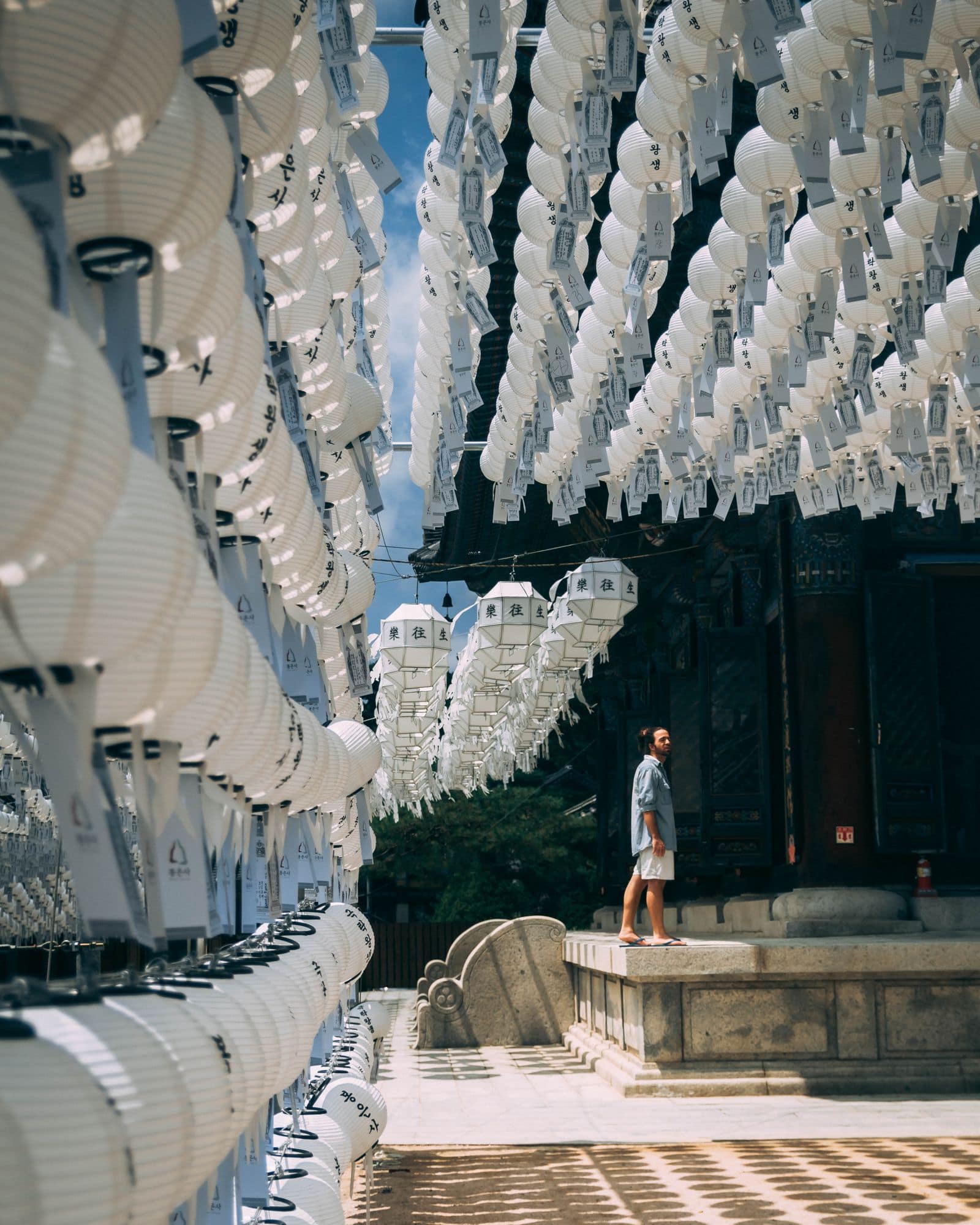
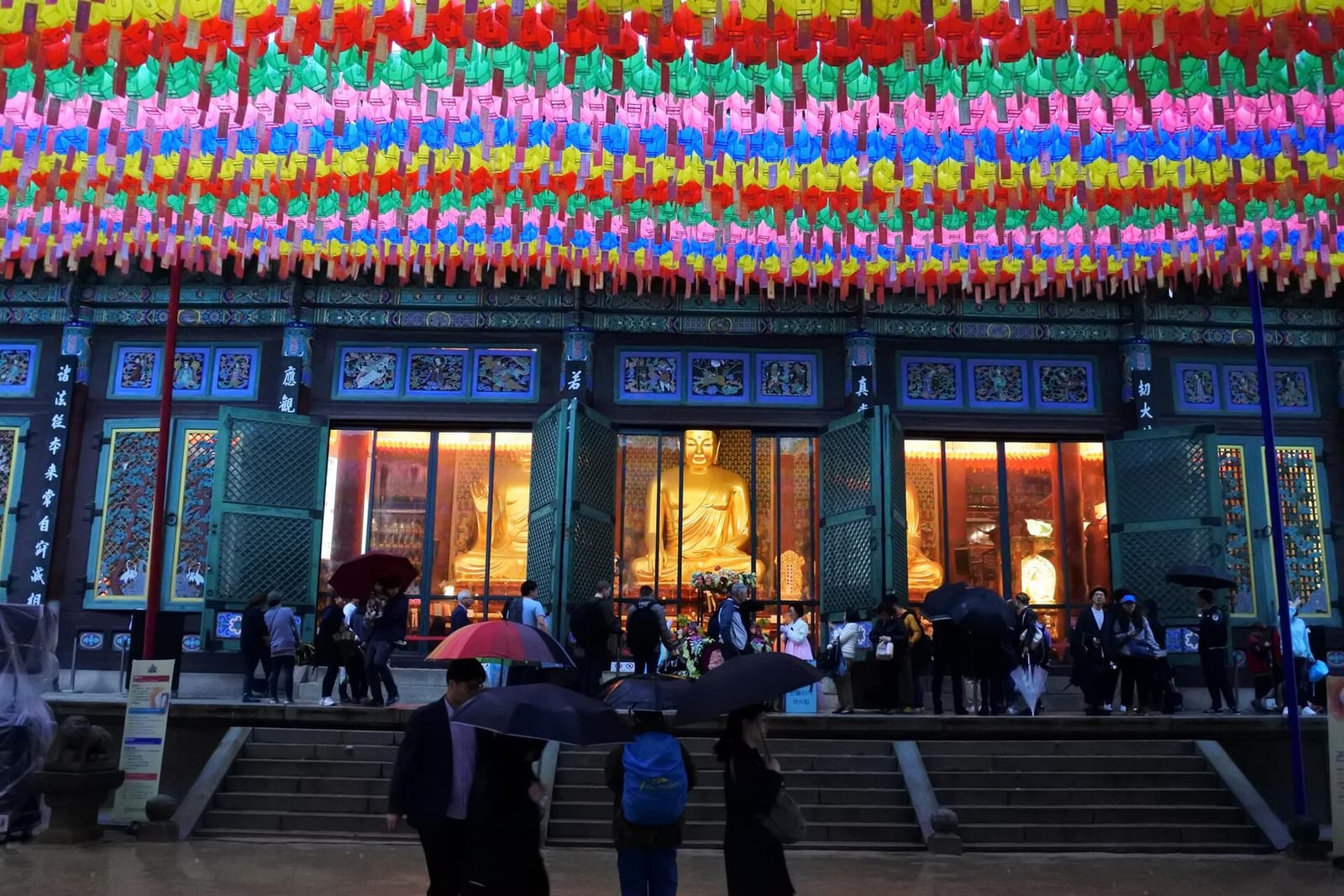
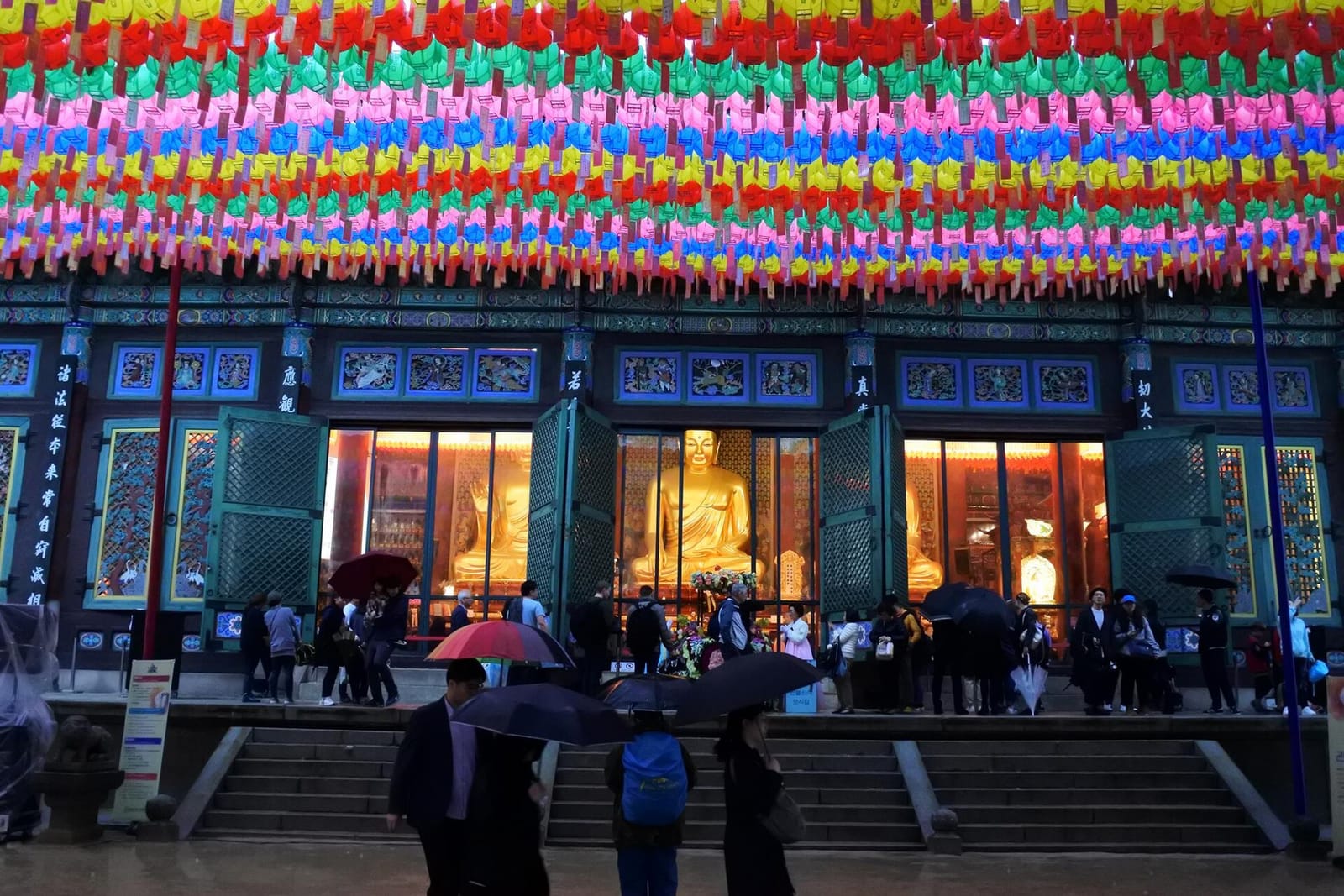
Visit in the morning for a calmer courtyard, or around dusk when lanterns are illuminated during festival season. The annual Yeondeunghoe Lotus Lantern Festival brings exhibitions and events to Jogyesa and other central locations, but dates change every year. The 2026 festival took place in May; future travelers should use the current official calendar rather than copying those dates.
Inside a worship hall, enter only where visitors are permitted. Step to the side rather than walking directly through the central doorway, keep your voice low, and do not cross in front of someone bowing. If a ceremony is underway, observe from the back unless staff invite participation.
Jogyesa pairs naturally with Insadong, the Seoul Museum of Craft Art, Gwanghwamun, and Bukchon. Our Seoul hanok experience guide can help turn the temple visit into a broader architecture day without rushing from photo stop to photo stop.
Bongeunsa: Old Seoul Inside Modern Gangnam
Bongeunsa was founded in 794 during the Silla period, although its buildings and institutional history have changed repeatedly. Today it sits across from the COEX area, which creates Seoul's clearest visual shorthand for "old and new": tiled roofs, dancheong paint, and a large Maitreya Buddha with high-rise Gangnam behind them.
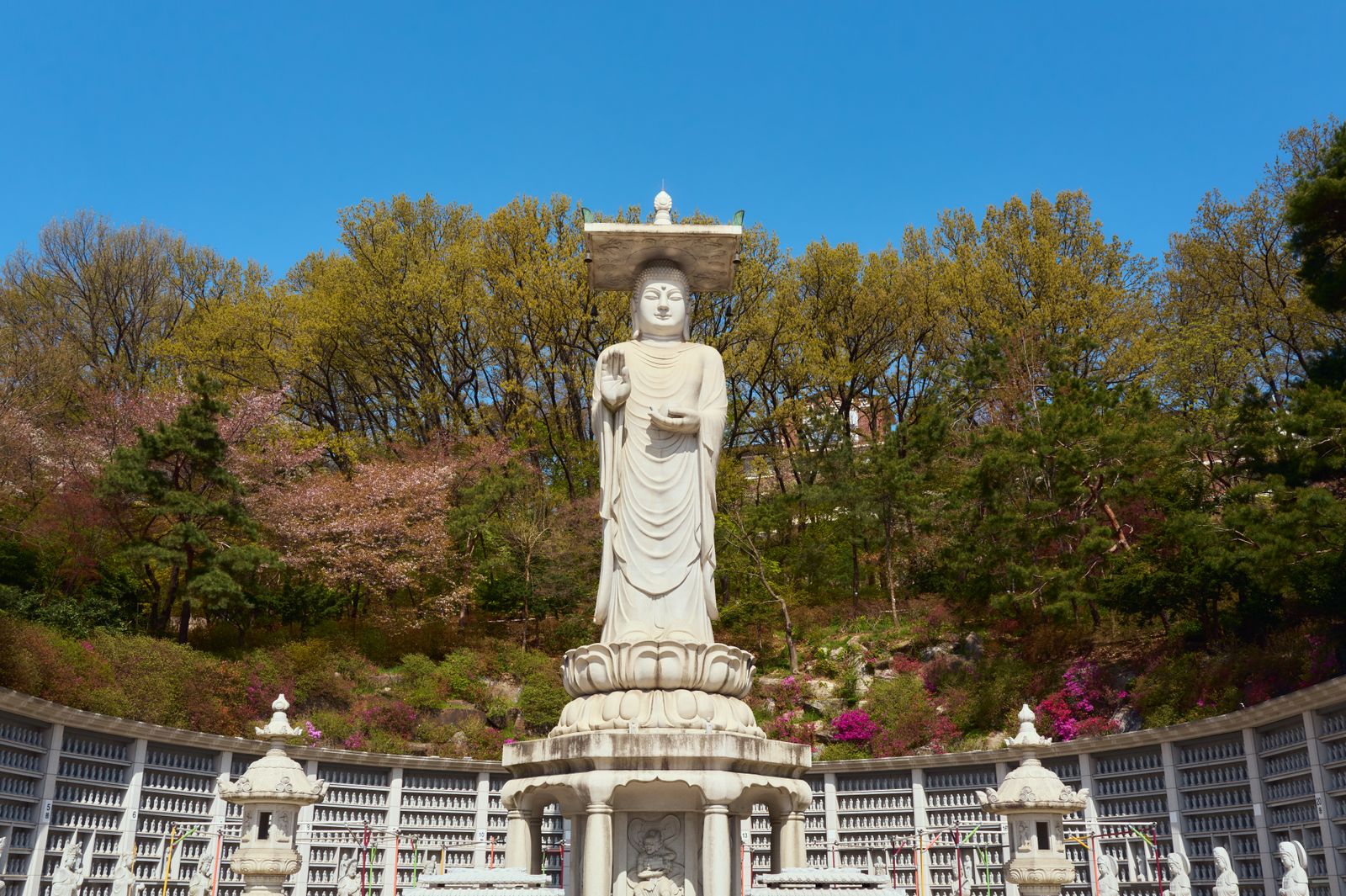
The contrast is real, but Bongeunsa is more than a skyline composition. Its halls, sutra woodblocks, ceremonies, and cultural programs deserve time. Walk slowly uphill through the grounds, notice how the city noise changes, and watch where worshippers pause before taking out a camera.
Bongeunsa offers temple-stay and cultural experiences, with activities that can include meditation, tea, chanting, or Buddhist meals depending on the program. Reserve through official channels and confirm the language. Do not assume a walk-in visitor can join a scheduled session.
Prepare for a long temple-and-city day: As an Amazon Associate, EpicKor may earn from qualifying purchases. Compare Korea travel essentials for a compact umbrella, quiet layer, reusable water bottle, and small pouch without overpacking your day bag.
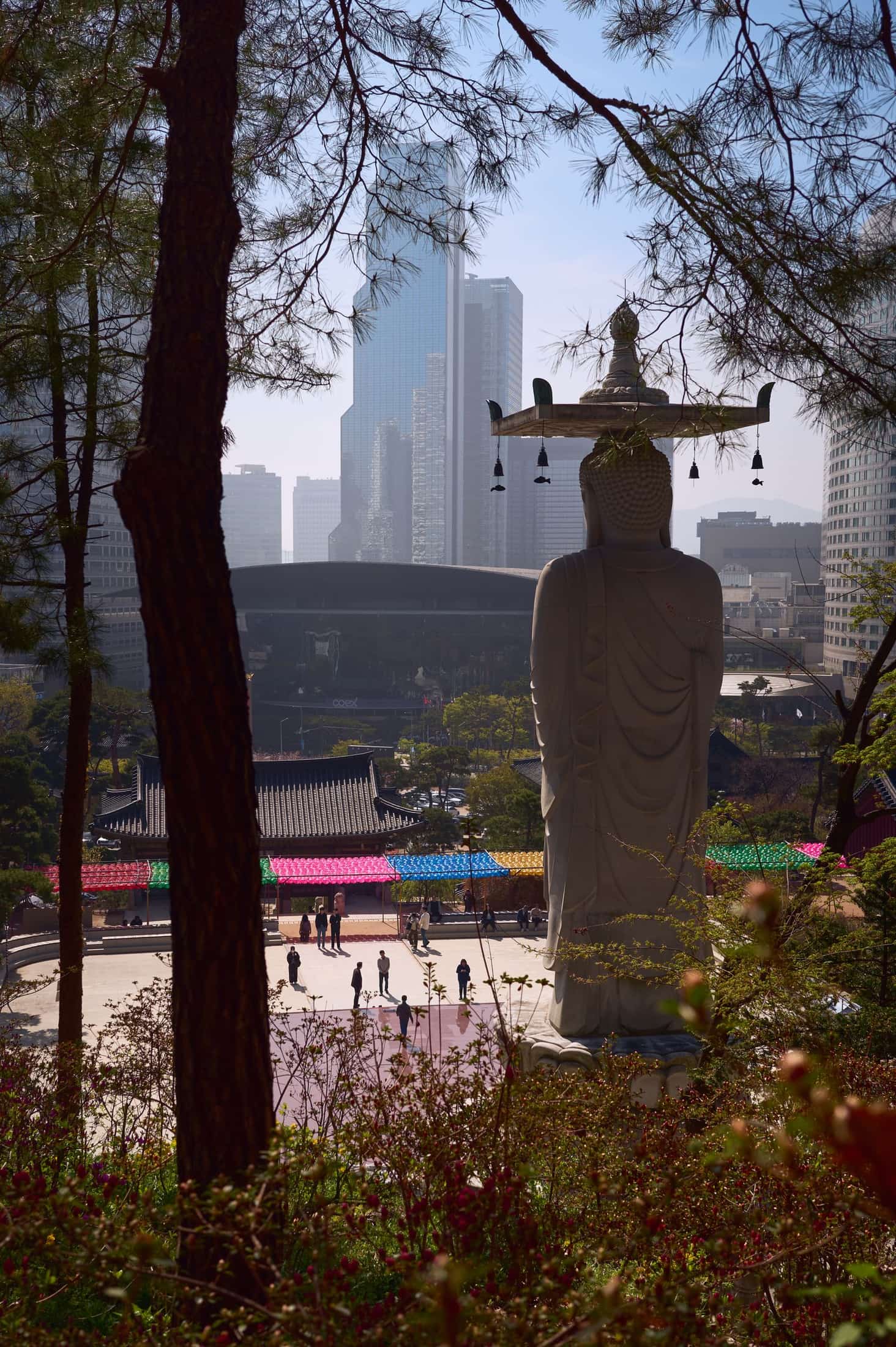
The nearest subway access makes Bongeunsa straightforward, but weekends and festival periods can be crowded. Early morning offers softer light and less competition for the narrow paths around halls.
Jinkwansa: A Temple at the Edge of Bukhansan
Jinkwansa is the choice for travelers who want the transition from city to mountain. Located near Bukhansan National Park, it has a historical origin tradition connected to King Hyeonjong of Goryeo and the monk Jinkwan. The setting feels more secluded than Jogyesa or Bongeunsa even though it remains within Seoul.
The temple is known for Buddhist food traditions and temple-stay programs, but those should be booked and described accurately. A casual visitor does not automatically receive a meal, cooking class, or dawn ceremony. Program content varies by date.
Allow more transport time than the map suggests. The final approach may involve a local bus, taxi, and walking. Comfortable shoes matter, particularly in rain, heat, or winter ice. Pair the visit with a short, appropriate Bukhansan-area walk only if daylight and weather allow.
Jinkwansa is a strong complement to our full guide to Korean temple food, which explains why the cuisine avoids certain pungent vegetables and treats preparation as part of Buddhist practice. For an overnight comparison, see the broader Korean temple-stay guide.
Temple Etiquette Without Anxiety
You are not expected to perform unfamiliar ritual perfectly. Respectful observation is enough. Wear clothing suitable for an active religious site: shoulders and torso covered, and shorts or skirts at a modest length. Remove hats inside worship halls. Shoes usually come off before entering raised interiors; follow the shoe line and local visitors.
Bow only if you want to. A small nod is a respectful alternative, and no one should pressure a visitor of another faith to participate. Do not touch statues, ritual objects, offerings, instruments, or prayer tags.
| Situation | Respectful Choice | Avoid |
|---|---|---|
| Entering a hall | Use a side entrance when indicated and step quietly | Walking through the center during worship |
| Photography | Check signs and keep worshippers out of close frames | Flash, tripods in paths, or photographing people bowing |
| Clothing | Wear comfortable, modest layers and easy-off shoes | Beachwear or clothing that disrupts a formal program |
| Sound | Silence alerts and speak softly | Calls, music, or staged shouting for video |
| Offerings | Observe unless instructions are clear | Moving food, candles, flowers, or money for a photo |
During a ceremony, stay behind regular participants and maintain an exit route. If you need to leave, do so quietly between ritual movements rather than stepping over cushions or in front of the altar.
Photography: What Is Beautiful Is Not Always Available
Outdoor photography is generally possible in temple grounds, but signs and ceremonies take priority. Interiors may prohibit photography, and rules can differ by hall. Ask staff if uncertain.
Do not photograph a worshipper's face at close range without permission. A long lens does not turn a private act into public content. Avoid using prayer tags as a readable background because they may contain names and personal wishes.
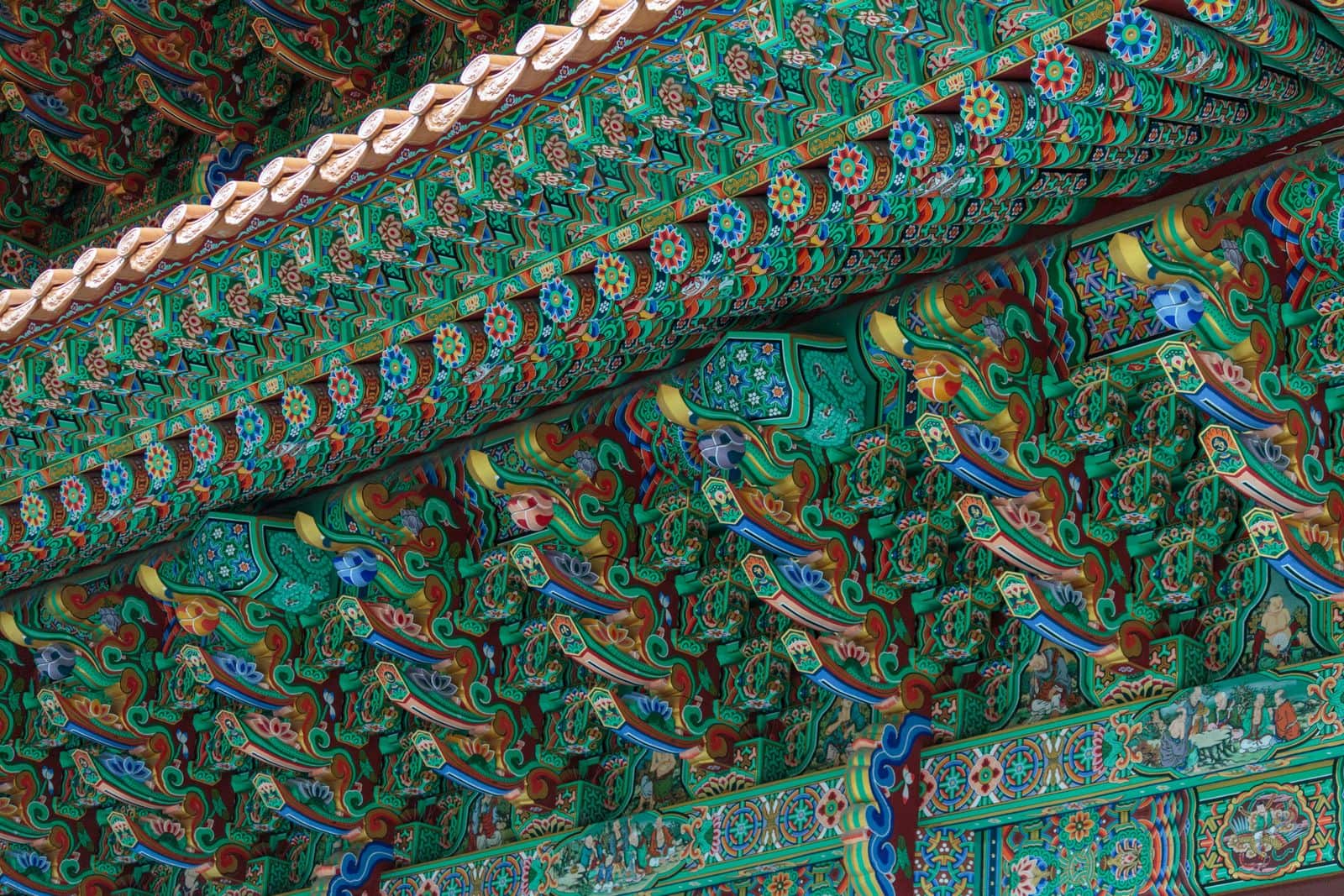
For architecture, photograph the relationship between gate, courtyard, hall, and mountain rather than only isolated roof details. At Bongeunsa, step away from active routes before framing the skyline. At Jogyesa during lantern season, keep tripods out of crowded paths.
Commercial filming, large equipment, or styled shoots may require permission. A phone snapshot and a production setup are not treated the same way.
Temple Stay: Day Visit, Experience, or Overnight?
The official Templestay network offers one-day experiences, rest-focused programs, and overnight schedules at participating temples. Activities may include orientation, meditation, tea, chanting, communal work, a Buddhist meal, or a pre-dawn service.
A temple stay is structured accommodation, not a hotel with temple decor. Participants may sleep on floor bedding, follow quiet hours, wear program clothing, eat simple meals, and wake early. Alcohol, smoking, and disruptive behavior are generally incompatible with the program.
Check the language, physical requirements, room arrangement, meals, allergy handling, cancellation policy, and exact meeting time. Temple food can still include ingredients that matter for allergies even when it is plant-based. Ask rather than assuming "vegan" or "allergen-free."
Read before an overnight stay: Compare Korean culture and history books for a grounded introduction to Korean Buddhism and heritage, then rely on the temple's own instructions for current program rules.
What a Templestay Costs, and Whether It Runs in English
The two questions people actually search for, and neither is answered by a temple's own page.
| Detail | |
|---|---|
| Korean name | 템플스테이 (templestay) |
| Typical price | ₩50,000–100,000 per adult for one night, most sitting at ₩60,000–90,000 |
| Promotional rates | as low as ₩30,000 at participating temples during promotion periods |
| Usually included | accommodation, temple clothing, scheduled activities, meals |
| Usually not included | transport to the temple |
| Official booking | eng.templestay.com — English interface |
| Book ahead | at least a month for popular Seoul temples |
The seven Seoul temples that run English programs
This is the practical filter, because most temples run in Korean only. In Seoul, seven offer English templestay programs:
Bongeunsa · Geumsunsa · Hwagyesa · International Seon Center · Jinkwansa · Jogyesa · Myogaksa
Two of those — Jogyesa and Jinkwansa — are covered in detail above, and both fill quickly.
Experience-oriented or rest-oriented?
Programs split into two types, and picking wrong is the most common regret.
- 체험형 (experience-oriented) follows the temple's actual daily routine: dawn chanting, the 108 prostrations, making prayer beads. You are woken early and you participate.
- 휴식형 (rest-oriented) leaves the schedule mostly open. You walk the grounds, sit, meditate, and are largely left alone.
Choose rest-oriented if what you want is quiet. A surprising number of visitors book the experience program expecting serenity and find themselves doing 108 prostrations before sunrise. That is a genuinely good experience — but it is exercise and discipline, not a spa.
When to skip it
- Skip it if you only have one night in Seoul. A templestay consumes an evening and a morning, and it is usually outside the centre.
- Skip the overnight if you are unsure — take a day program instead. Several temples run half-day versions that give you the atmosphere without committing to a 4am wake-up.
- Do not book a Korean-only program hoping to follow along. Instructions during chanting and prostration sequences are verbal and fast.
A One-Day Seoul Temple Itinerary
For a central day, begin at Jogyesa in the morning, walk through Insadong, then continue to a palace or hanok area. This is the least complicated route and leaves space to observe a ceremony without sacrificing a reservation elsewhere.
For an old-and-new day, visit Bongeunsa before COEX and the surrounding Gangnam area. The order matters: beginning at the temple creates a quieter first half before shopping and crowds.
Do not attempt Jogyesa, Bongeunsa, and Jinkwansa in one day just to collect photographs. The cross-city transport turns the experience into transit. Choose one central temple and one outer temple on separate days if you have time.
Most temple grounds do not charge general admission, but programs, museums, parking, and special activities can have fees. Donations are optional unless a clearly priced program says otherwise. Confirm current access before traveling during major religious events.
FAQ
Q: Can non-Buddhists visit temples in Seoul?
Yes. Major temples welcome respectful visitors regardless of religion. Active ceremonies and restricted rooms still require consideration.
Q: Is there an entrance fee for Jogyesa or Bongeunsa?
General grounds access is typically free. Programs, parking, or special facilities may cost money, so verify the current notice.
Q: Which Seoul temple is easiest to visit?
Jogyesa is easiest for most first-time visitors because it is central and close to Jonggak, Anguk, Insadong, and Gwanghwamun.
Q: Can I take photos inside a temple hall?
Only when signs and staff permit it. Never use flash or photograph worshippers closely while they are bowing or praying.
Q: What should I wear to a Korean temple?
Wear comfortable, modest clothing and shoes that are easy to remove. Bring layers because halls and mountain approaches can feel cooler than the city street.
Q: Do I need to reserve a temple stay?
Yes. Use the official Templestay platform or temple website, select a date and language, and read the program's arrival and cancellation rules.
Sources
You Might Also Like
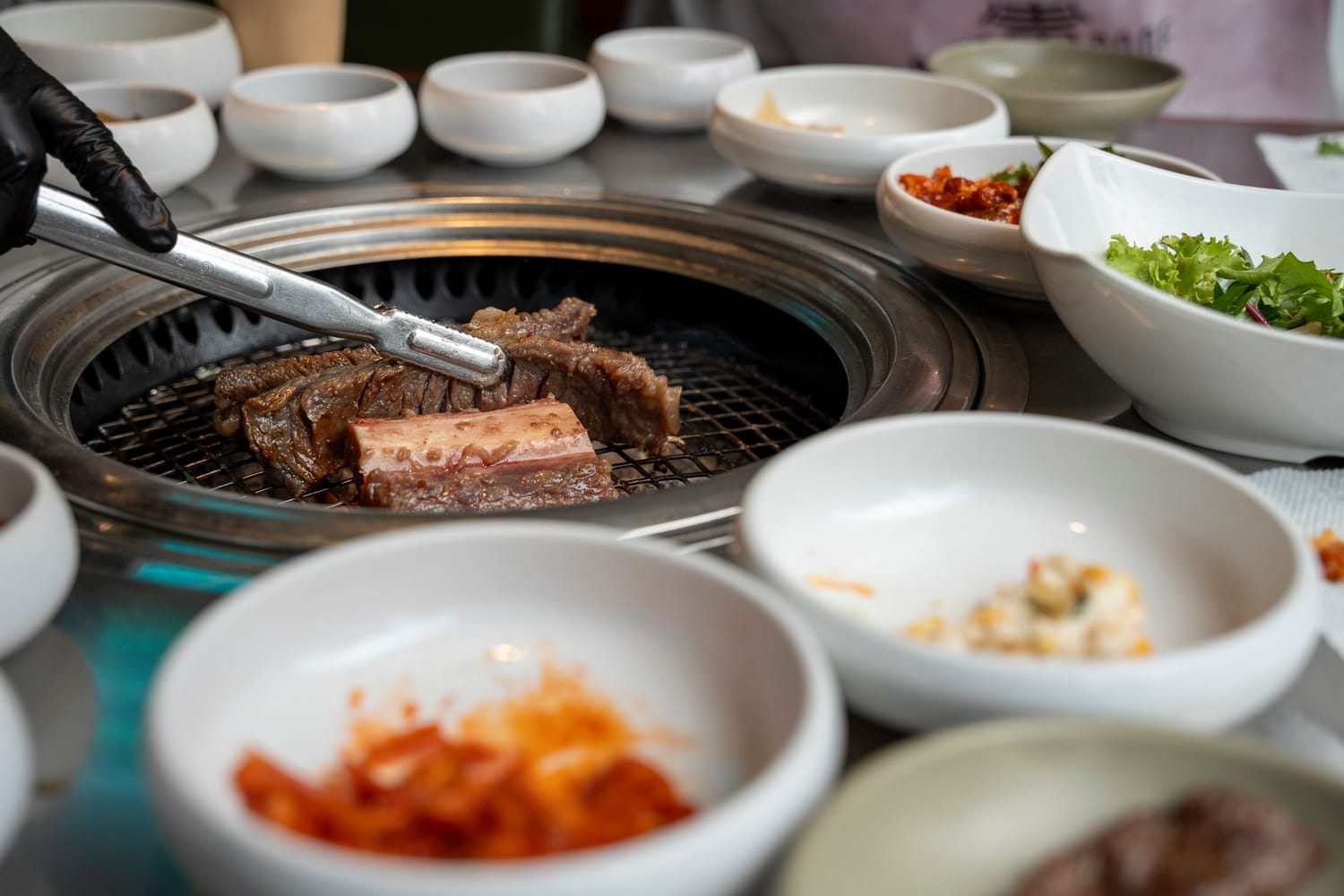
Korean Kitchen Scissors: Why Koreans Cut Meat and Noodles at the Table, and Why It Is Not an Office Scissor
Scissors on a restaurant table look wrong to most of the world and normal to every Korean. The tool is not a desk scissor: thick blades, one serrated edge, big rings, often detachable, built for galbi and cold noodles. Where it came from, and which one to buy.
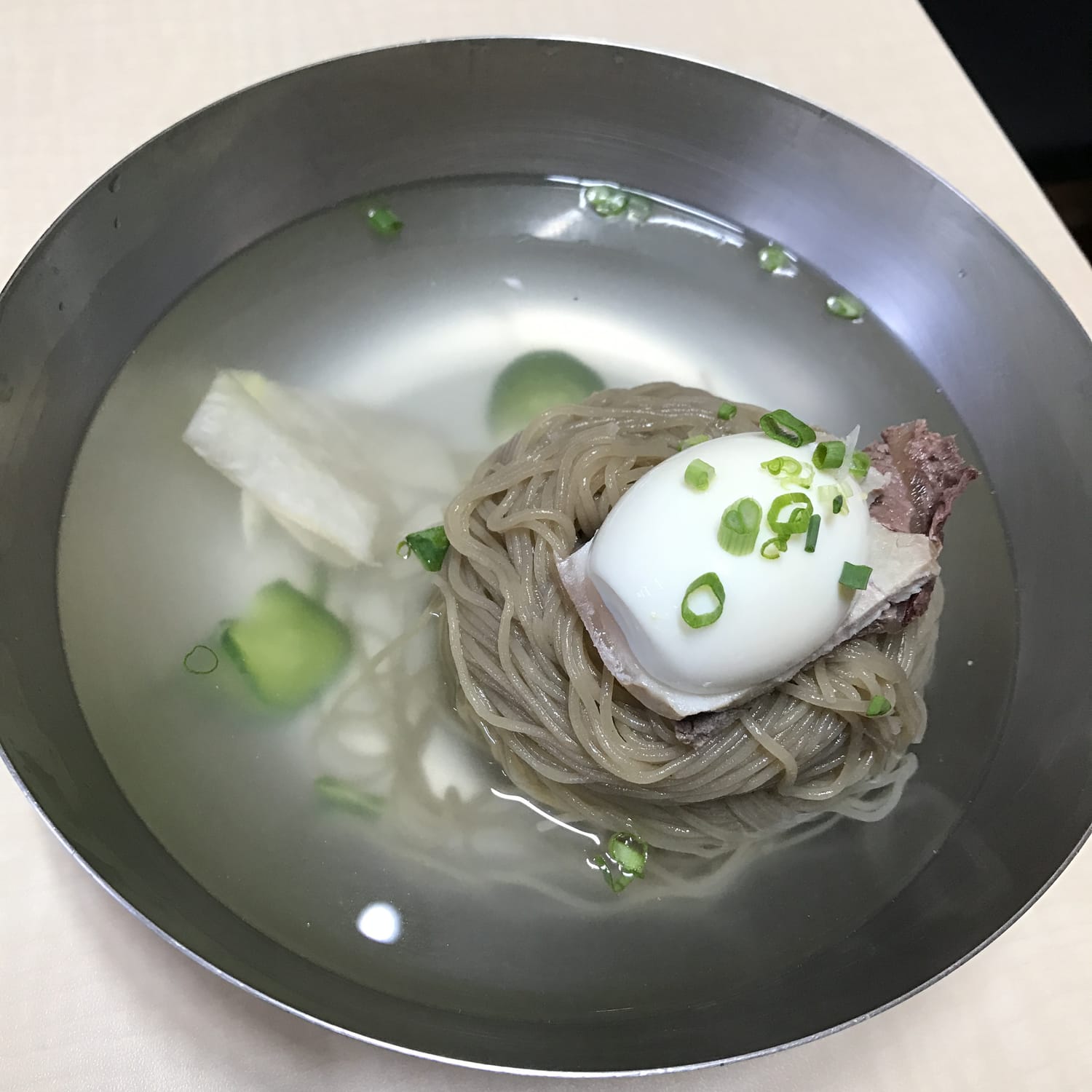
The One Korean Food Foreigners Never Learn to Love: Hamheung Naengmyeon, and Why Koreans Can't See the Problem
Foreigners who eat cheonggukjang and even hongeo still will not pay for this twice. A Korean creator who fed foreigners for years says naengmyeon was the overwhelming number one refusal, and Koreans, who rank it first every summer, cannot see why.
Why Do Koreans Stare at Foreigners? The 5% Country, and Where the Looking Actually Happens
In central Seoul nobody looks at you. In a provincial market, a small town or a subway car of grandmothers, they do. Korea only became a 5%-foreign country in 2025. Where the staring happens, what it means and does not mean, and what to do with it.