
Chef Anh Sung-jae and Mosu Seoul: Michelin Stars After Reopening
Chef Anh Sung-jae became globally recognizable as the exacting judge on Netflix's Culinary Class Wars, but his professional story is larger than a television persona. He trained in major American kitchens, opened Mosu in San Francisco, moved the restaurant to Seoul, earned three Michelin stars in the 2023 and 2024 editions, closed during a relocation, and reopened Mosu Seoul in 2025.
The most important 2026 correction is this: Mosu is not currently a three-star restaurant. The Michelin Guide Seoul & Busan 2026 newly awarded the reopened Mosu two stars. That is a major return after the relocation gap, while Mingles holds the guide's three-star distinction. Articles that still call Mosu Korea's current sole three-star restaurant are repeating its pre-closure status.
This guide explains Anh's background, what the stars mean, how Culinary Class Wars changed public interest, and how to think about a Mosu reservation without reducing Korean fine dining to celebrity access.

Anh Sung-jae's public image is severe on television, but his Michelin profile emphasizes family, memory, and the values behind his cooking.
Chef Anh Sung-jae and Mosu: The Quick Answer
Anh Sung-jae is a Korean American chef whose restaurant Mosu moved from San Francisco to Seoul. Mosu Seoul earned three Michelin stars for the 2023 and 2024 guides, closed for relocation, reopened in 2025, and entered the 2026 guide with two Michelin stars. Anh also serves as a judge on Netflix's Culinary Class Wars.
| Period | Milestone | Why it matters |
|---|---|---|
| 2015 | Mosu opens in San Francisco | Establishes Anh's independent restaurant identity |
| 2017 | Mosu moves to Seoul | Korean ingredients and memories become more central |
| 2023-2024 guides | Mosu holds three Michelin stars | Places the restaurant at the top of the Seoul selection |
| 2024 | Culinary Class Wars reaches global audiences | Anh becomes familiar beyond fine-dining circles |
| 2025 | Mosu Seoul reopens after relocation | The restaurant returns with a new space and service cycle |
| 2026 guide | Mosu receives two Michelin stars | Confirms a strong post-reopening return without claiming three |
Korean food starter pack — compare on AmazonAffiliate link. As an Amazon Associate, EpicKor earns from qualifying purchases at no extra cost to you.
Michelin's corporate release on ten years of the guide in Korea names Mosu as newly awarded two stars in the 2026 selection. The restaurant's official site should be the source for current reservations, contact details, and operating notices.
From the United States to a Seoul Restaurant
Anh moved to the United States as a child and did not begin with the polished path people now associate with elite restaurants. His career included military service, culinary education, and training in demanding kitchens. The important point is not a dramatic “outsider becomes genius” story. It is the accumulation of technique, repetition, and judgment that later shaped Mosu.
Mosu first opened in San Francisco in 2015. Anh then relocated the restaurant to Seoul in 2017. Moving to Korea changed more than the address. Access to local produce, seafood, fermentation, mountain vegetables, and personal food memory gave the restaurant a different vocabulary.
Michelin's earlier profile of Anh and his family describes family as a central source of motivation. It also records Mosu's rapid rise from one star to two before the later three-star period.
What Mosu's Food Is Trying to Do
Mosu is often labeled innovative or contemporary, but those words can sound empty. The restaurant's dishes usually begin with a recognizable ingredient, season, place, or memory, then use fine-dining technique to change texture, concentration, temperature, or presentation.
Anh's cooking is not a museum display of “traditional Korean food,” and it is not simply French cuisine decorated with Korean ingredients. It works in the space between Korean pantry knowledge, California experience, Japanese and European technique, and the chef's own memories.
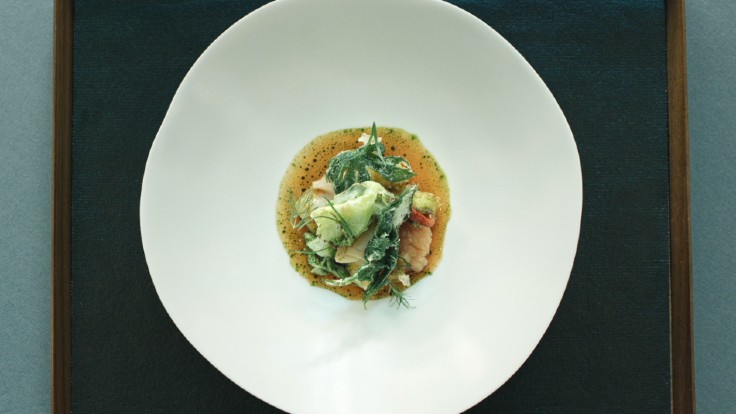
A Mosu dish may look minimal, but the restaurant's identity depends on ingredient selection, preparation, and the sequence of the tasting menu.
If you want to understand a quieter tradition-led counterpoint, read EpicKor's Korean temple food guide. For tools and home cooking, the Korean cookware starter guide explains why practical objects matter even when the finished plate looks simple.
Michelin Stars Before and After the Closure
Michelin stars belong to a restaurant in a particular selection, not permanently to a chef's biography. Mosu's three-star achievement in the 2023 and 2024 guides remains part of its history. The closure and relocation meant the restaurant was not simply carrying an unchanged current rating through the gap.
The reopened Mosu entered the 2026 selection with two stars. Michelin defines two stars as excellent cooking worth a detour, while three stars indicate exceptional cuisine worth a special journey. The distinction matters because travelers make expensive decisions based on current guide status.
Learn the everyday flavor system first: As an Amazon Associate, EpicKor may earn from qualifying purchases. Before treating Korean food only as tasting-menu cuisine, compare a Korean food starter pack and learn how pantry staples, fermentation, rice, and banchan build the baseline that contemporary chefs reinterpret.
Do not describe Anh as “the only three-star chef in Korea” without a date. A historically accurate sentence is that Mosu was awarded three stars for the 2023 and 2024 Seoul guides. A current 2026 sentence is that the reopened restaurant has two stars.
Culinary Class Wars and the Perfectionist Image
Netflix introduced Anh to viewers who had never read a restaurant guide. On Culinary Class Wars, he evaluates seasoning, texture, temperature, intent, and execution with unusually specific language. Editing turns that precision into a recognizable character: quiet, severe, and difficult to impress.
Netflix's official season-one guide identifies Anh as a judge alongside restaurateur Paik Jong-won. The show is entertainment, not a documentary record of every judging conversation. Contest structure, dramatic cuts, and time limits amplify certain aspects of each judge.
The useful lesson is not that vegetables must be judged with fear. It is that professional tasting asks whether an ingredient has the intended texture and whether every component has a reason to be on the plate.
Why One Millimeter and One Degree Can Matter
Fine dining depends on repeatability. A slice that is thicker than planned changes cooking time and mouthfeel. A sauce held too hot can split. A vegetable served seconds late can lose the contrast the chef designed. Guests see one plate; the kitchen manages dozens of linked variables.
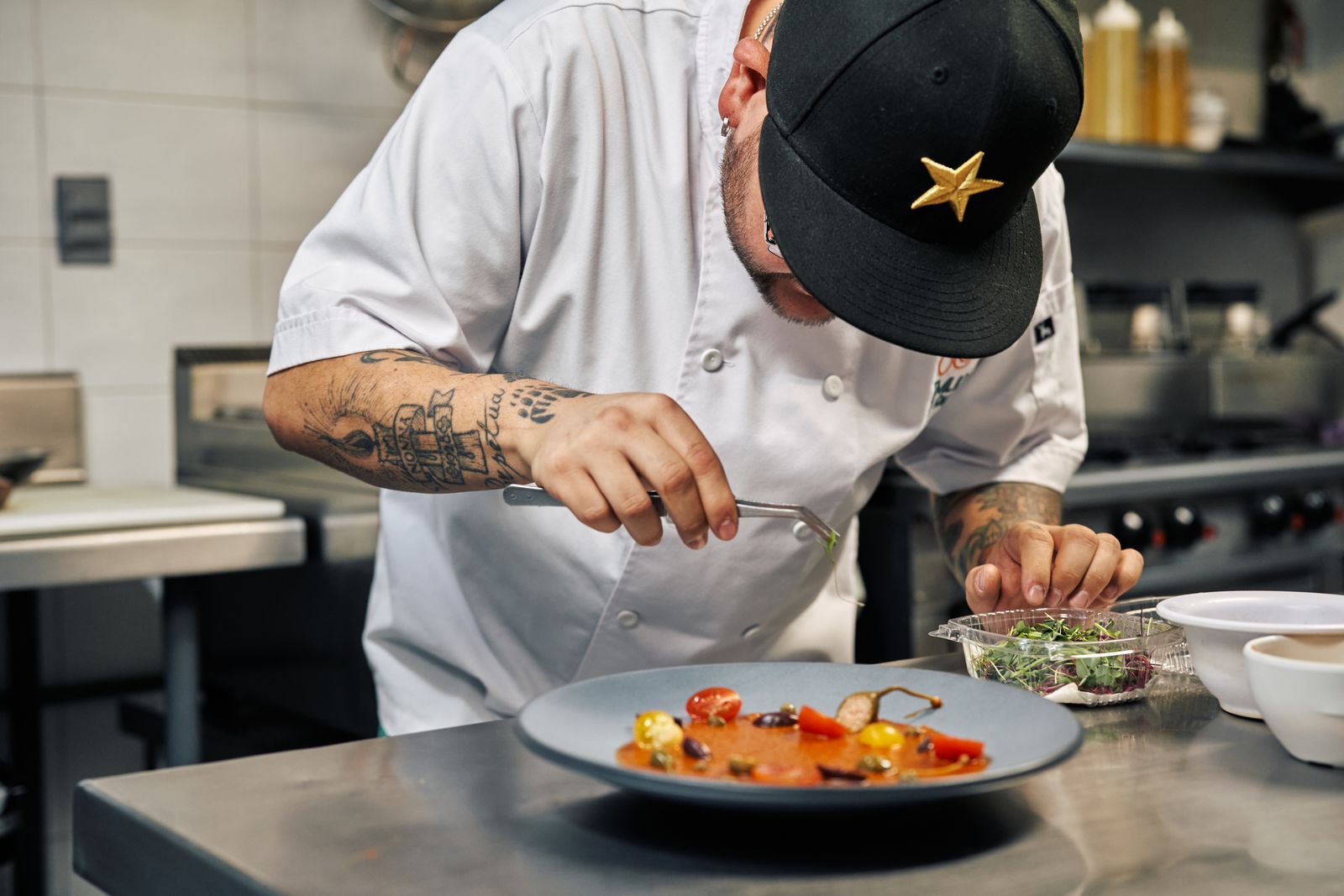
Precision is a team system of prep, timing, temperature, and communication rather than one chef staring at a plate.
This is where Anh's perfectionist reputation makes sense. It is less about decorative fussiness than about whether the result matches the stated idea. That mindset also explains why a tasting menu can change when ingredients or seasons shift.
Booking Mosu Without Making Bad Assumptions
High demand after the television series does not justify relying on old blog posts, resale messages, or an unofficial concierge. Use Mosu's official site and linked reservation channel. Confirm the address, menu format, cancellation fee, dietary accommodation deadline, and whether the reservation requires a deposit.
Do not promise yourself a specific signature dish seen in an older photo. Tasting menus evolve. A dish may be retired, modified, or available only in a different season. If one viral plate is the only reason you want to go, ask whether a current menu is a better use of your budget.
| Before booking | What to verify | Why |
|---|---|---|
| Current guide status | Michelin selection year and official listing | Avoid repeating the old three-star status |
| Reservation source | Link from Mosu's official site | Reduce impersonation and resale risk |
| Cancellation terms | Deposit, deadline, no-show charge | Tasting-menu seats carry high opportunity cost |
| Dietary needs | What can be accommodated and by when | Complex menus cannot always change at service |
| Menu expectation | Seasonal format rather than one old dish | Prevents a celebrity-photo checklist meal |
Is Mosu the Best Korean Restaurant?
“Best” depends on what you want. Michelin evaluates cooking through its own methodology. A traveler might value temple cuisine, a specialist soup shop, market noodles, barbecue, or a family-run neighborhood restaurant more than a long tasting menu.
Mosu is useful for understanding one influential direction in Korean fine dining: personal memory translated through international technique and local ingredients. It should not become evidence that expensive food is Korea's most authentic food.
Pair fine dining with ordinary meals. EpicKor's guide to what Koreans eat for breakfast shows the opposite end of the daily spectrum, while the traditional dessert guide explains flavors that can appear in both humble and refined forms.
How to Approach a Tasting Menu
Arrive on time and avoid strong fragrance. Tell the restaurant about allergies before the service date, not after the first course arrives. Listen to explanations, but do not feel obligated to identify every technique. Notice how the menu moves between temperatures, textures, richness, acidity, and rest.
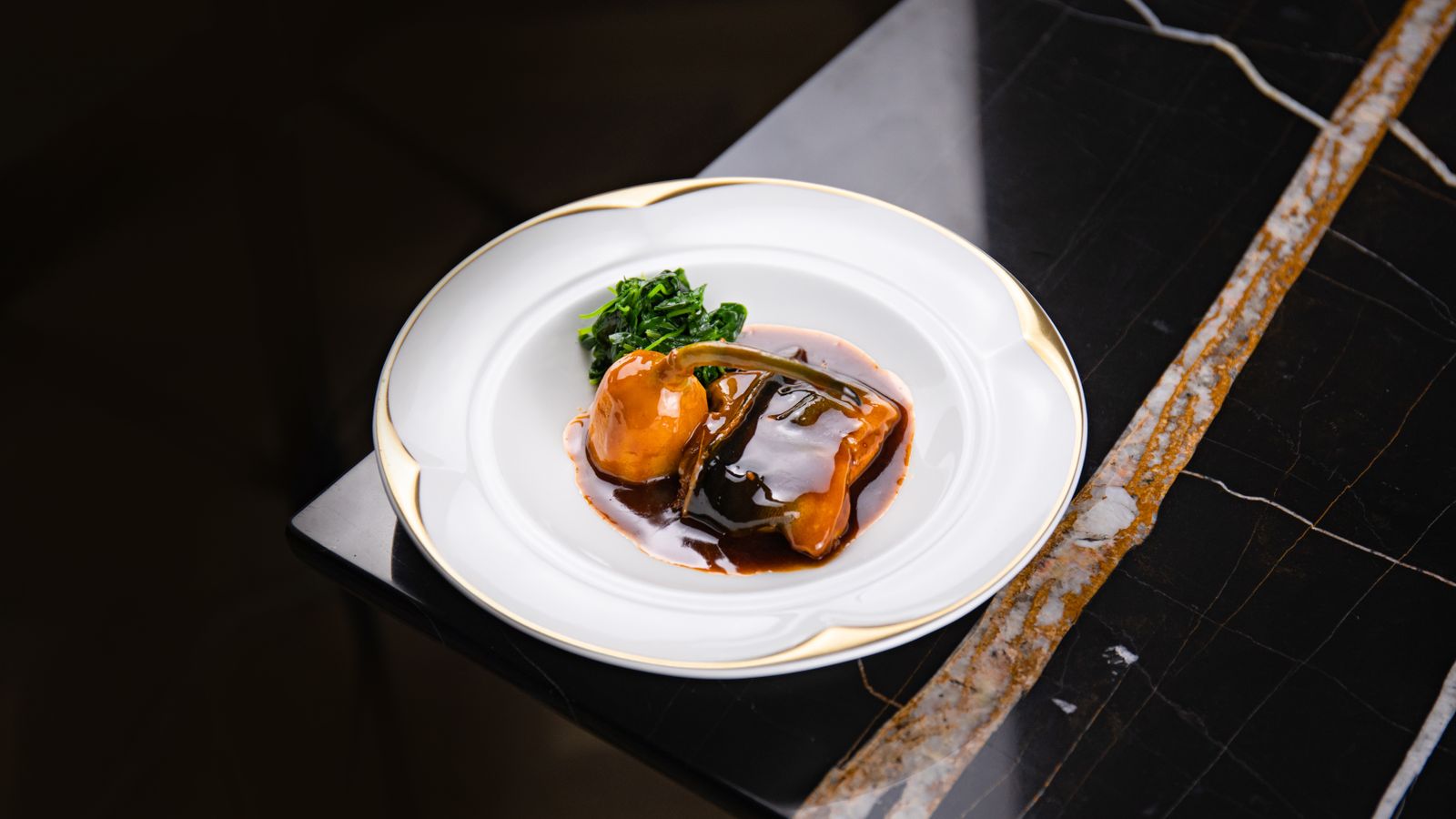
A tasting menu is a sequence; judging one plate without the courses around it misses part of the design.
Photography rules vary. Keep the camera quick, avoid lighting the room with flash, and do not let documentation make every course cold. Ask before photographing staff or open kitchen areas.
Bring the technique home realistically: A tasting menu cannot be recreated with one gadget, but a dependable Korean kitchen scissors and tongs set shows the practical tool logic behind everyday Korean preparation. Compare function before buying a novelty chef product.
The Bigger Significance of Anh Sung-jae
Anh's influence comes from three overlapping roles: restaurant chef, global television judge, and public symbol of Korea's contemporary dining confidence. Those roles create attention, but they also create misinformation when old star counts and current restaurant status are mixed together.
The accurate 2026 picture is more interesting than the myth. Mosu closed, relocated, reopened, and returned directly with two stars. That story shows that restaurant identity is not a permanent trophy. It has to be rebuilt through a team, a room, a menu, and daily service.
Frequently Asked Questions
Q: Does Mosu Seoul currently have three Michelin stars?
No. Mosu held three stars in the 2023 and 2024 guides. The reopened Mosu was newly awarded two stars in the Michelin Guide Seoul & Busan 2026.
Q: Why did Mosu lose its previous listing?
The Seoul restaurant closed during a relocation. Michelin selections evaluate operating restaurants, so the reopened venue returned through a new inspection cycle.
Q: Is Anh Sung-jae still a Culinary Class Wars judge?
Netflix's official title pages list Anh as a judge and star of the series. Check Netflix for the current season and regional availability.
Q: Can visitors reserve Mosu through Instagram messages?
Use the reservation path linked from Mosu's official website. Avoid paying an unknown account or reseller that claims private access.
Q: Does Mosu serve traditional Korean food?
It is contemporary fine dining shaped by Korean ingredients, memories, fermentation, seasonality, and international technique. It is not a conventional traditional set meal.
Q: Is the restaurant appropriate for dietary restrictions?
Possibly, but complex tasting menus have limits. Contact the restaurant before booking and disclose allergies or restrictions by the required deadline.
Official Sources
You Might Also Like
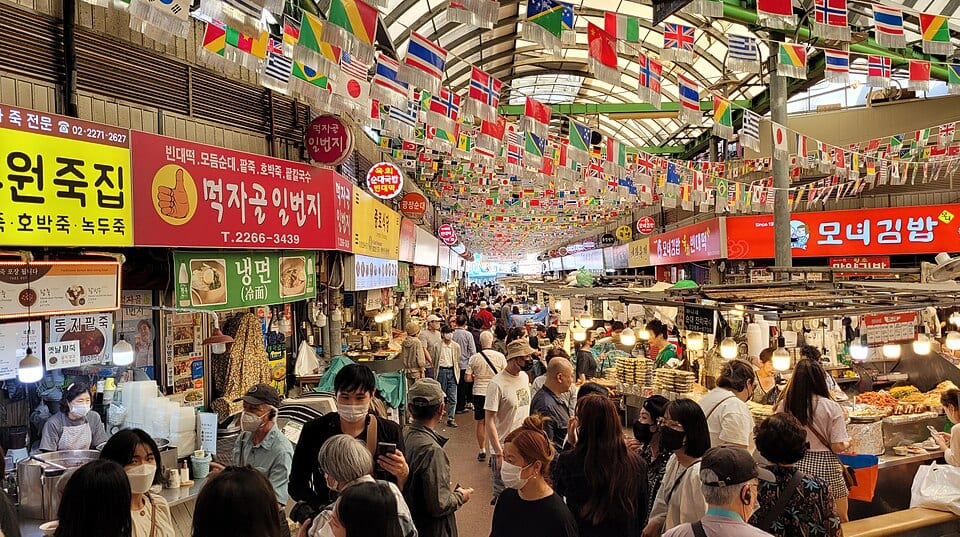
Three Seoul Markets: Gwangjang, Majang and Dongmyo
Plan Gwangjang, Majang and Dongmyo markets with the right food, shopping, subway stops, timing, etiquette, and realistic expectations.
Korea's Neighbourhood Bathhouses Are Disappearing, and the Bath Is Not: Where the Hot Water Went
Seoul had 1,764 public bathhouses in 1995 and has 510 now. Koreans have not stopped soaking; they moved to private-bath hotels, ₩60,000 scrub studios and the apartment-basement sauna. Why the old tang died, what Japan did differently, where to bathe in 2026.
Korean McDonald's: Why the Burgers Are Named After Farm Counties, and What to Order Now
McDonald's Korea has bought 459.2 tonnes of named Korean produce since 2021 and prints the county on the burger — Changnyeong garlic, Jindo spring onion, Jinju pepper. 24 million sold, ₩61.7 billion of measured regional value. Here is what is on the menu now.