Why So Many Koreans Are Named Kim: Surnames and Bon-Gwan
Why are so many Koreans named Kim? The quick answer is that Kim became prestigious through several powerful royal and regional lineages, then spread as surnames became nearly universal. But the useful answer requires one more Korean concept: bon-gwan, the ancestral place attached to a family line. Two people named Kim may belong to different bon-gwan and have no meaningful family connection.
According to Statistics Korea's complete 2015 population census, Kim was the country's most common surname, ahead of Lee and Park. The census counted the Gimhae Kim origin alone at about 4.46 million people, or 9 percent of the Korean population measured. That is one clan origin, not every person named Kim.
This guide explains the royal history, the expansion of surnames, how bon-gwan works, and what a traveler should actually say when meeting a Kim in Korea.
The Short Answer: Kim Is One Surname, Many Lineages
Kim is written as Gim in South Korea's official Revised Romanization, although most families use the internationally familiar spelling Kim. The name is usually associated with the Chinese character meaning "gold." Its high frequency reflects centuries of political prestige, family organization, and the gradual spread of surnames beyond elite households.
The key correction is that "all Kims are related" is not how Koreans understand the name. A full traditional identification combines surname and bon-gwan. A Gimhae Kim, a Gyeongju Kim, and a Gwangsan Kim belong to distinct historical origin groups even though all write the same surname.
| Term | Meaning | Example | What It Tells You |
|---|---|---|---|
| Seong | Family name or surname | Kim | The broad surname shared by millions |
| Bon-gwan | Ancestral place of a clan line | Gimhae | Which historical Kim lineage is meant |
| Jokbo | Compiled genealogy | A clan genealogy book | Recorded descent and family branches |
| Pa | Branch within a clan | A named sub-line | A narrower family division |
Korea: A History (Eugene Y. Park) — on AmazonAffiliate link. As an Amazon Associate, EpicKor earns from qualifying purchases at no extra cost to you.
That structure explains why asking "Which Kim?" can mean "Which bon-gwan?" rather than "Which individual person?" Older Koreans may know their clan origin immediately. Younger Koreans often know it too, but it is no longer a necessary topic in ordinary introductions.
How the Silla Royal House Made Kim Prestigious
Silla, one of Korea's Three Kingdoms, existed for nearly a millennium and eventually unified much of the peninsula. Its throne passed among Park, Seok, and Kim lines before Kim rulers became dominant. Korean historical records describe King Michu as the first Kim to take the Silla throne, after which the line held royal power for long periods.
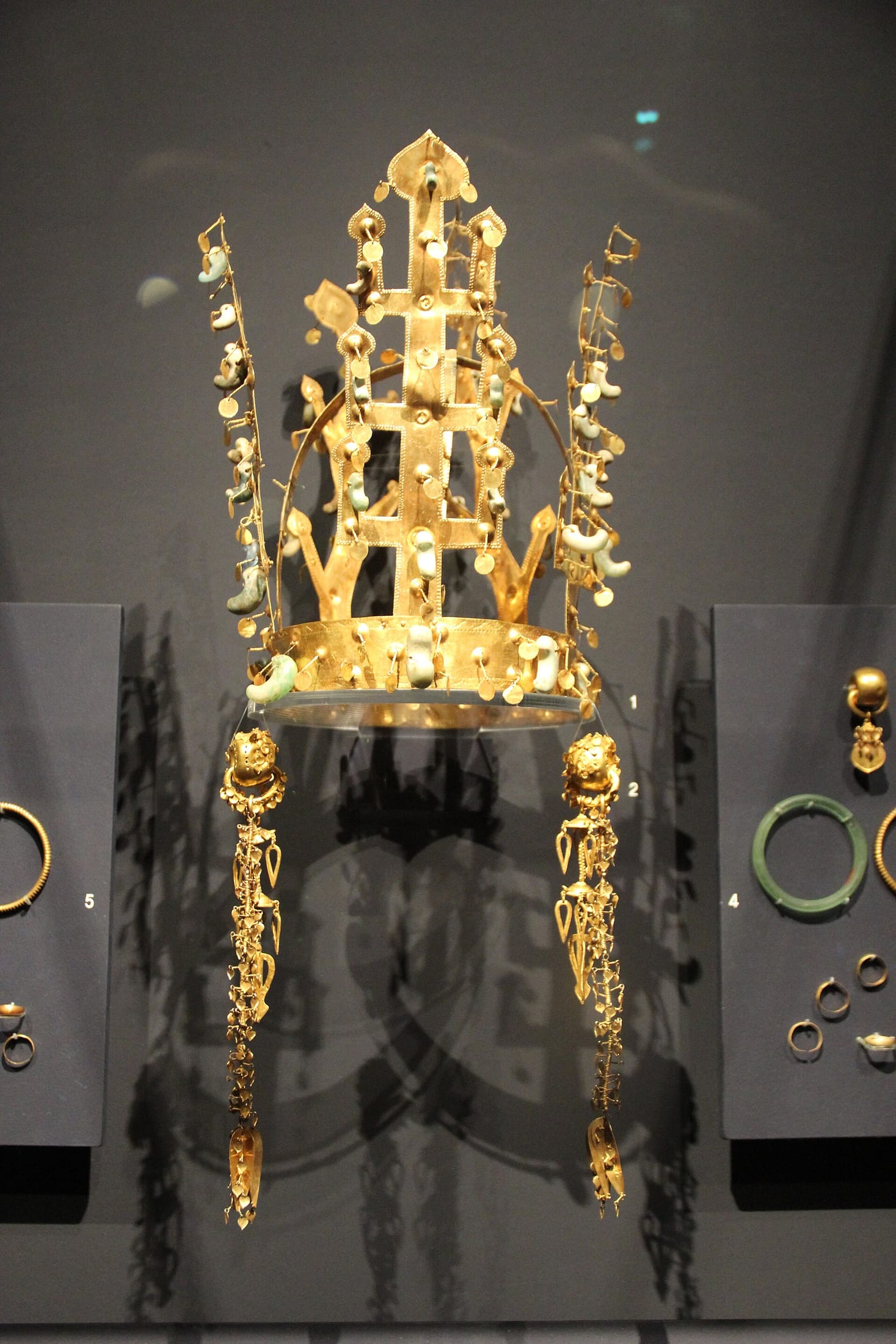
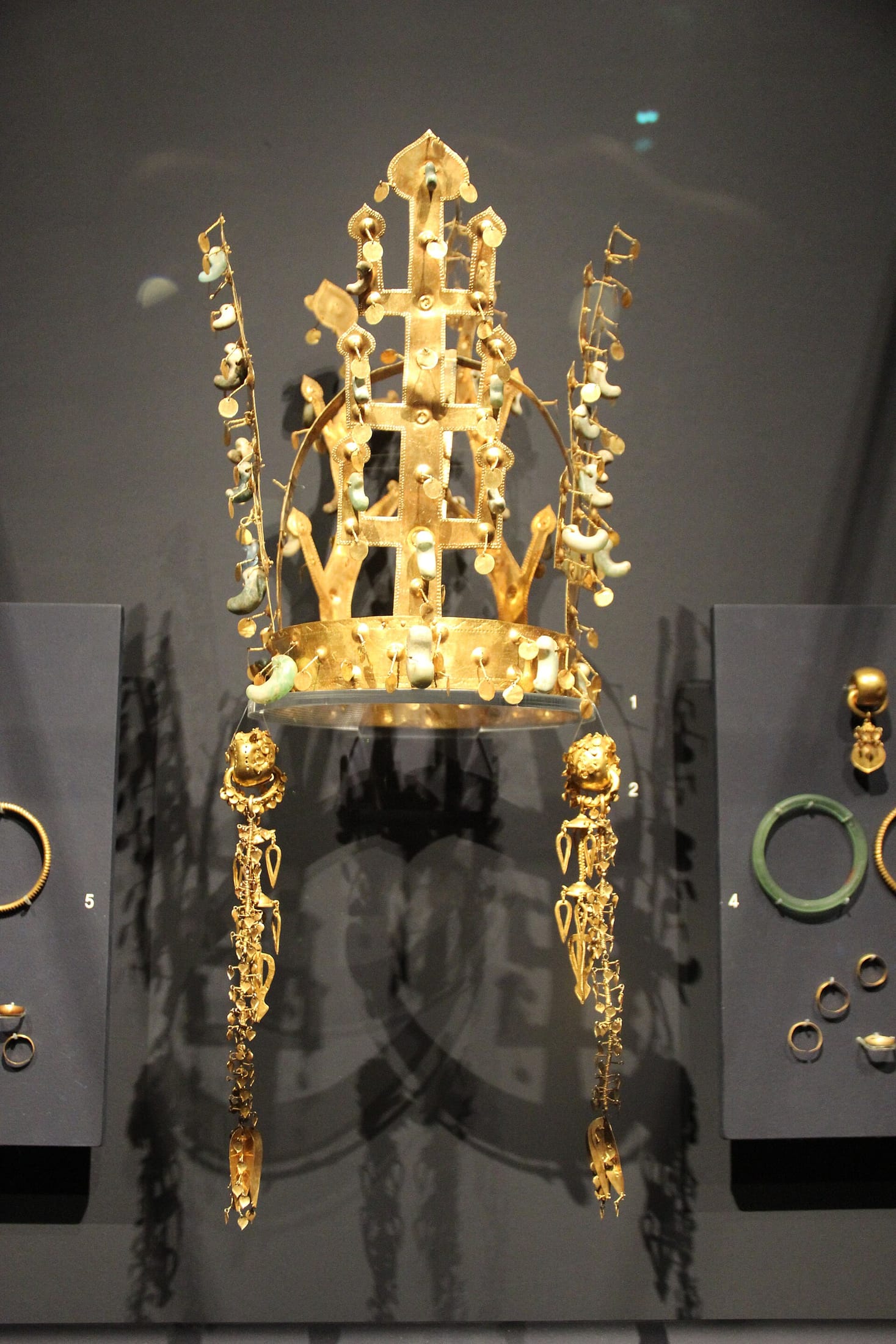
The prestige of that history matters. A royal surname carried symbolic weight long after a kingdom disappeared. Gyeongju Kim lineages connect their origin story to Silla, and museum displays of gold crowns, belts, and tomb goods reinforce the public image of Silla's ruling elite.

Royal ancestry should still be described carefully. A modern person with a Gyeongju Kim bon-gwan is part of a lineage tradition; that does not mean a simple, fully documented biological chain connects every member to one king. Clan histories combine records, social organization, and origin narratives developed over centuries.
The Gimhae Kim story is different. It traces its founding tradition to King Suro of Geumgwan Gaya, a polity centered around present-day Gimhae. That distinction is why the two largest well-known Kim origins are not interchangeable: one is associated with Gaya and King Suro, the other with Silla and Gyeongju.
How Surnames Spread Beyond the Elite
Modern summaries often say that ordinary people simply copied prestigious surnames near the end of the Joseon Dynasty. That captures part of the pattern but makes a long social change sound like one event. Surname use expanded over centuries through status change, household registration, purchased or claimed genealogical affiliation, adoption, and the administrative needs of a modern state.
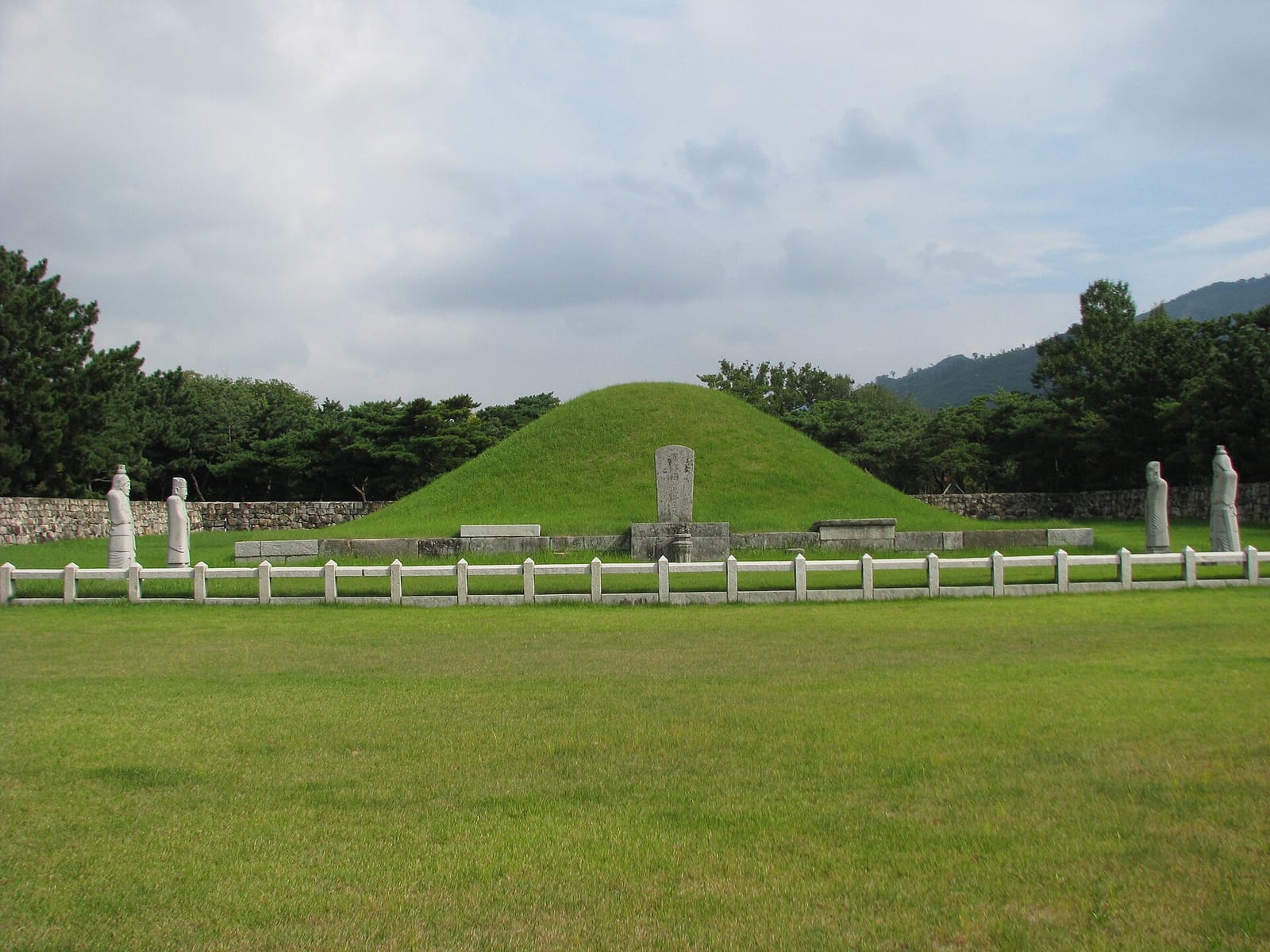
Genealogies, or jokbo, also changed. The National Institute of Korean History notes that Korean genealogies existed earlier but became widely compiled among yangban families from the 16th century, spreading further in the 17th and 18th centuries. A genealogy was not only a family tree. It organized ritual obligations, marriage relationships, status claims, and membership in a descent group.
By the late Joseon period, having a recognized surname and clan affiliation carried social value. Families could connect themselves to established lines, while population registers increasingly required stable identities. The result was concentration around a limited set of high-prestige names, including Kim, Lee, and Park.
Read the history behind the names: As an Amazon Associate, EpicKor may earn from qualifying purchases. Korea: A History carries the longer account of Silla, Gaya and Joseon society — the family systems behind modern surnames are a Joseon story, and this is the accessible single volume that covers it.
See Korea: A History on AmazonWhat the Census Actually Says
The 2015 complete enumeration remains the standard official reference for surname concentration. Statistics Korea reported 5,582 family names in total when names with and without Chinese characters were counted. The top ten surnames accounted for 63.9 percent of the population, and Kim ranked first.
Those figures need context. Thousands of recorded surnames include very small populations, variant characters, and names that entered Korea through immigration or naturalization. Meanwhile, a handful of old surnames cover a large share of citizens. Korea is therefore both highly concentrated at the top and more diverse at the edges than the familiar Kim-Lee-Park shorthand suggests.
| 2015 Census Finding | Official Figure | How to Interpret It |
|---|---|---|
| Total recorded family names | 5,582 | Includes names with and without associated Chinese characters |
| Share held by top 10 surnames | 63.9% | A small group of surnames remains highly concentrated |
| Gimhae Kim origin population | About 4.457 million | One bon-gwan alone represented about 9% of the population |
| Total recorded family origins | 36,744 | Many entries were very small or historical records rather than large active clans |
The census does not support the casual claim that exactly "one in five" Koreans is named Kim without checking the denominator and year. Kim is close to that popular shorthand, but official census tables are better than repeating a rounded meme as timeless fact.
How Bon-gwan Works in Real Life
A bon-gwan is not necessarily where a person was born, where their parents live, or where the family maintains a house. It is the ancestral place associated with the lineage. A Seoul resident whose grandparents also lived in Seoul may still identify as a Gimhae Kim because that is the inherited clan origin.
Bon-gwan mattered strongly in marriage law. For much of modern Korean legal history, marriage between people who shared both surname and ancestral origin was prohibited. Korea's Constitutional Court found the blanket restriction unconstitutional in 1997, and the family-law system later shifted toward barring marriage between close relatives rather than every distant member of the same bon-gwan.
That change is important. It is inaccurate to tell travelers that two Gimhae Kims can never marry today. Families may still discuss clan origin, and older relatives may have cultural preferences, but the legal question now turns on actual degree of kinship.
In everyday introductions, Koreans usually use a person's full name and social title. If several people share a surname, first names, job titles, or relationship terms do the work. Our guide to what "ajumma" means in Korea explains why relationship and social-role words can be as important as names in actual conversation.
Kim, Gim, Lee, Yi, Park, and Bak
Romanization creates another layer of confusion. Under Revised Romanization, the Korean surname written with the initial consonant giyeok is rendered Gim, but Kim remains the dominant family spelling internationally. Similarly, Lee may correspond to the Korean surname pronounced closer to "Ee," and Park represents a Korean pronunciation closer to "Bak."
Personal and family spellings are identities, not errors to be corrected. A passport holder named Kim should not be renamed Gim because a map or language textbook uses Revised Romanization. The official system mainly standardizes Korean geographic and administrative terms; families retain established spellings.
If Korean spelling interests you, learn the Hangul letters behind the romanized versions. It immediately clarifies why multiple English spellings can represent the same Korean name. Our Hangeul design guide also shows how the alphabet moved from a writing system into a visible part of contemporary Korean design.
Decode Korean names yourself: A beginner workbook can help you move past inconsistent English spellings. Compare the Korean alphabet writing workbook and practice recognizing common surname syllables before your trip.
See Korean alphabet writing workbook on AmazonEtiquette: What to Ask and What to Avoid
It is fine to ask a Korean friend about their bon-gwan if family history is already part of the conversation. It is less natural to interrogate a new acquaintance as though their surname reveals social rank. Most people are not walking archives of a clan genealogy, and some families have complicated adoption, migration, or registration histories.
Avoid assuming that two colleagues named Kim are relatives. Do not treat royal-origin stories as proof that someone is aristocratic. And never "fix" a person's English spelling. The respectful approach is simple: use the name as the person writes it, ask how they prefer to be addressed, and let deeper family history emerge naturally.
For travelers, the practical lesson is that a surname carries less identifying power in Korea than it might elsewhere. Confirm a full name, phone number, booking reference, or workplace when arranging a meeting. "Mr. Kim" alone can be genuinely ambiguous.
FAQ
Q: What percentage of Koreans have the surname Kim?
Kim is commonly summarized as roughly one-fifth of South Koreans. For precise work, use Statistics Korea's 2015 census tables rather than treating a rounded percentage as permanent.
Q: Are all Korean Kims related?
No. Kim includes many bon-gwan lineages, and even members of the same large origin may be separated by countless generations with no close family relationship.
Q: What is the largest Kim clan origin?
The 2015 census identified Gimhae Kim as the largest family origin, with about 4.457 million people.
Q: Is Kim connected to the Silla royal family?
Several Kim lineages, especially Gyeongju Kim, are historically associated with Silla's royal house. Other Kim origins have different founding traditions, including Gimhae Kim's connection to King Suro of Gaya.
Q: Can two people with the same surname and bon-gwan marry?
Modern Korean law does not impose the old blanket ban on everyone sharing a surname and bon-gwan. Marriage restrictions focus on close degrees of kinship, although family attitudes can vary.
Q: Should the surname be written Kim or Gim?
Use the individual's chosen spelling. Gim follows South Korea's Revised Romanization, but Kim is the established spelling used by most families internationally.
Sources
You Might Also Like

South Korea Explained: K-Pop, Growth, Tragedy, and Resilience
A clear guide to South Korea's compressed development, Hallyu soft power, historical trauma, safety reforms, and why modern Korea feels intense.
The One Korean Food Foreigners Never Learn to Love: Hamheung Naengmyeon, and Why Koreans Can't See the Problem
Foreigners who eat cheonggukjang and even hongeo still will not pay for this twice. A Korean creator who fed foreigners for years says naengmyeon was the overwhelming number one refusal, and Koreans, who rank it first every summer, cannot see why.

Why Do Koreans Stare at Foreigners? The 5% Country, and Where the Looking Actually Happens
In central Seoul nobody looks at you. In a provincial market, a small town or a subway car of grandmothers, they do. Korea only became a 5%-foreign country in 2025. Where the staring happens, what it means and does not mean, and what to do with it.