
Korean Proverbs Guide: Kimchi Soup, Tigers, and Everyday Wisdom
Korean proverbs are small language capsules. They carry warnings about speech, patience, humility, timing, reputation, and social responsibility. You will hear them in family conversations, variety shows, dramas, classrooms, and casual advice.
The danger for learners is translating them too literally. A proverb about kimchi soup is not really about soup. A tiger proverb is not only about animals. A needle thief is not about sewing supplies. Korean proverbs work because they turn daily images into social lessons.
This guide explains five useful Korean proverbs, how to understand them, and when not to use them.
Why Korean Proverbs Matter
Proverbs matter because Korean communication often values indirectness, timing, and shared context. A proverb can soften criticism, make advice sound less personal, or let someone warn you without giving a lecture.
For learners, proverbs also reveal what a culture notices. Korean sayings often involve food, animals, farming, neighbors, speech, family, and social consequence. They are useful not because you should force them into every conversation, but because they teach the logic behind many everyday reactions.
If you are still learning the alphabet, start with EpicKor's Hangeul and Korean learning guide. Proverbs become much easier once you can read the Korean forms.
Korean Alphabet with Writing Workbook — compare on AmazonAffiliate link. As an Amazon Associate, EpicKor earns from qualifying purchases at no extra cost to you.
1. Do Not Drink Kimchi Soup First
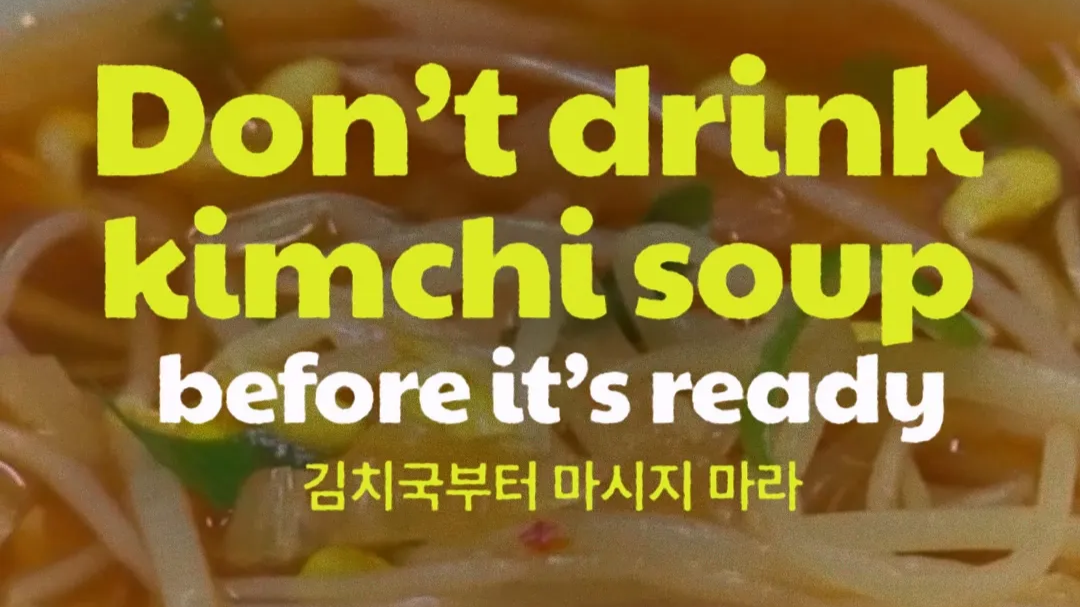
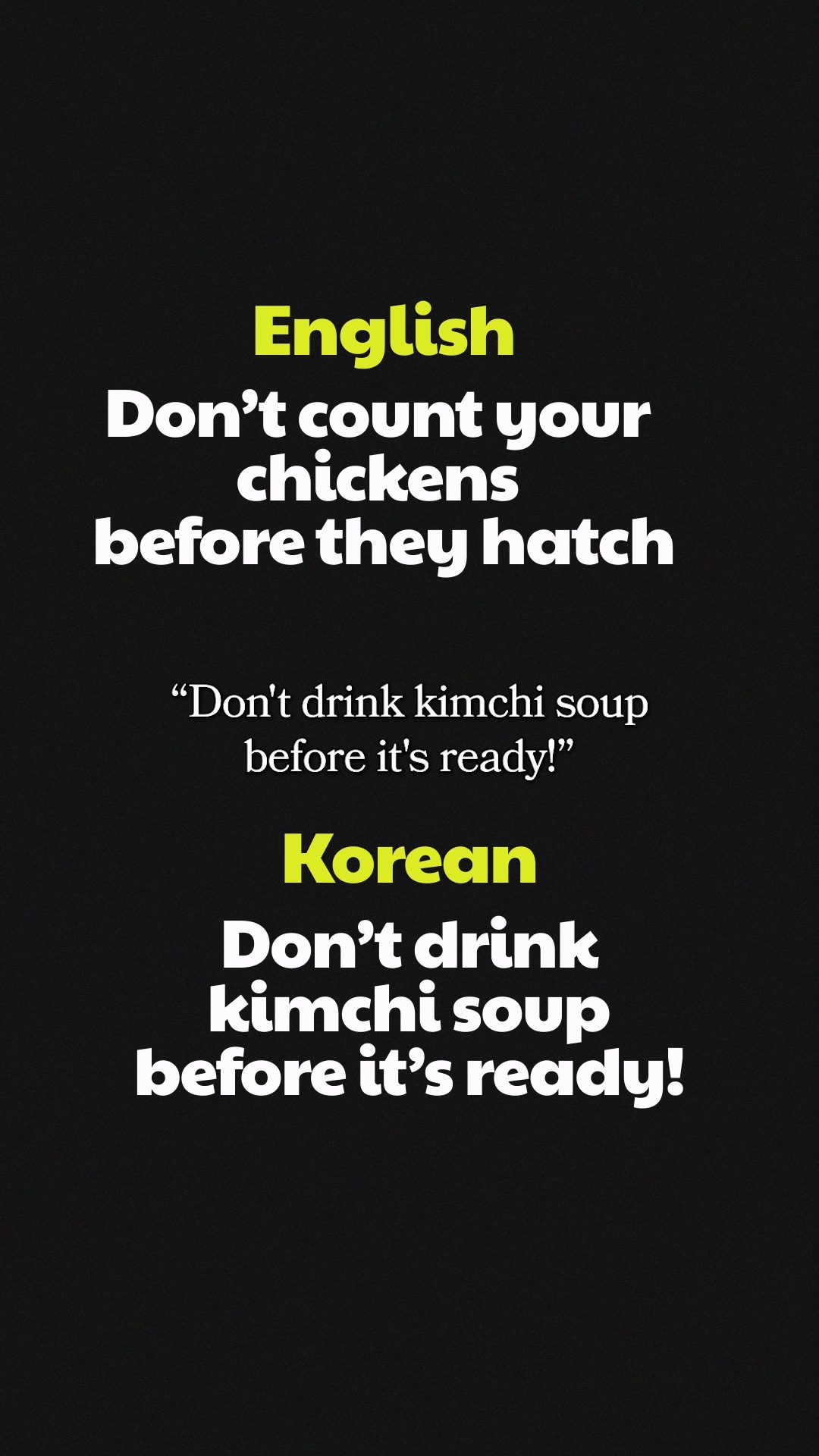
The Korean saying 김칫국부터 마시지 마라 is often translated as "Do not drink kimchi soup first." The meaning is close to "Do not count your chickens before they hatch." It warns against celebrating or assuming success before the result is secure.
The image works because kimchi soup or kimchi broth comes with a meal. Drinking it too early suggests you are acting as if the meal is already yours. In modern life, Koreans may use the saying when someone is already planning what to do with money, status, a relationship, or a result that has not arrived yet.
Use it carefully. It can sound teasing among friends, but dismissive if someone is sharing hope. Tone matters.
| Proverb | Literal Image | Real Meaning | Use Carefully When... |
|---|---|---|---|
| 김칫국부터 마시지 마라 | Drinking kimchi soup first | Do not assume success too early | Someone is excited but vulnerable |
| 호랑이도 제 말 하면 온다 | A tiger appears when mentioned | The person being discussed shows up | You were gossiping |
| 등잔 밑이 어둡다 | Darkness under the lamp | People miss what is closest | Someone already feels embarrassed |
| 바늘 도둑이 소 도둑 된다 | A needle thief becomes a cow thief | Small bad habits can grow | You sound too moralizing |
2. Even a Tiger Appears When Spoken Of
호랑이도 제 말 하면 온다 means that when people are talking about someone, that person coincidentally appears. The National Institute of Korean Language's learner dictionary includes the proverb under "호랑이" and explains it as a case where the person being discussed happens to show up.
In English, "speak of the devil" is the closest phrase, but the emotional texture is different. The Korean tiger carries folktale weight: powerful, frightening, familiar, and symbolic. In real conversation, the phrase is often light and funny, especially when the person walks in at the exact wrong moment.
It also teaches a practical Korean social lesson: be careful with speech. In a close network, words travel.
Learn the words behind the sayings: As an Amazon Associate, EpicKor may earn from qualifying purchases. If proverbs make you want the basics too, compare the Korean Alphabet with Writing Workbook with your app routine.
3. It Is Dark Under the Lamp
등잔 밑이 어둡다 means that what is nearest can be hardest to see. The image is old but easy to understand: the lamp lights the room, yet the space directly underneath may remain dark.
Koreans use this when someone misses an obvious answer nearby: a lost phone on the desk, a solution inside the team, a problem in one's own family, or a blind spot in personal behavior.
This proverb is useful because it is not only about intelligence. It is about attention. People often search far away for what is close. In travel terms, it is like crossing Seoul for a viral cafe while ignoring the excellent bakery beside your hotel.
4. A Needle Thief Becomes a Cow Thief
바늘 도둑이 소 도둑 된다 means that a person who steals a needle can become someone who steals a cow. The lesson is that small dishonest habits can grow into bigger wrongdoing.
This proverb can sound strict, and it often is. It reflects a moral logic that small actions reveal character. In school, work, family, and public life, Koreans may use similar thinking around habits, reputation, and trust.
For learners, the important thing is not to weaponize the saying. It can sound heavy if used casually. Understand it as a cultural warning about small boundaries.
5. Nice Words Bring Nice Words Back
가는 말이 고와야 오는 말이 곱다 means that if your outgoing words are nice, the words coming back will also be nice. The National Institute of Korean Language learner dictionary explains it as speaking or acting nicely first if you want the same response.
This is one of the most useful Korean proverbs for etiquette because it connects directly to conversation. Korean politeness is not only grammar; it is rhythm, tone, and reciprocity. If you begin harshly, you should not expect warmth in return.
This pairs naturally with EpicKor's how to avoid conflict in Korea guide, which explains nunchi, indirect refusal, and social temperature in everyday situations.
How to Use Proverbs Without Sounding Awkward
Do not force proverbs into every sentence. A learner who drops a proverb too dramatically can sound like a textbook or a variety-show character. Use them first for comprehension, then for gentle humor once you understand tone.
The safest way to use a proverb is to repeat it after a Korean speaker uses it, or to ask about it. For example: "I heard 김칫국부터 마시지 마라. Is it like 'don't count your chickens'?" That turns the proverb into conversation instead of performance.
If you want everyday travel language, pair proverb curiosity with practical phrases. A proverb will not help you order food if you cannot ask for water, directions, or a receipt.
| Goal | Better Use | Risky Use | Practice Move |
|---|---|---|---|
| Understand dramas | Recognize the proverb and mood | Pause every scene to translate literally | Write down the context, not only the phrase. |
| Speak with friends | Use light sayings with a smile | Correct people with heavy proverbs | Ask if the tone sounds natural. |
| Travel Korean | Learn basic phrases first | Memorize proverbs instead of survival words | Use phrasebooks and apps for essentials. |
| Cultural insight | Notice values behind the saying | Claim one proverb explains all Koreans | Compare multiple sayings before generalizing. |
Proverbs in K-Dramas and Variety Shows
Korean entertainment uses proverbs because they are fast character tools. An elder may use one to scold. A friend may use one to tease. A variety-show caption may use one for comic timing. A drama may use a proverb to show class, age, or family atmosphere.
This is why proverbs help with more than vocabulary. They help you hear relationship. Who is allowed to say the proverb? Is it playful, annoyed, disappointed, or affectionate? The same phrase can land differently depending on speaker and situation.
For entertainment context, EpicKor's Korean drama guide and Korean webtoon guide show where this kind of language appears in modern content.
Proverbs, Nunchi, and Social Timing
Korean proverbs often depend on timing. Saying "do not drink kimchi soup first" before someone celebrates too much can be funny. Saying it after someone failed can sound cruel. Saying "nice words bring nice words back" can calm a fight, or it can sound like a lecture.
That is where nunchi matters. Nunchi is the skill of reading the room: who is present, what just happened, how direct you can be, and whether humor will help or hurt.
If you learn the proverb without the nunchi, you only learn half the language.

Building a Small Proverb Toolkit
Start with five to ten proverbs that map to situations you actually understand: premature confidence, gossip timing, obvious blind spots, small bad habits, and reciprocal speech. Do not memorize a hundred sayings with no context.
Then connect each proverb to a scene. A job interview result: kimchi soup. Someone walks in while being discussed: tiger. You cannot find glasses on your head: lamp. A small dishonest habit: needle thief. A rude message exchange: nice words.
That scene-based memory is more useful than a raw list.
If you keep a notebook, make four columns: Korean phrase, literal image, natural English equivalent, and situation. The situation column is the most important. Without it, proverbs become decorative vocabulary. With it, they become a small map of Korean social judgment.
You can also compare subtitles. When a drama or variety show translates a proverb, ask what the translator chose: literal image, English equivalent, or a completely different joke. That habit teaches you that translation is not only word matching. It is tone matching. Korean proverbs are a perfect training ground because the literal image is often charming, but the social timing is the real message.
Turn sayings into usable Korean: The Lonely Planet Korean phrasebook connects proverb curiosity to everyday requests, greetings and polite travel phrases — proverbs are where the grammar you learn actually gets used.
FAQs About Korean Proverbs
Q: What are Korean proverbs called? A: They are commonly called sokdam in Korean, meaning traditional sayings or proverbs.
Q: What does "do not drink kimchi soup first" mean? A: It means do not assume success before it is certain, similar to "do not count your chickens before they hatch."
Q: Is "speak of the devil" the same as the tiger proverb? A: It is close, but Korean uses the tiger image: 호랑이도 제 말 하면 온다, meaning the person being discussed appears.
Q: Should Korean learners memorize many proverbs? A: No. Start with a few common ones and learn their social context before using them.
Q: Are proverbs formal or casual? A: They can appear in both, but tone depends on speaker, age, relationship, and situation.
Q: Can I use Korean proverbs while traveling? A: You can, but practical phrases are more important. Proverbs are better for cultural understanding and deeper conversation.
Final Take
Korean proverbs are small windows into social timing. They teach patience, careful speech, humility, attention, and trust. Learn them slowly, connect them to real situations, and remember: the proverb is only half the message. The other half is nunchi.
Sources
You Might Also Like

Learn Korean With Hangeul: Alphabet, Honorifics, and Apps
A beginner-friendly guide to Hangeul, Korean pronunciation, honorifics, study apps, and realistic ways to start learning Korean.
Ajumma Meaning: Is This Korean Word Rude? Ahjumma and Imo Explained
Learn what ajumma means in Korean, why it can sound rude, how it differs from ajumeoni and imo, and what travelers should say instead.

What to Call a Stranger in Korea: Jeogiyo, Sajangnim, Imo
You need a waiter's attention in Korea and you do not know their name. Jeogiyo is the safe answer, sajangnim works in any shop, and imo is warmer than a foreigner should risk. Here is what to actually say, and what never to shout.