Dongduk Women's University Coeducation Dispute in Korea
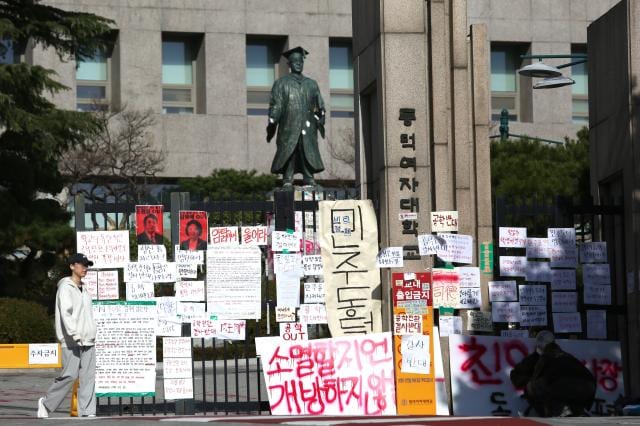
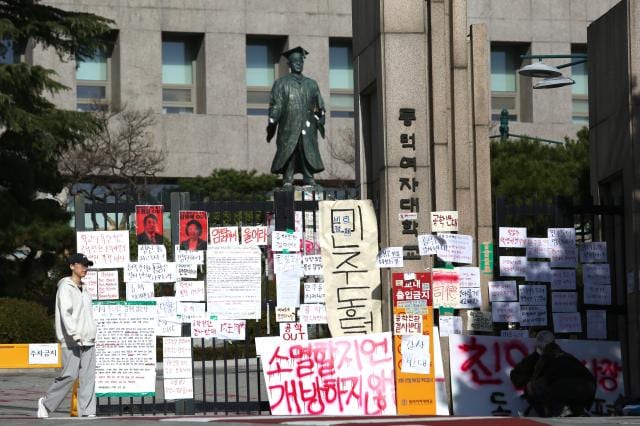
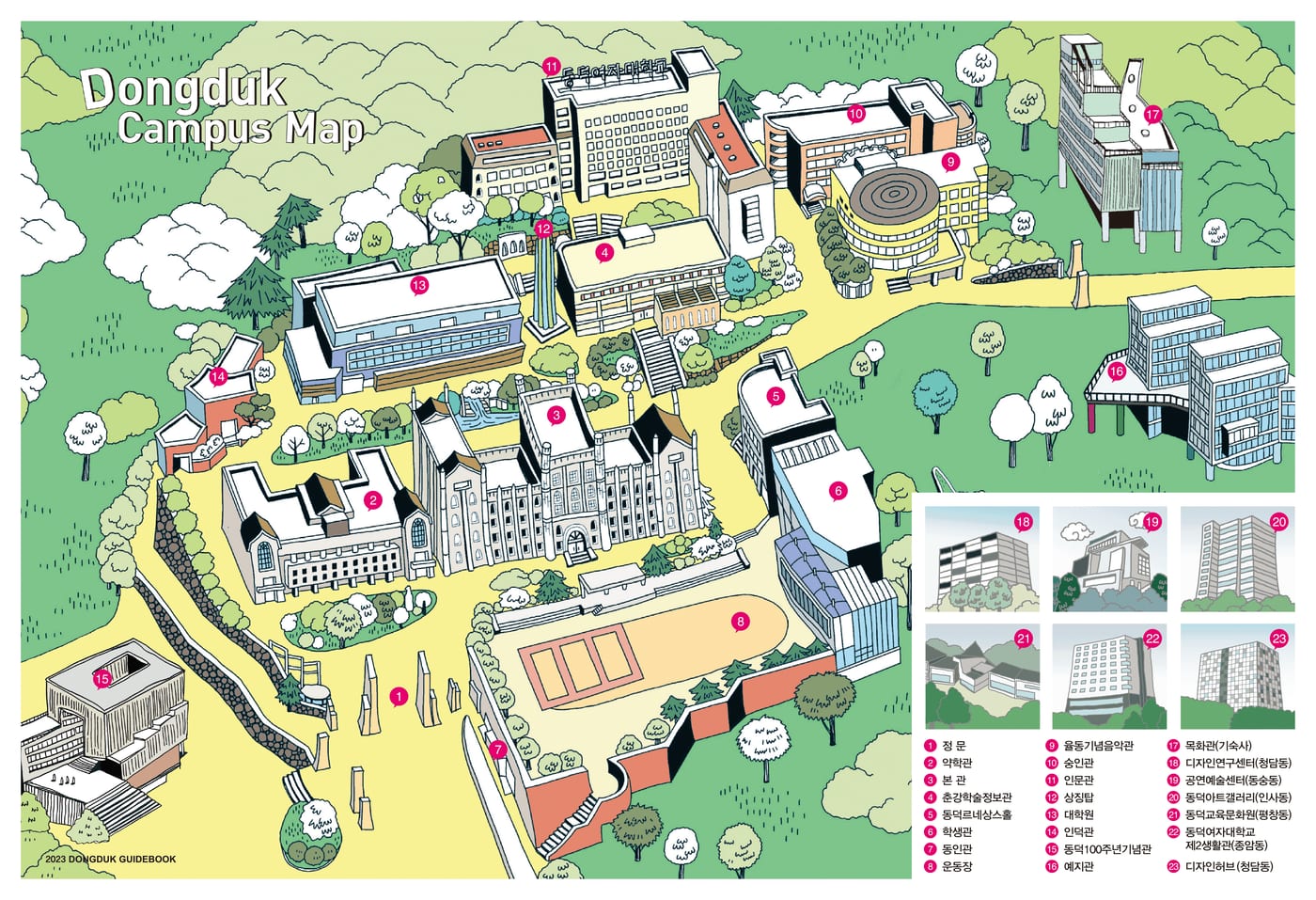
The Dongduk Women's University coeducation dispute began as a conflict over whether the Seoul institution might admit men, then grew into a wider argument about student consent, women's educational space, university survival, protest tactics, property damage, and governance. Students occupied buildings and covered parts of the campus with anti-coeducation messages in November 2024. The university later used a public-deliberation process and, in December 2025, accepted a recommendation to pursue coeducation in 2029.
That does not make every dispute settled. Some students and supporters continued to oppose the change, while legal proceedings connected to the 2024 occupation moved forward. Eleven people were indicted without detention in March 2026, according to Korean court reporting. An indictment is an accusation, not a conviction, and the university's own strongly worded statements should be read as one party's position rather than neutral findings.
The Short Answer: What Changed
The immediate trigger was an internal discussion connected to the university's long-term development plans. Students learned that coeducation had been raised as a possibility and argued that a change so central to Dongduk's identity could not be considered without meaningful student participation. The university said no final decision had been made at that stage and accused protesters of disrupting classes, administration, and events.
After occupation and confrontation in November 2024, both sides agreed in principle to a public-discussion structure. A formal Public Deliberation Committee worked in 2025 with participation from faculty, students, staff, and alumni. Its final recommendation favored transition. The university announced in December 2025 that it would respect the result and target 2029, when students then enrolled would generally have had the opportunity to complete their degrees in a women-only environment.
The best one-sentence summary is therefore time-specific: Dongduk is still a women's university in 2026, but its administration has accepted a process recommending coeducation from 2029, subject to the institution's required follow-up decisions and implementation.
| Period | Development | What it did not settle |
|---|---|---|
| Nov. 2024 | Students occupy buildings and oppose possible coeducation | Whether the university would ultimately change status |
| Late 2024–2025 | Campus normalization, complaints, negotiations, and legal conflict | Responsibility for every alleged act or damage amount |
| 2025 deliberation | Committee gathers views from major university groups | Whether all students accepted the process or result |
| Dec. 2025 | University accepts recommendation for a 2029 transition | Every operational detail of admissions and campus change |
| Mar. 2026 | Eleven people are indicted without detention over alleged protest conduct | Criminal guilt, which courts must decide |
Why Students Opposed Coeducation
For opponents, Dongduk's women-only status was not a decorative tradition. It was part of the educational offer under which students applied, paid tuition, and planned their campus lives. Changing it could affect classroom dynamics, safety perceptions, institutional mission, alumni identity, and the value students believed they had chosen.
Women's universities developed when Korean women faced restricted access to advanced education and public careers. Supporters say the institutions still provide leadership opportunities and spaces where women are not a numerical or cultural minority.
Opposition was also procedural. Students said an identity-defining change required more than consultation after administrators had begun discussing it. The dispute therefore included a governance question: who has standing to decide what a university is?
Why the University Considered a Change
The administration framed coeducation as one option within a broader competitiveness strategy. Korean universities face a shrinking traditional-age population, intense competition for applicants, financial pressure, and an employment market that makes students scrutinize the value of each institution. Private universities outside the most selective tier have strong incentives to widen enrollment and redesign programs.
That does not prove coeducation is the only viable response. Institutions can specialize, recruit new learner groups, strengthen career services, or share programs. Opening admission to men potentially expands the applicant pool and changes how an institution positions itself.
The university's 2024 and 2025 statements framed this as a development question and condemned the occupation as unlawful. Those notices evidence its reasoning, not independent adjudication of every contested event.
What Happened During the 2024 Occupation
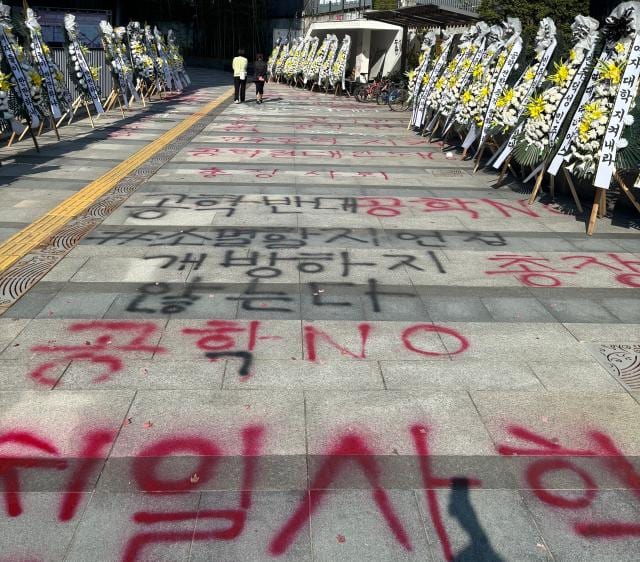
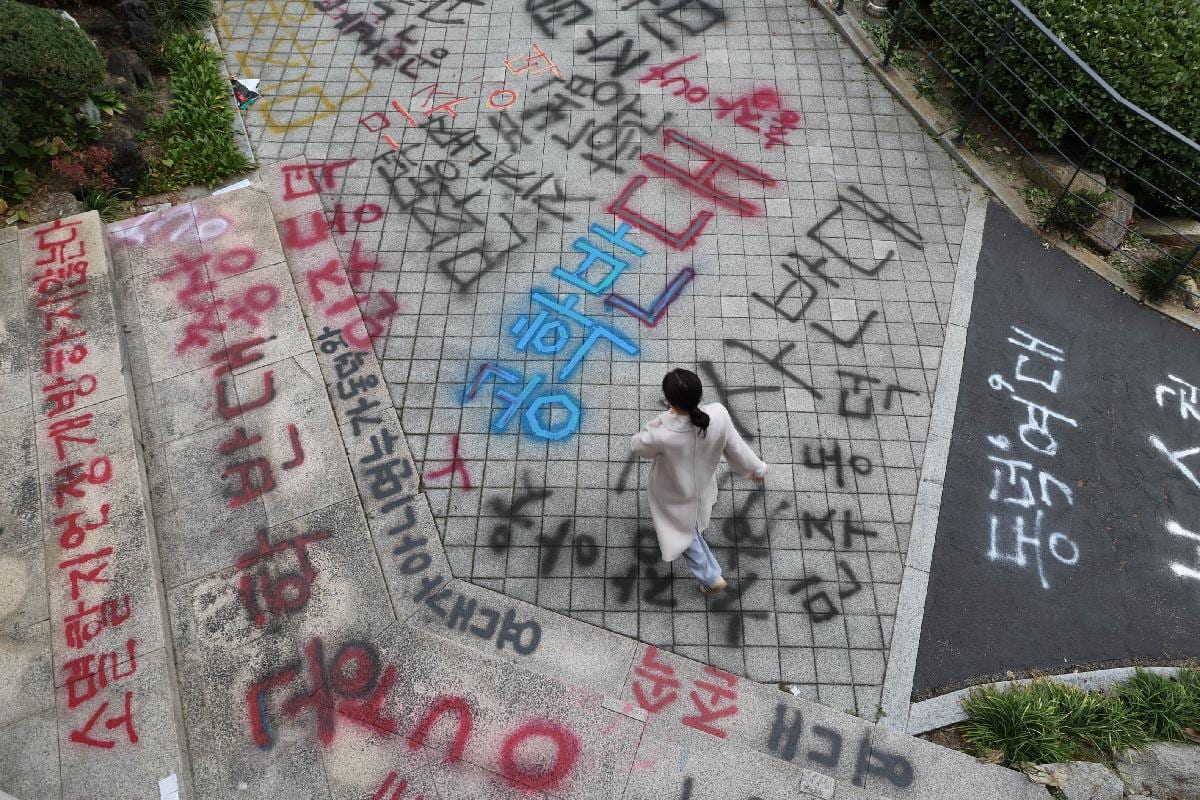
Beginning on November 11, students occupied the main building and other spaces, boycotted or disrupted activities, and placed messages across campus surfaces. Images of red lacquer writing became the dominant public symbol. A career fair was disrupted, access to buildings was affected, and the university alleged extensive property damage.
Descriptions require care. “Protest,” “occupation,” “vandalism,” and “violence” carry different legal and moral claims. Some conduct, such as spray-painting surfaces or blocking facilities, is visible in records and reporting. Responsibility for a particular act must still be tied to evidence and an individual. It is inaccurate to assign every action to every protesting student.
Likewise, an institutional damage estimate is not automatically a court-awarded amount. Early reports circulated figures in the billions of won for cleanup and restoration. Readers should label such numbers as university estimates unless a final civil judgment or audited settlement establishes liability.
The occupation ended, but cleaning, disciplinary fears, police investigation, and distrust continued. Its visual impact made it easy for national debate to focus on lacquer rather than the governance problem behind the mobilization.
How Public Deliberation Worked
Public deliberation is intended to move a conflict beyond slogans by giving participants shared information, structured discussion, and a defined recommendation process. Dongduk's committee included perspectives from faculty, students, staff, and alumni and worked from June into late 2025, according to the university's final statement.
The university said more opinions in the process favored coeducation, while acknowledging continued opposition and concern among current students. The final recommendation proposed implementation in 2029. That delayed date was designed to protect the expectation of students who enrolled at a women's university before the decision.
Process legitimacy is not binary. A multi-group committee can still face criticism about selection, information, turnout, or agenda-setting. Opposition to the result does not prove the process was fake. Ask who participated, what question was posed, and which formal bodies must still approve changes.
| Stakeholder | Core interest | Reasonable question to ask |
|---|---|---|
| Current students | Promises, safety, learning environment, degree identity | Will enrolled students keep the environment they selected? |
| Faculty and staff | Academic continuity, jobs, programs, governance | Which model is financially and educationally sustainable? |
| Alumni | Institutional mission and reputation | How will the founding purpose be preserved or revised? |
| Future applicants | Admissions access, program quality, campus life | What exactly changes in 2029 and for which cohorts? |
| University corporation | Legal authority, finances, long-term survival | How will decisions remain transparent and accountable? |
What the 2029 Plan Means—and Does Not Mean
The December 2025 announcement said the university would accept the committee recommendation and set coeducation implementation for 2029. It also said formal policy would proceed through explanatory sessions and the university's development, academic-affairs, and council bodies.
This means the direction is more concrete than the exploratory discussion that sparked the 2024 protest. It does not mean male undergraduates suddenly entered every Dongduk program in 2026. Admissions rules, degree naming, department structure, facilities, housing, safety, and student services all require detailed implementation.
The university promised to continue advancing women's education and strengthen competitiveness, facilities, and safety. Those commitments must be evaluated through budgets, rules, and outcomes—not the announcement alone.
International applicants should therefore check the current official admissions guide for their intended entry year. A 2026 guide correctly lists the current institution; a 2029 applicant will need rules published much closer to application.
The Legal Cases Require Precise Language
The university filed complaints in connection with the occupation and later submitted a statement indicating that it did not want punishment, according to Korean reporting in May 2025. Police and prosecutors could nevertheless continue investigating alleged offenses because withdrawal of a complainant's request does not necessarily terminate every category of case.
In March 2026, prosecutors indicted eleven people without detention on allegations related to the occupation and property damage. “Without detention” means they were not jailed pending trial under that charging decision. “Indicted” means prosecutors sent charges to court. It does not mean a judge found them guilty.
This article does not identify students. They are not necessary for explaining the institutional dispute, and naming defendants can amplify harassment before final judgments. Claims about individual conduct, damages, or intent should be updated from court records as cases conclude.
Why Women's Universities Still Matter in Korea
Korea's women-only universities differ in history, mission, academic strengths, finances, and governance. One institution's decision does not determine the future of Ewha, Sookmyung, Sungshin, Duksung, Seoul Women's University, or others.
The debate sits between two real pressures. Women's educational institutions can remain valuable in a society with gendered violence, leadership gaps, and workplace inequality. At the same time, the pool of college-age students is shrinking, and private universities must attract enough students and resources to maintain programs.
Neither pressure supplies an automatic answer. “Demographics make coeducation inevitable” is too deterministic; strategy and institutional strength vary. “A women's university must never change” also leaves unanswered who funds and governs the institution if enrollment and finances deteriorate. The hard work is designing a process in which mission, evidence, and affected people genuinely shape the choice.
For everyday context beyond this dispute, EpicKor's guide to Korean university life explains clubs, hierarchy, festivals, and study culture. Our guide to Korean university rankings beyond SKY shows why a single national prestige ladder can obscure program fit and institutional differences.
How to Discuss the Dispute Responsibly
Avoid turning students into a single character. Some led the occupation, some supported the objective but not every tactic, some favored discussion, and some wanted classes to continue. The same applies to faculty, staff, and alumni.
Separate motive from method. A person can believe the demand for consent was legitimate while criticizing property damage or blockades. Another can support coeducation while criticizing a closed administrative process. Those are not contradictions.
Use dated language. “The university is considering coeducation” was appropriate in November 2024; after December 2025, “the university accepted a recommendation targeting 2029” is more accurate. As implementation advances, even that formulation will need revision.
Do not use the dispute as a proxy war about all Korean women, men, feminism, or young voters. Online commentary often imports unrelated gender conflicts and rewards the most insulting interpretation. The actual case concerns a particular institution, a particular governance process, and particular alleged acts.
What Prospective Students Should Check
Applicants should consult official admissions documents for the year and program they want, not a social-media summary. Check who may apply, whether a department is changing, tuition, scholarships, housing, language requirements, and the legal name that will appear on the degree.
Current students should look for written transition protections: whether their curriculum, facilities, graduation requirements, and degree wording remain stable. Alumni may want details on records and branding. International students should contact the university directly if Korean-language notices are unclear.
Because this dispute includes ongoing criminal proceedings and claims of substantial damage, EpicKor intentionally carries no affiliate product promotion in this guide. Primary notices, court reporting, and current admissions documents are more appropriate resources.
Further reading: the dispute sits inside a longer argument about gender, education and access in Korean society; Politics in North and South Korea gives the institutional background in English. Affiliate link — as an Amazon Associate, EpicKor earns from qualifying purchases at no extra cost to you.
FAQ
Q: Is Dongduk Women's University already coeducational in 2026?
No. The university accepted a recommendation to target coeducation in 2029. The detailed transition requires follow-up institutional decisions and implementation.
Q: Why did students protest in 2024?
They opposed the possibility of coeducation and argued that an identity-defining decision was being discussed without sufficient student consent. The conflict also concerned safety, mission, and governance.
Q: Did every Dongduk student support the occupation?
No evidence supports treating the student body as unanimous about every demand or tactic. Views differed, and responsibility for alleged acts must be assessed individually.
Q: How much damage did the protest cause?
The university circulated estimates in the billions of won, but an institutional estimate is not automatically a final court award. Cleanup costs and legal liability should be labeled by source and date.
Q: Were students convicted over the protest?
As of July 17, 2026, eleven people had been indicted without detention in March. Indictment is not conviction; criminal courts must determine guilt on the charged conduct.
Q: Does Dongduk's decision mean all Korean women's universities will become coed?
No. Each university has different governance, finances, admissions, mission, and stakeholders. Dongduk's process may influence debate, but it does not legally decide another institution's future.
Sources
- Dongduk Women's University: November 12, 2024 explanation of the initial discussion
- Dongduk Women's University: November 25, 2024 statement
- Dongduk Women's University: February 7, 2025 position statement
- Asia Business Daily: full English text of the university's December 2025 coeducation statement
- Asia Business Daily: March 2026 indictment report
- SBS News: May 2025 report on withdrawal of the university complaint and continued investigation
You Might Also Like
Seoul Deleted Its Women-Only Parking: What Korean Gender Policy Actually Is in 2026
Most English writing on Korean gender policy describes rules that were removed, renamed, or never existed. Seoul scrapped women-only parking in 2023, the ministry was renamed in 2025, and the famous five-point exam bonus went to men and ended in 1999.
Kkondae (꼰대) Explained: Korea's Word for the Boss Who Knows Best
Kkondae (꼰대) explained: Korea's word for a condescending senior who won't listen — and why survey data shows it's about behavior, not age.
Jeong (정) Explained: The Korean Bond That Has No English Word
Jeong (정) explained: the untranslatable Korean bond of warmth and attachment, where you'll feel it as a visitor, and why it can turn sour too.