Korean Moving Guide: Ladder Trucks, Packing Movers, and Tips
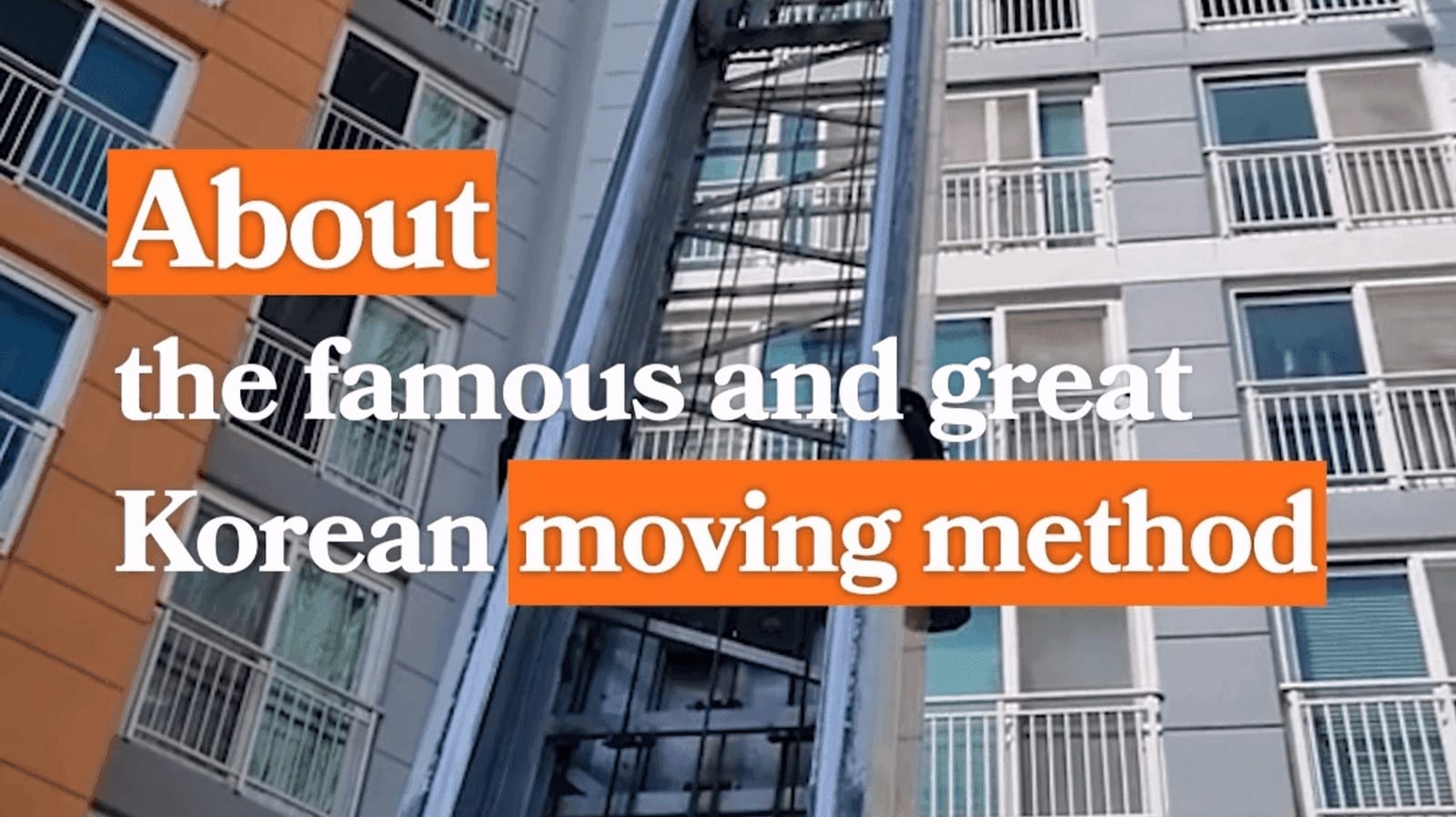
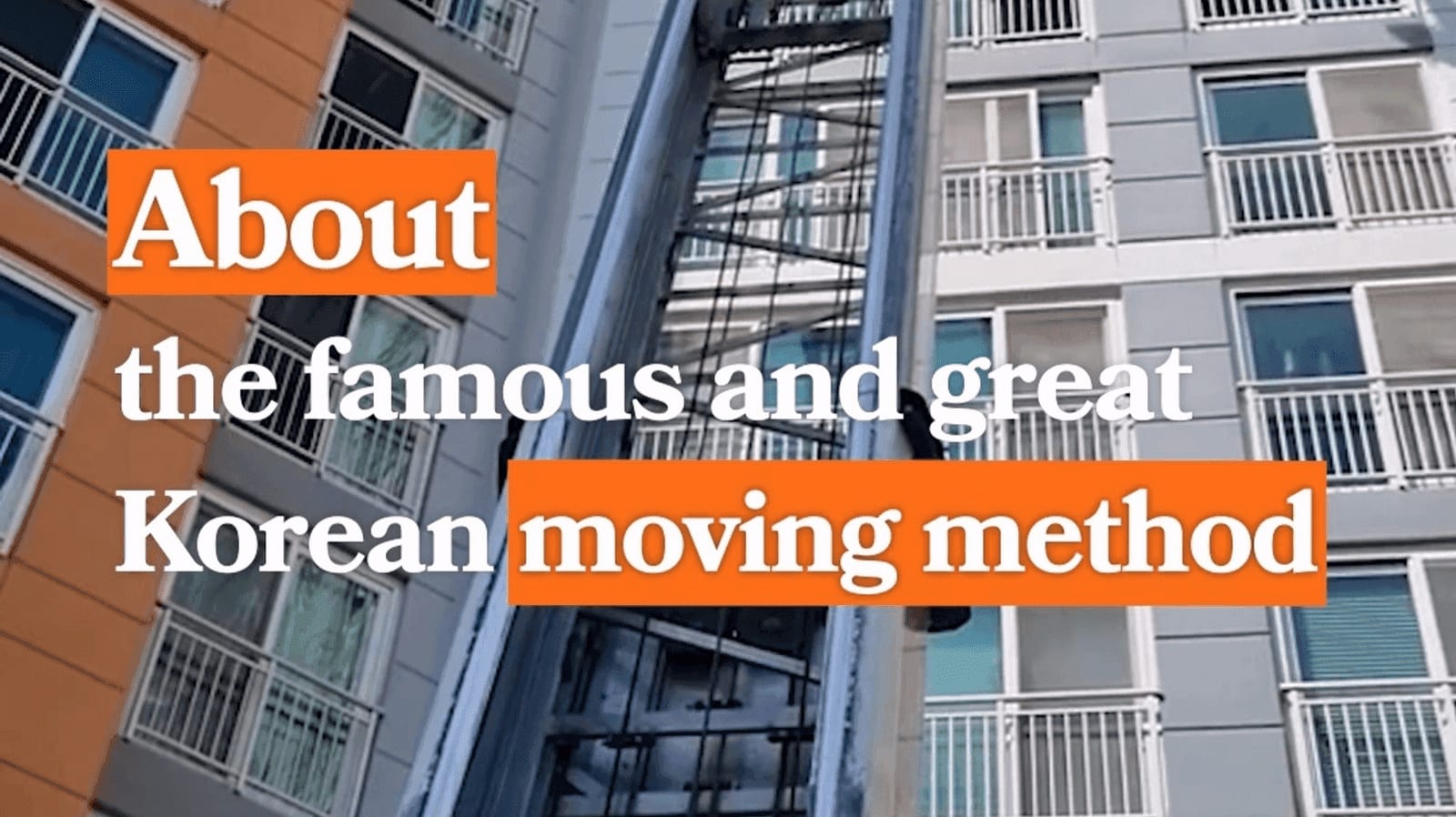
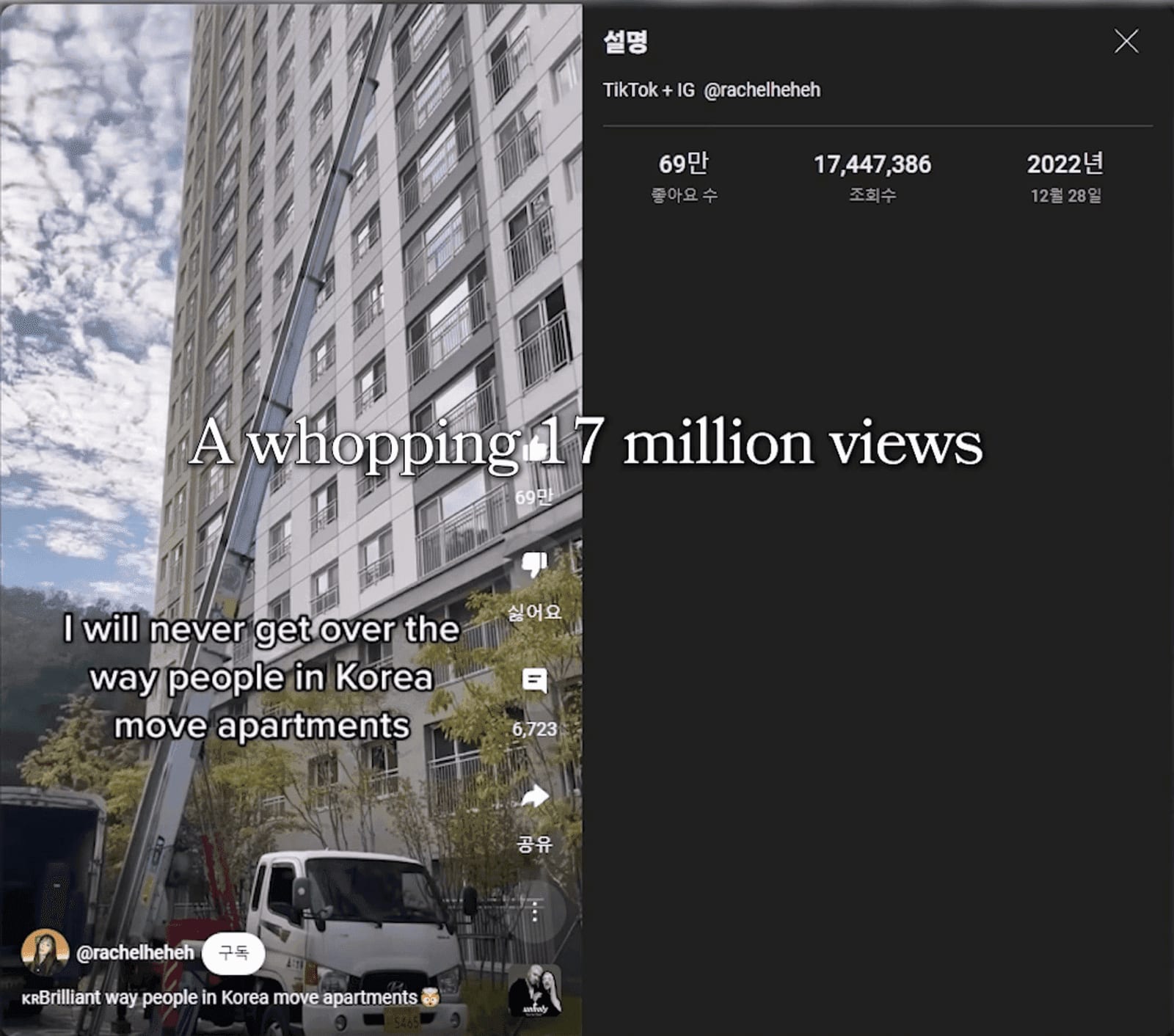
The Korean moving system looks unbelievable the first time you see it. A ladder truck parks beside an apartment tower, a platform rises toward a balcony, windows come out, and boxes or furniture seem to fly between the street and the living room. For visitors, it looks like a stunt. For many Koreans, it is simply moving day.
This guide explains the practical side: why ladder trucks exist, what pojang-isa means, what to check before booking, why contracts matter, and what this tells you about Korean high-rise life.
What Is Pojang-Isa?
Pojang-isa means packing move. In a full-service version, movers do much more than transport boxes. They pack household items, protect furniture, move everything, unpack many items, and sometimes help place belongings close to their original arrangement.
The exact service depends on the company and contract. Do not assume every move includes the same level of packing, cleaning, appliance installation, or disposal. The name sounds simple, but the scope is what matters.
If you are not moving house but simply trying to understand Korea's daily systems, connect this with EpicKor's unique Korea convenience guide. The moving system is another example of Korea reducing friction in dense urban life.
Why Ladder Trucks Are Common in Korea
Korea has many high-rise apartments, narrow internal corridors, shared elevators, and strict building rules. Moving a refrigerator, sofa, mattress, or heavy cabinet through an elevator can be slow, noisy, risky, or impossible.
That is where the sadaricha, or ladder truck, comes in. The Institute for Basic Science's foreigner living guide explains that if elevator use is not allowed, or if a building has no elevator, a ladder truck may be needed. The guide describes ladder trucks as specialty vehicles with extendable ladders and remote-controlled platforms that move items between the outside moving truck and an upper-floor residence.
The result is efficient, but not casual. A ladder truck needs access, ground space, safe height, weather tolerance, and building permission.
What the Ladder Truck Actually Does
| Moving problem | Ladder-truck solution | What to verify |
|---|---|---|
| Large furniture does not fit elevator | Moves items through balcony or window access | Window access and safe platform position |
| Elevator reservation is unavailable | Bypasses shared elevator traffic | Apartment management approval |
| Internal hallways are narrow | Creates an outside vertical route | Ground setup space and parked cars |
| Moving time is limited | Speeds loading and unloading | Separate costs for move-out and move-in |
| High floor or bad weather | May become unsafe or unavailable | Height limit, wind, rain, and contingency plan |
Gonex compression packing cubes — on AmazonAffiliate link. As an Amazon Associate, EpicKor earns from qualifying purchases at no extra cost to you.
The Contract Matters More Than the Spectacle
The ladder truck is the visual hook, but the contract is the serious part. The Korea Consumer Agency has warned consumers to be careful when using moving services and recommends confirming details such as company name, address, representative name, cargo truck size, number of trucks, number of porters, arrival time, and ladder-truck use.
That advice is old but still useful because moving disputes tend to repeat: damage, delay, unexpected fees, cancellation, missing details, and unclear responsibility.
Before a move, write down what is included:
- Packing and unpacking scope.
- Number and size of trucks.
- Number of workers.
- Ladder-truck use and cost.
- Elevator reservation or building management fee.
- Appliance disconnection and reconnection.
- Disposal or storage.
- Damage-handling process.
- Start time and expected finish time.
If you are a foreign resident moving into Korea with household goods, Korea Customs Service also has separate moving-household-effects rules. That is a customs topic, not a local ladder-truck topic, but it matters if your move crosses borders.
Why Foreigners Find Korean Moving So Surprising
Many foreigners come from places where people rent a truck, buy boxes, ask friends for help, and carry furniture through stairs. Korea's apartment moving system can look almost industrial by comparison.
The surprise comes from three things:
- Vertical movement: Furniture can enter through windows or balconies.
- Team choreography: Workers pack and move quickly with assigned roles.
- Service expectation: The customer may do less manual packing than expected.
That does not mean every move is effortless. It means the system is built around professional speed.
How Moving Day Usually Feels
A Korean apartment move often starts early. The building may have a reserved elevator slot or parking access. Movers arrive, confirm the plan, protect floors or entry points, and begin packing or carrying.
If a ladder truck is used, the access point may be a balcony or removable window section. IBS's guide notes that window sections may be removed and that movers determine the access point based on parking and building conditions. That is why residents should not randomly help with windows or platform work. Heavy glass and high platforms are not a DIY moment.
The move can look fast because each person has a narrow job. One worker packs kitchen items, another handles wardrobe sections, another manages platform flow, another loads the truck. Good crews make chaos look routine.
Moving-day packing helper: As an Amazon Associate, EpicKor may earn from qualifying purchases. If a Korea trip turns into mailing souvenirs or preparing a small move, compression packing cubes do more of this job than mailers do — a Korean move is usually boxes supplied by the 포장이사 crew plus whatever you fly with, and the cubes are what make the flying half fit.
What Can Go Wrong?
The moving system is efficient, not magical. Problems can still happen.
| Risk | Why it happens | How to reduce it |
|---|---|---|
| Unexpected extra fee | Ladder truck, stairs, parking, or item volume was unclear | Get written scope and photos before the quote |
| Damage to furniture | Fast handling, tight access, or poor padding | Photograph valuable items before moving |
| Building conflict | Elevator or parking was not reserved | Confirm with apartment management in advance |
| Weather delay | Wind or rain affects ladder-truck safety | Ask for the backup plan before moving day |
| Missing small items | Loose packing and weak inventory | Carry valuables, documents, cash, and devices yourself |
What Travelers Can Learn From It
Even if you never move in Korea, the moving system teaches a lot about the country:
- Korea solves dense-city problems with specialized services.
- Apartment life shapes everyday technology.
- Speed is valuable, but coordination matters more than rushing.
- Convenience often depends on hidden labor.
- A system can look futuristic and stressful at the same time.
That last point matters. It is easy to romanticize the ladder truck as “only in Korea.” It is more accurate to see it as an adaptation: high-rise buildings, shared infrastructure, expensive time, and professional service culture all meeting in one dramatic street scene.
Elevator Moves vs Ladder-Truck Moves
Not every apartment allows or needs a ladder truck. Some buildings require movers to reserve a freight elevator or use protective padding inside the elevator and hallway. Other buildings prefer outside access because it reduces elevator congestion and protects shared spaces. The right answer depends on building management, floor height, street access, item size, and weather.
Ask both addresses separately. A move can use a ladder truck at the old apartment and an elevator at the new one, or the reverse. That is why a vague quote is risky. The moving method is not one decision; it is two site decisions.
If the company says “we will decide on the day,” ask what cost changes could happen. A surprise ladder-truck fee is easier to prevent than to argue about after half your furniture is already outside.
Practical Checklist Before Booking a Move in Korea
If you are actually booking:
- Get at least two quotes.
- Show photos or videos of every room.
- Ask whether the quote includes ladder-truck use.
- Confirm whether ladder-truck cost applies at both addresses.
- Reserve elevator/parking through building management.
- Ask whether appliance installation is included.
- Carry passports, bank documents, jewelry, laptops, and medicine yourself.
- Photograph furniture before moving.
- Keep the contract, receipts, and messages.
- Record damage immediately if it happens.
This is where KCA's consumer advice becomes practical: if something goes wrong, documentation matters more than memory.
For renters, also separate the moving contract from the housing contract. Deposit return, cleaning, wall damage, elevator reservation, and parking approval may involve the landlord, real-estate office, building management, and moving company at different moments. Keep those conversations organized so one party does not blame another while you are standing between two apartments.
Housewarming, Jajangmyeon, and the Human Side
Korean moving culture is not only machinery. People may associate moving day with convenient delivery food such as jajangmyeon, with small housewarming gifts, or with practical shopping for the new home. Traditions vary by family, age, region, and apartment culture.
If you are invited to a Korean home after a move, use EpicKor's Korean etiquette guide and Korean floor culture guide before assuming shoes, seating, or gifts work the same way as at home.
New-home travel kit: If your Korea stay involves a move, dorm, or long apartment stay, a Korea plug adapter matters more than any of it — Korea is 220V on Type F sockets, so every appliance you bring needs one from day one, and a dorm or short-let will not have spares.
FAQ
Q: What does pojang-isa mean?
It means packing move. In practice, it usually refers to a fuller moving service where workers pack, move, and often unpack many household items, depending on the contract.
Q: What is a sadaricha?
Sadaricha means ladder truck. It is a specialized truck with an extendable ladder and platform used to move goods between the ground and upper-floor residences.
Q: Do all Korean moves use ladder trucks?
No. Elevator access, floor height, building rules, parking space, weather, and item size determine whether a ladder truck is used.
Q: Should I help remove windows or handle the ladder platform?
No. Let the moving crew handle heavy windows, platform access, and furniture movement. Safety matters more than being helpful.
Q: What should I carry myself?
Carry passports, IDs, cash, cards, jewelry, laptops, medicine, hard drives, and important documents yourself.
Q: Why do Korean moves look so fast?
They are often team-based, specialized, and built around dense apartment logistics. Speed comes from planning and repetition, not just rushing.
Sources
- Korea Consumer Agency: Moving-service consumer precautions
- Institute for Basic Science: Ladder trucks and moving domestically in Korea
- Korea Customs Service: Moving household effects to Korea
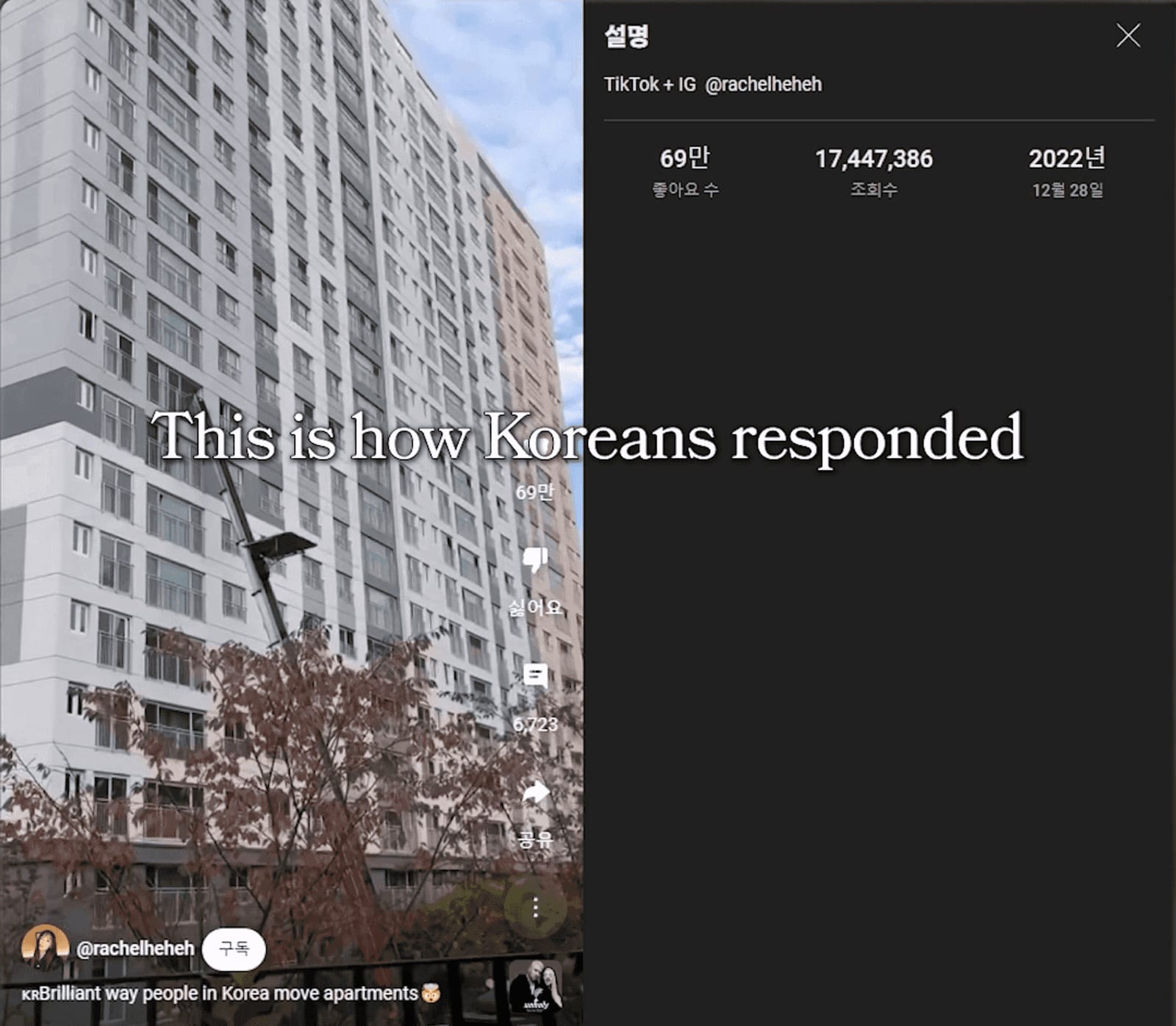
Video Insight: The Miracle Moving System
You Might Also Like
Korean Kitchen Scissors: Why Koreans Cut Meat and Noodles at the Table, and Why It Is Not an Office Scissor
Scissors on a restaurant table look wrong to most of the world and normal to every Korean. The tool is not a desk scissor: thick blades, one serrated edge, big rings, often detachable, built for galbi and cold noodles. Where it came from, and which one to buy.
The One Korean Food Foreigners Never Learn to Love: Hamheung Naengmyeon, and Why Koreans Can't See the Problem
Foreigners who eat cheonggukjang and even hongeo still will not pay for this twice. A Korean creator who fed foreigners for years says naengmyeon was the overwhelming number one refusal, and Koreans, who rank it first every summer, cannot see why.
Korean Stare Meaning: Why Koreans Stare at Foreigners, and How to React
The Korean stare almost always means curiosity, not hostility: outside central Seoul a non-Asian face is still rare. Sometimes it means you broke a quiet public rule. How to tell which, and the nod and 안녕하세요 that end it.