
Why Mercedes-Benz Is So Common in South Korea
Mercedes-Benz is common in South Korea because the country has a large, mature imported-car market and the brand has built unusually deep recognition, especially around the E-Class. Premium-car status matters to some buyers, but it is not the whole explanation. Dense cities make the same cars highly visible, established sales and service networks reduce the friction of ownership, and years of strong registrations have put many Mercedes vehicles into both the new- and used-car fleets.
The numbers also need perspective. Mercedes-Benz registered 68,467 new passenger cars in Korea in 2025, according to figures from the Korea Automobile Importers & Distributors Association reported by Yonhap. That placed it second behind BMW, not first, while the imported-car market as a whole grew strongly. A Mercedes is still a premium purchase; it is not Korea's default family car.

Mercedes-Benz Studio Seoul opened in Seongsu-dong as the brand's fifth global studio. Photo: Mercedes-Benz Korea.
What the latest Korean registration data actually says
Korea's imported-car market is substantial enough that premium German brands no longer look rare. The official KAIDA statistics center explains that its figures cover new passenger-car registrations by member importers and are based on Ministry of Land, Infrastructure and Transport data. They exclude gray imports, used cars and commercial vehicles, so they should not be mistaken for every vehicle on Korean roads.
For calendar year 2025, imported-car registrations reached 307,377. Mercedes-Benz recorded 68,467, while BMW led with 77,127. Those figures explain visibility better than a claim that every Korean prefers Mercedes. They show that tens of thousands of new Mercedes cars joined an already large installed fleet in one year.
| 2025 Korea measure | Result | What it means |
|---|---|---|
| New imported passenger cars | 307,377 | Imports are a meaningful part of the market, not a tiny niche. |
| BMW registrations | 77,127 | BMW led the imported-brand ranking. |
| Mercedes-Benz registrations | 68,467 | Mercedes remained one of Korea's two dominant imported brands. |
| Mercedes share of those imports | About 22% | Roughly one in five registered imports carried the three-pointed star. |
The annual totals come from KAIDA data summarized by Yonhap's January 2026 market report. Monthly rankings can change, and Tesla's growth means that Korea's premium-import story is no longer only a German-brand contest.
TRUNKCRATEPRO collapsible trunk organizer — on AmazonAffiliate link. As an Amazon Associate, EpicKor earns from qualifying purchases at no extra cost to you.
Why the E-Class is the key to the street-level impression
The E-Class sits in a useful middle position: visibly premium, large enough for executives and families, but less rare and expensive than an S-Class or Maybach. In Korea it has become a familiar benchmark when buyers compare imported executive sedans. That long presence matters. Every strong sales year adds cars that remain visible for many more years through leasing, resale and ordinary ownership.
Korean media sometimes calls the E-Class a “Gangnam Sonata,” comparing its frequency in affluent Seoul districts with the everyday familiarity of Hyundai's Sonata. Treat that phrase as a joke about local visibility, not a national statistic. Outside wealthy business districts, Hyundai, Kia and Genesis vehicles remain far more representative of ordinary traffic.
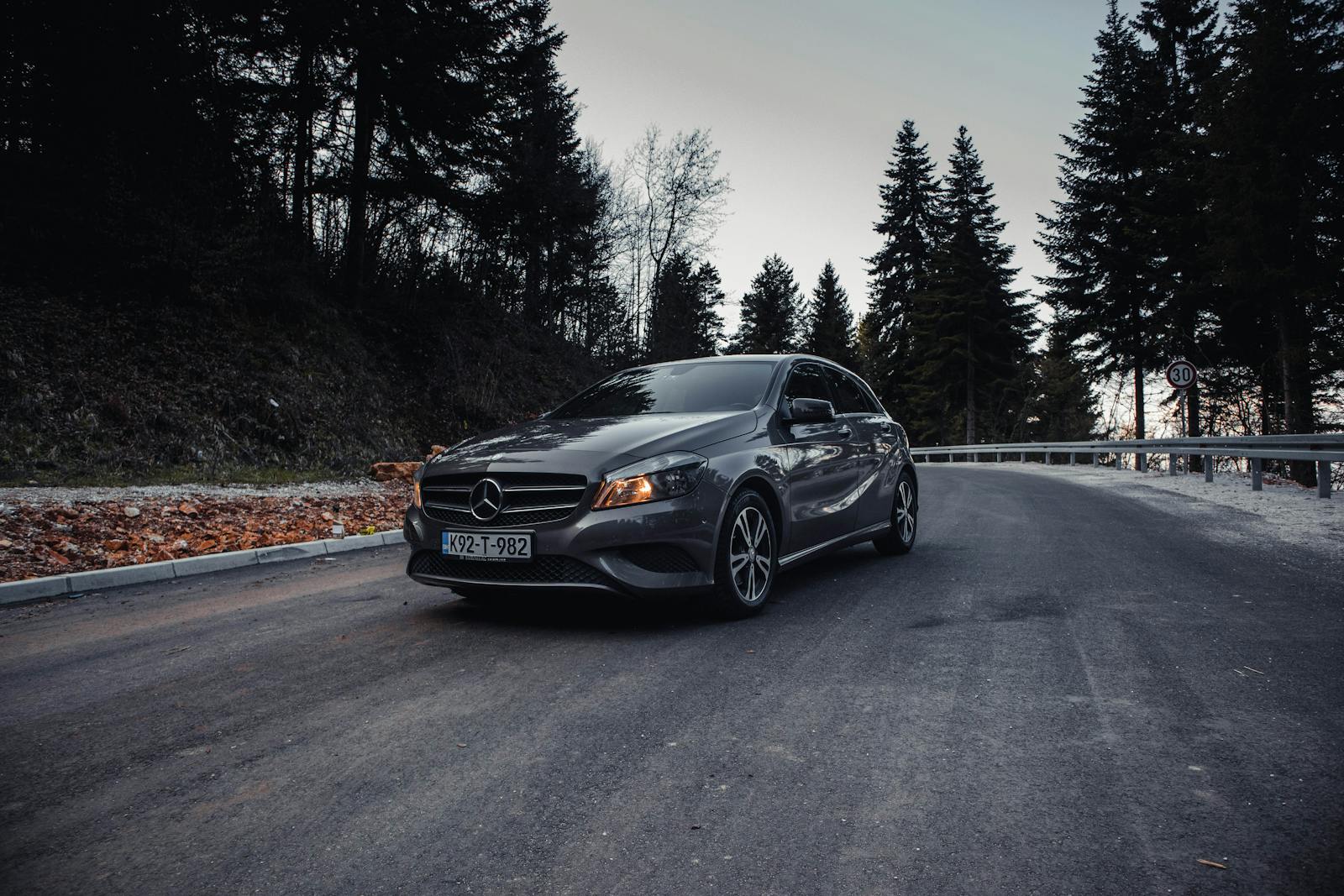
Strong sales over many years put premium cars into normal traffic and the used-car market. Photo via Pexels.
Status matters, but it should not become a stereotype
Cars communicate taste, income and professional identity in many countries. Korea is no exception. A Mercedes badge can signal that a buyer wants a recognized premium object, and the brand's long association with executive sedans makes that signal easy to read. In client-facing work, a polished vehicle may also become part of how someone presents a successful business life.
But “Koreans buy Mercedes only to show off” is a weak explanation. It turns millions of individual decisions into a national personality trait. Buyers also compare ride comfort, cabin design, safety equipment, financing, warranty terms, dealership access, resale expectations and the simple preference for a familiar model. Some choose BMW, Genesis, Tesla, Volvo or Lexus for equally practical and symbolic reasons.
The better conclusion is narrower: social recognition can add value to a premium badge, while product, price and ownership infrastructure still determine whether the purchase makes sense.
Why Seoul makes Mercedes cars look even more common
The visibility effect is geographic. Seoul is dense, and its offices, expensive housing, hotels, department stores, clinics and entertainment districts pull premium-car owners into the same corridors. A visitor walking around Gangnam, Yeouido or central business areas samples a concentrated part of the market rather than Korea as a whole.
Parking entrances and valet zones also display cars more clearly than suburban garages do. Taxis, buses and pedestrians repeatedly pass the same commercial blocks, so a popular executive sedan can feel omnipresent. This is a classic denominator problem: the observation may be accurate for the street in front of you without describing the entire national fleet.
For a broader look at Korean driving culture beyond luxury badges, EpicKor's Korean highway rest-area guide shows the practical, shared side of road travel. The Korea car-camping guide covers another vehicle trend shaped by leisure rather than status.
Service networks turn a luxury purchase into a practical option
A premium car becomes easier to choose when buyers know where it can be serviced, repaired and resold. Mercedes-Benz Korea has operated for decades, supported by authorized dealers, service centers, financing products and certified-used channels. That structure does not make maintenance cheap, but it makes the ownership path more legible than buying a rare imported marque with little local support.
Brand familiarity also compounds. Families, colleagues and business partners can share dealer experiences, independent repair-shop recommendations and used-car price knowledge. The next buyer is not starting from zero. This network effect helps established models remain strong even when a new competitor offers better specifications on paper.
Keep the car practical: As an Amazon Associate, EpicKor may earn from qualifying purchases. If this article has you thinking about everyday ownership rather than the badge, the TRUNKCRATEPRO collapsible organizer folds flat when you do not need it — check the folded size and the strap fastening against your own boot, and that it does not block access to emergency equipment.
New cars, leases and the used market create different buyers
Street sightings do not reveal how a car was acquired. One may be privately purchased, financed, leased, registered to a company, rented for professional use or bought used. These routes have different costs and tax consequences, and rules change. It is unsafe to assume that every premium car is a tax write-off or that a company registration makes an expensive vehicle effectively free.
The used market is especially important to the “why are there so many?” question. A three- or five-year-old Mercedes may cost far less than a new one, but maintenance risk can rise as warranties end. Buyers need to examine service history, accident records, recall work, tires, electronics and model-specific repair exposure. A low listing price does not erase premium-car parts and labor costs.
Mercedes versus the alternatives Korean buyers see
Mercedes does not operate in an empty category. BMW has led Korea's imported-brand ranking in recent years, Genesis offers domestic luxury with a dense local support network, and Tesla has changed what an aspirational imported car can look like. Lexus and Volvo appeal to buyers with different priorities around hybrids, comfort, design or perceived ownership experience.
| Choice | Why a Korean buyer may consider it | Question to ask |
|---|---|---|
| Mercedes-Benz | Recognized executive image, broad model familiarity and established support | Does the specific model justify its running cost? |
| BMW | Equally established premium network and a driving-focused brand image | Which powertrain and warranty fit the use case? |
| Genesis | Domestic luxury, extensive Korean service access and competitive equipment | Is import-brand signaling actually important? |
| Tesla | Technology identity, EV powertrain and a different kind of status signal | Do charging, insurance and repair logistics work? |
| Lexus or Volvo | Alternative strengths in hybrids, comfort, safety positioning or ownership style | Is the local dealer network convenient? |
Competition is why old claims that Mercedes “dominates Korea” need qualification. It is highly visible and commercially important, but the 2025 brand ranking shows a plural market.
What the S-Class and top-end cars really contribute
The S-Class matters more as an image anchor than as the main source of street volume. It represents chauffeur-driven executive transport, hotel arrivals and corporate prestige, while the E-Class supplies far more of the everyday familiarity. Mercedes groups the S-Class, Mercedes-Maybach, G-Class, GLS, EQS and AMG models into its top-end strategy; the company's 2025 global sales release reported 268,000 top-end car sales worldwide.
That global figure is not a Korean sales count. It simply shows why the company continues to invest in halo models that reinforce the badge above its core range. In Korea, seeing an S-Class near a luxury hotel may strengthen the impression of Mercedes prestige even though most Mercedes registrations are not S-Classes.
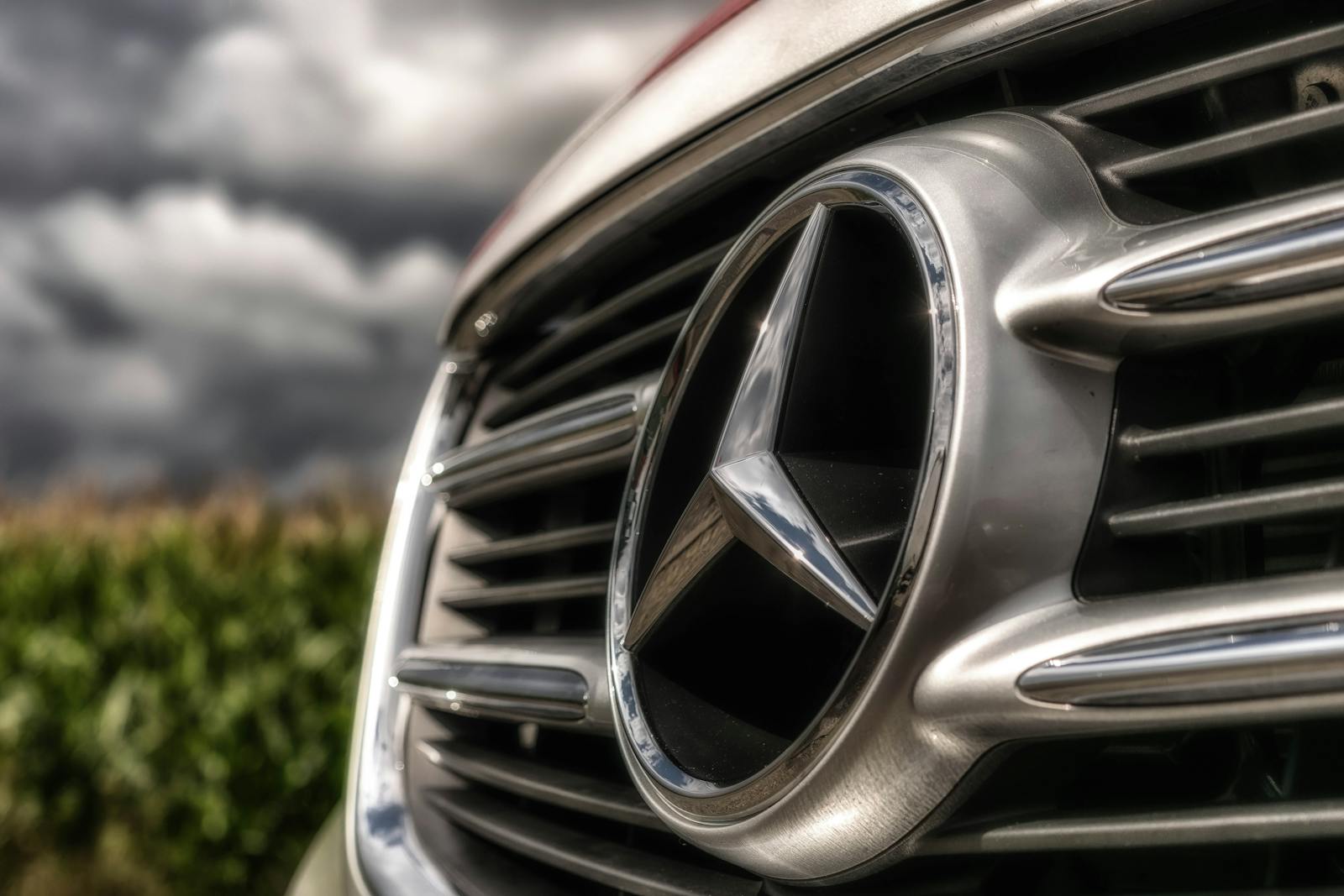
The badge carries meaning because buyers recognize it instantly; that does not explain every purchase. Photo via Pexels.
How to read claims about the Korean luxury-car market
First, check whether a number refers to registrations, deliveries, all cars on the road or one model. Second, check the period. A monthly lead can reverse in the annual table. Third, distinguish imported passenger cars from the total Korean vehicle market. Finally, avoid using one Gangnam street scene as proof of national preference.
KAIDA is the best starting point for imported passenger-car registrations, while Mercedes-Benz Group releases explain the company's global categories and strategy. Neither source proves a psychological motive. Claims about status should therefore be framed as one plausible factor supported by visible consumer behavior, not as a measured fact about every owner.
Is a Mercedes in Korea automatically a sign of great wealth?
No. A new Maybach and an older used C-Class carry very different prices and ownership stories. Financing and leasing further separate the vehicle someone drives from a simple estimate of cash wealth. The badge may be intended as a premium signal, but an observer cannot infer income, debt, job or ownership structure from the hood ornament.
This is also useful cultural etiquette. Admire the car if the owner brings it up, but do not ask what it cost, whether it belongs to the company or how much the driver earns. Korea's car culture can be status-aware without making another person's finances public conversation.
For long navigation days: As an Amazon Associate, EpicKor may earn from qualifying purchases. An Anker 10,000mAh power bank in the door pocket solves this without another socket adapter — it charges the phone, and it leaves the car when you do, which a car charger does not.
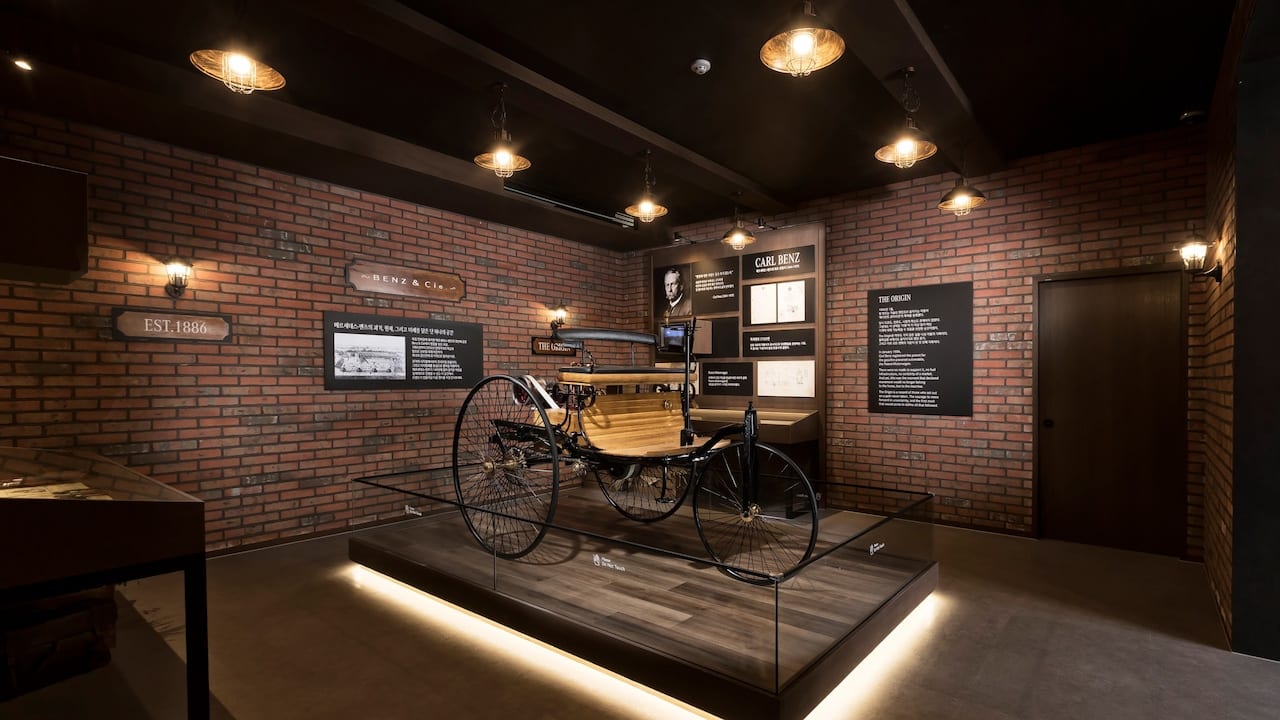
The Seoul studio presents Mercedes-Benz history alongside the brand's current Korean-market presence. Photo: Mercedes-Benz Korea.
The practical answer
Mercedes-Benz looks unusually common in South Korea because strong annual registrations have accumulated over time, the E-Class occupies a popular executive-car position, and premium vehicles cluster in the dense Seoul districts visitors notice most. Status recognition helps the badge, while financing, service coverage, resale and product familiarity make the choice operationally possible.
The most accurate 2026 reading is not “all Koreans are obsessed with Mercedes.” It is that Korea supports one of the world's most competitive imported-car markets, where Mercedes remains a major player but shares attention with BMW, Genesis, Tesla and other premium alternatives.
FAQ
Q: Is Mercedes-Benz the best-selling imported car brand in Korea?
Not in 2025. KAIDA data reported by Yonhap placed BMW first with 77,127 registrations and Mercedes-Benz second with 68,467. Monthly rankings and future annual rankings can change.
Q: Why is the Mercedes E-Class called the Gangnam Sonata?
It is an informal joke about how frequently the E-Class appears in affluent Seoul districts. It compares that local familiarity with Hyundai's mainstream Sonata; it is not an official model name or national fleet statistic.
Q: Does Korea buy more S-Class cars than every other country?
Historical articles have described Korea as an exceptionally important S-Class market, but current public sources do not justify repeating an unqualified number-one claim here. The E-Class contributes much more to everyday street visibility.
Q: Are imported cars now more common than Korean brands?
No. Imports form a meaningful segment, but Hyundai, Kia and Genesis vehicles still dominate the broader domestic market. KAIDA's imported-car table should not be read as the whole Korean car market.
Q: Are most Mercedes cars in Korea company leases?
Public street observations cannot establish that. Mercedes cars can be privately purchased, financed, leased, company-registered or bought used. Each route has different costs and rules.
Q: Is a used Mercedes cheap to own in Korea?
Not necessarily. The purchase price may fall sharply, but parts, labor, insurance, tires and age-related repairs can remain premium. A pre-purchase inspection and complete service history matter more than the badge price alone.
You Might Also Like

Hell Joseon and N-Po Explained: Why Some Young Koreans Feel Stuck
What Hell Joseon and N-po mean, and how work, housing, education costs, gender roles, fertility, and choice shape Korea's youth debate.
Korean Blood Type Personality: Culture, Dating, and MBTI
Korean blood type personality explained as pop culture, dating small talk, stereotypes, science limits, MBTI overlap, and visitor etiquette.
Korean Modern Art: The Painters Whose Work Now Sells for Millions
Meet the Korean modern painters whose work now sells for millions at auction, why the market is booming, and exactly where to see the real thing in Korea.