Korean Etiquette Guide: Habits Locals Notice Most
Korean etiquette is not a secret test. Most Koreans do not expect visitors to behave like locals, and small mistakes are usually forgiven. But a few habits are noticed quickly because they touch daily Korean ideas of cleanliness, hierarchy, shared space, and consideration.
This Korean etiquette guide focuses on the habits locals often find puzzling when foreigners do the opposite: wearing shoes in the wrong indoor space, talking loudly on public transit, using one hand in formal exchanges, refusing too bluntly, mishandling shared food, or missing the room's mood.
The point is not to make you anxious. It is the opposite. Once you understand the pattern, Korea becomes easier to move through. You stop memorizing random rules and start reading the situation.
The Pattern Behind Korean Etiquette
Korean etiquette often asks one question: does your behavior make the shared space easier for everyone else?
That is why the rules can look inconsistent at first. A subway may be quiet, but a barbecue restaurant may be loud. A casual friend may tease you, but a formal elder may expect two-hand politeness. A cafe may allow shoes, but a home absolutely does not. The rule changes because the social setting changes.
Visit Seoul's etiquette guidance describes basic Korean manners around shoes, greetings, two-hand giving and receiving, dining order, and public behavior. Treat these as practical defaults, not as rigid theater.
If you want the broader social-reading layer, pair this article with EpicKor's nunchi and Korean conflict-avoidance guide.
Korean culture and history books — compare on AmazonAffiliate link. As an Amazon Associate, EpicKor earns from qualifying purchases at no extra cost to you.
1. Shoes Indoors: The Threshold Matters
The fastest way to shock a Korean host is to walk into a home with outdoor shoes on. In Korean homes, many hanok stays, some guesthouses, temple spaces, jjimjilbangs, and floor-seating restaurants, the entryway marks a real boundary between outside and inside.
This is partly hygiene and partly habit. Korean floors are living surfaces. People may sit, sleep, stretch, eat snacks, fold laundry, or let children play on the floor. Outdoor shoes bring street dirt into that zone.
In modern Korea, you keep shoes on in ordinary cafes, shops, offices, museums, and most chair-style restaurants. The clue is the entrance. If you see shoe racks, slippers, raised flooring, or other shoes lined up, pause and remove yours.

2. Two Hands Make a Small Moment Feel Respectful
Using two hands when giving or receiving something is one of the easiest Korean etiquette wins. It matters with elders, hosts, shop staff in formal settings, business contacts, and anyone you want to treat with extra care.
You do not always need a dramatic gesture. Often, your right hand holds the item while your left hand lightly supports your right wrist or forearm. The signal is simple: I am not tossing this at you casually.
Use two hands for business cards, gifts, payment cards in a polite setting, a drink from an elder, or an item someone hands to you with care. If the situation is very casual, one hand may be normal, but two hands rarely hurts.
3. Quiet Public Transit Is Not Coldness
Seoul subway cars can feel surprisingly quiet for such a huge city. People talk, of course, but loud phone calls, speaker audio, and big group noise stand out quickly. The quiet is not because everyone is unfriendly. It is a shared-space agreement.
Korean public transit is dense. A small behavior repeats across hundreds of riders. Keeping your voice down, taking off a backpack in a packed car, not blocking doors, and respecting priority seats are all ways to reduce friction.
If you are using transit for the first time, EpicKor's Seoul subway etiquette guide explains the platform and seat behavior in more detail.
Learn the context, not just the rule: As an Amazon Associate, EpicKor may earn from qualifying purchases. If etiquette makes you curious about the deeper social background, compare Korean culture and history books before buying a random travel title.
4. Indirect Refusals Can Be Polite, Not Vague
In many English-speaking contexts, a direct "no" can feel honest and efficient. In Korea, especially in formal or relationship-sensitive settings, a softer refusal may feel more considerate.
Phrases like "that may be difficult," "I will think about it," or "maybe next time" can mean no. They give the other person room to save face. The goal is not deception; it is to avoid slamming the social door.
Visitors do not need to become cryptic. But when refusing an invitation, offer warmth and a reason. "Thank you, but I already have a plan tonight" is better than a flat "No." If someone gives you a soft refusal, do not keep forcing the question until they say the hard version.
5. Eye Contact and Staring Need Context
Some visitors feel stared at in Korea. Sometimes they are right. Korea is more diverse than before, but people who look visibly foreign, dress unusually, speak loudly, or move differently may still attract curiosity, especially outside the most international neighborhoods.
That does not make every glance hostile. It also does not mean you must enjoy it. Read the whole situation: age, place, tone, distance, and whether the person keeps engaging. A passing look is not the same as harassment.
On your side, avoid intense eye contact with elders or strangers if it starts feeling confrontational. A brief look and polite expression usually works better.
| Situation | What Locals Notice | Easy Visitor Move | Why It Works |
|---|---|---|---|
| Home or hanok stay | Outdoor shoes inside | Stop at the entry and look for slippers | Protects the floor as living space |
| Receiving a card or gift | Too-casual one-hand grab | Use two hands or support your wrist | Signals respect without overacting |
| Subway or bus | Loud phone or video audio | Use headphones and lower your voice | Reduces shared-space stress |
| Invitation you cannot accept | Blunt refusal | Thank them and give a soft reason | Lets both sides save face |
6. Dining Etiquette Is About the Table, Not Perfection
Korean dining rules are easier when you remember that many meals are shared. Side dishes sit in the middle. Grilled meat may be cut at the table. Soup, rice, lettuce wraps, sauces, and banchan all move together.
Useful basics:
- Wait a beat before eating if you are with elders or a host.
- Do not stick chopsticks upright in rice.
- Use the spoon for rice and soup.
- Avoid digging through shared dishes for the "best" piece.
- Ask before assuming every side dish is refillable.
- At barbecue, let the person managing the grill manage it unless invited.
EpicKor's Korean banchan guide and free side-dish etiquette guide explain the restaurant side in more practical detail.
7. Public Affection and Physical Space
Korea is changing quickly, and younger couples may hold hands, take photos, or show affection in public. Still, heavy public displays of affection can feel out of place in many everyday settings.
Physical contact with strangers is also limited, even though crowded buses and subways may force accidental contact. Do not hug people you just met unless they clearly initiate it. In a group photo, read the mood before putting your arm around someone.
This is less about strict morality and more about public composure. Korea can be emotionally warm, but not always physically casual.
8. Nunchi: Reading the Room
Nunchi is often translated as social sense or the ability to read the room. It is not mind-reading. It is attention: who is senior, who is uncomfortable, when the group wants to leave, whether a joke landed, whether the room is quiet, and whether your behavior is making someone work harder.
Travelers can practice basic nunchi by slowing down for three seconds:
- What are other people doing?
- Is this a quiet or loud space?
- Is the staff busy?
- Is there a line behind me?
- Did someone say "maybe" in a way that really means no?
That small pause solves many etiquette problems before they become problems.
Make the language layer less awkward: A little Korean softens many etiquette moments. Compare the Korean Alphabet with Writing Workbook if you want to read signs, names, and simple phrases before your trip.
What Koreans Usually Do Not Expect From Visitors
You do not need perfect bow angles. You do not need to master every drinking rule. You do not need to speak honorific Korean. You do not need to panic if you choose the wrong chopstick grip.
Most people appreciate effort more than flawless performance. Say hello politely. Thank people. Keep your voice reasonable. Remove shoes when appropriate. Use two hands when the moment feels formal. If you make a mistake, smile, apologize briefly, and adjust.
That is enough for most travel situations.
| Do This | Skip This | Better Mindset |
|---|---|---|
| Watch what locals do at entrances | Assume shoes are always fine | The threshold tells you the rule |
| Use two hands in formal exchanges | Throw cards, cash, or gifts casually | Small gestures carry respect |
| Keep public transit quiet | Play phone audio aloud | Dense space needs low friction |
| Refuse with thanks and a reason | Push people into a hard no | Face-saving can be kindness |
| Ask if unsure | Pretend you know every rule | Polite uncertainty is acceptable |
FAQ
Q: Do Koreans expect foreigners to know all etiquette rules? No. Most people do not expect perfection. They notice effort, especially around shoes, noise, dining manners, and polite exchanges.
Q: When should I remove shoes in Korea? Remove shoes in homes, many hanok stays, jjimjilbangs, temple halls, and floor-seating restaurants. Keep them on in most cafes, shops, offices, and chair-style restaurants unless signs or shoe racks indicate otherwise.
Q: Is it rude to say no directly in Korea? Not always, but a blunt no can feel harsh in relationship-sensitive settings. A thankful refusal with a short reason usually works better.
Q: Should I use two hands every time I give something? Use two hands when the situation is formal, when someone is older, or when the item matters. In casual moments, one hand may be fine, but two hands are a safe respectful habit.
Q: Why are Korean subways often quiet? Quiet public behavior reduces friction in dense shared spaces. Use headphones, lower your voice, and avoid long phone calls on crowded trains.
Q: What is nunchi? Nunchi is social awareness: reading mood, status, timing, and unspoken cues. For travelers, it means pausing and noticing the room before acting.
Sources and Further Reading
- Visit Seoul - Etiquette
- Visit Seoul - Korean Etiquette
- Korea.net - What nunchi means
- Facts: Korea - Korean table manners
Video Insight: Cultural Curiosities
You Might Also Like

How to Avoid Conflict in Korea: Nunchi, Respect, and Boundaries
A practical Korea etiquette guide explaining nunchi, honorifics, family respect, public conflict, sensitive topics, and how visitors can disagree well.
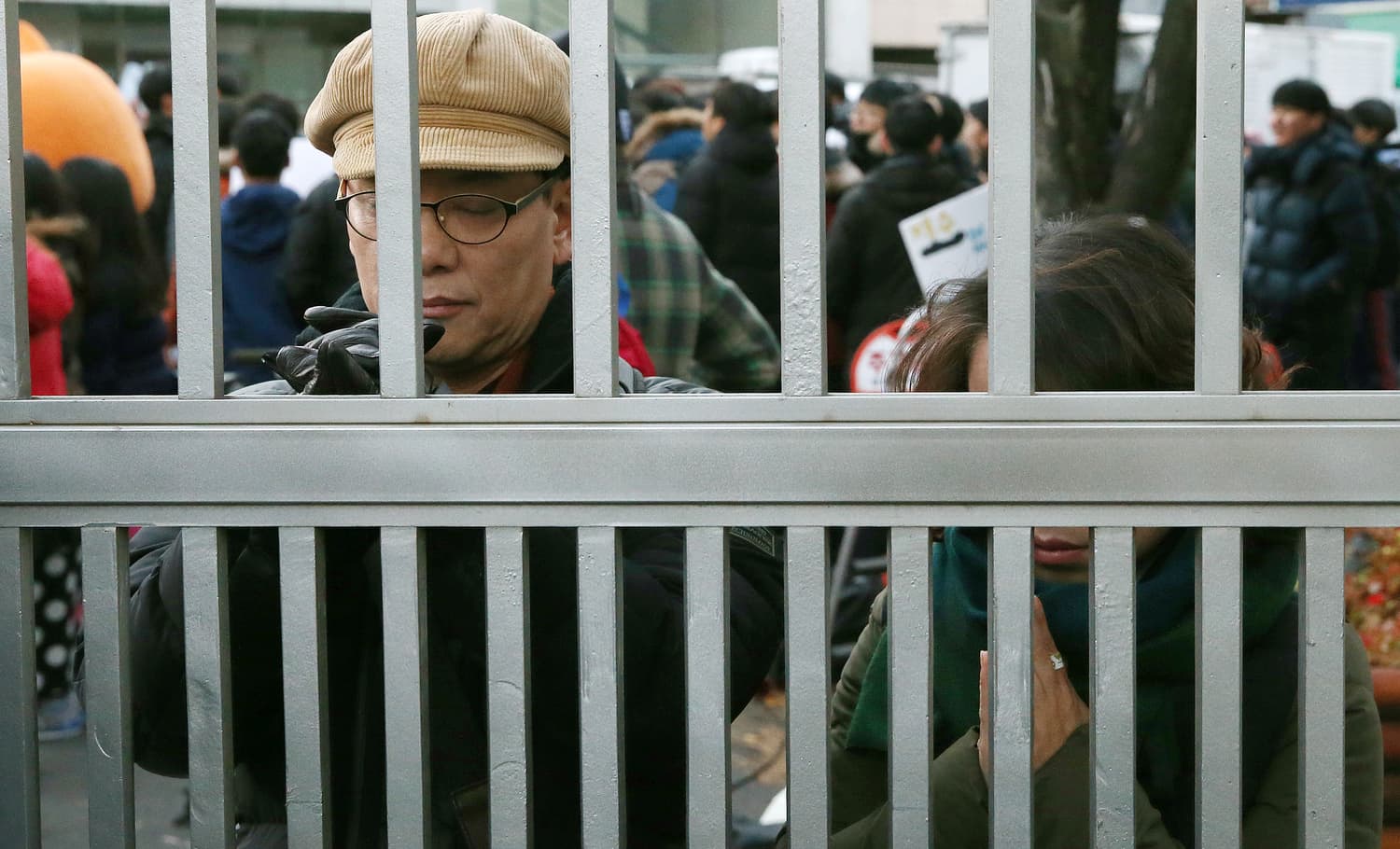
Korea's Exam Day: Why Planes Stop for Suneung and How to Plan Around It
For about 35 minutes on Korea's exam day, aircraft stop taking off nationwide, artillery drills halt, and the stock market opens an hour late — all for one English listening test. What happens on Suneung day, and how to plan a trip around it.
Ajumma Meaning: Is This Korean Word Rude? Ahjumma and Imo Explained
Learn what ajumma means in Korean, why it can sound rude, how it differs from ajumeoni and imo, and what travelers should say instead.