Korean Blood Type Personality: Culture, Dating, and MBTI
Blood Type Personality Is Culture, Not Science
In Korea, the question “What is your blood type?” has often meant more than a medical fact. It can work like a personality shortcut, a dating icebreaker, a joke among friends, or a way to tease someone about being careful, intense, outgoing, strange, romantic, stubborn, or hard to read. For visitors, this can sound oddly clinical. In Korean pop culture, it has usually been closer to astrology or MBTI small talk: not a serious diagnosis, but a familiar social language.
The important first point is clear: blood type does not scientifically determine personality. Large-scale research has not supported a meaningful relationship between ABO blood type and personality traits. A 2014 large-scale survey analysis in Japan and the United States found that blood type explained less than 0.3% of the variance in personality. Earlier Big Five research also failed to support the idea that blood type predicts personality in a useful way.
So why does the topic still matter? Because culture does not always disappear when science says a belief is weak. Blood type personality survives as a shared reference. Koreans may say they do not believe in it and still know the stereotypes. That is the useful travel lesson: treat it as a cultural script, not as evidence about a person.
For nearby social-context guides, read EpicKor's Hell Joseon and N-po explainer, Korean laugh-clap guide, and Korean etiquette guide.
Small-talk prep: As an Amazon Associate, EpicKor may earn from qualifying purchases. If blood type, MBTI, honorifics, and dating questions make Korean conversation feel layered, the Lonely Planet Korean phrasebook covers the first-meeting questions this article is about — age, job, and yes, sometimes blood type.
The Four Stereotypes People Recognize
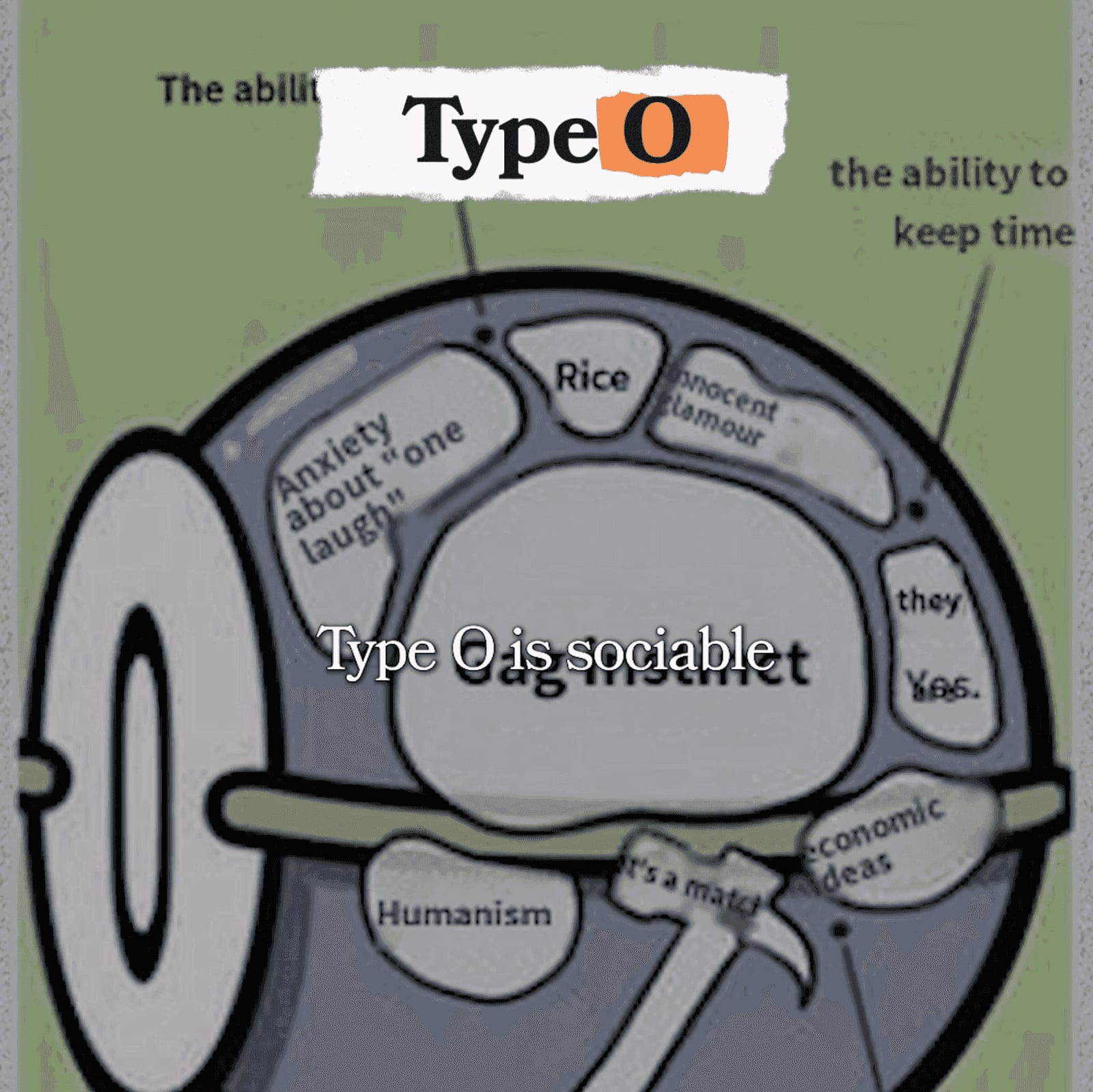
The stereotypes vary by person, generation, and media source, but the basic shorthand is widely recognizable. Type A is often framed as careful, considerate, detail-oriented, and sensitive. Type B is framed as free-spirited, passionate, creative, and sometimes selfish or unreliable, especially in old dating jokes about men. Type O is framed as confident, social, practical, and leader-like. Type AB is framed as unusual, rational, unpredictable, or “four-dimensional.”
Those descriptions are not fair personality tests. They are social caricatures. The same way an English speaker may joke about zodiac signs without truly making life decisions from them, a Korean speaker may use blood type language as a playful way to talk about temperament.
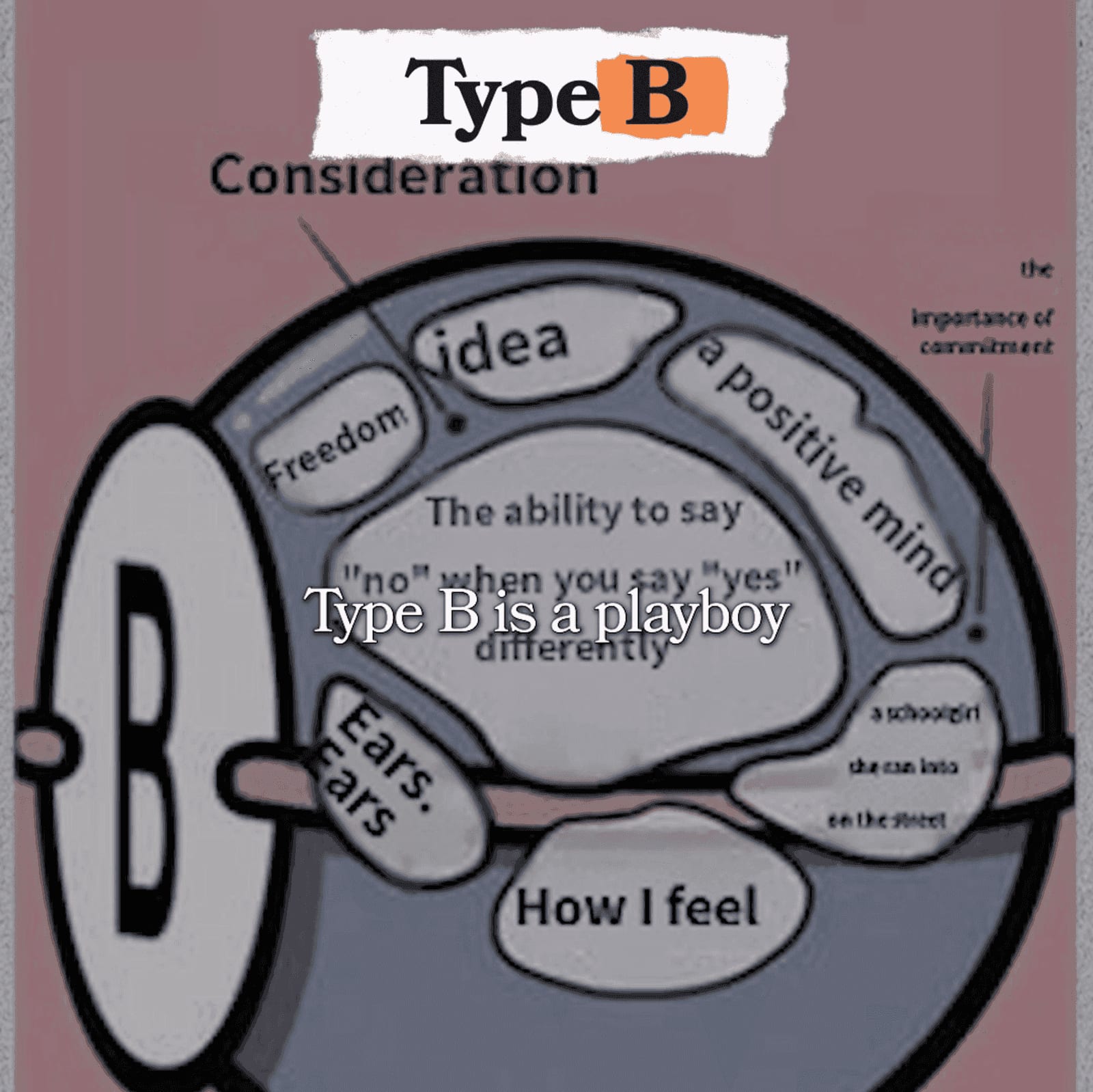
The danger comes when playful labels become assumptions. Calling a Type B man unreliable, a Type A person timid, or an AB person weird can become lazy and sometimes rude. If someone brings up your blood type, you do not need to defend your entire personality. You can treat it lightly: “What does that mean in Korea?” or “Do people still believe that?” usually opens a better conversation.
| Blood type | Common Korean stereotype | How to read it | Visitor response |
|---|---|---|---|
| A | Careful, organized, sensitive, considerate | Often used for someone who overthinks or prepares well. | Do not treat it as proof they are shy. |
| B | Independent, passionate, selfish, unpredictable | Can carry old dating stereotypes, especially around men. | Be careful; the joke can sound judgmental. |
| O | Outgoing, practical, leader-like, social | Often framed as a group-friendly type. | Ask how seriously the person takes it. |
| AB | Rational, eccentric, unpredictable, hard to categorize | Sometimes described as “alien” or unusual in jokes. | Do not use it to call someone strange. |
Why It Became Popular in Korea
Blood type personality theory was not invented in Korea. It became popular in Japan before becoming familiar in Korea through books, media, school chatter, dating talk, and entertainment. By the early 2000s, Korean pop culture had many blood-type references. Films, TV segments, comics, online quizzes, and dating conversations used blood type as an easy personality label.
The best-known example for many people is the old stereotype around Type B men, reinforced by dating jokes and the Korean romantic comedy My Boyfriend Is Type B. Whether a person watched the film or not, the phrase helped turn blood type into a recognizable relationship meme.
Blood type worked well as small talk because it felt personal without being too direct. Asking someone why they are anxious, intense, reserved, or flirtatious can be rude. Asking blood type lets people talk about those traits indirectly. In a high-context culture where social harmony matters, indirect personality language can feel safer than blunt judgment.
This does not mean every Korean believes it. Many people treat it as outdated, funny, or replaced by MBTI. But because the stereotypes are still culturally legible, the topic remains useful to understand.
MBTI Replaced Blood Type, But the Social Need Stayed
For younger Koreans, MBTI has largely replaced blood type as the personality shorthand of choice. The Korea Times has described MBTI as a major trend among young Koreans and noted that blood type was an earlier national personality-label craze. Korea JoongAng Daily has made a similar comparison, explaining that blood type was once a common way to categorize people before MBTI became viral.
The shift makes sense. MBTI feels more detailed: sixteen types instead of four. It also feels more self-chosen because people answer questions rather than inherit a blood group. It can be used for dating, friend compatibility, workplace jokes, content algorithms, and personal branding.
But the underlying social function is similar. People want shortcuts for understanding each other. They want language for awkward introductions. They want a way to explain why someone is quiet, intense, spontaneous, meticulous, emotional, or difficult. Whether the label is Type A, Type B, ENFP, ISTJ, or “I am not an E, I just look like one at work,” the label makes social complexity easier to discuss.
| Label system | Why it spread | What it does socially | Main caution |
|---|---|---|---|
| Blood type | Simple four-type shorthand, media repetition, dating jokes | Creates quick personality talk without direct confrontation. | Too broad and scientifically unsupported. |
| MBTI | More detailed, quiz-friendly, social-media compatible | Helps people explain preferences, energy, and compatibility. | Can become overused or treated as fixed identity. |
| Zodiac-style talk | Playful and familiar across many cultures | Lets people joke about personality and fate. | Can slide into stereotyping. |
What the Science Says
The scientific case for blood type personality is weak. The most useful way to explain it is not “no study has ever found anything,” because research history is messy and small studies sometimes claim minor associations. The better explanation is: strong, repeatable, useful evidence is not there.
The 2014 Japanese Journal of Psychology paper by Kengo Nawata analyzed large survey datasets from Japan and the United States and concluded there was no meaningful relationship between ABO blood type and personality. The effect sizes were extremely small. A 2003 paper in Personality and Individual Differences also found no support for a relationship using personality measures. A 2005 study of Taiwanese high school students using Big Five personality measures likewise reported no significant relationship except a narrow subgroup result that does not support broad stereotypes.
That means you should not use blood type to make decisions about dating, hiring, trust, friendship, or someone's emotional life. If a Korean friend jokes about your blood type, you can play along lightly. But if someone uses blood type to seriously judge you, it is fair to push back.
Dating, Work, and Visitor Etiquette
In dating, blood type can still appear as a playful question. A person might ask, “What is your blood type?” and then tease, “Ah, that makes sense.” If you are not Korean, you can answer simply or say you do not know. Many visitors do not know their blood type, and that itself can become a funny cultural difference because some Koreans know theirs from school, family, or medical contexts.
At work, the topic should be lighter. Serious workplace judgment based on blood type is not appropriate. If coworkers joke about it, treat it like personality small talk unless it becomes discriminatory or uncomfortable.
For travelers, the best etiquette is curiosity without mockery. Do not say, “That's stupid.” A better answer is, “I heard MBTI is more popular now. Do people still ask blood type?” That lets the other person explain their own view.
How to Answer When Someone Asks
If you know your blood type, answer and ask what stereotype it has in Korea. If you do not know, say so. If you dislike personality labels, keep it gentle: “I do not really believe in it, but I know it is a fun topic.” If someone asks your MBTI too, you can compare how the two labels feel.
The goal is not to win a science debate in the first minute of conversation. The goal is to understand why the question appears. In Korea, blood type personality is one more example of how social categories become conversation tools. It is not reliable psychology, but it is useful cultural vocabulary.
For a Korean culture night: If this kind of social-label talk makes you curious about modern Korea, The Birth of Korean Cool is a better use of an evening than dating clips, quizzes and short-form jokes, and it explains where a lot of these social labels came from.
FAQ
Q: Do Koreans still ask about blood type? A: Some do, but it is much less dominant than before. Younger Koreans are more likely to bring up MBTI, though blood type stereotypes are still widely recognizable.
Q: Is blood type personality scientifically true? A: No useful evidence supports blood type as a personality test. Large-scale studies have found no meaningful relationship between ABO blood type and personality.
Q: What does Type B mean in Korean dating stereotypes? A: Type B, especially Type B men, has often been stereotyped as passionate but selfish or unreliable. Treat this as pop-culture baggage, not a fair judgment.
Q: Why did MBTI become more popular than blood type in Korea? A: MBTI gives sixteen types, feels more detailed, works well on social media, and lets people describe themselves through a quiz rather than inherited biology.
Q: What if I do not know my blood type? A: That is fine. Many foreigners do not know. You can simply say you do not know and ask what the Korean stereotype would have been.
Q: Should I correct someone who believes in blood type personality? A: If it is light small talk, you can keep it playful. If someone makes a serious judgment about dating, work, or character, it is reasonable to say you do not see blood type that way.
Sources and Further Reading
- Kengo Nawata, Japanese Journal of Psychology: No relationship between blood type and personality
- Personality and Individual Differences: Blood type and personality
- Personality and Individual Differences: Blood type and five factors of personality in Asia
- The Korea Times: Personality tests popular among young Koreans
- Korea JoongAng Daily: Korea's love for categorizing, from blood types to MBTI
You Might Also Like

Why Mercedes-Benz Is So Common in South Korea
See why Mercedes-Benz cars are so visible in South Korea, what current sales data shows, and where status, service, and city life fit.
Korean Modern Art: The Painters Whose Work Now Sells for Millions
Meet the Korean modern painters whose work now sells for millions at auction, why the market is booming, and exactly where to see the real thing in Korea.

Centre Pompidou Hanwha Seoul: Yeouido Art Stop Guide
A timely guide to Centre Pompidou Hanwha Seoul in Yeouido: opening facts, why it matters, how to plan a visit, and what to pair nearby.