Chung Yong-jin and Shinsegae: Korean Influencer Leadership Risks
Chung Yong-jin is no longer just the social-media-friendly Shinsegae heir people discussed as an unusual chaebol figure. He is the chairman of Shinsegae Group, and in 2026 his public leadership became tied to a more serious question: when a Korean conglomerate owner becomes highly visible, what happens when visibility turns into accountability?
That is the better way to read Chung's story now. The older version of the article framed him mainly as an "influencer chairman" who disrupted quiet chaebol tradition. That was only part of the picture. The current story is sharper. Shinsegae's retail empire includes E-Mart, SSG.com, Starfield, Starbucks Korea through E-Mart's stake, food and lifestyle retail, sports branding through SSG Landers, and major consumer-facing businesses. A public-facing owner can create warmth, speed, and attention, but also concentrates reputational risk.
This guide explains who Chung Yong-jin is, why his leadership style matters in Korean business culture, what changed after his promotion to chairman, how the 2026 Starbucks Korea controversy shifted the accountability conversation, and what international readers should understand about chaebol leadership without turning it into celebrity gossip.
Korean business books — compare on AmazonAffiliate link. As an Amazon Associate, EpicKor earns from qualifying purchases at no extra cost to you.
Quick Answer: Who Is Chung Yong-jin?
Chung Yong-jin, also romanized Jeong Yong-jin in some Korean-to-English contexts, is chairman of Shinsegae Group. Yonhap reported that he was promoted from vice chairman to chairman in March 2024 as Shinsegae sought to respond to difficult retail conditions and changing customer demand. Forbes notes that he is a grandson of Samsung founder Lee Byung-chull and that his fortune is tied largely to Samsung Electronics and E-Mart, a Shinsegae retail unit.
In June 2026, Shinsegae Group announced that Chung would take leadership roles at E-Mart and Shinsegae Property, framing the move as stronger responsible management. Yonhap reported the same month that Chung would become head of E-Mart and co-CEO of Shinsegae Property following criticism over a Starbucks Korea promotional campaign. You can read Shinsegae's own newsroom announcement on Chung taking E-Mart and Shinsegae Property leadership roles and Yonhap's English report on Shinsegae chief to lead E-Mart.
That means any current article about Chung should not stop at Instagram personality. The more relevant topic is how a visible owner-executive manages consumer brands, public backlash, governance expectations, and retail transformation.
| Old Reading | Better 2026 Reading | Why It Matters |
|---|---|---|
| Influencer chaebol | Public owner-executive | Visibility now creates accountability, not only attention. |
| Social media novelty | Consumer-brand risk channel | Posts, apologies, promotions, and politics can affect trust. |
| Retail celebrity | E-Mart/Shinsegae operator | Leadership is judged by business recovery and execution. |
| Culture-friendly heir | Reputation manager | Sports, food, coffee, malls, and shopping all touch public emotion. |
| Anti-mystery chairman | Test case for chaebol transparency | Korean conglomerates face higher expectations for public responsibility. |
Why His Public Image Stood Out
Korean chaebol leaders traditionally tended to be distant, formal, and institutionally filtered. That distance had strategic value. It preserved hierarchy, reduced personal controversy, and kept brand communication inside official channels. Chung became notable because he moved differently. He was more visible, more conversational, more lifestyle-coded, and more willing to appear as a consumer personality rather than only a boardroom figure.
That publicness fit Shinsegae's business reality. Retail is intimate. People buy groceries, coffee, clothing, gifts, snacks, home goods, baseball merch, and everyday services. A retail-group leader who appears to cook, shop, attend games, taste products, and talk in a human voice can make a conglomerate feel less abstract.
But consumer intimacy cuts both ways. The more a leader becomes a face, the more the public may expect direct responsibility. A quiet owner can hide behind corporate process. A visible owner cannot do that as easily. This is why Chung's story is useful for understanding modern Korean business: the old chaebol aura is weakening, but the replacement model is not risk-free.
For broader soft-power and Korean consumer context, see EpicKor's K-brand explainer, Korea travel cheat codes guide, and Korean soft power icons guide. Shinsegae is not only a business story; it sits inside Korean lifestyle, food, shopping, sports, and branded spaces.
Business context before hot takes: As an Amazon Associate, EpicKor may earn from qualifying purchases. If Korean conglomerates and retail leadership interest you, compare Korean business books before relying only on celebrity-chairman headlines.
The 2026 Starbucks Korea Lesson
In May 2026, Starbucks Korea faced public criticism over a promotional campaign connected to the anniversary of the May 18 Gwangju Democratic Uprising. Yonhap reported that Chung publicly apologized, saying he took seriously the pain and anger people felt from the inappropriate marketing. Yonhap also reported that this was his first formal public apology since becoming Shinsegae Group chairman in March 2024. Read Yonhap's report on Chung's apology over the Starbucks Korea campaign.
This matters because Starbucks Korea is not an isolated cafe chain in the public imagination. It is operated through Shinsegae's retail ecosystem, and E-Mart is a major shareholder. When a brand error touches a politically and historically sensitive date, the issue becomes bigger than marketing. It becomes a test of corporate memory, internal review, leadership discipline, and public repair.
The incident also changed the meaning of Chung's publicness. Visibility helped make him a recognizable leader, but it also made it natural for the public to expect him to stand in front of the issue. That is the core paradox of influencer-style leadership: the same attention that helps a leader humanize the company can turn into a demand for direct accountability when something goes wrong.
Chaebol Leadership Is Changing, But Not Disappearing
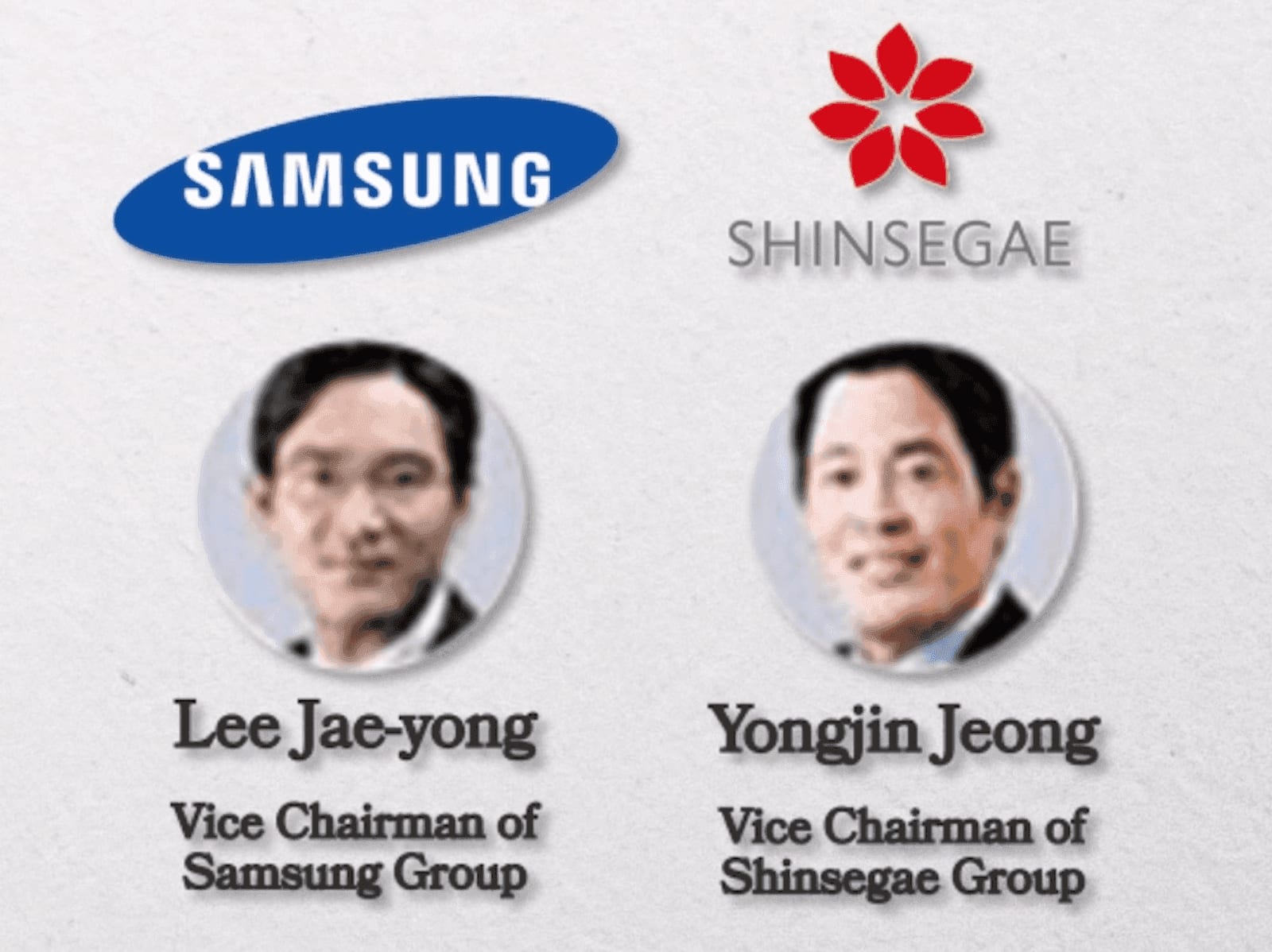
International readers often treat chaebol as a simple word for "Korean conglomerate," but the term carries family-control, succession, governance, and national-development context. Chaebol groups helped shape Korea's industrial growth, but they also attract criticism over concentration of power, opaque decision-making, labor issues, succession, and political ties.
Chung's public style does not erase those structural issues. It changes how they are communicated. A leader can appear casual online and still operate inside a highly concentrated corporate structure. A company can have a relatable face and still need strong boards, risk controls, consumer-safety systems, and transparent decision-making.
That is why the more mature question is not "Is Chung cool?" It is "Does visible leadership improve trust, execution, and accountability?" Sometimes it can. A visible owner may move faster, signal priorities clearly, and humanize a company. But if visibility replaces systems, the company becomes more fragile. Personality cannot substitute for compliance, governance, and good operational judgment.
| Leadership Benefit | Business Value | Risk If Overused |
|---|---|---|
| Public familiarity | Humanizes a large retail group | Personal controversy can spill into brand trust. |
| Fast signaling | Shows priorities quickly | May bypass slower review and governance norms. |
| Culture access | Connects retail with sports, food, and lifestyle | Can look like celebrity networking if business results lag. |
| Direct accountability | Public can see who is responsible | Leader becomes the lightning rod for every mistake. |
| Retail storytelling | Makes products and stores feel personal | Authenticity can become performance. |
What Shinsegae Needs From This Style Now
The 2026 challenge is not whether Chung can attract attention. He already can. The challenge is whether public-facing leadership can support retail recovery, customer trust, and operational discipline.
E-Mart faces intense competition from online grocery, convenience formats, specialty retail, quick commerce, private-label products, discount competitors, and changing household behavior. Starfield-style properties compete for time as much as money. Starbucks Korea, food retail, and lifestyle shopping all depend on emotional trust. Baseball and fandom branding can create warmth, but they do not solve margin pressure.
In that environment, the strongest version of Chung's style would be less about being everywhere and more about making responsibility visible. That means clear apologies when needed, disciplined brand review, customer-centered execution, stronger governance signals, and practical improvements shoppers can feel.
For international readers, the lesson is also comparative. Korea's large retail groups are not only selling products; they are selling reliability in dense cities where people shop often and judge brands quickly. A single campaign mistake, food-safety issue, app failure, or customer-service controversy can move through online communities fast. Public leadership helps only when the company can show that the system underneath the personality is improving.
That is why the next proof point is operational, measurable, durable, and not aesthetic. Retail customers notice real fixes faster than polished slogans.
For readers interested in Korea's shopping and consumer side, EpicKor's Korean convenience-store food guide, Seoul stationery shopping guide, and Korean cookware starter kit show the ground-level consumer culture that large retail groups compete to serve.
Leadership lens: If this article is making you think about public executives and brand risk, compare business leadership books with a focus on crisis communication and consumer trust.
FAQs About Chung Yong-jin and Shinsegae
Q: Is Chung Yong-jin the chairman of Shinsegae Group? A: Yes. Yonhap reported his promotion to chairman in March 2024, and Shinsegae Group's own 2026 newsroom material refers to him as chairman.
Q: Why was he called an influencer-style chaebol leader? A: He stood out because he communicated more publicly and personally than the older, more distant chaebol-leader model. That made him a recognizable retail personality, not only a corporate name.
Q: What changed in 2026? A: Shinsegae announced that Chung would take leadership roles at E-Mart and Shinsegae Property, and he publicly apologized after the Starbucks Korea promotional controversy, making accountability a bigger part of the story.
Q: What was the Starbucks Korea controversy? A: Yonhap reported that a Starbucks Korea promotional campaign drew criticism for evoking painful memories around the May 18 Gwangju Democratic Uprising anniversary. Chung apologized publicly in May 2026.
Q: Does public leadership solve chaebol governance problems? A: No. It can improve visibility and accountability, but governance still depends on boards, systems, compliance, transparency, and operational discipline.
Q: Why should international readers care? A: Shinsegae touches Korean retail, coffee, shopping malls, grocery, lifestyle, sports, and consumer culture. Chung's leadership shows how Korean conglomerates are adapting to a more public, more reactive brand environment.
Bottom Line
Chung Yong-jin's story is no longer simply "a chaebol heir became social-media famous." It is a case study in what happens when Korean conglomerate leadership becomes visible in a consumer era.
Visibility can humanize a company. It can also intensify accountability. The lasting test for Shinsegae is not whether its chairman can command attention, but whether public leadership produces better judgment, stronger systems, and more trust after mistakes.
You Might Also Like
Korea Bonus Shock 2026: Hyundai, Kia, and GM Labor
A July 2026 guide to Hyundai, Kia, and GM Korea labor disputes, bonus demands, Atlas automation, tariffs, and what may change next.
Is Korea Kid-Friendly? What Foreign Parents Report — and What Korean Data Shows: Strangers Who Hand Out Tangerines, 114 No-Kids Zones, and the 68% Who Accept Them
Foreign parents say older Koreans shower babies with snacks and department-store nursing rooms beat London's. Korean data adds 114 no-kids zones, 68% public acceptance, and 64% of Korean parents who feel watched. What that means for your trip.
Car Seat Taxis in Korea: The Law Requires a Seat for Every Child Under 6, Ordinary Taxis Don't Carry One — What Tourists Can Actually Book in Seoul
Korea's Road Traffic Act requires a car seat for children under 6 in any car, taxis included, and fines the driver ₩60,000. Ordinary taxis carry none and police paused taxi enforcement in 2018. TADA, whose app takes foreign phones and cards, runs about 300 car-seat vans.