
Korean Cinema Guide: Iconic Films and Lines to Know
Korean cinema has global prestige now, but inside Korea many films also live as everyday references. A line from a gambling movie can become a joke about risk. A crime film phrase can become a shorthand for corruption. A noir scene can define an actor's image for years. If you want to understand Korean pop culture beyond K-dramas and K-pop, you need a small map of the films people quote, meme, parody, and use as emotional grammar.
This guide is not a streaming availability list, because catalogs change by country and date. It is a cultural orientation guide: which films to start with, why their lines matter, how to avoid reducing Korean cinema to violence, and how to watch older films with context. For more actor and Hallyu background, pair it with EpicKor's Choi Min-sik guide, Kim Go-eun guide, Korean soft power icons guide, and Seoul bookstore and library guide.

The Short Answer
Start with five lanes: crime/noir, revenge thrillers, social satire, historical memory, and everyday comedy or romance. Films such as Tazza: The High Rollers, A Bittersweet Life, The Unjust, Oldboy, Memories of Murder, The Host, The Handmaiden, Parasite, and Decision to Leave all reveal different parts of Korean cinema's range.
The iconic lines matter because they travel outside the movie. Koreans may use them as jokes, warnings, workplace metaphors, or internet shorthand. But you do not need to memorize long quotes. In fact, for copyright and context reasons, it is better to learn the situation, tone, actor, and cultural feeling behind the line.
| Film lane | Good entry point | What to notice | Why it matters |
|---|---|---|---|
| Crime/noir | Tazza, A Bittersweet Life | Style, betrayal, masculine codes | Many quoted lines come from tension and power games. |
| Institutional corruption | The Unjust | Police, prosecutors, backroom deals | Its phrases became useful for talking about entitlement and power. |
| Revenge thriller | Oldboy | Memory, violence, moral shock | Global gateway to darker Korean cinema. |
| Social satire | Parasite, The Host | Class, family, systems | Explains why Korean genre films often carry social critique. |
| Modern auteur cinema | Decision to Leave | Language, restraint, obsession | Shows the quieter prestige side of Korean film. |
Korean culture and history books — compare on AmazonAffiliate link. As an Amazon Associate, EpicKor earns from qualifying purchases at no extra cost to you.
Why Korean Movie Lines Travel
Korean movie lines travel because they compress a social feeling into a repeatable phrase. A film character says something in a charged situation, and later people use that line to joke about work, money, hierarchy, gambling, betrayal, loyalty, or absurd unfairness. The line becomes a social tool.
This happens in many countries, but Korea's dense internet culture, variety shows, YouTube clips, and meme recycling make the process especially visible. A line can be cut into short clips, repeated by comedians, quoted in comments, remixed into thumbnails, and used by people who have not watched the full film recently.
The risk for foreign viewers is that they hear "iconic line" and expect a slogan. Many Korean cinema references depend on delivery: the actor's face, the rhythm, the situation, and the moral pressure of the scene. Translation can carry meaning, but not always the exact social flavor.
Tazza: The High Rollers
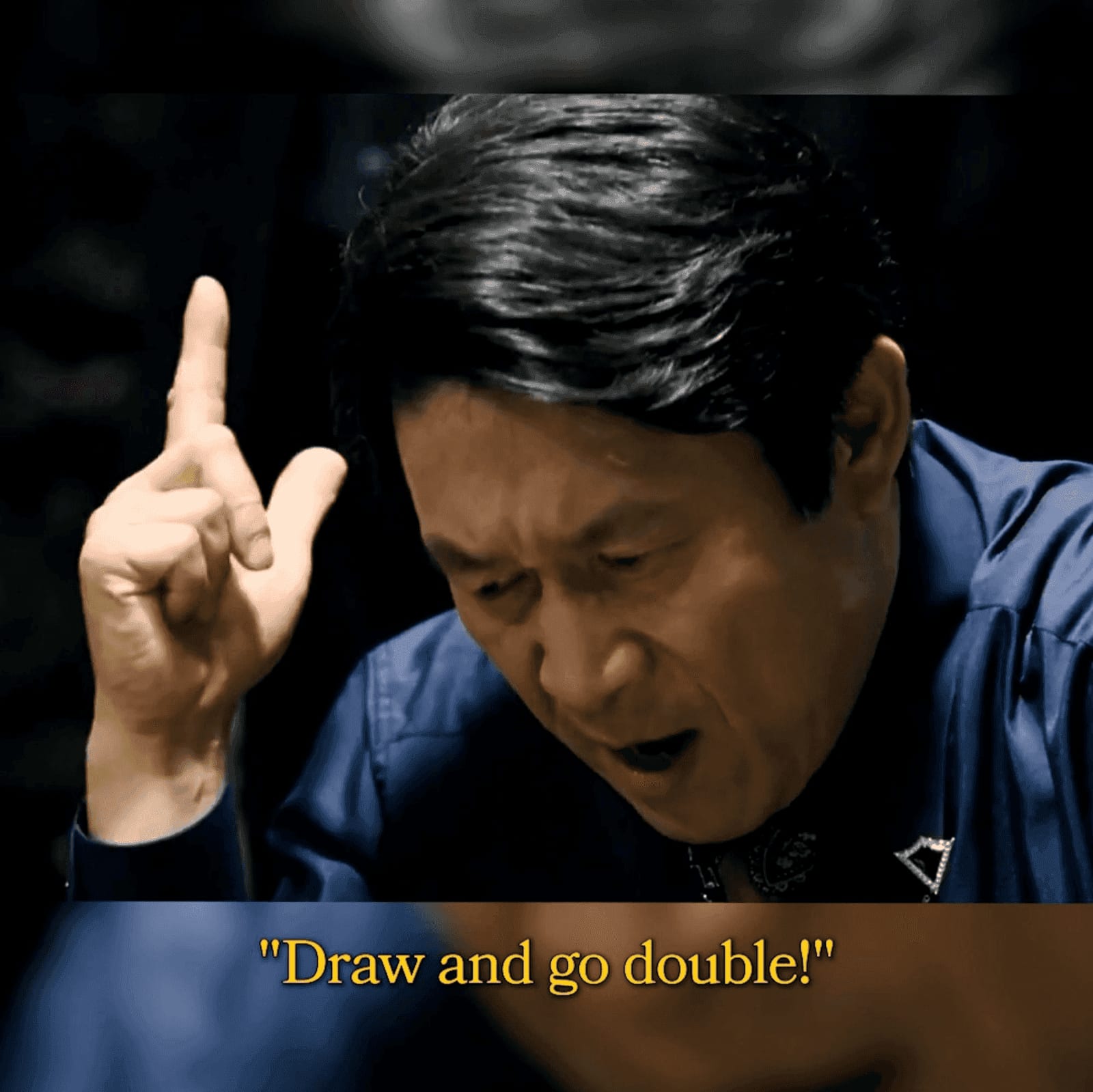
KOFIC's Korean Film Biz Zone lists Tazza: The High Rollers as a 2006 Korean drama directed by Choi Dong-hoon, released on September 28, 2006, with more than 5.69 million admissions recorded in its database as of July 2026. The plot follows Go-nee, who loses his savings to professional gamblers and enters the world of hwatu card sharks.
Tazza matters because it turned gambling-table language into broader cultural performance. Even people who do not gamble recognize the posture: bluffing, reading faces, raising stakes, pretending confidence, and surviving a rigged table. The film's famous expressions are often used jokingly when a situation feels like a bet.
For foreign viewers, the key is not to learn gambling vocabulary first. Watch how the film treats charisma and danger together. The humor, betrayal, and stylish swagger are why the lines stayed alive.
A Bittersweet Life
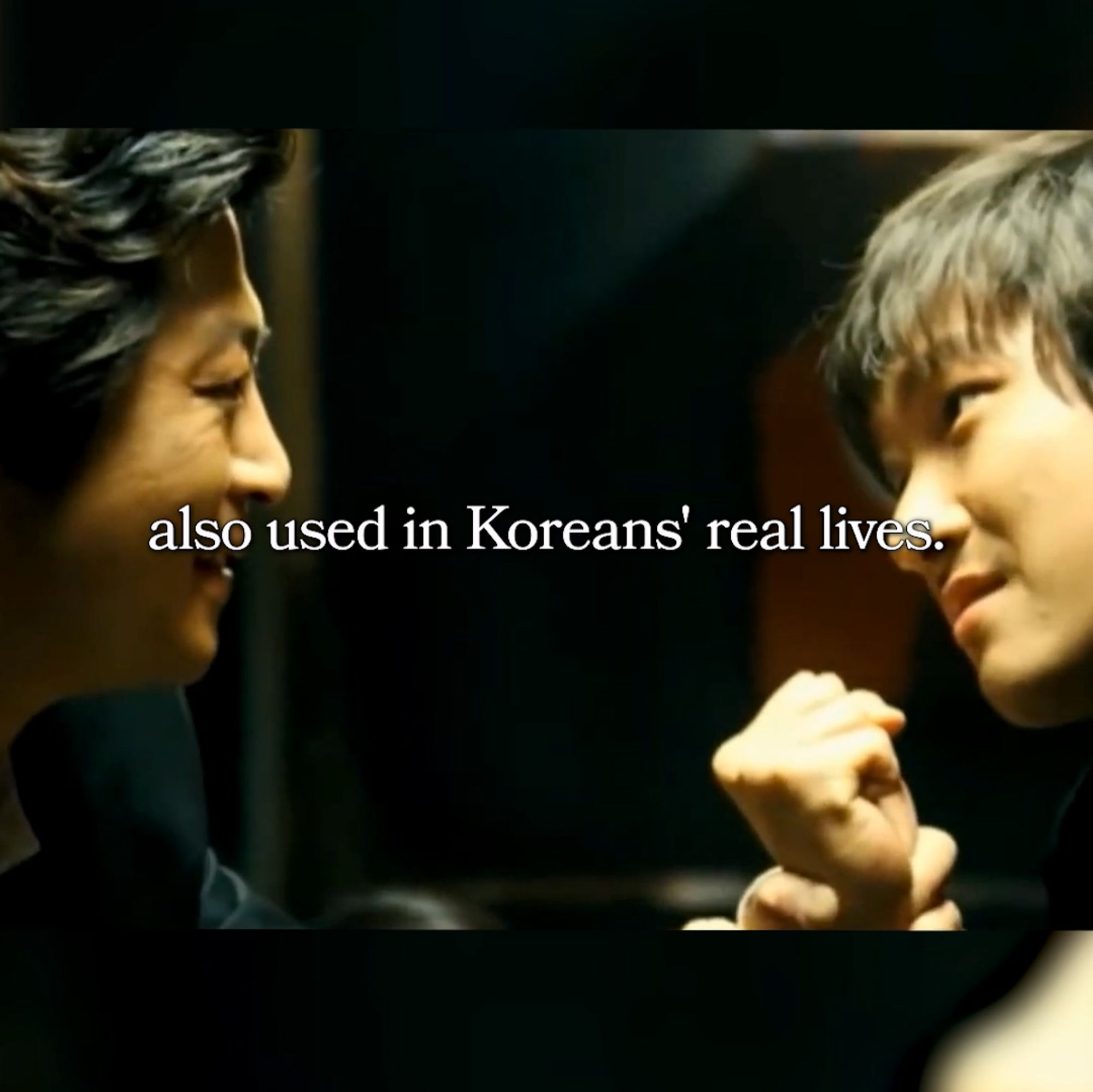
KOFIC's feature on A Bittersweet Life describes Kim Jee-woon's 2005 action noir starring Lee Byung-hun, Shin Min-a, Kim Young-cheol, and Hwang Jung-min. The film follows Sun-woo, a disciplined hotel-lounge manager and mob subordinate whose small act of mercy triggers punishment and revenge.
This film's iconic value is mood. Its lines are remembered because they come from restraint cracking open. Lee Byung-hun's image as controlled, wounded, elegant, and dangerous became central to how many viewers remember the movie. It is not only what is said; it is how silence, suits, violence, and regret sit around the words.
If you are new to Korean noir, watch this for atmosphere before plot twists. The film shows how Korean genre cinema can be stylish without feeling weightless. It also shows why a single actor's delivery can keep a line alive for decades.
The Unjust
KOFIC lists The Unjust as a 2010 crime drama directed by Ryoo Seung-wan, released on October 28, 2010, with more than 2.72 million admissions in the database as of July 2026. Its story centers on a serial-killer investigation, police pressure, prosecutors, organized crime, and corrupt dealmaking.
The line most associated with the film is commonly paraphrased around the idea that repeated favors become treated as rights. It became useful because it names a social pattern people recognize beyond the movie: when a concession stops being appreciated and starts being demanded.
That is why The Unjust has remained culturally sticky. It is a crime thriller, but it is also a vocabulary machine for talking about power. Korea has a long tradition of films that use genre entertainment to express frustration with institutions. The Unjust belongs firmly in that tradition.
Korean culture context: As an Amazon Associate, EpicKor may earn from qualifying purchases. If Korean films make more sense when you understand history, hierarchy, and modern society, compare Korean culture and history books before treating movie lines as isolated memes.
Oldboy and the Global Gateway Problem
Oldboy is unavoidable in any Korean cinema conversation. For many international viewers, it was the gateway into Korean revenge thrillers, Choi Min-sik's intensity, and Park Chan-wook's moral extremity. But it can also distort expectations if it becomes the only reference. Korean cinema is not only dark revenge.
Use Oldboy as one door, not the whole house. It helps explain why Korean genre films earned global attention: bold premise, visual control, emotional violence, and unforgettable performance. But after that, move sideways into Bong Joon-ho, Lee Chang-dong, Hong Sang-soo, Kim Jee-woon, Ryoo Seung-wan, and newer directors.
EpicKor's Choi Min-sik guide goes deeper into Oldboy, Exhuma, and his role in Korean screen intensity.
Parasite Changed the Global Conversation
After Parasite, many viewers discovered that Korean cinema could be funny, tense, social, elegant, and brutal in one film. The Academy Award visibility changed the international conversation, but it did not appear from nowhere. Bong Joon-ho had already built a body of work around class, institutions, monsters, families, and systems.
The lesson for travelers and culture fans is simple: Korean cinema often hides social critique inside entertainment. A monster movie may be about family and government failure. A thriller may be about class or memory. A comedy may be about shame, hierarchy, or money.
That is why iconic lines last. They are not only cool dialogue. They point to pressure people recognize.
How to Watch Korean Cinema Without Missing the Point
Do not watch only plot. Watch hierarchy. Who speaks formally? Who drops honorifics? Who apologizes first? Who can interrupt? Who pays? Who sits? Who gets to be silent? Korean films often carry power dynamics through speech level, body language, age, job title, and social class.
Subtitles can miss some of this. That does not mean subtitles are bad; it means you should look at behavior as much as words. If a line sounds ordinary in English but everyone in the scene freezes, something happened in tone, rank, or implication.
Also check age ratings and content warnings. Many iconic Korean films include violence, sexual content, trauma, or disturbing themes. Prestige does not mean comfort viewing.
Where to Start by Mood
| If you want... | Start with | Then try | Watch for |
|---|---|---|---|
| Stylish noir | A Bittersweet Life | New World | Loyalty, betrayal, suits, silence |
| Crime and corruption | The Unjust | Veteran | Institutions, favors, backroom pressure |
| Global classic shock | Oldboy | The Handmaiden | Memory, revenge, taboo, visual control |
| Social satire | Parasite | The Host | Family, class, system failure |
| Actor study | Tazza | Assassination | Charisma, ensemble rhythm, quotability |
About Streaming and Availability
Streaming availability changes constantly by country. Do not trust an old blog post that says "watch now" unless it updates daily. Use this guide to choose what to search for, then check current legal streaming platforms, rental stores, local libraries, Korean cultural centers, or film festivals.
If a film is not available in your region, do not jump to illegal uploads. Korean cinema has a strong international rights ecosystem, and availability often rotates. Legal access supports the companies and archives that keep these films visible.
Why These Films Help Travelers
Watching Korean films before a trip changes how Seoul feels. You notice police stations, office towers, underpasses, restaurants, apartments, markets, karaoke rooms, court buildings, and late-night streets differently. Film gives emotional texture to places that a travel checklist may flatten.
But keep fiction separate from daily life. Korea is not a noir film. The value of cinema is not that it "proves" what Koreans are like. It shows what Korean artists do with fear, humor, power, memory, and desire.
Build a Korea watch shelf: For a home viewing night, compare Korean cinema books or film-history guides so the movies become more than isolated streaming recommendations.
Sources and Further Reading
- KOFIC / KoBiz: Tazza: The High Rollers.
- KOFIC in Focus: A Bittersweet Life.
- KOFIC / KoBiz: The Unjust.
- KOFIC in Focus: The Unjust.
FAQ
Q: What Korean film should I watch first?
If you want global recognition, start with Parasite or Oldboy. If you want Korean quotability, add Tazza, A Bittersweet Life, and The Unjust.
Q: Why do Korean movie lines become memes?
They often compress social pressure into a memorable delivery: gambling risk, betrayal, hierarchy, corruption, entitlement, or absurd unfairness.
Q: Are Korean films mostly violent?
No. International attention often highlights thrillers and noir, but Korean cinema also includes romance, comedy, family drama, animation, documentary, and quiet auteur films.
Q: Should I memorize famous Korean movie lines?
Learn the context first. A short phrase without tone, relationship, and scene context can sound strange or be used awkwardly.
Q: Where can I check Korean film details?
KOFIC's Korean Film Biz Zone / KoBiz database is a reliable starting point for release dates, directors, cast, ratings, and admissions.
Q: Can I use these films to understand Korea?
Yes, but carefully. Films reveal cultural fears, humor, and social critique; they should not be treated as literal descriptions of every Korean person's daily life.
Video Insight: Iconic Movie Lines
You Might Also Like

K-Brand Explained: Why Korea's K-Prefix Travels
A practical guide to Korea's K-brand, Hallyu, K-pop, K-drama, K-food, K-beauty, and how soft power turns into travel and shopping.

Kim Go-eun Guide: Exhuma, Goblin, and Natural K-Beauty
A current guide to Kim Go-eun's career, from A Muse and Goblin to Exhuma, with notes on acting style, public image, K-beauty, and what to watch first.
Korean Soft Power Icons: BTS, Son, Bong, IU, and More
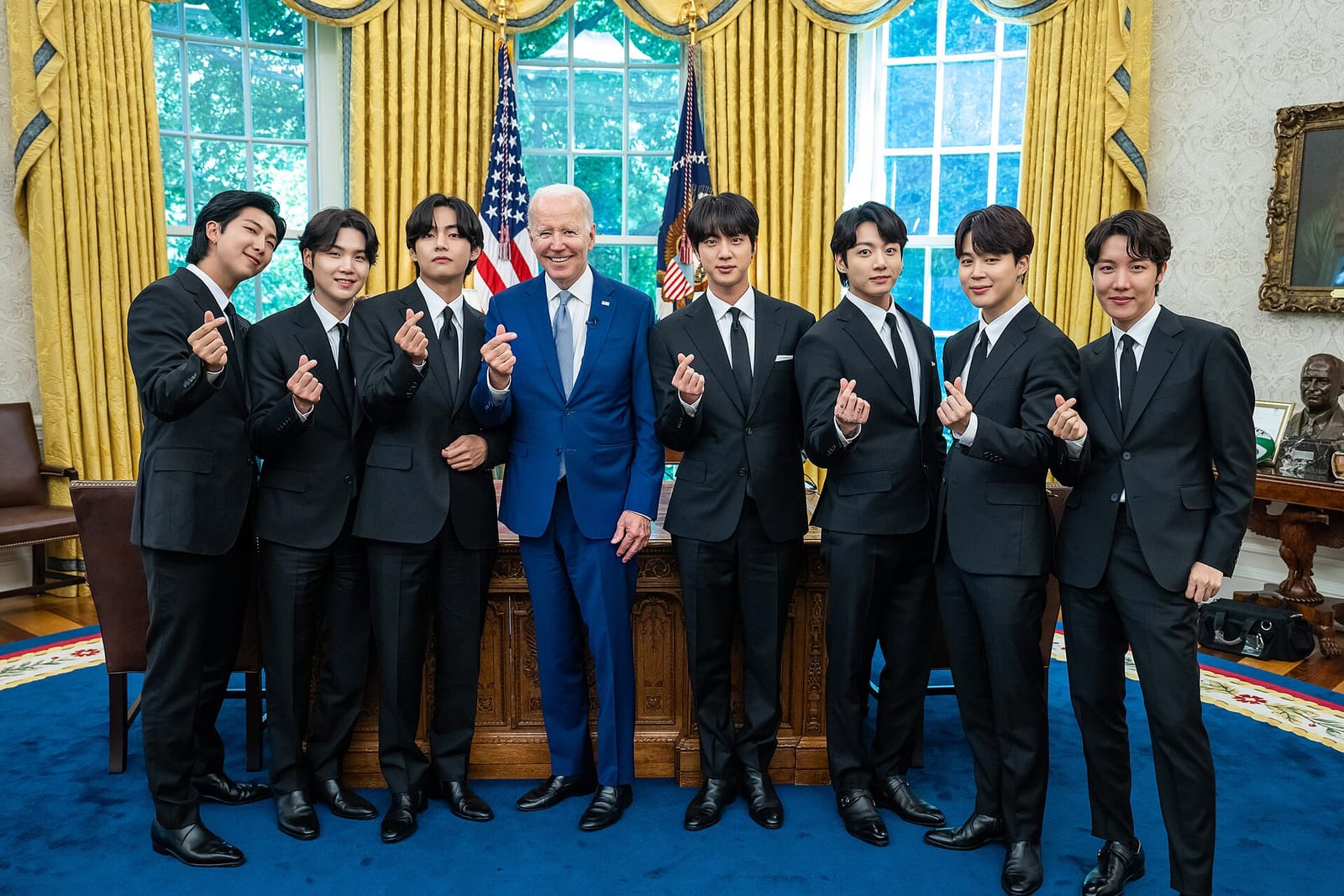
A current guide to six Korean soft power icons and what BTS, Son Heung-min, Bong Joon-ho, Yoo Jae-suk, Kim Yuna, and IU reveal about Korea.